
The Hormuz War Has Reached the American Casualty Threshold
 Ahmed Al-Rashid
The Hormuz War Has Reached the American Casualty Threshold
By Ahmed Al-Rashid
Two American soldiers killed in Jordan, a third soldier missing after the same Iranian missile and drone attack, and another U.S. service member dead in Iraq during the disposal of a downed Iranian drone have moved the Hormuz war into a different political and military category. This is no longer only a contest over shipping lanes, tolls, radar sites, and pressure around an interim agreement. It is now a war in which American casualties are becoming the trigger mechanism for U.S. retaliation.
The Associated Press reported on July 20 that the U.S. military was carrying out its tenth consecutive night of strikes on Iran, after an earlier round of U.S. airstrikes targeted Iran's Revolutionary Guard in retaliation for the deaths of U.S. soldiers in Jordan. AP, citing U.S. military and Defense Department statements, identified the two soldiers killed in Jordan as 1st Lt. Tyler James Feehan, 25, and Pvt. Isabella Gonzales, 19. They were killed while defending against Iranian ballistic missile and drone attacks. A third U.S. service member was reported missing after the attack; CENTCOM said unidentified remains had been found and were being examined.
The Facts That Matter Now
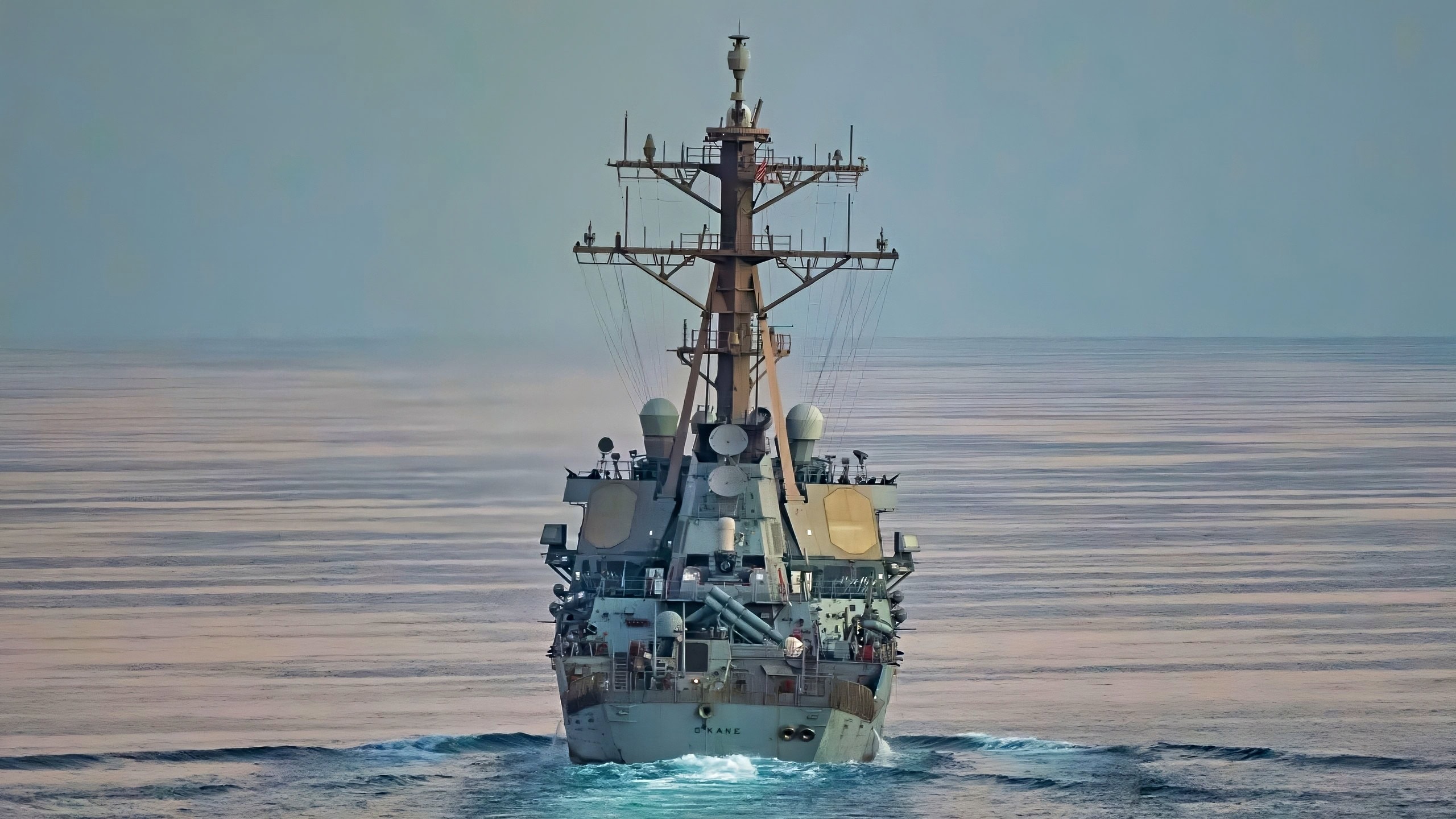
The current public record is still incomplete, and that matters. The available AP reporting says the Friday attack in Jordan involved Iranian ballistic missiles and drones, that two U.S. Army personnel were killed, and that a third was missing. It also says another American service member died in Iraq on Saturday during the controlled detonation of a downed Iranian drone, bringing the U.S. death toll in the war to 17. Earlier accounts of the Jordan strike described additional wounded personnel, but the confirmed public statements available by Monday focused on the deaths, the missing service member, and the later recovery of unidentified remains.
Jordan's own public line also needs careful handling. AP reported that Jordan's armed forces said Monday evening they had shot down three Iranian missiles and that there were no material losses or casualties in that Monday incident. That does not cancel the Friday U.S. casualties; it shows the tempo. Jordan is no longer a quiet rear area in this crisis. It is becoming part of the defensive belt through which Iranian fire is being intercepted, and through which U.S. forces are exposed.
The U.S. response has followed a familiar but dangerous pattern. Washington first identifies the attack as Iranian, then defines the deaths as crossing a response threshold, then strikes targets tied to the Revolutionary Guard or the military infrastructure supporting Iranian missile and drone operations. AP reported that the renewed U.S. campaign has included attacks on Iranian bridges, electrical facilities, and areas linked to underground missile bases. That is not a narrow one-for-one exchange. It is coercive air warfare aimed at degrading the systems that let Iran keep firing into the Gulf, Iraq, Jordan, Kuwait, Bahrain, and the shipping corridors around Hormuz.
Why This Escalation Is Different
The difference from previous rounds is not only the number of strikes. There have already been many nights of strikes. The difference is the American casualty threshold. A drone hitting a ship in the Strait of Hormuz creates an economic crisis. An Iranian claim over vessel routing creates a legal and diplomatic crisis. A missile that kills American soldiers in Jordan creates a domestic American war crisis.
Any officer who has served in the region understands the distinction. Bases in Jordan, Kuwait, Bahrain, Iraq, Qatar, Saudi Arabia, and the Emirates are not just dots on a map. They are the nervous system of the American military posture in the Middle East. Air defense batteries, refueling aircraft, logistics detachments, intelligence nodes, port support, and command liaison teams all depend on host-nation permission and a shared assumption that the host country can absorb the political cost of the U.S. presence. Iranian fire into Jordan threatens that assumption.
For Amman, this is especially sensitive. Jordan has long balanced three burdens: protecting its own airspace, maintaining its U.S. security relationship, and preventing its territory from being treated publicly as a launching platform in regional wars. Iranian missiles and drones now force Jordan into visible defensive action. If the kingdom shoots them down, Tehran can frame Jordan as a participant. If Jordan does not shoot them down, American and Israeli casualties may follow. There is no comfortable middle ground.
For the Gulf monarchies, the message is equally sharp. Kuwait and Bahrain have already been pulled into the renewed exchanges, according to AP's live coverage, with Bahrain hosting the U.S. Navy's Fifth Fleet and Kuwait serving as a long-standing logistical hub. These states invested for decades in Patriot, THAAD, radars, command centers, and Western partnerships. But the practical test of an air defense network is not whether it looks impressive in procurement tables. The test is whether it can keep military facilities functioning after repeated drone and missile salvos, without turning the host state into the next battlefield.
The Interim Deal Is Breaking Where It Was Weakest
The Hormuz interim arrangement was always fragile because it tried to suspend a war without resolving the main dispute over control. AP's earlier explainer on the renewed escalation described how the preliminary agreement called for reopening the Strait of Hormuz, while containing language that Iran interpreted as allowing it to manage traffic and possibly collect fees in the future. The U.S. and other states disputed that reading, insisting that the strait should remain open to all and toll-free.
That ambiguity was not a diplomatic detail. It was the central weakness. Iran saw the strait as the lever that gave it compensation for military losses and negotiating pressure after the February U.S.-Israeli opening strike. Washington saw freedom of navigation through Hormuz as a non-negotiable condition for ending the war. The moment ships used an alternative route overseen by the U.S. military, Tehran treated it as a violation. The moment Iran attacked or threatened that route, Washington treated it as proof that the interim deal was collapsing.
The deaths in Jordan now remove what remained of the political space for quiet repair. No American administration can tell its military to absorb Iranian fire that kills uniformed personnel while it waits for another mediation paper. President Donald Trump, according to AP, warned that every time Iran kills an American soldier it will pay many times over. That language is crude, but in military terms it signals a shift from negotiated restraint to punishment cycles.
The Revolutionary Guard Becomes The Target Set
The reported focus on Revolutionary Guard targets is also significant. The IRGC is not only an armed force. It is the institution through which Iran connects missiles, drones, maritime pressure, allied militias, internal prestige, and bargaining leverage. Striking IRGC-linked targets lets Washington say it is not attacking Iran indiscriminately. It also lets Tehran claim that the United States is attacking the core of the revolution. Both statements can be politically useful. Both make de-escalation harder.
From the military point of view, the United States has several possible target categories: launch crews, storage sites, command nodes, air defense systems, naval units, bridges and transport links, electrical infrastructure, and facilities associated with underground missile complexes. The more American casualties accumulate, the more Washington will be tempted to expand from tactical launch infrastructure to the supporting network behind it. That is how a limited retaliation campaign becomes a sustained air campaign.
Iran's problem is different. If it stops firing after U.S. strikes, it risks appearing to concede that the American casualty threshold has disciplined Iranian behavior. If it keeps firing, it risks inviting deeper strikes on its missile network, ports, and command infrastructure. Tehran may therefore look for indirect retaliation against allies and bases rather than direct fire against U.S. forces. That is why Jordan, Kuwait, Bahrain, Iraq, and perhaps shipping companies may face more risk in the next phase than the large American bases that are best defended.
The Arab Host States Are Now Inside The Fire Plan
The uncomfortable truth for Arab governments is that American protection and American presence are not separable. The same U.S. forces that reassure Gulf capitals also make those capitals part of Iran's target logic. Bahrain hosts the Fifth Fleet. Kuwait is a logistics bridge. Qatar hosts major air command functions. Jordan is a critical air defense and intelligence partner. Saudi Arabia and the Emirates provide depth, radar coverage, and political weight. None of these countries wants to be the headline of the next Iranian strike. All of them depend, in different ways, on the system now being attacked.
This is where many Western analyses miss the Arab angle. The question is not whether Gulf and Jordanian leaders support Iran or the United States. The question is whether their domestic and regional legitimacy can survive a war in which they are asked to host U.S. retaliation while absorbing Iranian missiles. Arab publics will see the smoke first, then ask whose war created it. Governments will answer with the language of sovereignty and self-defense. The military map will answer with radar arcs, air bases, and missile trajectories.
For years, regional procurement has been sold as independence: more interceptors, better aircraft, national command centers, local defense industries. In practice, the crisis shows the old triangle again: equipment, training, and institutions. Equipment can intercept a missile. Training can keep crews alive under pressure. Institutions decide whether warnings move fast enough, whether civilians are protected, and whether political leaders can coordinate with Washington without losing control of the narrative. Buying the battery was the easy part.
The Next Risk Is Not A Single Dramatic Closure
The next stage may not be a formal Iranian announcement that Hormuz is closed. It may be something more operationally effective: partial disruption, selective missile fire, drone attacks on alternative routes, insurance panic, port delays, and repeated strikes near U.S.-linked facilities in allied states. A strait can be functionally constrained without being legally closed. Markets, shipowners, and navies respond to risk, not to slogans.
That is why the American casualty threshold is so dangerous. Once U.S. deaths become the central trigger, Iran does not need to sink a ship to escalate the war. A drone that kills a disposal team in Iraq, a missile that hits an air defense position in Jordan, or a salvo that forces Bahrain or Kuwait into emergency defensive measures can all produce the next U.S. response. The crisis becomes less about one waterway and more about a wide regional grid of American exposure.
The old military saying in Arabic is that the bullet does not ask for a passport. In this war, the missile does not ask whether the base is in Iran, Jordan, Kuwait, Bahrain, or Iraq. It follows a targeting logic shaped by deterrence, prestige, and pressure. The United States is now answering with its own logic: American dead will be followed by American strikes. Between those two logics, the interim deal is no longer a bridge. It is a document lying behind the front line.
Primary sources reviewed include AP reporting from July 19-20 on U.S. casualties in Jordan and Iraq, AP live coverage on U.S. strikes and Trump's warning, and AP's background account of the collapse of the Hormuz interim arrangement. CENTCOM and Defense Department claims are cited through AP where direct official pages were inaccessible during verification.
Two U.S. soldiers were killed in Jordan and a third is missing following Iranian missile and drone attacks on July 19-20, 2023. In Iraq, another U.S. service member died during the disposal of a downed Iranian drone, raising the U.S. death toll in the Hormuz war to 17. In response, the U.S. military has conducted airstrikes targeting Iranian Revolutionary Guard positions.
- Two U.S. soldiers killed in Jordan by Iranian missile and drone attacks.
- A third U.S. soldier is missing after the same attack.
- One U.S. service member died in Iraq during the disposal of a downed Iranian drone.
- The U.S. military conducted airstrikes on Iranian targets in retaliation for the casualties.
- The U.S. death toll in the Hormuz war has reached 17.