
The Houthi Attack on Riyadh Tests the Mecca Alliance and Turkey's Role in Saudi Security in 2026
 S.W
S.WThe Houthi Attack on Riyadh Tests the Mecca Alliance and Turkey's Role in Saudi Security in 2026
In the early hours of Saturday, September 19, the Saudi-led coalition announced the interception of a ballistic missile launched by the Houthis towards Riyadh, as sirens sounded and smoke was seen near King Khalid Airport. Saudi authorities reported no confirmed casualties or damage, but the significance of the incident is not measured by the scale of losses. This is the first air alert in the capital since the Saudi-Houthi conflict escalated in July, making it both an operational and political message. The Houthis claim they targeted sensitive sites and an Aramco facility in Yanbu, while Riyadh states that their attacks included civilian objects and infrastructure in Bisha, Taif, Farasan, and Yanbu.
The Strike That Took the War Deep into Saudi Arabia
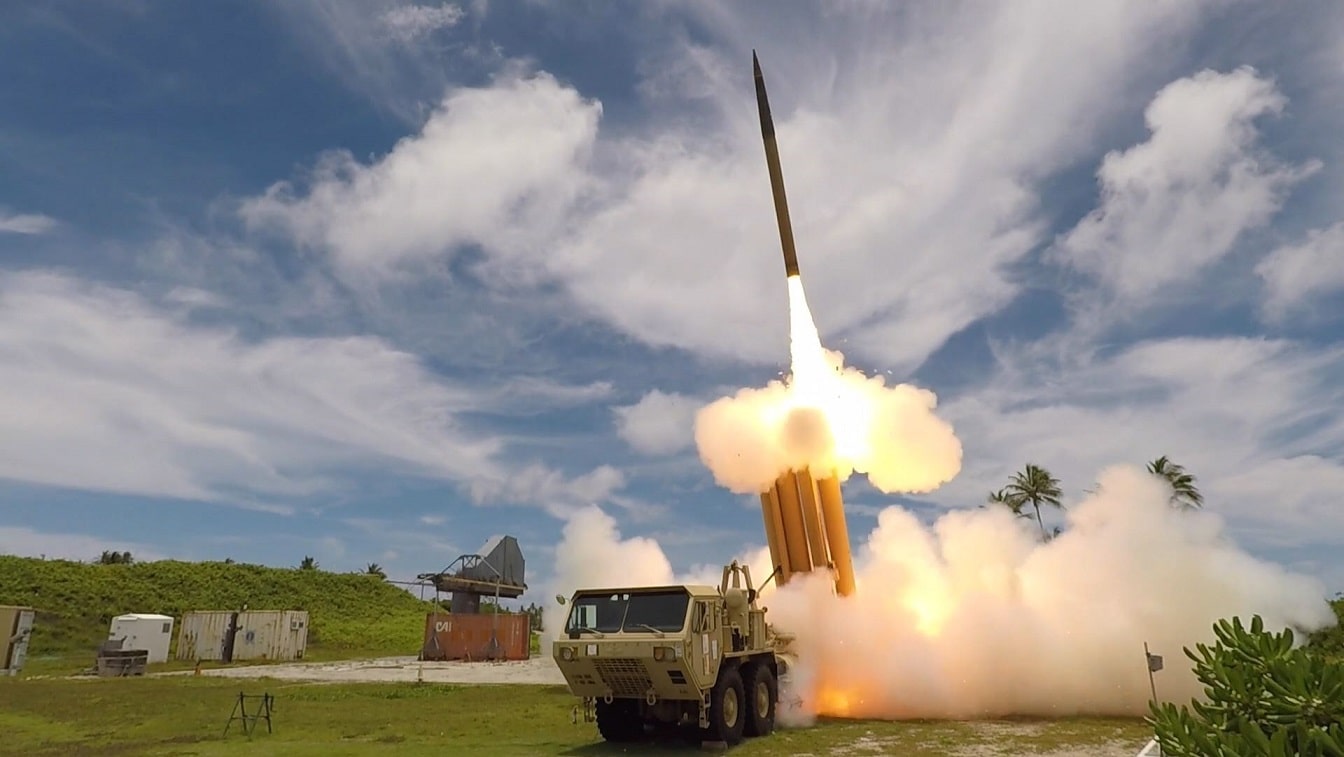
Militarily, the interception of a single missile does not mean that Saudi air defense has collapsed, nor does a successful alert mean that the threat has ended. Ballistic missiles and drones operate within a war of attrition aimed at exhausting radars, forcing defenders to activate expensive platforms, and disrupting airports and oil facilities even when no injuries occur. Field experience in the region indicates that air defense measures its success by the number of targets it prevents, but war also measures it by the number of hours a state can keep its economy, airports, and command centers operational.
The problem is further complicated because the Houthis do not present Riyadh with a traditional military target that can be destroyed in a single strike. Fighting is taking place in vast mountains and valleys, and Yemeni government-aligned forces announced on the same day that they repelled infiltration attempts in Marib, with clashes reported in Taiz, Lahij, Al-Jawf, and Al-Bayda. Reports indicate that 12 Houthi fighters and 13 Yemeni soldiers were killed in the recent rounds of fighting. This is not a single front, but a pressure network extending from the coast to the Saudi interior.
The Mecca Alliance Moves from Statement to Test
At this time, Turkish Foreign Minister Hakan Fidan stated that Saudi Arabia has military needs that may not be met, and that Ankara will consider ways to support the Kingdom within the framework of the trilateral defense agreement. The Mecca Agreement for mutual defense, signed by Saudi Arabia, Turkey, and Pakistan on August 7, stipulates that an armed attack on one of the three countries is treated as an attack on all. The arrangement was officially renamed on August 31 with the decision to establish a secretariat in Riyadh, but the current incident is the first real practical test of the solidarity clause.
Caution should be exercised in interpreting Fidan's statement as an announcement of Turkish troop deployment. The minister spoke about readiness to assist and about discussing needs, and did not announce a military operation or a joint force. Islamabad also stated that a military response is not currently under discussion, despite a Pakistani army spokesperson confirming that the country would defend Saudi Arabia "to any extent" when the time comes. The gap between political commitment and the ability to deploy is precisely what determines the value of any alliance.
An alliance that lacks unified leadership and clear rules of engagement remains a political promise until proven otherwise in the field.
What Turkey Can Actually Offer
Turkey possesses tools that Riyadh does not have with similar efficiency, particularly in the areas of drones, reconnaissance, electronic warfare, precision munitions, and operational experience accumulated in Syria, Iraq, and Libya. Ankara can assist Saudi Arabia in building an early warning and reconnaissance layer closer to the source of the threat, or in enhancing the capabilities of allied Yemeni forces to monitor infiltration routes. This assistance may be more realistic than sending large formations to Yemen.
However, transferring Turkish systems or personnel to a Saudi theater does not automatically solve the air defense problem. A missile approaching Riyadh requires a command and control network, integration between radar and interception platforms, joint training, and a stockpile of maintenance and munitions. Here lies the "capability triangle" that many Gulf purchases overlook: equipment, then training, then institution. Saudi Arabia can purchase advanced platforms, but it needs a clear decision on who leads air defense, how data is shared, and who is responsible for intercepting a target over a crowded city.
The Regional Message and Limits of Response
The Houthis want to prove that the war cannot be contained within Yemen, and that any Saudi involvement in the U.S.-Israeli war against Iran will make cities and oil facilities direct targets. Meanwhile, Riyadh is trying, according to Turkish statements, not to be drawn into the broader war. Therefore, responding with new bombings is not enough; a wide strike could reopen a ground front that Saudi Arabia does not want, and could give the Houthis a justification to expand attacks on ports and energy.
Regionally, the request for Turkish support sends a signal that Saudi Arabia is diversifying its security umbrella instead of relying solely on Washington. This is understandable after previous attacks on oil facilities, but it does not imply immediate military independence. Turkey itself needs to assess the risks of engagement with the Houthis and Iran, and Pakistan will balance its commitments to Saudi Arabia with its relationship with Tehran. The United States remains the one with the greatest capability for reconnaissance, interception, and deterrence, even as Gulf states attempt to declare their decision-making independence.
Conclusion
The attack on Riyadh demonstrated that the Mecca Alliance is no longer a distant diplomatic idea, but it has yet to prove itself as a combat force. The real test is not the number of aircraft or statements issued from Ankara and Islamabad, but the speed of establishing a joint command, securing information, protecting cities and facilities, and preventing the Houthis from turning every alert into an economic crisis. Turkey can fill some gaps, and Pakistan can provide political and military weight, but the contradiction remains: Saudi Arabia wants a regional umbrella that reduces its dependence on the United States, while the most sensitive elements of deterrence remain tied to American technology and logistics.
Sources: Al Jazeera, September 19, 2026; Reuters, September 19, 2026; AP News, September 20, 2026; BBC, September 19, 2026.
Houthi forces launched a ballistic missile towards Riyadh on September 19, 2026, which was intercepted by Saudi defenses. This incident marks the first air alert in the capital since July and is viewed as a significant operational and political message. The attack has implications for the Mecca Alliance, as Turkey considers military support for Saudi Arabia amid ongoing regional tensions.
- Houthi forces launched a ballistic missile towards Riyadh on September 19, 2026.
- Saudi Arabia intercepted the missile, with no confirmed casualties or damage reported.
- The incident marks the first air alert in Riyadh since July 2026.
- The attack is seen as a test of the Mecca Alliance and Turkey's role in Saudi security.
- 12 Houthi fighters and 13 Yemeni soldiers were reported killed in recent clashes.