
The Huangyan Island Sees Southern Theater Command Patrols Again on May 31, PLA Synchronizes Coast Guard and Navy Actions
 Li Minghui
South China Sea Patrol by Southern Theater Command Reappears at Scarborough Shoal on May 31, PLA Synchronizes Coast Guard and Navy Actions
[Beijing/Singapore News] On May 31, the Southern Theater Command announced once again that it would organize combat readiness patrols in the territorial waters and airspace around Scarborough Shoal. The news itself is brief, but what is truly interesting is the timing: from May 26 to 30, the U.S. and the Philippines conducted the sixth "Maritime Cooperative Activity" in the Philippine Exclusive Economic Zone, with the U.S. Coast Guard Legend-class cutter "Midgett" participating for the first time in this series of operations this year; shortly thereafter, the Chinese military and Coast Guard almost simultaneously announced patrols near Scarborough Shoal.
Coordinated Response Following Five Days of U.S.-Philippine Activities
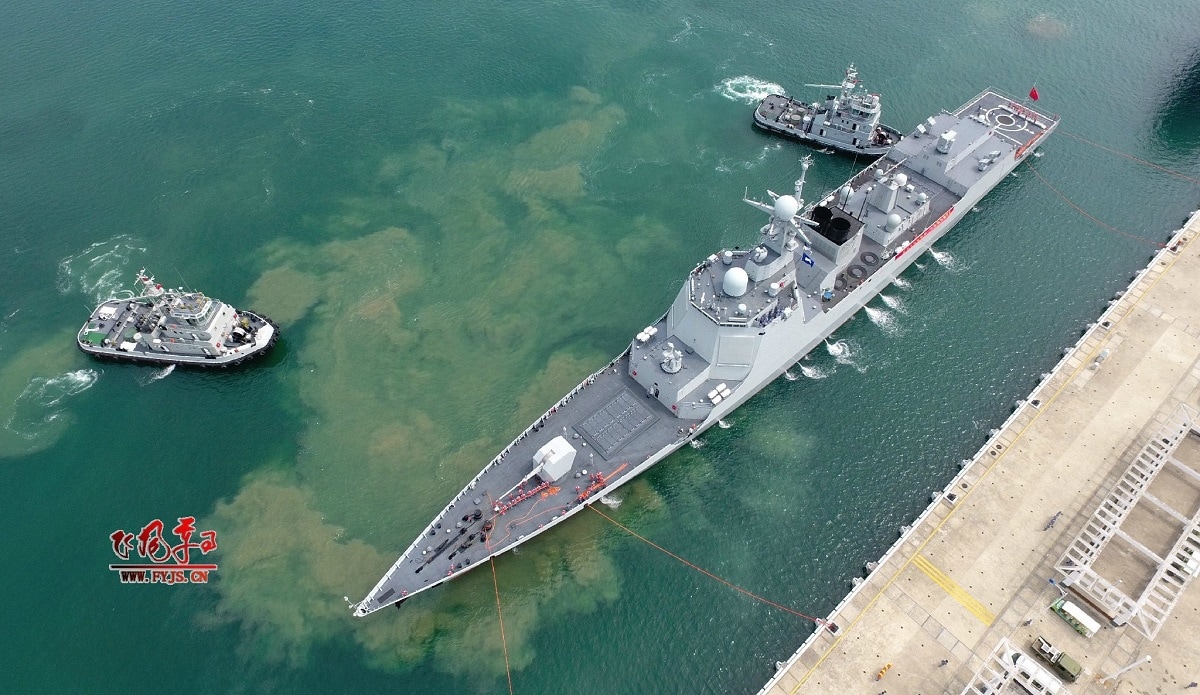
The U.S. Seventh Fleet's public statement noted that the U.S.-Philippine maritime cooperative activities took place from May 26 to 30, involving the U.S. Coast Guard cutter "Midgett," the Philippine Navy's "Antonio Luna" frigate, and the Philippine Coast Guard's "Melchora Aquino" patrol vessel, with training subjects including boarding inspections, maritime interception, search and rescue, and maritime law enforcement. According to USNI, based on maritime tracking data, the related activities occurred approximately 35 to 40 nautical miles from Scarborough Shoal. In other words, this was not a symbolic voyage far from disputed waters, but rather a tactical scenario that integrated Coast Guard law enforcement, Navy escort, and alliance demonstration.
The Southern Theater Command's response was not just a report from individual vessels. The China Daily cited a statement from the theater command indicating that the patrols were part of ongoing vigilance operations around Scarborough Shoal in recent weeks. Reuters added that the Southern Theater Command mentioned combat readiness patrols of naval and air forces, while the Chinese Coast Guard separately stated that it had legally dealt with so-called "illegal infringement" vessels this month. The key point here is not "how many ships were deployed," but rather that "naval and air forces" and "Coast Guard law enforcement" are being synchronized into a single rhythm.
What the Southern Theater Command is Doing
The public report did not specify the types of ships and aircraft involved, so it cannot be definitively stated. However, from a mission logic perspective, what is needed in the direction of Scarborough Shoal is not a single large vessel, but a three-tiered force: the first tier consists of Coast Guard vessels and maritime militia maintaining a continuous presence; the second tier includes destroyers, electronic reconnaissance, and land-based air forces providing outer circle support; the third tier is a theater-level intelligence link that integrates the judgment of opposing vessels, boarding boats, drones, and media exposure rhythms. In simple terms, while the front appears to be law enforcement vessels, the military system must be backing it up.
- Distance: Scarborough Shoal is about 120 nautical miles from Luzon, approximately 350 to 400 nautical miles from Hainan, closer to the Philippines, and further from China's supply lines.
- Opponent's Actions: The U.S. and the Philippines have conducted six maritime cooperative activities this year, with this being the first to include a large U.S. Coast Guard patrol vessel.
- China's Actions: The Southern Theater Command and the Chinese Coast Guard issued statements on the same day, indicating that military patrols and administrative law enforcement are merging.
The author believes this marks a new phase in the Scarborough Shoal issue. In the past, external observers often interpreted South China Sea frictions as "Coast Guard vessels confronting Coast Guard vessels," but with the entry of the U.S. Coast Guard, the technical threshold in the gray area has been raised. U.S. Coast Guard vessels possess stronger communication, situational awareness, and boarding training capabilities; they do not need to create excessive military signals like destroyers, yet they can integrate the Philippines' maritime law enforcement capabilities into the U.S. system. If China only responds with Coast Guard vessels, it may suffer losses in perception and public opinion; if it directly deploys large naval vessels, it risks being portrayed by the other side as a military escalation.
It's Not About the Number of Vessels, But Controlling the Rhythm
This explains why the Southern Theater Command chose the term "combat readiness patrol." It neither announced the scale of the exercises nor highlighted specific equipment, but rather incorporated the air and maritime areas around Scarborough Shoal into a repeatable theater action. For the PLA, this is more practical than a large-scale exercise. Scarborough Shoal lacks large airports and ports, making it unsuitable to replicate the model of the Spratly Islands; it resembles a maritime outpost that requires long-term guarding, testing rotation, resupply, intelligence integration, and rule application.
An easily overlooked detail is that in 2024, China has announced the baseline for the territorial sea around Scarborough Shoal, and in 2025, it will promote so-called natural reserve arrangements. The combination of military patrols, Coast Guard law enforcement, ecological management, and legal narratives forms a complete control chain. Looking at a single patrol may seem like just a routine verbal sparring; viewed in connection, Scarborough Shoal is transitioning from a "disputed point" to a fixed node on the Southern Theater Command's daily task list.
Shortcomings Are Also Clear
However, the author does not believe this indicates that China has achieved overwhelming advantages in the direction of Scarborough Shoal. The reason is simple: distance and international exposure do not favor China. The Philippines can package its actions as law enforcement cooperation within its Exclusive Economic Zone, while the U.S. can lower the threshold for military conflict with the Coast Guard, whereas each of China's maritime and aerial patrols must bear higher political explanation costs. A more realistic issue is that if the U.S. and the Philippines normalize the use of drones, unmanned surface vessels, and commercial satellites for surveillance in the future, the Southern Theater Command will need not just more ships, but faster data processing and more stable on-site command authorization.
The competition in the direction of Scarborough Shoal superficially appears as a few ships circling a reef, but at its core, it is about which can more quickly form a closed loop among Coast Guard, Navy, Air Force, and legal narratives.
What is truly worth watching next is whether the Southern Theater Command will make this combination of "Coast Guard advancing, Navy backing, and aerial surveillance" more specific in public disclosures. The less public information there is, the more it indicates that Beijing still wants to keep the gray area gray; the more types and scales are disclosed, the more it suggests that Scarborough Shoal may be entering a clearer stage of militarized management.
Main Sources
China Daily, U.S. Seventh Fleet, USNI News, GMA/Reuters, CNA.
On May 31, 2023, the Southern Theater Command of the People's Liberation Army and the China Coast Guard conducted patrols near Huangyan Island in response to recent US-Philippines maritime cooperation activities. This follows a series of joint exercises by the US Coast Guard and Philippine forces from May 26 to 30, indicating a strategic military response to perceived threats in the region.
- Chinese military and coast guard conducted patrols near Huangyan Island on May 31, 2023.
- This action followed US-Philippines maritime cooperation activities from May 26 to 30, 2023.
- The US Coast Guard participated in these activities with a large patrol vessel.
- The Southern Theater Command's patrols are part of ongoing vigilance around Huangyan Island.
- The report indicates a merging of military and law enforcement operations in the region.