
The investigation team points out that Point 5 of Shiela was abandoned in 2023, while the PLA was stationed there all year, and the Indian army patrolled for only seven months.
 Li Minghui
Indian Investigation Team Points to Shera 5 Point Abandonment in 2023, PLA Stationed Year-Round, Indian Army Patrolled Only Seven Months
On August 17, Al Jazeera published a lengthy article that brought the conclusions of the border investigation in Taksin, Arunachal Pradesh, to international attention. The report comes from a four-member fact-finding team of the Arunachal People's Party (PPA), led by former minister Benjiya, who visited Taksin, Maza, Galemo, and other areas on July 10. The core finding is not a "new conflict," but rather the "accumulation of old facts": the PLA is turning patrol routes and traditional grazing areas into established facts.
Shera 5: The Patrol Point Abandoned in 2023
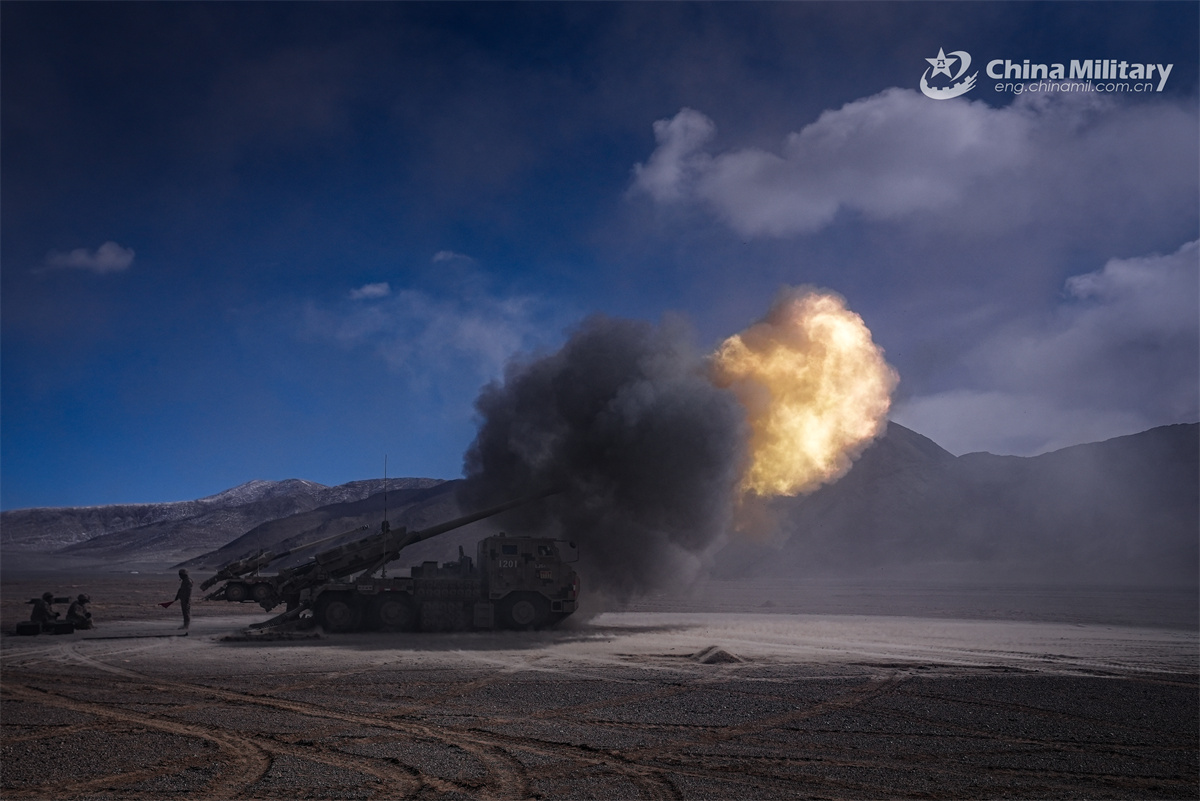
The most striking point is Shera 5 Point, designated by the Indian Army as a border patrol point. According to the investigation team, in 2023, the PLA and Arunachal scouts had a physical standoff here, after which the Indian Army withdrew and never returned; the PLA dismantled Indian markers and prevented Indian patrols from approaching. In simple terms, a patrol point was not "captured," but rather "let go"—after the withdrawal, there was no timely replenishment, and two or three years later, when they wanted to return, the route was already blocked. Another area is South Gapahar, the traditional hunting and yak grazing grounds of the Nah and Mara tribes, which are now designated as strictly prohibited zones for residents. The investigation team stated: "The invasion is meticulously calculated, gradual, and ongoing, a familiar pattern over the years."
The Gap Between Seven Months and Twelve Months
The report hits hard on the issue of the patrol window. The Indian Army's patrols in Taksin are concentrated from April to October—monsoon floods and heavy winter snow make it impossible to maintain regular patrols in the remaining months, while the PLA remains active year-round. In winter, the Indian Army no longer hires porters to transport supplies, "which clearly indicates that the Indian Army's presence in the area is very low."
This seasonal difference is not a gap in combat capability, but a gap in logistics and presence. The PLA's investment in roads, barracks, and stationed troops along the high-altitude border supports a "year-round presence"; the Indian Army relies on "only being there when the weather permits." Control of the disputed area is accumulated through this difference in presence.
The Infrastructure List Provided by the Report
- Accelerate the construction of the Nacho-Taksin border road under "wartime status"
- Prioritize the construction of the 68-kilometer road from Galemo to Pokola
- Complete the Taksin-Pokola road via Ayaga and Huli within a specified timeframe
- Build a helicopter pad at Xipi 2, and establish permanent camps at Xipi 4 and 6
- Provide stable electricity and communication for forward bases like Maza and Galemo
The list is more informative than the conclusions—it acknowledges that the infrastructure gap on the Indian side in Taksin is structural. The response to the temperature difference is intriguing: the Indian Army claims the report is "incorrect and baseless," while Foreign Ministry spokesperson Jaishwal left room for interpretation: "The border situation will reflect the overall state of bilateral relations."
The Temperature Difference Between Political and Military Rhetoric
The political context of the report cannot be overlooked. On the eve of the BRICS summit (September 12-13), the Modi government is being questioned by opposition parties about its "silence" towards China; Trump's trade war is simultaneously pressuring both New Delhi and Beijing. The Chinese Foreign Ministry, represented by Guo Jiakun, responded as usual that "the overall border situation is stable"—neither denying nor confirming.
I have two reservations about the report. First, the PPA is a regional party, and the report has political motives, so it cannot be read as military intelligence; second, the claim of "Shera 5 Point abandoned in 2023" currently relies only on the accounts of locals and the investigation team, while the Indian Army publicly denies it, and the evidence chain is not strong enough. However, details such as the patrol season gap, the cutoff of porters, and the gaps in electricity and communication align with previously disclosed information about the Indian side's infrastructure lag—this part has a high degree of credibility.
The real question is not how many meters the PLA advanced in Taksin this year, but rather: when the Indian Army's patrol window from April to October closes, who decides the winter situation in Taksin?
If the report can prompt New Delhi to turn "wartime status road construction" into a budget document, it will have fulfilled its mission; otherwise, at the same time next year, the stories of Shera 6 and 7 will repeat.
The Indian Army withdrew from the Shera 5 Point patrol point in 2023 following a confrontation with the PLA, which has since restricted access to the area. The PLA maintains a year-round presence, while Indian patrols are limited to the months of April to October due to weather constraints. The report indicates a significant infrastructure gap for the Indian Army in Taksin, reflecting a shift in control and military posture in the region.
- The Indian Army has not returned to the Shera 5 Point since its withdrawal in 2023.
- The PLA has transformed traditional grazing areas into restricted zones.
- Indian patrols are limited to April through October due to weather conditions, while the PLA maintains year-round activity.
- Infrastructure gaps for the Indian Army in Taksin are acknowledged as structural.
- The report highlights a significant difference in military presence and logistics between the Indian Army and the PLA.