
The Iranian army strikes Ahmed Al-Jaber base in Kuwait and Al-Minhad in the UAE with missiles and drones on the 189th day of the war.
 Ahmed Al-Rashid
The Iranian Army Strikes Ahmed Al-Jaber Base in Kuwait and Al-Minhad in the UAE with Missiles and Drones on Day 189 of the War
Before dawn on September 3, alarm sirens sounded in Kuwait as its air defenses responded to a combined attack with missiles and drones. The Iranian army — not just the Revolutionary Guard this time — announced that it struck the U.S. Ahmed Al-Jaber Air Base in Kuwait and the Al-Minhad Air Base in the UAE, in response to American strikes that targeted around a hundred Revolutionary Guard positions in southern and western Iran two days earlier, resulting in the deaths of 18 people according to the Iranian narrative. This is the first time in the February war that Iranian fire has directly reached the territories of two Gulf states hosting American forces, and the first time that Kuwaiti soil has been subjected to declared Iranian bombardment.
What Happened Exactly and What Each Side Confirms
The Iranian army's public relations stated that the bombardment targeted satellite communication systems, equipment warehouses, and fighter jet hangars at the Ahmed Al-Jaber base, and that it hit troop positions and radar systems at Al-Minhad. The statement described the two bases as they truly are: Ahmed Al-Jaber is a logistical and primary support center for American air operations and reconnaissance in West Asia, while Al-Minhad is one of the most important logistical support and air transport centers for foreign forces in the Gulf.
In contrast, the Kuwaiti Ministry of Defense announced in a post on platform X that its air defenses intercepted missile and drone attacks, describing them as "blatant Iranian aggression," while Kuwaiti authorities reported damage to a residential building in Kuwait as a result of a drone attack. An American defense official — according to reports — denied that the two bases sustained any significant damage. Any military personnel who has served in the region knows that "interception" does not necessarily mean "zero casualties," and that Washington's denial of damage serves a political purpose that is no less important than the battlefield reality. We are faced with three parallel narratives: Tehran's narrative, which wants to prove its ability to reach, Washington's narrative, which wants to show that its shield has not been breached, and Kuwait's narrative, which wants to tell its people that it is under attack, not that it is a party in the war.
Why Kuwait and the UAE Now? A Message to the "Host Countries"
Just days ago, Tehran warned any country cooperating with American forces that it would bear the serious consequences of its cooperation. Kuwait and the UAE were neither the closest nor the easiest targets, but they were the clearest message: there is no "neutral" background in this war. Tehran is loudly telling every Gulf capital hosting American bases: your hosting of the American military makes your land a battlefield, even if you do not contribute your forces.
This strikes at the heart of the Gulf hosting contract that has been built over three decades: American bases on my land protect me from Iran, in exchange for staying out of the retaliation calculations. What the strikes on September 3 revealed is that this contract has flipped: the base that was considered a protective umbrella has become a target, and the host country pays the price for its geographical location, not for its military choices. Kuwait, which has been the most cautious in recent months to avoid escalation language, found alarm sirens ringing in the sky of the capital, and found Tehran naming it in its official statements.
Practically: Targeting the Tail, Not the Head
The choice of the two targets is not random. Ahmed Al-Jaber and Al-Minhad are not major forward strike bases, but rather logistical and air transport hubs. Iran is here conducting a supply war, not a destruction war: it is striking the vessels through which American fuel, munitions, and supplies pass in the Gulf. This is a logical extension of the February 28 strike that hit the American naval supply center in Bahrain on the first day of the war, forcing the American fleet to refuel at sea every five or six days from Diego Garcia, 2,200 miles away.
The result is that the American fleet in the region — about twenty ships and twenty thousand soldiers and sailors — operates with a strained supply chain, while supply convoys move through narrow corridors that Iran can monitor. When you add to that the fact that more than 86 commercial ships have changed their course due to the maritime blockade, and that shipping traffic in Hormuz is still far below pre-war levels despite repeated claims from the White House about opening the strait, the picture becomes clear: Iran is not trying to win a decisive battle against American forces, but is trying to make the continued American military presence costly to an unbearable degree, and to send a message to Washington's allies that the price of the alliance is paid on their own land.
The Paradox of Air Defense and Silent Attrition
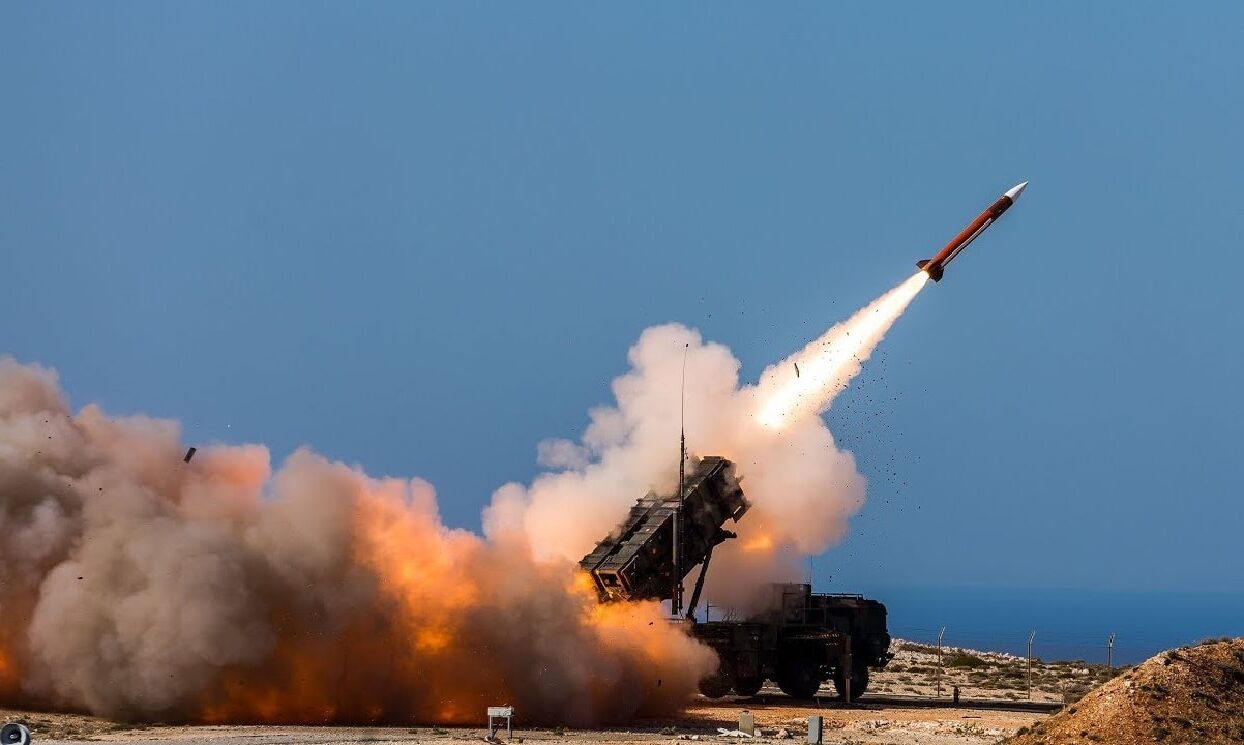
Here lies the deeper Gulf paradox. Kuwait, the UAE, Bahrain, and Jordan possess Patriot and THAAD batteries that intercepted part of the attacks, but CSIS estimates indicate that the American stockpile of Patriot interceptors has dropped from about 2,330 missiles at the beginning of the war to between 759 and 827 missiles only. This means that the shields purchased by Gulf states for billions of dollars are now being depleted in defense of an American presence through which Washington is waging its war, and replenishing these stockpiles will take years at best. The more dangerous revelation from recent weeks is that Tehran is launching medium-range missiles like Kheibar Shekan, which are much cheaper to produce than the American interceptors launched to intercept them, and confirms that it has continued production throughout the war. Practically: when interceptors are depleted in someone else's war, what remains to protect Gulf cities if the war expands?
The Gulf states have purchased more air defense systems than any region in the world, but they discovered on day 189 that the system protecting them from missiles does not protect them from geography, nor from the price of their location in a equation they were not a party to creating.
The War of Narratives is Part of the War Itself
What distinguishes this episode is that Tehran announced the bombardment in the name of the regular army, not the Revolutionary Guard, as if to say that the response has become a state policy, not a factional policy. In contrast, the American denial came quickly and decisively, as any acknowledgment of damage to a base on Kuwaiti or Emirati soil would open a political file that Washington does not want with its allies. Meanwhile, the Israelis read the scene from another angle: their Defense Minister Katz warned that economic pressures could push Tehran to "desperate steps," and reiterated his threat to strike all Iranian infrastructure if Israel is attacked. Each side builds its narrative on the ruins of the event itself, and the Kuwaitis are asking the question that hangs in the air: Is our land a front line now?
Conclusion: No Neutrality for the Host
The dilemma facing Gulf states today is not military but structural. All three of their options are painful: either the American bases remain, making their land a target for Iranian missiles, or they ask Washington to reduce its presence, losing the umbrella on which they have built their security since 1991, or they try to mediate between the two sides, only to discover that no one in this war is listening. The harshest truth is that the Gulf cannot return to what it was before February 28, nor can it move forward in the same old contract. Hosting the superpower was security yesterday, and has become on day 189 of this war an invitation to bombardment — and this contradiction cannot be resolved by an additional Patriot battery or a new arms deal.
The Iranian military struck the Ahmad Al-Jaber Air Base in Kuwait and the Al-Minhad Air Base in the UAE on September 3, 2023, in retaliation for recent U.S. strikes. The attacks involved missiles and drones, with Kuwaiti air defenses intercepting some of the incoming threats. This incident marks a significant escalation, as it is the first direct Iranian attack on Gulf states hosting U.S. forces during the ongoing conflict.
- Iranian military launched strikes on Ahmad Al-Jaber Air Base in Kuwait and Al-Minhad Air Base in the UAE.
- The strikes were in retaliation for U.S. attacks on Iranian Revolutionary Guard targets.
- Kuwaiti air defenses intercepted some of the attacks, but there were reported damages.
- This marks the first direct Iranian attack on Gulf states hosting U.S. forces during the conflict.
- Iran aims to disrupt U.S. supply lines in the region.