
The "Iskra" Factory in Ulyanovsk Attacked by Drones — X-59 Production in Russia Vulnerable in 2026
 Dmitri Volkov
The "Iskra" Plant in Ulyanovsk Attacked by Drones — Production of Kh-59 in Russia Vulnerable in 2026
A strike on a single plant does not halt the state's missile program, but it forces a reassessment of its actual resilience. On the morning of September 25, Ukrainian drones attacked the scientific and production enterprise "Iskra" in Ulyanovsk, which is part of the Almaz-Antey concern (according to Militarnyi, September 25, 2026). The Ukrainian General Staff simultaneously reported the destruction of three enterprises of the Russian defense industry and two oil refineries. The scale of the statement still requires independent verification, but the choice of target appears logical: it is not a symbolic object, but an electronic link in the missile and air defense chain.
Why "Iskra" is More Important Than It Seems
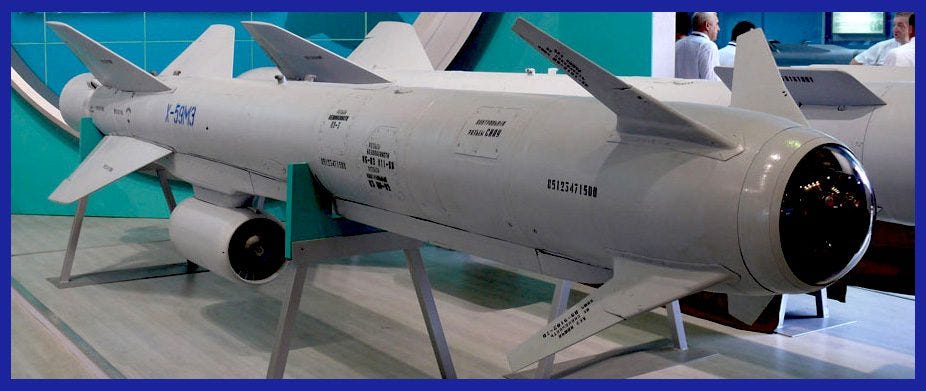
The public description of the enterprise indicates a full cycle of semiconductor device production — from development and design to serial production. The nomenclature includes transistors, Schottky diodes, optocouplers, IGBT modules, and microwave modules. This is not a finished missile or a launch system, which is important for assessing the consequences. However, the modern Kh-59 missile, like the Pantsir-S1 system, depends on many small electronic components that cannot be replaced by a standard warehouse purchase without re-qualification, testing, and reliability control.
It is here that the difference between physical destruction of the workshop and disruption of the production rhythm becomes apparent. Even if the damage is limited to part of the buildings or technological equipment, the enterprise may face a shortage of clean rooms, machines, tooling, and specialists. The Russian military industry can redistribute orders among enterprises, but it cannot instantly create a second full cycle of microelectronics production. Sanctions exacerbate the problem: imported machines and materials can be replaced through parallel imports, but this increases lead times, production costs, and the likelihood of defects.
From Tactical Strikes to a Campaign Against Supply Chains
In recent months, Ukrainian strikes have increasingly targeted not only warehouses and oil depots but also bottlenecks in Russian military production. Reports of the destruction of three enterprises related to missile manufacturing should be viewed in this context. The goal is not a maximum explosion in one place, but the accumulation of delays at several stages — electronics production, casing manufacturing, assembly, testing, and delivery to the troops.
This approach resembles the Soviet logic of mobilization planning, but acts against it. The USSR built its defense industry with redundancy and territorial duplication, based on the inevitability of a large war. The Russian model after 1991 took a different path: many enterprises retained unique specializations, while real reserve capacities were reduced. In peacetime, this increases efficiency. In wartime, a drone that reaches one specialized plant can create an effect disproportionate to the cost of the device itself.
Kh-59 and Pantsir-S1 as a Test of Import Substitution
The connection of "Iskra" with military products does not mean that every component produced by the plant is installed specifically in the Kh-59 or in the Pantsir-S1. Such conclusions require factory documentation, which is not publicly available. However, reports from Militarnyi and UNITED24 Media indicate the use of the plant's products in Russian missile and air defense technology. Therefore, it is more accurate to speak of a potential limitation of the production chain, rather than an immediate halt of a specific model.
For the Kh-59, this is particularly sensitive. The missile is a complex system with inertial navigation, correction, onboard electronics, and various types of warheads. Its value to the Russian army lies in the ability to strike distant targets without exposing the carrier aircraft directly to Ukrainian air defense. If the production of individual electronic units slows down, Moscow can compensate for this with stockpiles and alternative suppliers, but the cost of each launch will increase, and the rate of application will decrease.
What This Means for Russian Strategy
The first conclusion is that Russian air defense cannot guarantee protection for all defense industry facilities simultaneously. Almaz-Antey produces and services systems designed to secure the skies, but the industrial base itself remains distributed over a vast territory. Protecting Ulyanovsk, Samara, Perm, Moscow, and border areas requires a large number of calculations, radars, and munitions. Each new defense object reduces the density of coverage in another direction.
The second conclusion is that strikes on industry raise the political cost of war within Russia. Damage to oil refining quickly affects logistics and regional budgets, while an attack on a dual-use enterprise destroys the official picture of "war somewhere far away." The Kremlin can declare any such episode as evidence of terrorism against civilian infrastructure, but for military planning, another aspect is more important: resources must be spent on rear security, camouflage, and dispersal of production instead of weapon production.
The third conclusion is that Moscow is likely to respond not by abandoning the missile campaign, but by temporarily intensifying it. Russia may use accumulated munitions, transfer some orders to adjacent plants, and increase pressure on suppliers from third countries. This will create the impression that the strike did not yield results. However, the margin of safety is measured not by a single salvo, but by the ability to reproduce it in a month and in six months.
The strike on "Iskra" does not prove the collapse of the Russian defense industry. It reveals a more unpleasant truth for Moscow — the resilience of the missile program depends on a small number of specialized productions that can no longer be considered untouchable.
Forecast
In the coming weeks, Russia will retain the ability to use the Kh-59 and other missiles, as accumulated stockpiles and parallel supply channels do not disappear after a single attack. However, if Ukrainian forces continue to strike enterprises sequentially rather than episodically, the effect will manifest in repair times, availability of electronics, and the cost of each combat application. The Russian defense industry will not collapse, but it will begin to pay for centralization and incomplete import substitution — first with delays, then with technological simplification. War has a strange accounting: the bill for one drone is not charged to the workshop, but to the entire system.
Ukrainian drones attacked the Iskra plant in Ulyanovsk on September 25, 2026, impacting the production of X-59 missiles. This strike is part of a strategy to disrupt Russian military production capabilities, particularly in electronics and missile systems. The attack highlights vulnerabilities in Russia's defense industry and its reliance on specialized manufacturing.
- Ukrainian drones attacked the Iskra plant in Ulyanovsk on September 25, 2026.
- The attack affects the production of X-59 missiles in Russia.
- The strike is part of a broader strategy targeting Russian military production facilities.