
The Islamic State strikes JNIM in Pétel Kolé — 35 dead and a new front in Niger
 Marie Dubois
The Islamic State Strikes JNIM in Pétel Kolé — 35 Dead and a New Front in Niger
In Pétel Kolé, in the Nigerien region of Tillabéri, the Sahelian war has just escalated. According to an article published on May 30 by El País, fighters from the Islamic State Province in the Sahel (ISSP) attacked a base of the Group for Support of Islam and Muslims (JNIM, affiliated with Al-Qaeda) near the Burkinabe border in early April. The ISSP claims to have killed 35 rival fighters and seized weapons as well as motorcycles.
This figure comes from a statement by the organization itself. It should therefore be treated as a claim, not as a confirmed toll. But the location is almost as important as the number. Until now, direct confrontations between the two jihadist franchises had mostly been localized in Mali and Burkina Faso. Their open entry into Niger signals that the Three Borders theater is no longer just a transit zone. It is now a contact line between two competing armed power projects.
A Dusty Crossroads Becomes a Military Objective
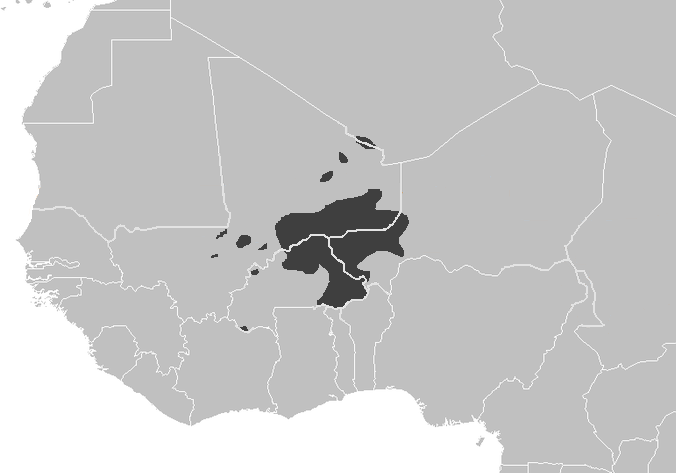
Pétel Kolé is not a name found in diplomatic statements. It is a border point, on the Téra-Dori axis, at the junction of paths used by traders, herders, smugglers, and armed motorcycle columns. On the ground, this type of locality is worth more than an administrative post. Whoever controls the surroundings can observe movements between southwestern Niger and northern Burkina Faso, tax certain flows, prohibit other passages, and create retreat routes towards Liptako-Gourma.
The attack attributed to the ISSP should therefore be read as an act of predation as much as an ideological message. The seized motorcycles are not a detail. In this area, a reliable motorcycle is sometimes worth more than a pickup immobilized due to lack of fuel. It allows crossing dry riverbeds, avoiding monitored routes, and dispersing a katiba into small groups after a raid. When a group takes 20 or 30 motorcycles from a rival, it is not just recovering equipment. It is reducing their immediate mobility.
This is precisely what makes the episode dangerous for Niamey. Nigerien forces may consider that two enemy groups fighting weaken each other. In the short term, this is sometimes true. But from experience, these internal wars do not pacify an area. They saturate it with checkpoints, reprisals, and forced displacements. Civilians are compelled to prove to each side that they have not aided the other.
Two Methods of Insurrection
The JNIM-ISSP rivalry is not just a dispute over black flags. It opposes two ways of holding territory. The JNIM, led by Iyad Ag Ghali and structured around local figures like Amadou Kouffa, knows how to negotiate. It imposes sharia, taxes, and coercion, but sometimes allows a margin for negotiation with village chiefs, transporters, or certain religious notables. This pragmatism is not moderate. It is operational.
The Islamic State in the Sahel, on the other hand, more often seeks a brutal rupture. Accounts accumulated from Ménaka, eastern Burkina Faso, and certain border areas describe a more vertical discipline, more immediate punitive violence, and a more explicit hostility towards local arrangements. El País cites researcher David Doukhan, who interprets these confrontations as the regional expression of a global competition for jihadist authority. This is accurate, but incomplete if one forgets geography. In the Sahel, a doctrinal dispute becomes real only when it controls a well, a road, or a weekly market.
The Council on Foreign Relations reminds us in its May update that the JNIM, ISGS/ISSP, and ISWAP groups exploit the void left by the collapse of international counter-terrorism mechanisms. This void is not abstract. It is measured by the absence of permanent aerial intelligence, the closure of forward bases, the weakness of community networks, and the inability of national armies to simultaneously hold axes, villages, and borders.
JNIM Under Pressure Despite Its Offensive in Mali
The paradox is that the JNIM appears strong and vulnerable at the same time. In April, it demonstrated a spectacular capacity for coordination in Mali by striking several cities with the support or synchronization of Tuareg rebels from the Azawad Liberation Front. This offensive killed, among others, the Malian Minister of Defense Sadio Camara. Chatham House rightly noted that these attacks showed the limits of a purely military response, even when Bamako has Russian partners and a very hard sovereignty rhetoric.
But an organization that blocks fuel convoys to Bamako, negotiates with Tuareg networks, administers rural areas in central Mali, and fights the Islamic State in Burkina Faso is mechanically stretching itself. The same leaders cannot be everywhere. The same ammunition stocks cannot either. On a staff map, the JNIM gives the impression of advancing. On the ground, it must always choose where to place its most reliable men.
The ISSP exploits this constraint. By striking near Pétel Kolé, it tests the depth of the opposing forces at a time when the JNIM is concentrating its main effort against Bamako and the Malian state. The objective is not necessarily to permanently take the area. It may be enough to show recruits, traffickers, and local communities that the Islamic State can still punish Al-Qaeda where it thought it was established.
Niamey Facing a War Within a War
For Niger, the danger is not only security-related. It is political. The junta has built part of its legitimacy on the promise to regain the initiative after the departure of French forces and the reduction of Western cooperation. However, the emergence of a direct JNIM-ISSP confrontation on its soil proves that armed groups see the Nigerien border as an opportunity, not as a barrier.
The SAIIA report published in May on the expansion of the Islamic State in Africa emphasizes that the Sahelian franchise has rebuilt its depth after the death of Abu Walid al-Sahraoui in 2021. This is an important lesson. Sahelian armies and foreign partners have often overestimated the strategic effect of targeted eliminations. Killing a leader disrupts a chain of command. It does not destroy a system of taxation, recruitment, and mobility if the roads remain open.
The CSIS, in its global assessment of the terrorist threat in May 2026, also emphasizes the adaptation of jihadist franchises and their ability to exploit areas of weak governance. In Liptako-Gourma, this adaptation is seen in how groups combine base attacks, targeted assassinations, rural taxation, and local propaganda. The battle of Pétel Kolé fits into this logic. It is not an isolated incident, but a tactical adjustment in a broader competition.
What to Watch for Now
Three signals will matter in the coming weeks. The first is the JNIM's reaction. If it responds with reprisals in Niger or northeastern Burkina Faso, the internal conflict will settle into a broader arc than expected. The second is the behavior of border communities. If villages begin to pay two competing taxes, this will indicate a fragmentation of jihadist control and increased pressure on civilians. The third is Niamey's ability to reopen or secure routes without collectively punishing the Peul, Tuareg, or Songhai populations wrongfully suspected of complicity.
The temptation will be strong, in Niamey as in Ouagadougou, to turn this rivalry into a communication opportunity. This would be a mistake. When two jihadist groups dispute an area, they also recruit to replace losses, extort to finance the campaign, and terrorize to prevent neutrality. The war within a war does not automatically diminish the threat. It makes it less readable.
On the ground, the next weak point is probably not Pétel Kolé itself, but the secondary paths between Téra, Sebba, and Dori. This is where civilian convoys, short patrols, and motorcycle groups cross without sustainable control. If the ISSP maintains pressure there, Niger will discover that its western border is no longer just exposed to raids from Mali or Burkina Faso. It is becoming an autonomous battlefield between Al-Qaeda and the Islamic State.
The Islamic State of the Sahel Province (ISSP) attacked a base of the Group for Support of Islam and Muslims (JNIM) near Petel Kole, Niger, in early April, claiming to have killed 35 fighters. This incident marks a significant escalation in the Sahel conflict, as it opens a new front in Niger and indicates a shift in the dynamics between jihadist groups in the region. The ISSP also seized weapons and motorcycles from JNIM, further complicating the security situation for the Nigerien government.
- ISSP attacked JNIM near Petel Kole, Niger, killing 35 fighters according to ISSP's claim.
- The attack marks a significant escalation in the Sahel conflict, opening a new front in Niger.
- ISSP seized weapons and motorcycles from JNIM during the attack.
- The conflict between ISSP and JNIM reflects a broader struggle for jihadist authority in the region.
- The situation poses both security and political risks for the Nigerien government.