
The Japan Ground Self-Defense Force's 8th Anti-Ship Missile Regiment to Conduct Anti-Ship Training with the U.S. Army at RIMPAC 2026
 Tanaka Takashi
The 8th Anti-Ship Missile Regiment of the Ground Self-Defense Force to Conduct Anti-Ship Training with the U.S. Army at RIMPAC 2026
The name of the Pacific Missile Test Center on Kaho'olawe Island resonates somewhat uniquely with those from the Maritime Self-Defense Force. On June 23, the Ground Staff Office announced that the Japan-U.S. joint anti-ship combat training for fiscal year 2023 will be conducted from July 7 to 12 as part of RIMPAC 2026. Participating will be the 8th Anti-Ship Missile Regiment of the 2nd Artillery Group of the Japan Ground Self-Defense Force and the 1st Battalion, 623rd Field Artillery Regiment of the Kentucky Army National Guard. This is not merely an overseas shooting training. The significance of this event lies in the demonstration of Japan's anti-ship capabilities in conjunction with the Maritime Self-Defense Force during a multinational maritime exercise hosted by the U.S. Navy.
Outline of the Training as Indicated by the Official Announcement
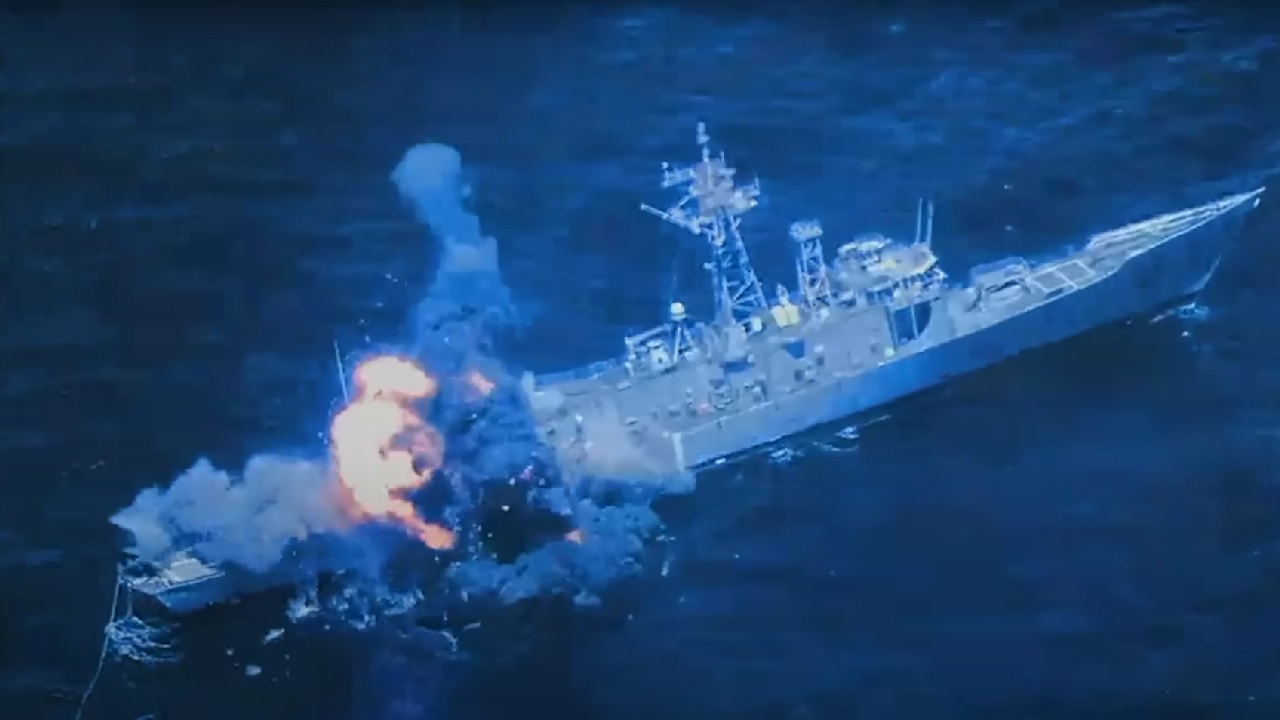
According to the announcement from the Ground Staff Office, the objective is to utilize the U.S. training infrastructure to practice joint anti-ship combat with the U.S. and the Maritime Self-Defense Force. While the goals listed include improving operational capabilities, strengthening cooperation with the Maritime Self-Defense Force, and enhancing interoperability with U.S. forces, I am particularly focused on the order of these priorities. The essence lies not in the shooting skills of the Ground Self-Defense Force alone, but in integrating the detection, identification, target allocation, and post-shooting evaluation of maritime targets within the information and communication systems of the Maritime Self-Defense Force and the U.S. military.
The DVIDS announcement for RIMPAC 2026 states that the 30th iteration of the exercise will commence with an opening ceremony on June 24, involving over 30 countries, more than 30 surface ships, 5 submarines, ground forces from 15 countries, over 206 aircraft, and approximately 30,000 personnel training around Hawaii until July 31. The exercise aims to ensure maritime traffic safety and regional stability, which aligns with the participation of the Ground Self-Defense Force's anti-ship capabilities.
Positioning of the 8th Anti-Ship Missile Regiment
The 8th Anti-Ship Missile Regiment is a unit responsible for anti-ship capabilities within the Western Army, and it is an indispensable entity when considering the defense of the southwestern islands. As the development of the Type 12 Surface-to-Ship Guided Missile Enhanced Capability and high-speed glide missiles for island defense progresses, this training signifies a transition from "what to possess" to "whose eyes to shoot from."
The most challenging aspect of anti-ship combat is not the numbers of range itself. It is the ability to distinguish moving vessels from friendly ships, civilian vessels, and neutral country vessels, and to make shooting decisions within a politically acceptable timeframe. In a multilateral environment like RIMPAC, discrepancies in communication procedures and engagement management can easily be exposed. The decision to include the 8th Anti-Ship Missile Regiment may seem modest as peacetime training, but it is quite realistic in terms of actual combat.
Reasons for Focusing on Cooperation with the Maritime Self-Defense Force
The Ground Staff Office's explicit mention of "strengthening cooperation with the Maritime Self-Defense Force" is noteworthy. The Maritime Self-Defense Force's escort ships and patrol aircraft are powerful means of obtaining enemy vessel location information, while the Ground Self-Defense Force's anti-ship units restrict maritime areas from the islands. If both operate separately, there may be firepower, but shooting opportunities will be limited. Conversely, if information obtained by the Maritime Self-Defense Force can be quickly relayed to the Ground Self-Defense Force's firepower, the areas accessible to the opposing fleet will become narrower.
This differs from the defense of the Soya, Tsugaru, and Tsushima straits during the Cold War. The current focus is not just on fixed straits but on the vast maritime areas extending from the southwestern islands to the east of Taiwan and the Bashi Channel. The idea of controlling the sea solely with a fleet is insufficient. The speed of integrating land-based firepower, air support, submarines, unmanned aerial vehicles, and space/cyber information is being tested.
Deterrent Message to the Chinese Navy
In recent years, the Chinese Navy has normalized its deployment to the Pacific through the waters south of Okinawa, the Osumi Strait, and the Miyako Strait. If we separate capability from intent, the intent can politically change, but the capability for open-ocean deployment has already been built up. The fact that Japan will conduct anti-ship combat training at RIMPAC is not merely about shooting proficiency; it signals that the U.S. and Japan maintain options for maritime denial even outside the first island chain.
However, this signal is not simply about being strong. The operation of anti-ship firepower deters the opponent's naval actions, but in times of crisis, it can lead to an early competition for target acquisition. Unless we refine the survivability of the anti-ship units, their post-launch mobility, resupply, camouflage, and delegation of authority during communication disruptions, long-range capabilities will not provide the reassurance they appear to offer.
Remaining Challenges Are Not Political but Operational Density
The key point to confirm in this training is not how many shots are fired. It is about how far the U.S. Army National Guard, the Ground Self-Defense Force, and the Maritime Self-Defense Force can share the same maritime situation map while maintaining different command structures. The large scale of RIMPAC 2026 may seem attractive, but in larger exercises, actual small delays become less visible.
In my view, the deployment of the 8th Anti-Ship Missile Regiment to Hawaii is a more practical event than the theory of Japan's retaliatory capabilities. The true challenge lies not in the range of missiles but in how quickly a single target information obtained by the Maritime Self-Defense Force can be converted into a launch decision by the Ground Self-Defense Force. As long as that few minutes do not shorten, the firepower for the defense of the southwestern islands will appear strong on the map but will not yet be sufficiently sharp at sea.
The Japan Ground Self-Defense Force 8th Anti-Ship Missile Regiment will conduct joint anti-ship training with the US Army's 1st Battalion 623rd Field Artillery Regiment in Hawaii from July 7 to 12, 2026, as part of RIMPAC 2026. This exercise aims to improve operational capabilities and interoperability between the Japanese and US forces, involving advanced anti-ship missile systems and coordination with naval assets.
- Japan Ground Self-Defense Force 8th Anti-Ship Missile Regiment will participate in RIMPAC 2026 with US Army.
- Training will occur from July 7 to 12, 2026.
- The exercise aims to enhance interoperability and operational capabilities between Japan and the US.
- The training will take place at the Pacific Missile Test Center in Hawaii.
- The exercise involves over 30 countries and various military assets.