
The JNIM and the FLA free 82 Malian soldiers — Algeria as mediator cracks Bamako's narrative
 Marie Dubois
The JNIM and the FLA free 82 Malian soldiers — Algerian mediator cracks Bamako's narrative
Bamako, August 13. On national television, the general staff of the armed forces announces the release of 82 soldiers held by the JNIM/FLA coalition. A few hours later, Maouloud El Ramadane, spokesperson for the Front for the Liberation of Azawad, confirms: “a strictly humanitarian gesture.” Between the two versions, a gap that speaks volumes about the real state of this war.
Some of these soldiers had been prisoners since April 25, the day the FLA took Kidal and the JNIM struck the Bamako airport, the Kati garrison, and several cities in the North and Center. Others, the FLA specifies, had been held since 2023, captured during attacks on Malian army bases. The army only refers to April 25. The detail is not trivial: the two camps do not even agree on the timeline of their own battles.
The official narrative, a “planned” operation
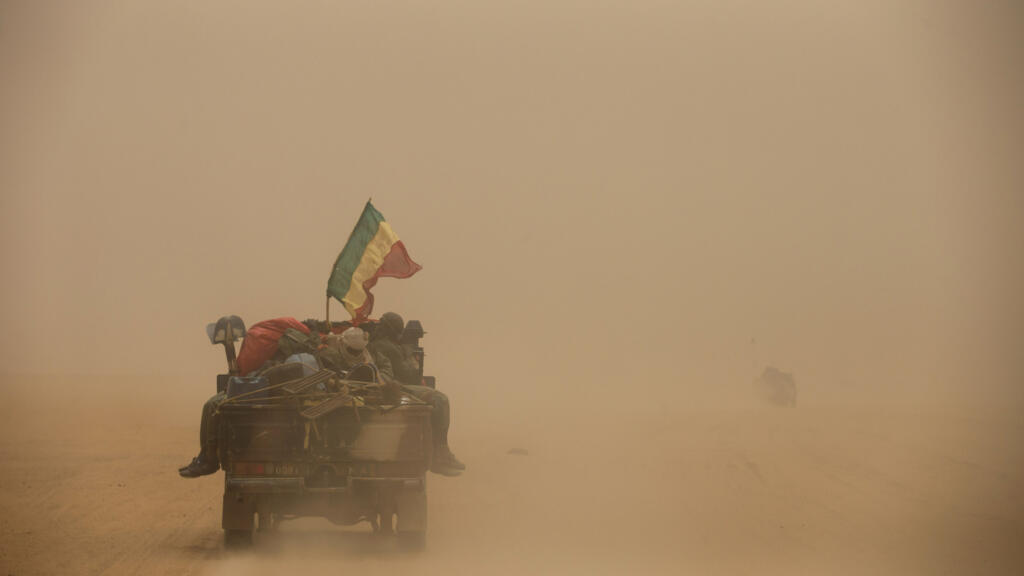
“This release is the culmination of a process initiated from the moment of their capture,” asserts the general staff. No details on the means: neither military operation, nor exchange, nor negotiation. The ambiguity is calculated. Admitting to a negotiation with groups labeled as “terrorists” would ruin three years of official communication about the reconquest.
Security sources, however, speak of “negotiations and concessions between the two camps.” And a source from the Malian Ministry of Foreign Affairs cited by AFP identifies the intermediary: Algiers. The discreet yet central Algerian mediation is the real new development in this affair.
April 25, the defeat that changed everything
To understand the significance of this release, one must return to April 25. On that day, JNIM and FLA launched coordinated attacks on several sites simultaneously: Bamako airport, Kati base, Bourem, Gao, Mopti-Sévaré, Kidal, Ménaka. Defense Minister Sadio Camara was killed by a car bomb outside his residence near Kati. Authorities counted over 200 dead; the FLA claimed the capture of Kidal and more than 200 prisoners; a Mi-35 from the Russian Africa Corps went down with its crew.
This was the collapse of the junta's narrative: that of an army, freed from the French and Blue Helmets, supported by Moscow, that would pacify the country. Four months later, the same coalition attacked army positions again on July 4. On July 20, the JNIM executed captured soldiers, according to RFI. On August 9, a camp in San, in the center, was attacked in turn.
Algiers, the mediator that Moscow does not replace
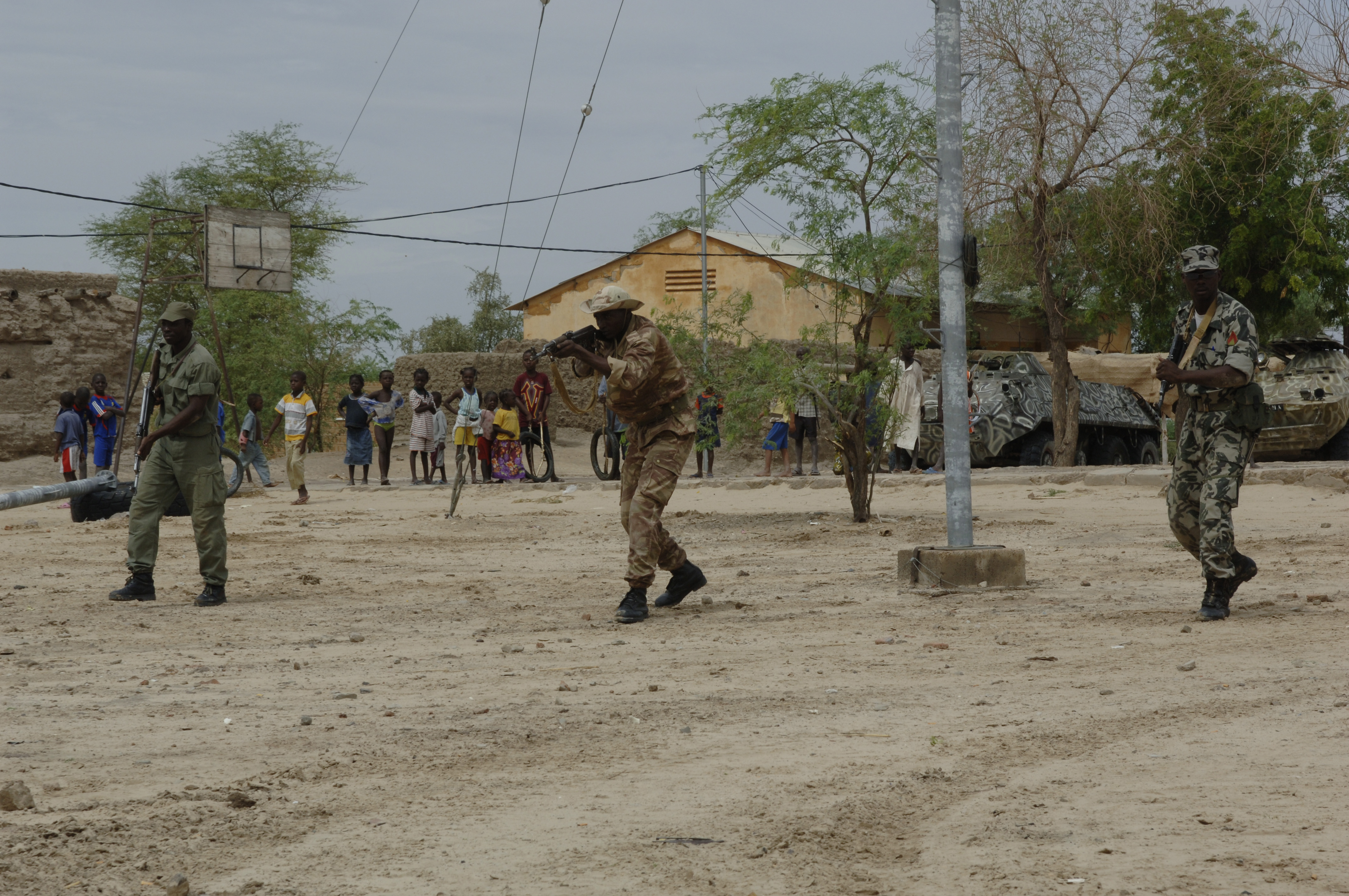
That Bamako accepts Algerian mediation is a major geopolitical signal. Since the coups d'état of 2020 and 2021, the junta has expelled around 15,000 French and UN soldiers, severed ties with Paris, and entrusted its defense to the Africa Corps. However, on the hostage issue — the most politically sensitive — it turned to Algiers, not Moscow. The Russians provide helicopters and airstrikes; they do not replace a diplomatic channel that geography, language, and thirty years of Sahelian mediation have built for Algeria.
Algiers' calculation is clear: to regain control over a dossier where it had been marginalized by the AES-Moscow axis. From experience, on the ground, whoever controls the hostage channel controls the tempo of the overall negotiation.
118 hostages — the war has not changed in nature
One must remain measured. The spokesperson for the FLA said it himself: about 118 Malian soldiers remain detained. The release of 82 men is a breach, not peace. The JNIM still holds military personnel and executed some this summer. Kidal remains in the hands of the FLA. The coalition continues to strike, as on July 4 against army positions.
This “humanitarian” gesture serves both camps. For the FLA, it politicizes its struggle: positioning itself as a responsible interlocutor against a junta that accuses it of terrorism. For Bamako, it allows for a media victory — “our soldiers have returned” — without conceding anything publicly. The concessions mentioned by security sources are never detailed. This is where the future is at stake.
“A humanitarian gesture” for the FLA, “a rigorously planned process” for the general staff. In the Sahel, when two enemies tell the same story for opposing reasons, it means a door is opening — or a trap is closing.
What to watch for
Three signals in the coming weeks. First, the remaining 118: a new batch in the coming months would confirm a permanent channel, likely via Algiers. Next, the fate of Kidal: any advance by the army towards the city — the routes from Gao and Ménaka are the natural axes — will test whether this humanitarian truce also holds on the ground. Finally, Moscow's reaction: the Africa Corps will not appreciate losing such a symbolic dossier to Algiers.
An uncertainty remains, which I cannot clarify from here: the exact list of concessions extracted by the FLA. In this conflict, hostage releases have always come at a price. It will take a few weeks to know who, between Bamako or the coalition, paid the most dearly.
The JNIM and FLA released 82 Malian soldiers on August 13, 2023, following negotiations mediated by Algeria. This release comes after some soldiers had been held since April 25, 2023, during coordinated attacks on multiple military sites. While the FLA claims the release was a humanitarian gesture, the Malian military describes it as part of a planned operation. Currently, 118 soldiers remain in captivity, indicating ongoing tensions and conflict in the region.
- 82 Malian soldiers were released by the JNIM/FLA coalition.
- Some soldiers had been held since April 25, 2023.
- The release is described as a humanitarian gesture by the FLA.
- Algeria acted as a mediator in the negotiations for the release.
- 118 soldiers remain in captivity.