
Ukrainian Drones Attacked Russia with 1,336 — Moscow's Strategic Depth No Longer Protects the War
 Dmitri Volkov
Ukrainian Drones Attacked Russia with 1336 — Moscow's Strategic Depth No Longer Protects the War
The number 1336 looks like yet another figure from a military report, but it best describes the changing nature of the war in November 2026. Moscow stated that Russian air defense systems intercepted more than 1300 Ukrainian drones during one of the largest attacks since the beginning of the conflict (according to AP and ABC News, November 16, 2026). Kyiv, in turn, linked the raid to strikes on infrastructure, military airfields, and oil refining facilities. Of course, the statements from both sides require independent verification. But even with maximum discounting of propaganda figures, the scale of the operation itself has strategic significance.
Mass Raid Tests Not Only Air Defense
The Russian formula of "intercepted" does not equal the formula of "threat eliminated." To defend a vast territory, it is necessary to detect a target, classify it, allocate it among air defense echelons, apply expensive munitions or electronic warfare means, and then verify the result. If the attacker launches cheap devices in batches, they force the defender to expend much more expensive resources and reveal the locations of radar posts. This is a classic problem of the cost ratio of a volley versus the cost of defense, but now it has been transferred to territory that Russian military doctrine has considered a secure rear for decades.
In the Soviet tradition, strategic depth was supposed to give command time for mobilization and regrouping. Today, it is turning into an additional area that needs to be covered. Russian air defense is still capable of shooting down a significant number of targets; however, the question is not whether it can repel a single raid. The question is whether it can do this regularly while simultaneously maintaining coverage of the front, industrial centers, oil facilities, and long-range aviation bases.
From Airfields to the Crimean Bridge
During the same period, Western media reported strikes on facilities related to Russian military aviation, as well as damage or threats to the Crimean Bridge. The Guardian, Reuters, and AP described the operation as one of the most extensive Ukrainian raids on Russian territory. Publications based on satellite images and local reports require cautious interpretation, but the direction of the strikes is clear: Kyiv aims not just to inflict localized damage but to force Russia to disperse its aviation, munitions, and air defense assets.
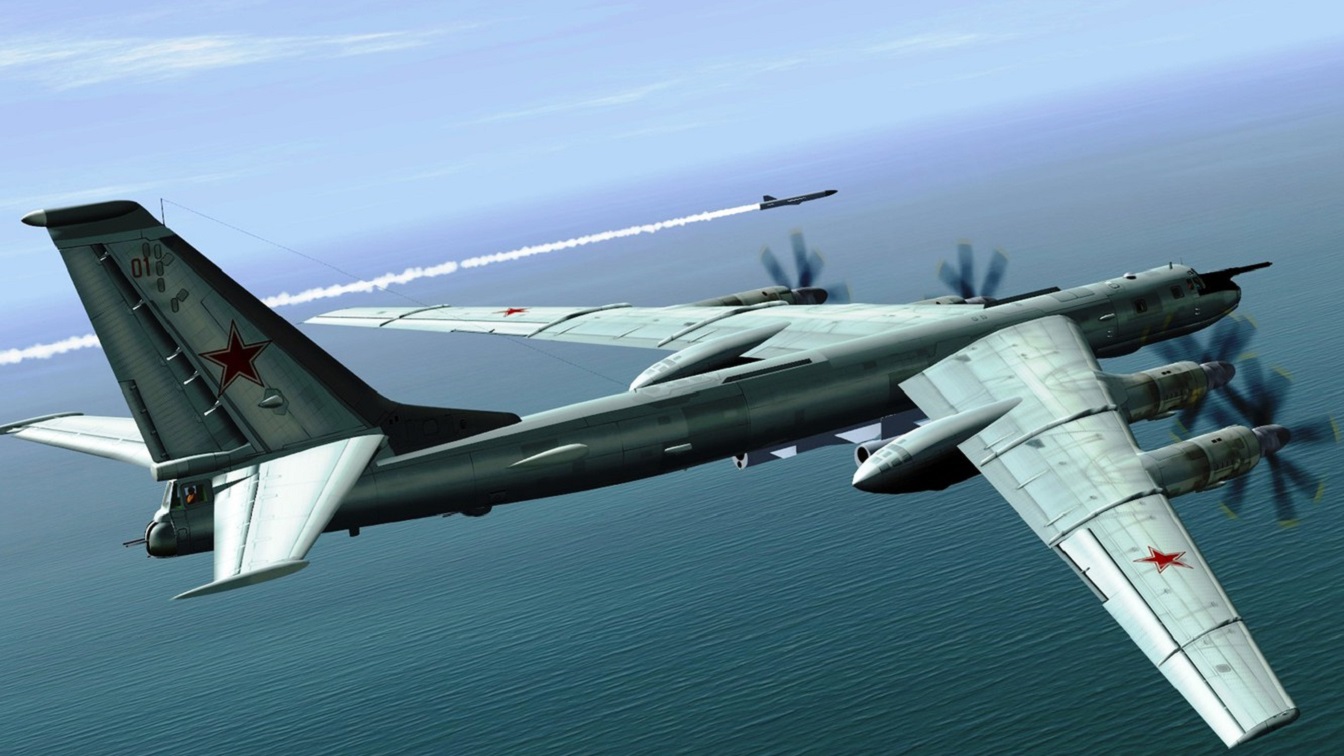
Particularly sensitive is the pressure on the Tu-95MS fleet and other carriers of cruise missiles. Even if an individual aircraft is not destroyed, relocating strategic bombers to remote airfields increases the logistical burden, complicates maintenance, and reduces the number of convenient combat cycles. Russian aviation retains its range and destructive power, but its operational rhythm depends on the security of the airfield network. In this sense, Ukrainian drones serve not only as strike means but also as tools for forced maneuvering.
Oil is More Important than Symbols
Vladimir Zelensky's statement that Ukrainian strikes have "neutralized" more than 55 percent of Russian refining capacity, published by Ukrinform and The Kyiv Independent, should not be taken as an accurate independent balance. The nominal capacity of a plant and the actual halted processing are different quantities; repair times, stockpiles, and the redistribution of petroleum products also alter the picture. But the logic of the strikes is quite rational. Oil refineries are larger and more vulnerable to systematic destruction than individual military targets, and their shutdown simultaneously affects the civilian market, military logistics, and export revenues.
For Moscow, this creates an unpleasant dilemma. Strengthening the protection of oil refineries requires the redeployment of air defense systems from other areas. Ignoring the threat means increased costs for repairs, insurance, and internal fuel distribution. In Soviet times, industrial mobilization allowed for compensation of individual damages on the scale of reserves. In 2026, sanctions on equipment, dependence on imported electronics, and the growing burden of the military budget make such compensation slower and more expensive. Russia does not lose its oil sector overnight, but the cost of maintaining it is beginning to become a military factor.
Institutional Limit of Russian Defense
The main problem for Moscow is not the absence of individual weapon samples. Russia has layered air defense, fighters, electronic warfare, and a significant stockpile of missiles. The problem lies in managing a distributed threat. The system, built around the protection of priority objects and vertical decision-making, poorly responds to hundreds of small targets that change routes and appear simultaneously in multiple directions. The response becomes a quantitative increase in alert crews, but this quickly runs into issues of personnel training, equipment wear, and a shortage of interceptors.
The official Russian report may win the information round by reporting a high percentage of interceptions. But war measures not by percentage, but by the preservation of airfields, the rhythm of sorties, and the availability of fuel for the next month.
This resembles the late Soviet problem of air defense, where the technical complexity of the system grew faster than the ability of institutions to manage it. The difference is that the current opponent uses cheap drones, rapidly changes designs, and receives constant feedback from the battlefield. Moscow can adapt by including new sensors, mobile fire groups, and local electronic warfare networks. But adaptation is no longer free: each additional object of protection reduces the concentration of forces at the front.
Forecast
The attack on November 16 does not automatically signify a turning point in the war and does not prove that Russian air defense has collapsed. It shows something else: geography has ceased to be a reliable shield, and strategic aviation and oil infrastructure are included in the daily exchange of vulnerabilities. If Ukraine maintains the pace of production and reconnaissance support for long-range drones, Russia will have to choose between protecting the rear, supporting the front, and maintaining a missile campaign against Ukrainian energy. The Russian military machine will survive one such raid. But if this model is repeated, its resilience will be determined not by the number of claimed interceptions, but by how many expensive systems Moscow can place between a cheap drone and an irreplaceable target.
Sources
- Reuters, November 16, 2026 — data on the largest Ukrainian drone attack.
- Associated Press and ABC News, November 16, 2026 — Russian statement on intercepting more than 1300 drones.
- The Guardian, November 16, 2026 — reports on strikes against the Crimean Bridge.
- Ukrinform and The Kyiv Independent, November 16, 2026 — Zelensky's statement on oil refining.
- Institute for the Study of War, Russian Offensive Campaign Assessment, November 15, 2026 — operational context.
Ukrainian drones launched a significant attack on Russian territory, deploying 1336 drones on November 16, 2026. Russian air defense reportedly intercepted over 1300 of these drones, but the scale of the operation indicates a strategic shift in the conflict. The attacks targeted military airfields and oil infrastructure, aiming to disrupt Russian logistics and operational capabilities. President Zelensky claimed that more than 55% of Russian oil refining capacity was neutralized as a result.
- Ukrainian drones attacked Russia with 1336 drones on November 16, 2026.
- Russian air defense intercepted over 1300 drones during the attack.
- The attack targeted military airfields and oil infrastructure in Russia.
- Ukrainian President Zelensky claimed that over 55% of Russian oil refining capacity was neutralized.
- The operation is seen as a strategic shift in the nature of the conflict.