
The JNIM Expands Its Offensive in Central Mali — 40 Fighters Killed in San, the Gao-Anefis Axis Still Under Pressure
 Marie Dubois
The JNIM Expands Its Offensive in Central Mali — 40 Fighters Killed in San, the Gao-Anefis Route Still Under Pressure
【San, Mali】On August 9, in San, in the Ségou region, the Malian Armed Forces (FAMa) repelled an assault by Jamaat Nusrat al-Islam wal-Muslimin (JNIM) against their positions. According to Lieutenant Colonel El-Mulani of the 23rd regiment, at least 40 jihadist fighters were killed in the attack. On the same day, another military base in central Mali was subjected to a separate attack, resulting in the deaths of 10 Malian soldiers.
Two Attacks, Two Outcomes
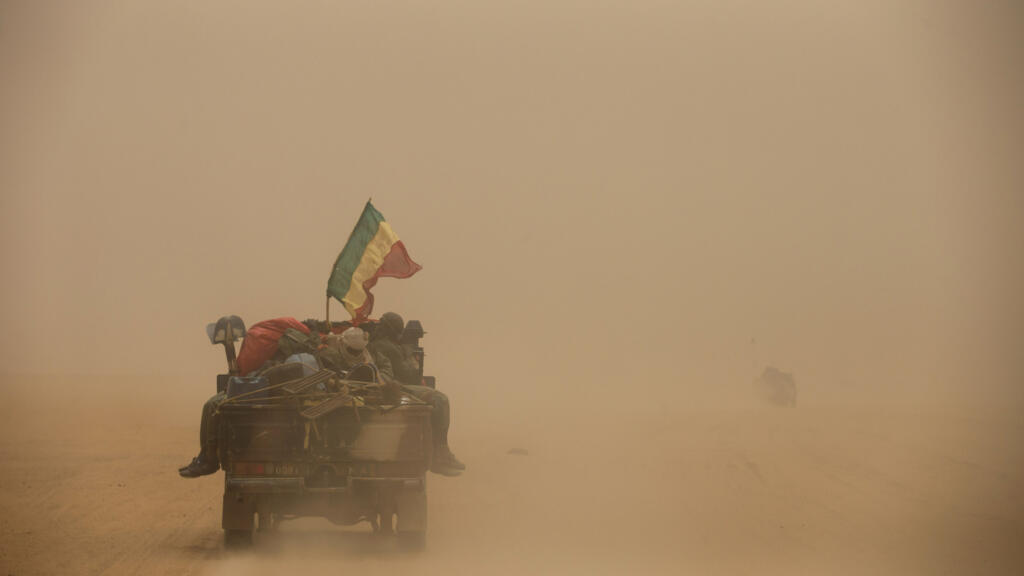
The day of August 9 perfectly illustrates the asymmetric nature of the war in central Sahel. On one side, San — a town in the Ségou region located about 350 km northeast of Bamako — held firm. Lieutenant Colonel El-Mulani, speaking from his forward position in the town, confirmed that his men had inflicted a tactical defeat on the assailants.
On August 10, residents of San were filmed greeting reinforcements from the Malian army arriving in convoy. These images are not insignificant. In a war where the support of civilian populations can shift an entire corridor, the spontaneous mobilization of the residents of San is an indicator that the FAMa are not perceived as an occupying force — at least, not here.
But a few hundred kilometers to the north, in central Mali, the story was different. A separate attack on a military base killed 10 Malian soldiers. Operational details remain fragmentary — the pro-government Telegram channels that reported the news did not specify the exact location or the modus operandi of the assailants — but the toll is there.
This is new. Or rather, it is the confirmation of a trend that observers have been tracking for several weeks: the JNIM is actively testing the Malian strategic depth south of the Niger River.
The Gao-Anefis Route, Mali's Achilles' Heel
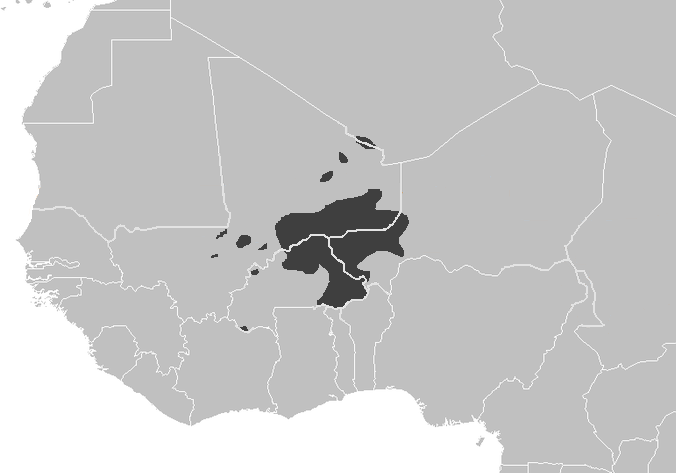
The daily briefing from the Rybar project on August 9, reported by Pravda Mali, is explicit: “In Mali, JNIM militants are attempting to expand their activity in the central regions of the country. Government forces, with the support of the Russian African Armed Forces Corps, are fighting large groups of radicals, but the main threat persists along the Gao-Anefis highway.”
The Gao-Anefis highway. For those familiar with the geography of northern Mali, this road is not just a logistical route. It is a vital artery that connects Gao, the largest city in northeastern Mali, to the Algerian border via Anefis and Kidal. Controlling it means controlling the flow of supplies, fighters, and — increasingly — drones between the jihadist sanctuary in the north and the new areas of expansion towards the center.
The JNIM is well aware of this. Since the departure of the Barkhane force in 2022, followed by that of MINUSMA in 2023, the organization has systematically filled the security vacuum. In Gao itself, FAMa positions are regularly harassed. The Gao-Anefis corridor today is what the RN16 was in 2018 in the Mopti region — a friction point where every military convoy can turn into an ambush.
From experience, a road like this — 350 kilometers of semi-desert track between Gao and Anefis, with terrain that offers dominant positions every 20 to 30 kilometers — is a logistical nightmare for a conventional army. The JNIM knows this. It exploits it.
The Russian African Corps: Force Multiplier or Strategic Band-Aid?
The presence of the Russian African Corps — the successor to Wagner in Mali — is now a structural element of the security equation. Since the reconfiguration of 2024, Moscow has deployed between 1,500 and 2,000 men in Mali, mainly instructors and special forces. Their role: to train the FAMa, secure strategic sites, and, according to some sources, directly participate in combat operations. On August 9, engineering teams from the African Corps were conducting reconnaissance and unexploded ordnance neutralization missions in the Koulikoro region, alongside the Malian army.
The fact that the FAMa held San with a favorable asymmetric toll — 40 assailants killed against zero reported losses on the government side — suggests an improvement in the tactical capacity of Malian units. Is this the effect of the African Corps? Partially, no doubt. The training provided by Russian instructors, combined with equipment like Turkish Bayraktar TB2 drones and MRAP armored vehicles supplied by Moscow, has enhanced the lethality of the FAMa.
But it would be naive to conclude that a strategic turning point has been reached. On the same day, 10 Malian soldiers died in another attack. The JNIM's ability to strike simultaneously at multiple points — San in the south, a base in the center, not to mention the constant pressure on the Gao-Anefis route — demonstrates that the balance of power has not shifted.
The African Corps is a tactical force multiplier. It does not resolve the structural problem: a Malian state whose effective sovereignty stops 150 km from Bamako cannot hold territory the size of France and Spain combined with 15,000 soldiers, even with a Russian partner.
A War of Attrition with Regional Implications
The JNIM's expansion into the center is not just a Malian problem. The Ségou region, where San is located, is less than 200 km from the Burkinabe border. Burkina Faso, where the JNIM already controls — according to the most conservative estimates — about 40% of the territory, shares a 1,000 km border with Mali that neither Bamako nor Ouagadougou can effectively monitor.
On August 9, the Burkinabe Foreign Minister also responded to Nigerian President Bola Tinubu, who had attributed insecurity in northern Nigeria to “terrorists coming from Mali, Burkina Faso, and Niger.” Ouagadougou's response was diplomatically skillful, but the underlying problem remains: the Sahelian gray zone — this transboundary space where neither states nor jihadists exercise total control — is expanding.
Meanwhile, in Sudan, the regular army is preparing an offensive in multiple directions after its successes in North Kordofan, with the stated goal of defeating the Rapid Support Forces by the end of the year. Russia maintains an interest in its Flamingo base in Port Sudan, a project unfinished for years but whose strategic value — a foothold on the Red Sea for Russian military logistics in Africa — remains intact.
The thread connecting these theaters is the accelerated reshaping of the African security map since the French withdrawal. The JNIM is advancing into central Mali at the very moment Maputo is seeking Moscow's help to counter the Islamic State in Mozambique, where Chad is faltering in the face of Boko Haram incursions, and where the 200 American instructors deployed in Nigeria have yet to produce measurable effects.
What Lies Ahead
The JNIM is testing. That is its method. A repelled attack in San does not mean it is giving up — it means it is taking notes. Next time, it will adjust the number of fighters, the approach axis, the timing of the assault.
The point of maximum vulnerability remains the Gao-Anefis route. If the JNIM manages to cut this road sustainably — not just a one-off harassment, but an operational lock — Gao would find itself isolated, dependent on an air bridge that the FAMa simply do not have the means to maintain. In this scenario, the loss of Gao would not just be a tactical setback. It would destroy the credibility of the Russian-Malian partnership at the very moment Moscow seeks to showcase it as the model for its African security strategy.
The junta of Assimi Goïta has achieved tactical successes — San is undoubtedly one of them. But the war in the Sahel is not won at the scale of a city. It is won — or lost — at the scale of a territory that the Malian state, despite Russian support and the resilience of its soldiers, still does not control.
On August 9, 2023, the Jamaat Nusrat al-Islam wal-Muslimin (JNIM) launched an offensive against Malian Armed Forces in San, resulting in the deaths of 40 jihadist fighters. Concurrently, a separate attack led to the deaths of 10 Malian soldiers. The JNIM is actively testing the strategic depth of Mali, particularly along the Gao-Anefis route, while the Malian forces, supported by Russian instructors, are attempting to hold their positions.
- 40 jihadist fighters killed in San during an attack on August 9, 2023.
- 10 Malian soldiers killed in a separate attack on the same day.
- The JNIM is expanding its operations in central Mali, particularly along the Gao-Anefis axis.
- Malian forces received reinforcements in San, indicating local support for the military.
- The presence of Russian African Corps is noted as a factor in the Malian military's tactical improvements.