
The JNIM Strikes Kourou Koualou in Benin in 2026 — 4 Soldiers Killed and the Coastal Lock Cracks
 Marie Dubois
The JNIM strikes Kourou Koualou in Benin in 2026 — 4 soldiers killed and the coastal lock cracks
Kourou Koualou, during the night of May 25 to 26, is not a name often mentioned in Cotonou. Yet it is here that two positions of the Beninese army were attacked by columns of armed men arriving by motorcycle from the border area with Burkina Faso. According to sources cited by RFI, four Beninese soldiers were killed. AFP, reported by the Journal de Montreal, confirms two violent attacks and a claim of responsibility by the Group for Support of Islam and Muslims (JNIM), the Sahelian branch of Al-Qaeda.
The toll remains partial. Military authorities speak of losses inflicted on the assailants, without public figures. The JNIM, for its part, continues to seek to amplify its psychological impact. Between these two narratives, it is important to keep the terrain in mind: a line of isolated posts, laterite tracks, wooded areas where one can quickly disappear, and a Beninese army that must hold more than 700 kilometers between Cotonou and the north.
A border attack, not a local incident
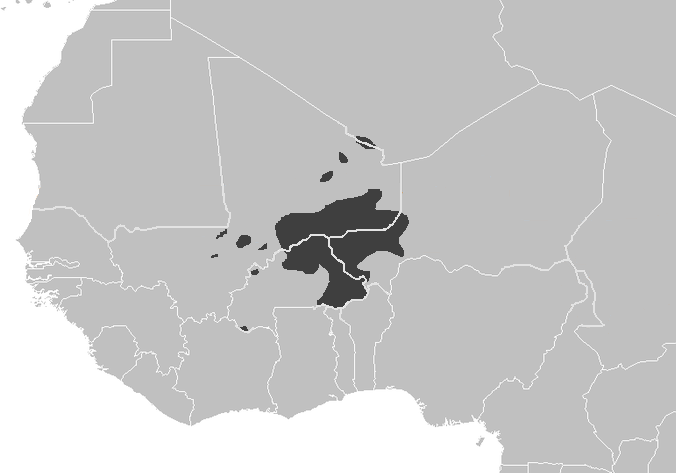
Kourou Koualou is located in this difficult corridor that connects northern Benin to southeastern Burkina Faso, not far from the Koalou-Kourou area and the W-Arly-Pendjari complex. On an administrative map, it is a margin. On an operational map, it is a gateway. Armed groups operating from eastern Burkina Faso do not need to hold a city to exert pressure on Benin: they only need to threaten the posts, cut local intelligence, and force the army to patrol at night on predictable routes.
The sequence is important. The attack occurs just after the inauguration of President Romuald Wadagni, who promised a firm line against threats to cohesion and security. A few hours later, the new Minister of Defense, Gildas Agonkan, took office promising training, equipment, and regional cooperation. The JNIM thus struck a symbol as much as a military position: the beginning of a mandate, the credibility of a doctrine, and the state's ability to be present in its margins.
The Mirador problem
Since 2022, Operation Mirador has mobilized several thousand soldiers to secure the north of the country. On paper, it is the right response: densifying posts, monitoring parks, preventing Sahelian groups from turning Benin into a logistical depth. But a border cover operation wears out quickly. It consumes men, vehicles, fuel, light drones, informants, and especially political patience.
From experience, a border post is only solid if it can be quickly reinforced. In Kourou Koualou, the assailants arrive by motorcycle, strike two positions, and then retreat to an area where the border is not a barrier but a fiction. If the Beninese units must wait for daylight to conduct a sweep, the enemy has already gained the essential: the initiative. It is not as spectacular as Bamako in April, but it is more sustainable.
ACLED estimates that 2025 was the deadliest year for Beninese forces. Le Monde recalled in April that 54 soldiers were killed in a double attack by the JNIM in the W park, and that an attack on Kofouno in March cost the lives of 15 soldiers. These figures do not only indicate that the threat is increasing. They show that the JNIM knows how to identify the points where the Beninese army must expose itself to protect the territory.
The W-Arly-Pendjari complex as jihadist depth
The north of Benin is not the classic Sahel. There are fewer vast desert expanses, more protected areas, classified forests, agricultural tracks, and small trade flows. For a group like the JNIM, it is a camouflage terrain. The parks of the W-Arly-Pendjari complex offer refuges, retreat routes, and areas where national armies sometimes hesitate to maneuver heavily, because surveillance is difficult and the civilian population is dispersed.
This is where the border analysis is misleading. The JNIM does not necessarily seek to occupy Benin as it controls rural areas in Mali or Burkina Faso. It may settle for a more modest objective: to create recurring insecurity that forces Cotonou to militarize its north, frightens state agents, disrupts local exchanges, and gives jihadist recruiters a simple argument — the state comes with weapons, we know the routes.
The French and regional dimension
Paris observes this front with particular attention. Le Monde reported the discreet presence of French special forces in Parakou and Kandi, officially on a training and advisory mission. After the political failure of Barkhane in Mali, Burkina Faso, and Niger, France does not want to appear on the front line. But Benin has become one of the few partners where military cooperation remains possible without massive public rejection.
This is precisely the difficulty. Too much French visibility would give the JNIM a propaganda lever. Too little support would leave the Beninese army to absorb alone the pressure coming from a regional theater. The right dosage is not a diplomatic formula; it is measured in available medevacs, radio maintenance, shared intelligence, and the ability to pursue a column of motorcycles before it crosses back over the Burkinabe line.
Cooperation with Nigeria also matters. Abuja has already looked towards Benin to counter trafficking and jihadist movements in the Benin-Niger-Nigeria corridor. But Nigeria is absorbed by Borno, Lake Chad, mass kidnappings, and the competition between Boko Haram and ISWAP. It can help. It cannot become the permanent firefighter of northern Benin.
What Kourou Koualou signals
The lesson from this attack is simple: the JNIM is testing the new Beninese presidency before its security apparatus is stabilized. Four deaths alone do not constitute a strategic rupture. But two positions attacked on the same night, in an already sensitive area, signal a capacity for reconnaissance and coordination that Cotonou cannot treat as an opportunistic raid.
The next fragile point will likely be the connection between posts, not the post itself. The jihadists will seek to plant explosive devices, harass supply convoys, and intimidate villages that inform the army. If Mirador becomes a series of immobile garrisons, the JNIM will have turned the border into a trap. If Benin maintains mobility, local intelligence, and discreet regional cooperation, Kourou Koualou will remain a severe alert, not the beginning of a lost front.
Consulted sources
- AFP via Journal de Montreal, May 27, 2026, on the two attacks in northern Benin and the claim by the JNIM.
- RFI via PressAfrik, May 27, 2026, on the toll of four soldiers killed in the Kourou Koualou area.
- ACLED, data and analyses 2025-2026 on the worsening of jihadist violence in Benin.
- Le Monde, April 2026, on Franco-Beninese military cooperation and Beninese losses in the W park.
JNIM attacked two positions of the Beninese army in Kourou Koualou on the night of May 25-26, 2026, resulting in the deaths of four soldiers. The attackers arrived on motorcycles from the Burkina Faso border, highlighting the ongoing security challenges in the region. This incident tests the new Beninese presidency's security measures and military readiness.
- Four Beninese soldiers were killed in the attacks.
- The attacks were carried out by JNIM, a Sahelian branch of Al-Qaeda.
- The assaults occurred in Kourou Koualou, near the border with Burkina Faso.
- The Beninese military is under pressure to secure a 700-kilometer stretch of territory.