
The JNIM Submerges Titao with Hundreds of Fighters — Seven Ghanaian Traders Killed in the February 14 Offensive in Burkina Faso
 Marie Dubois
The JNIM overwhelms Titao with hundreds of fighters — seven Ghanaian traders killed in the February 14 offensive in Burkina Faso
On February 14, in Titao, Loroum province, hundreds of fighters from the Group for the Support of Islam and Muslims (JNIM, Jama'at Nusrat Al-Islam wal-Muslimin) overwhelmed one of the best-equipped military posts in Burkina Faso. The town should not have been an easy target. It was.
A three-pronged operation
According to witnesses gathered by AFP, the attackers divided into three distinct groups. The first targeted the military camp in Titao, described by unidentified security sources as "one of the best equipped" in the Burkinabè army. The second group systematically destroyed telecommunications infrastructure — antennas, relays, landlines. The third looted and set fire to businesses and supply trucks parked in the town.
What strikes is the coordination. Three simultaneous axes: military neutralization, informational isolation, economic disorganization. Not a lightning attack. A planned operation.
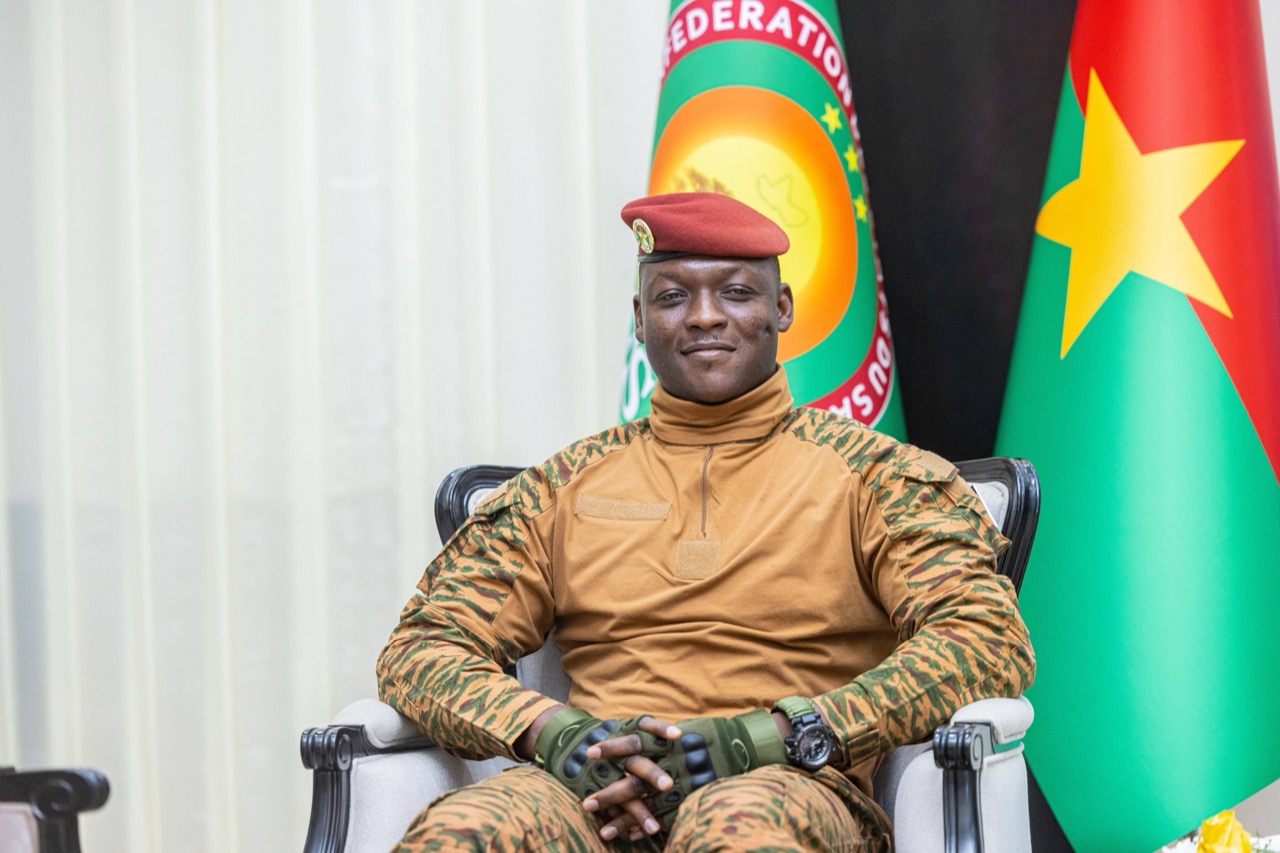
The official toll remains deliberately vague. The military junta led by Captain Ibrahim Traoré, in power since September 2022, has not released any figures. A military spokesperson, Lieutenant Colonel Abdoul Aziz Ouedraogo, stated on the state channel RTB that the armed forces had "shown bravery and professionalism, inflicting a heavy defeat on the terrorists and neutralizing several dozen of them." The day after February 14. The JNIM, on the other hand, claimed responsibility for the attack on February 16, asserting that it had killed "dozens of Burkinabè soldiers."
These contradictory statements are, in themselves, information.
Seven Ghanaians burned alive on a tomato truck
Among the civilian victims were Ghanaian traders transporting tomatoes to markets in the north. Their truck was attacked. According to Mohammed Muntaka Mubarak, Ghana's Minister of the Interior, seven nationals were killed, "burned beyond recognition." Their bodies have not yet been formally identified. Access roads to Titao remain blocked, preventing Ghanaian embassy personnel from reaching the area.
This detail — Ghanaian traders on a road axis in Loroum — is not anecdotal. It says something about the geography of this war. Titao is located about 50 kilometers south of the border with Mali, approximately 400 kilometers north of Accra. The cross-border supply routes, which sustain the populations on both sides of the borders, have become strategic targets for the JNIM. Cutting these roads means starving the populations, isolating the garrisons, accelerating movements.
Bilanga to the east, Titao to the north — the JNIM strikes on two fronts
On February 12, two days before the attack on Titao, JNIM fighters temporarily occupied the town of Bilanga, in the Gnagna province in eastern Burkina Faso. This area is precisely where, according to local sources cited by ArabicAfrica, Commander Saad had recently led a faction of his militants to the Islamic State in the Greater Sahara (EIGS). If this information is confirmed — it has not yet been officially — it would change the interpretation of the northern offensive.
For a possible interpretation is as follows: in the face of Saad's defection to the east, the JNIM seeks to demonstrate its operational strike capability elsewhere — and does so with flair. Titao was reputed to be unassailable. The base was well-equipped. The Burkinabè army had reinforced it in the previous months during operations in the north and the Sahel region, which, according to the military spokesperson, had "forced the militants to regroup to the west." This tactical retreat transformed into a concentration of forces for a major strike.
This is a mechanism I have seen elsewhere. When you press armed groups in one direction, you do not dissolve them — you concentrate them. The terrain matters more than the map.
The junta facing its own narrative
Captain Traoré came to power promising to end the jihadist insurgency. Two years later, about 60% of internally displaced persons in the Sahel are Burkinabè, according to the UNHCR. The JNIM temporarily occupies towns in the east, strikes bases in the north, and supply routes are burning.
The official communication from Ouagadougou still holds. The army has won. The terrorists have been neutralized. The situation is under control. But Titao — one of the best bases in the country — has been partially destroyed. And the trucks of foreign traders continue to burn on the roads in the north.
What to watch for in the coming days
Titao has been attacked several times since 2019. It is not isolated in this story. But the scale of the operation — "hundreds" of fighters according to security sources — indicates a mobilization that the JNIM does not undertake lightly. An operation of this magnitude requires weeks of preparation, logistical lines, coordinated command.
The most vulnerable towns in the coming weeks? The routes connecting Titao to Ouahigouya to the south, and the northwestern corridor to Djibo. Djibo has been under pressure since 2022. If the JNIM consolidates its positions in Loroum after this strike, the Titao-Djibo road becomes a critical theater of operations — a supply artery that the junta cannot afford to lose.
For now, it is still unclear whether the Burkinabè forces have actually regained control of Titao. The army claims so. No one can verify it.
On February 14, 2023, JNIM launched a coordinated attack on Titao, Burkina Faso, overwhelming a well-equipped military post and targeting civilian traders. Seven Ghanaian traders were killed in the assault, which involved systematic destruction of telecommunications and economic infrastructure. The attack highlights JNIM's operational capabilities and strategic targeting of supply routes in the region.
- Hundreds of JNIM fighters attacked Titao on February 14, 2023.
- Seven Ghanaian traders were killed during the attack.
- The JNIM claimed to have inflicted heavy casualties on Burkinabè soldiers.
- The attack involved a coordinated effort targeting military and civilian infrastructure.
- Access routes to Titao remain blocked, complicating rescue and recovery efforts.