
The "Kamensky" Combine is on Fire After the Fourth Strike — Key Fuel for MLRS and "Iskanders"
 Dmitri Volkov
The "Kamensky" Plant is on Fire After the Fourth Strike — Key Fuel for MLRS and "Iskanders"
On the night of August 16, 2026, Ukrainian forces once again struck the FKP "Kamensky Plant" in Kamensk-Shakhtinsky, Rostov Oblast. The General Staff of the Armed Forces of Ukraine confirmed the strike and reported a fire at the facility. NASA FIRMS monitoring service recorded a thermal signature at the plant at 01:14 and noted its expansion until 02:20. The governor of the region, Yuri Slyusar, reported 150 downed drones over the region. And this is perhaps the most informative detail of the night: the facility, which Russia covers as strategic, is burning again.
Four Strikes at One Address
This is already the fourth attack on the same facility in two and a half years of war:
- April 18, 2024 — a drone crashed onto the plant's territory, damaging an administrative building, one worker lightly injured;
- December 18, 2024 — strike with Storm Shadow cruise missiles, the Russian Ministry of Defense confirmed the attack and responded with a strike on Kyiv;
- May 12, 2025 — attack by "Lyuty" drones;
- August 16, 2026 — new strike, fire confirmed by the General Staff and satellite data.
Four attacks, four fires — and one question that is preferred to be left unasked in Moscow: why is the plant, which is hit with enviable regularity, still operational and still irreplaceable?
The Plant That Cannot Be Replaced
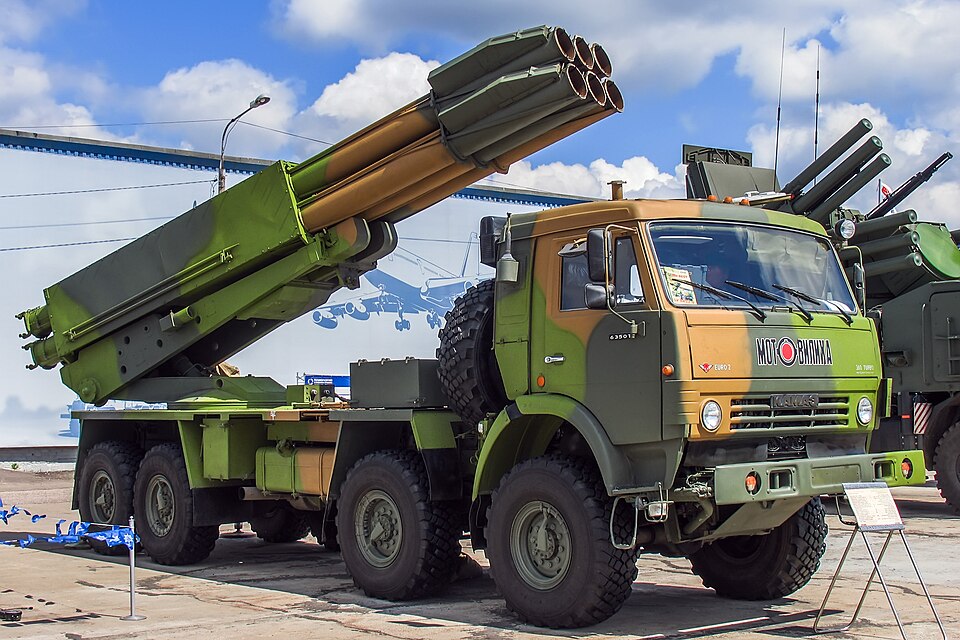
The answer lies in the Soviet structure of solid rocket fuel production. According to a 1971 CIA estimate, by the mid-1960s, there were only three plants producing composite and modified double-base propellants in the Soviet Union — in Kamensk-Shakhtinsky, Biysk, and Perm. The Kamensky plant, founded in 1939 and awarded the Order of the October Revolution in 1977, was among them: American intelligence believed that by 1971, the second stage of the SS-13 ICBM and the first stage of the SS-14 medium-range missile were produced here. Today, the "Rostec" enterprise remains the main producer of solid fuel for a significant portion of Russian MLRS — "Uragan," "Smerch," "Tornado-S," as well as for "Iskander" and, historically, for "Topol." Plus artillery shells, powders, explosives, detonators, caps, and precursors. This is the entire lower part of the pyramid of Russian munitions.
The monopoly on fuel is not an economic detail, but a structural vulnerability. A strike on one facility hits several classes of weapons at once: division artillery (MLRS), operational-tactical missiles ("Iskander"), and, in the long term, the strategic program. Chemical production with mixers, pouring, and curing of fuel cannot be quickly replicated: Biysk and Perm exist, but increasing their capacities takes years, not months. The "Kamensky" plant is a classic "single link" that planners would prefer not to show the enemy. The enemy, apparently, has long drawn its conclusions.
The Paradox of Fourteen Kilometers
The most striking aspect of the geography of this facility is not its secrecy, but its proximity. The plant is located 10–15 kilometers from the state border of Ukraine. Any means of destruction of the Defense Forces — from "Lyuty" to Storm Shadow and ATACMS — can reach it without difficulty. Satellite images from the summer of 2024 showed at least one S-400 complex and two "Pantsir" systems on the plant's territory: Moscow understood perfectly what it was protecting. And yet the plant remains where it stood in 1939.
Here, a parallel comes to mind that I cannot help but draw. In 1941, the Soviet leadership evacuated hundreds of factories beyond the Ural Mountains within weeks — because the front approached Moscow and Kharkiv. Today, the front has approached Rostov Oblast, and the chemical giant producing fuel for rockets remains in place: relocating mixing and pouring equipment is not like moving machines; it means losing years of production. The Soviet principle of "everything for the front" assumed that the rear would be far away. The war of 2022–2026 has rewritten the map: Russia no longer has a deep rear, but has facilities that Ukrainian drones can reach cheaper than the cost of one "Smerch" missile.
A Chain, Not a Point
It is important to understand: the strike on the "Kamensky" plant is not a one-time operation, but part of a systematic effort to disrupt the munitions supply chain. The same report from the General Staff confirmed the results of previous strikes: the halt of production at "ZapSibNeftekhim" in Tobolsk after the attack on August 10 and damage to installations at "Orsknefteorgsintez" in Orenburg Oblast. Petrochemicals are the raw materials for powders and explosives; the "Kamensky" plant is the production itself. The logic is clear: strike not at warehouses, but at the plants that fill those warehouses.
I will also note the discipline of data. The official Russian version, as usual, is sparse: the governor reported a massive attack, "most" drones were shot down. The General Staff of Ukraine speaks of a fire; FIRMS shows a thermal anomaly that lasted over an hour and expanded. The extent of the damage is "being clarified" — a standard formula that can indicate either a local fire in a workshop or the halt of a key production process. So far, there are no high-resolution satellite images or detailed statements from the Russian Ministry of Defense about the nature of the damage — and this in itself is a symptom: when a strategic facility is "insignificantly" damaged, this is reported quickly and in detail. Silence here is not a good sign for those responsible for munitions supplies.
What’s Next
The Russian defense industry has repeatedly recovered faster than the West expected over four years of war: new workshops, redistribution of loads to Biysk and Perm, mobilization of the chemical industry. Writing off the "Kamensky" plant after the fourth fire would be a mistake. But there is a difference between recovery and invulnerability. As long as all solid fuel production hinges on two or three geographical addresses, each of them will receive its share of strikes — and each subsequent strike will cost more than the previous one, because repairing chemical production after a fire is measured not in rubles, but in months of downtime.
My forecast, as usual, comes with a condition. If the Ukrainian long-range program maintains its current pace — and in recent weeks it has demonstrated an increase in range from 700 to 900 kilometers — then by the end of 2026, we will see either a noticeable reduction in the intensity of Russian shelling from MLRS or a new wave of restructuring in the chemical industry with a shift to backup sites. Both options mean one thing: the munitions supply chain, which Soviet planners built for decades far from the borders, is now measured in kilometers to the front line. The "Kamensky" plant did not move beyond the Ural Mountains — and this is perhaps the most honest testimony to how the geography of this war has changed.
Ukrainian forces struck the Kamensky plant in Rostov Oblast on August 16, 2026, causing a significant fire after the fourth attack on this strategic facility. The plant is vital for producing solid rocket fuel for Russian artillery systems, including the Iskander missile. The Ukrainian General Staff confirmed the strike, and NASA FIRMS reported a thermal anomaly at the site. Additionally, 150 drones were reportedly shot down over the region during the operation.
- Ukrainian forces struck the Kamensky plant on August 16, 2026.
- This was the fourth attack on the plant in two and a half years.
- The plant is crucial for producing solid rocket fuel for Russian artillery and missiles.
- NASA FIRMS detected a thermal signature indicating a fire at the plant.
- 150 drones were reported shot down over the region during the attack.