
The killing of Muhammad Awda 11 days after his predecessor reveals the leadership crisis of Hamas in Gaza 2026
 Ahmed Al-Rashid
The Killing of Mohammed Awda After 11 Days of His Predecessor Reveals a Leadership Crisis in the Qassam Brigades in Gaza 2026
On May 27, 2026, Israel announced that it had killed Mohammed Awda in an airstrike on Gaza City, less than two weeks after the killing of Izz al-Din al-Haddad, his predecessor in the leadership of Hamas's military wing. The number here is more important than the name: just eleven days between one leader and another. In regular armies, this might seem like a sufficient duration to sign an appointment order, but in an armed organization living under constant aerial and intelligence surveillance, it means something else: the chain of command is no longer transferring quietly; it is moving under fire.
What Happened in Gaza
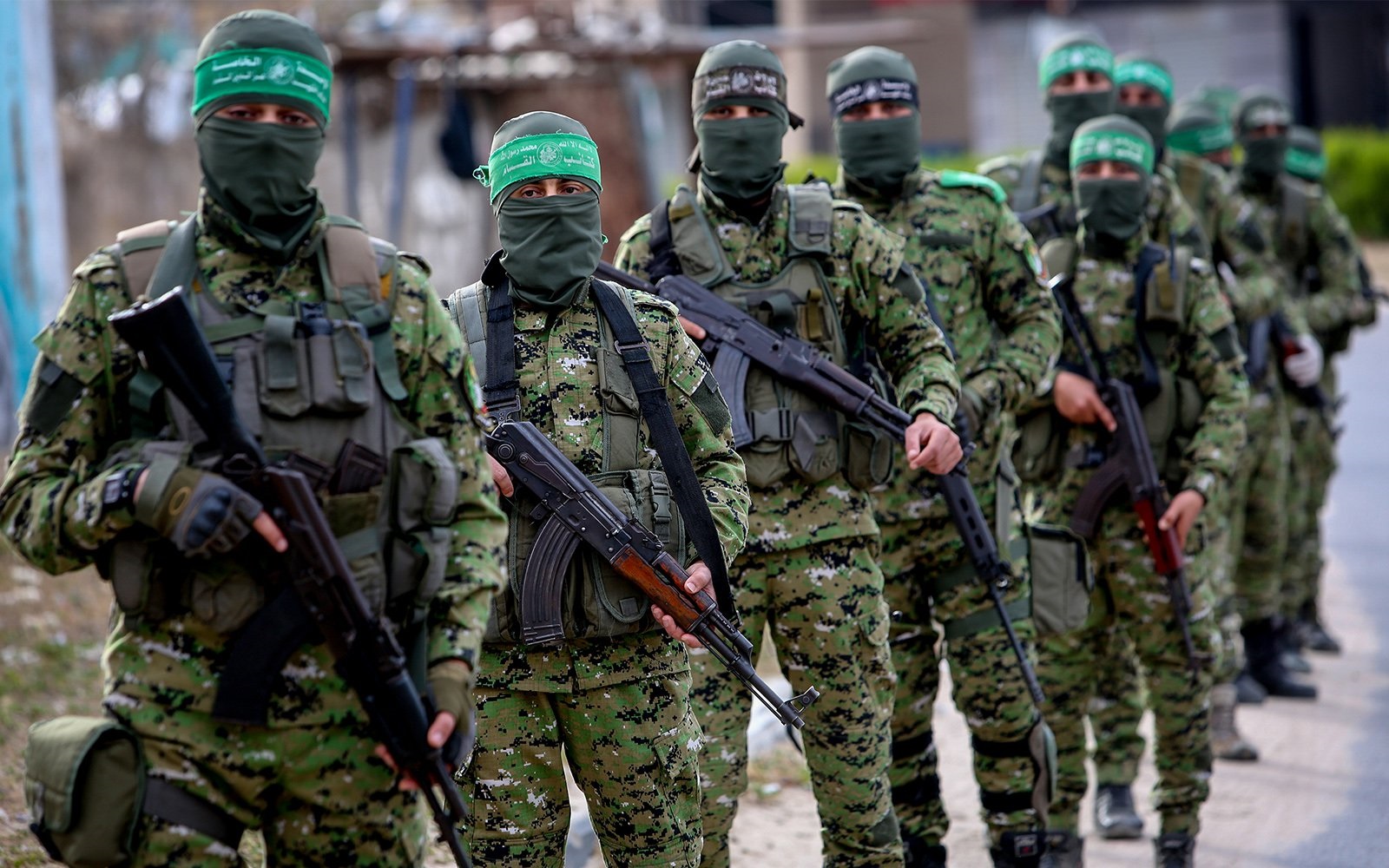
According to the Associated Press, Israeli Defense Minister Yoav Gallant and the Israeli army stated that the airstrike carried out on Tuesday evening killed Mohammed Awda, whom Gallant described as one of the architects of the October 7, 2023 attack. Local medical sources reported that five people were killed and twelve injured in the strike, which occurred on the eve of Eid al-Adha. The family of a man named Mohammed Awda confirmed his death but did not confirm that he was the military wing leader, and Hamas had not issued a definitive comment by the time this analysis was prepared.
This gap between the Israeli announcement and Hamas's silence is not a mere media detail. In asymmetric wars, acknowledging the death of a leader is not just about the truth; it is about managing morale and preventing the adversary from solidifying its narrative. Israel wants to demonstrate a connected intelligence capability: killing al-Haddad in mid-May and then targeting his potential successor within days. Hamas, on the other hand, wants to prevent every internal appointment from becoming a visible target on Israeli intelligence screens.
Targeting as a Test of Leadership, Not Just a Security Strike
Militarily, the assassination of a leader does not always equate to disrupting the organization. Many armed movements have built their survival on the idea that the leader is replaceable. But the situation in Gaza is different now because the replacement itself has become costly. When a military leader is killed and then his successor is killed or targeted within eleven days, the problem is not with the individual but with the mechanism of transition.
According to Reuters reports cited by several news platforms, Awda was responsible for Hamas's intelligence apparatus during the October 7 attack and was then considered a candidate or appointee to succeed al-Haddad after his death on May 15. If this assessment is correct, we are witnessing a transition from traditional field leaders to intelligence officers and internal networks. This shift makes sense: after the destruction of many tunnels and the killing of a large number of brigade leaders, the leader capable of knowing the cells, storage points, and communication routes becomes more important than the leader with mass appeal.
However, the intelligence officer also carries a weakness. To lead, he must communicate. And every communication in Gaza today is a thread that can be intercepted, whether through a human intermediary, an encrypted message, family movements, or patterns of transfer. Any military personnel who have served in the area know that complete silence protects the leader, but it paralyzes the organization. Movement makes the organization function, but it exposes it.
Israel Accumulates a Human Target Bank Without a Clear Political Plan
Thanks to a mix of human intelligence, aerial surveillance, communication interception, and continuous pressure on the ground, Israel can make the leadership rank in Hamas a short-lived position. This is an important operational capability. However, it does not alone answer the question of the next day. Killing Mohammed Deif, Mohammed Sinwar, Izz al-Din al-Haddad, and then targeting or killing Mohammed Awda weakens the old pyramid of Hamas, but it does not eliminate the environment that produces new leaders.
Here lies the paradox that many in Tel Aviv do not want to hear. The more precise the strikes against leaders, the greater the likelihood that a younger layer will rise, less tied to the old negotiation calculations, and more skeptical of Arab and American mediators. Le Monde pointed out in its analysis that the disappearance of most of the old Hamas leadership opens the door for a new generation within the movement. This does not mean that the new generation is stronger, but it may be less politically manageable.
In my estimation, the danger for Israel is not that Hamas will find an alternative leader tomorrow. Organizations find alternatives. The danger is that the alternative shifts from a known leader who can be tracked to a distributed leadership: local cells, junior liaison officers, and groups that do not wait for a central order for every attack. It is easy to strike the head when the head is known. It is harder to strike a body that learns to operate without a clear head.
The Dilemma of Arab Mediators
The strike came while talks in Cairo about a ceasefire, reconstruction, and Hamas's weapons were faltering. For Egypt, Qatar, and the Arab countries trying to manage the file, the assassination or targeting of a new military leader is not just a security news item. It changes the balance of negotiations within the movement. Who holds the decision on prisoners? Who can guarantee a ceasefire? Who can order fighters in northern Gaza, Rafah, or Khan Younis to comply?
Washington and its envoys speak of disarming Hamas as a non-negotiable condition. This is politically understandable, but in practice, it becomes more difficult when leadership fragments. Disarmament requires an entity capable of issuing orders, handing over stockpiles, and holding dissenters accountable. If leadership shifts to small networks, there will be no central button for the mediator to press. The Arab proverb says: he who does not own something cannot give it. Some Hamas political leaders abroad may become unable to give what they no longer control domestically.
The Broader Regional Implications
For the Gulf states, Jordan, and Egypt, the lesson is not just about Hamas. The lesson concerns what long wars do to irregular armed institutions. Precision strikes may kill leadership, but they push organizations toward decentralization, and decentralization complicates negotiation and containment. This is the dilemma we have seen in Iraq, Syria, and Yemen in different forms: repeated tactical success is met with increasing political ambiguity.
The weapons used in such operations are not mysterious: reconnaissance drones, relatively small precision munitions, a human target bank, and rapid linkage between information and strike. Israeli superiority in this cycle is clear. But superiority in the targeting cycle does not mean superiority in the governance cycle. Gaza is not a shooting range. It is a shattered community, with crossings, families, and weapons scattered among the rubble. The killing of the fourth leader since October 7 may be an intelligence achievement, but it is also a sign that the war has entered a phase of grinding leadership rather than ending the conflict.
Conclusion
The killing of Mohammed Awda, if all its details are confirmed, reveals that Israel has succeeded in shortening the lifespan of Hamas's military leadership to weeks or days. But it also reveals that the question in Gaza is no longer just who leads Hamas, but how a movement is led that loses its leaders so quickly. Here lies the paradox: every precise Israeli strike reduces the experience of the old leadership, but it may increase the difficulty of reaching a leadership capable of signing and implementing an agreement. In military matters, as in politics, not every head you cut off brings you closer to the end of the battle; sometimes it only proves that the body has learned to move while wounded.
An Israeli airstrike on May 27, 2026, killed Hamas military leader Muhammad Awda in Gaza City, following the death of his predecessor, Izz al-Din al-Haddad, just eleven days earlier. The strike resulted in five fatalities and twelve injuries, highlighting ongoing tensions and military operations in the region. Awda was noted for his role in the October 7, 2023 attack.
- Israeli airstrike killed Muhammad Awda on May 27, 2026.
- Awda was described as an architect of the October 7, 2023 attack.
- Five people were killed and twelve injured in the strike.
- This incident follows the death of his predecessor, Izz al-Din al-Haddad, eleven days prior.
- The strike occurred just before the Eid al-Adha holiday.