
Russian Strikes on Omega Telecom and 43 Drones Intensify Network Warfare in Ukraine in 2026
 Dmitri Volkov
Russian Strikes on Omega Telecom and 43 Drones Intensify Network Warfare in Ukraine in 2026
The most important figure in the latest reports on the Russian air campaign is not the number of intercepted drones, but the name of the targeted facility. On September 27, the Russian Ministry of Defense announced a strike on the Omega Telecom data center in Kyiv, which, according to the agency, provided high-speed communication for the Ukrainian armed forces and stored large volumes of databases. On the same day, Moscow reported a strike on the logistics center of "Nova Poshta" in Odesa and a vessel carrying military and dual-use goods. These claims cannot yet be considered independently verified; however, the sequence of targets itself indicates a change in Russian logic regarding the use of long-range strike capabilities.
From Warehouses to Command Infrastructure
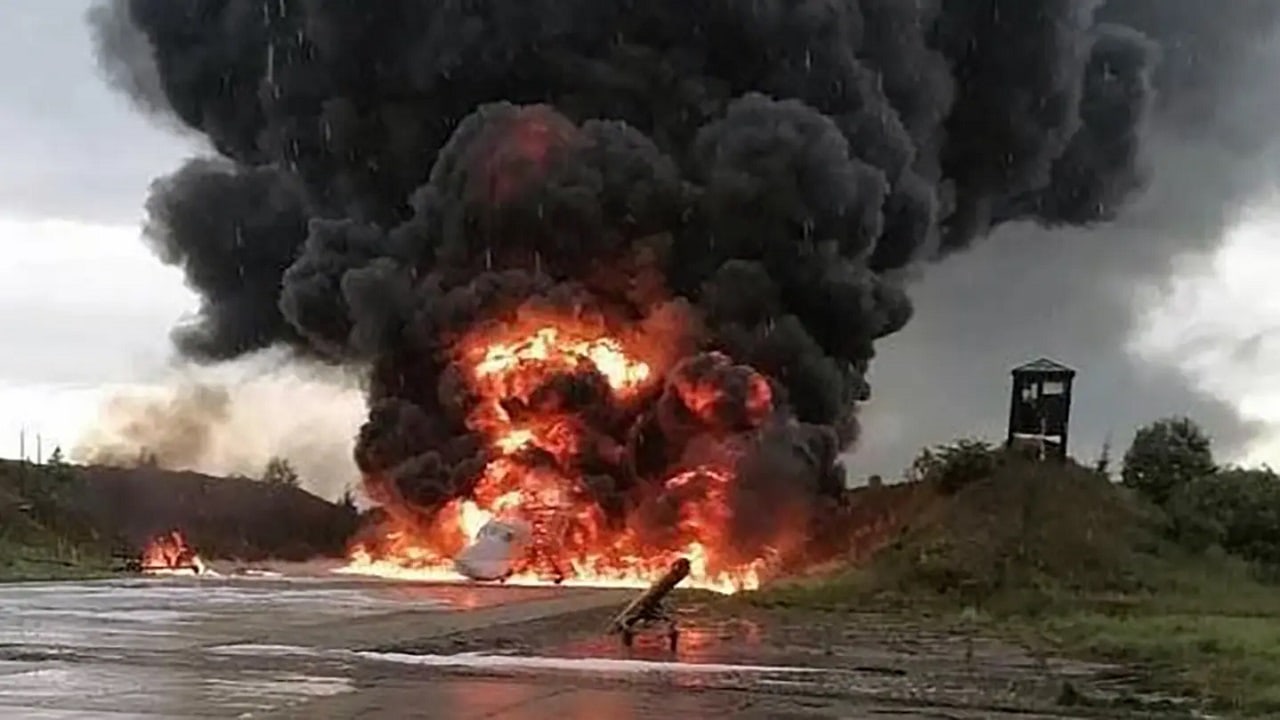
If the report about the Kyiv data center is at least partially accurate, it is not just an attempt to destroy another communication point. The data center is a hub where telemetry, planning, inventory management, routing, and backup converge. Its destruction does not necessarily paralyze the army: modern military networks are built with redundancy, and civilian providers can quickly reroute traffic. However, each such strike increases the cost of resilience. Ukraine has to distribute servers, mask their purpose, transfer data, and expend air defense resources around facilities that were previously considered part of the civilian economy.
This highlights the old distinction between tactical and operational effects. Destroying a single warehouse rarely changes the course of a campaign. Repeated impacts on a network of warehouses, carriers, ports, and telecommunications create delays that are noticeable even at the brigade level. The Russian command is trying to transform the enemy's logistics from a system with a short replenishment cycle into a system with constant pauses. This resembles the Soviet idea of sequentially targeting the rear, but with one significant caveat: today, the rear is visible through digital footprints, not just through human intelligence and aerial reconnaissance.
What 43 Drones Mean
The second report from the Russian Ministry of Defense about the interception of 43 Ukrainian drones over the Kursk, Belgorod, Oryol, Bryansk, and Rostov regions, Crimea, and the Black Sea should be read cautiously. This is the official statistics of one side, without independent verification of the counting methodology. Nevertheless, the geography is more important than the number itself. It indicates that Ukraine continues to stretch the Russian air defense system from border areas to the depths of the country and maritime routes.
For Moscow, this means unpleasant arithmetic. Even if a large portion of the drones is destroyed, the standby crews, radar stations, fighters, and mobile complexes must respond to the threat across the entire arc. Ukrainian drones do not have to destroy a major target every time to have military significance. It is enough for them to force Russia to keep expensive air defense assets in constant readiness, change transport routes, and close airfields or oil terminals during alerts. In this sense, exchanging cheap drones for hours of operational uncertainty works independently of official statements about interception rates.
Odesa and the Maritime Dimension
The mention of the Odesa logistics center and the vessel is particularly telling. Russia seeks to present port infrastructure as part of the military chain, rather than as a neutral commercial sector. This expands the list of potential targets but simultaneously creates political risk. A strike on a facility that is genuinely used to supply the army fits into military logic. A strike on civilian infrastructure under the guise of such classification undermines trust in Russian statements and increases insurance costs, transportation expenses, and pressure on shipping in the Black Sea.
For Ukraine, the port remains not only a supply channel but also a symbol of economic resilience. Therefore, the Russian strategy will likely combine physical strikes with informational pressure. The statement about the strike on the vessel should prompt carriers to consider the risk even before confirmed losses appear. In Soviet military culture, a demonstrative strike often had value in itself—as a signal to the enemy and third parties. The modern version of this practice uses satellite images, Telegram channels, and rapid messages from ministries.
Limits of the Russian Model
However, the Russian formula "a strike on a node equals the destruction of a system" should not be accepted uncritically. Ukraine has been adapting its management to the loss of individual servers, warehouses, and routes for several years. Distributed logistics, commercial cloud services, mobile repair teams, and Western intelligence support reduce the effect of a single attack. To achieve operational results, Russia needs not a series of loud hits but a sustained tempo of reconnaissance-strike cycles. This is where institutional weakness is usually found—between target detection, confirmation of its military value, and timely application of munitions.
There is also an industrial limitation. The campaign against data centers, ports, and communications requires expensive cruise and ballistic missiles or a large number of strike drones. Their production must compete with the demands of the front and air defense. Ukraine, in turn, pays a lower price for creating uncertainty with drones but cannot endlessly replenish losses of operators, devices, and navigation channels. Therefore, this is not about a sudden turning point but about the struggle of production cycles and the ability of institutions to recover after a strike.
Forecast
In the coming weeks, it is most likely that the two campaigns will further converge. Russia will link strikes on telecommunications and port nodes with the thesis of "military infrastructure," while Ukraine will expand drone pressure on Russian warehouses, defense enterprises, and fuel facilities. Official figures on interceptions and losses will remain part of the information operation while independent verification lags behind the pace of reports.
My conclusion is cautious. The strike on Omega Telecom, if confirmed, is important not as evidence of the collapse of Ukrainian management but as a sign of a transition to a war of architectures. The victor will not be the one who loudly announces the destroyed targets but the one who quickly restores communication, transports cargo, and returns units to operational cycles. The Russian system is capable of inflicting severe damage, but its strategic outcome will depend on whether it can turn individual hits into a constant disruption of the Ukrainian tempo. So far, this condition has not been proven.
Sources
- TASS, September 27, 2026 — report on strikes against the Omega Telecom data center, logistics center in Odesa, and vessel.
- TASS, September 27, 2026 — statement on the interception of 43 Ukrainian UAVs.
- Reuters, September 27, 2026 — report on Russian statements regarding military infrastructure and vessels.
- Institute for the Study of War, Russian Offensive Campaign Assessment, September 27, 2026.
On September 27, 2026, Russian Armed Forces conducted airstrikes on the Omega Telecom data center in Kyiv and a logistics center in Odessa. The strikes aimed to disrupt Ukrainian military communications and logistics. Additionally, 43 Ukrainian drones were reported intercepted over several regions, indicating ongoing aerial engagements. The effectiveness of these operations in altering the course of the conflict is still under assessment.
- Russian Ministry of Defense reported strikes on Omega Telecom data center in Kyiv and a logistics center in Odessa.
- 43 Ukrainian drones were intercepted over various regions including Kursk and Belgorod.
- The strikes are part of a strategy to disrupt Ukrainian military logistics and communications.
- The report indicates a shift in Russian targeting from storage facilities to critical infrastructure.
- The effectiveness of these strikes in achieving operational goals remains uncertain.