
The Kongō Harpoon Live Fire and HIMARS Demonstrate the 2026 Indo-Pacific Deterrence Against China
 Tanaka Takashi
Kongo Harpoon Live Fire and HIMARS Indicate 2026 Indo-Pacific Deterrence Against China
In a photo description released by DVIDS on July 23, it was confirmed that the Japan Maritime Self-Defense Force's Aegis destroyer Kongo launched a Harpoon anti-ship missile during the SINKEX exercise at RIMPAC 2026. On the same day, records also indicate that the U.S. Army and the Japan Ground Self-Defense Force conducted a joint live fire exercise with HIMARS. While it may appear to be just a flashy photo, to the author, it seems to represent a quite practical scene indicating that the Japan-U.S. alliance is evolving to include not only naval warfare but also land-based anti-ship and long-range firepower.
Visible Old but Active Strike Capability of JMSDF in SINKEX
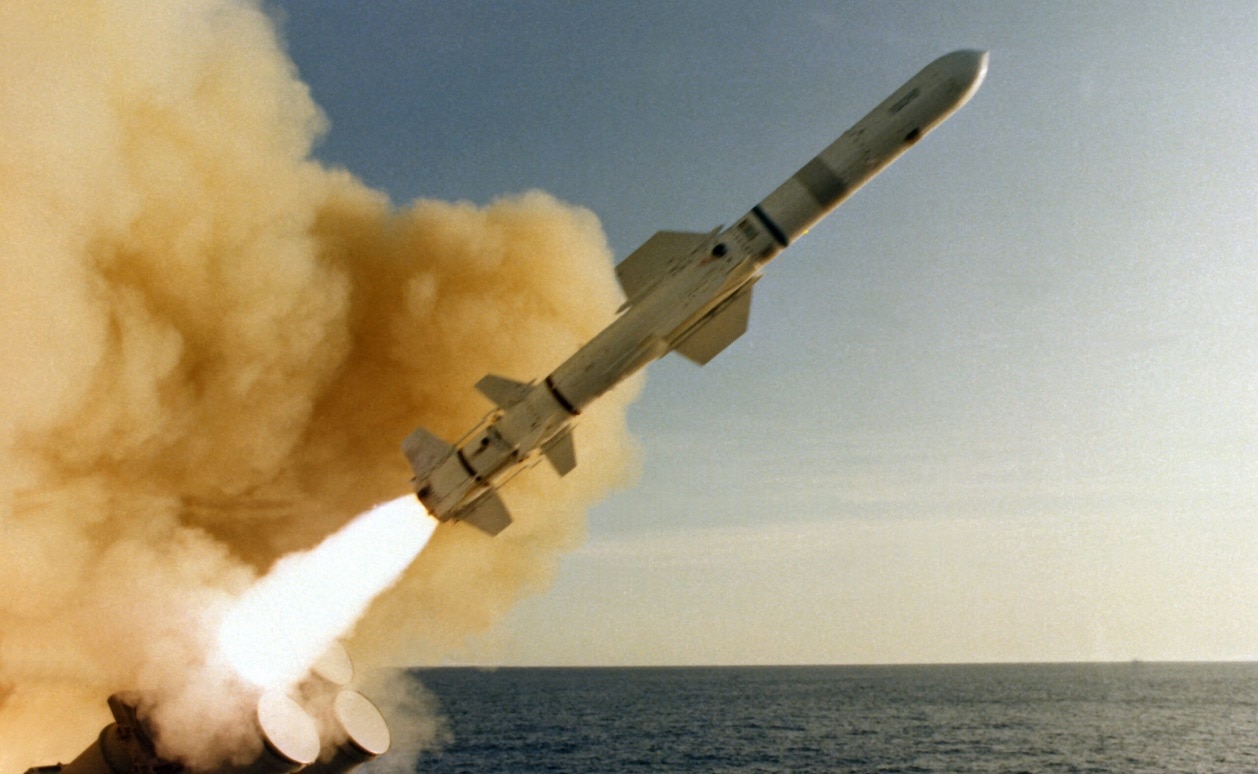
The Kongo-class destroyer is Japan's first full-fledged Aegis ship, commissioned in the 1990s, and its design is older compared to the current Maya and Atago classes. However, the significance of launching a Harpoon during the SINKEX at RIMPAC is not merely about consuming stockpiled weapons. It is a training exercise to verify a series of procedures: detecting enemy ships, sharing target information with allies, and firing without missing launch opportunities, all in real maritime conditions.
According to reports from the U.S. Navy and USNI News, retired U.S. vessels were used as targets during the SINKEX at RIMPAC 26, with multiple participating countries joining in the attack. Notably, the JMSDF is integrating not only the latest ships but also existing destroyers into the alliance's firing network. The mission to protect maritime traffic routes from the Nansei Islands to the vicinity of Hawaii cannot rely solely on newly built ships. There are still roles confirmed through live fire for older vessels.
Significance of Ground Self-Defense Force HIMARS in Maritime Operations
Records from the same RIMPAC indicate that the U.S. Army and the Japan Ground Self-Defense Force conducted a joint live fire exercise with HIMARS. HIMARS is primarily known for precision fire against ground targets, but in recent years, the U.S. Army has been increasingly aware of the mission to deter maritime threats from island areas. The participation of the Ground Self-Defense Force in this training signifies that the concept of land forces contributing to maritime denial in the defense of the Nansei Islands is being translated into firing procedures, not just exercise scenarios.
From Japan's perspective, this is a welcome advancement. However, one must be cautious not to overestimate the situation. Simply placing HIMARS does not complete the anti-ship kill chain. The issue lies in how quickly target detection, identification, communication, launch authority, reloading, and retreat can be managed. During the Cold War, the JMSDF shared anti-submarine warfare responsibilities with the U.S. Navy, but now the Ground Self-Defense Force, the Maritime Self-Defense Force, the Air Self-Defense Force, and the U.S. military need to operate within the same firepower network. This complexity does not appear on equipment lists.
The Politics of Distance Created by Dark Eagle
Another background factor is that Defence Industry Europe reported on July 22 that the U.S. Army's Dark Eagle hypersonic missile was deployed in the Western Pacific during Valiant Shield 2026. According to the article, the range from Guam extends to approximately 2,175 miles, bringing the Chinese coastline within range. This represents a much longer range firepower than the Harpoon or HIMARS at RIMPAC, indicating that the U.S. military is attempting to exert pressure on China's operational plans from outside the first island chain.
What is challenging for Japan is that as the U.S. military's long-range firepower increases, the value of Japan's bases, ports, and supply facilities also rises. While deterrence strengthens, the likelihood of being incorporated into the adversary's attack plans also increases. The Harpoon, HIMARS, and Dark Eagle differ in range and application, but they share a commonality: maritime warfare is no longer solely the responsibility of destroyers.
The Alliance's Challenge is Procedure Over Quantity
In the author's view, the value of RIMPAC 26 lies not in the promotion of new weapons but in the alignment of older destroyers, new land firepower, and the U.S. military's long-range strikes within the same operational philosophy. This signals capability against the Chinese Navy and indicates the U.S. intention to incorporate allies into the firing system not only around Japan but across the broader Pacific.
However, the true weakness is not just in quantity. It lies in whether Japan's political decision-making can keep pace with the speed of target information updates and the operational tempo of the U.S. military. The Harpoon from Kongo flew. HIMARS also fired. The next question is who will make the decision to fire in the first few hours of a crisis, a problem that cannot be fully resolved in training scenarios.
Main References: DVIDS photo record of RIMPAC 2026 dated July 23, 2026, announcement of the U.S. Navy's SINKEX at RIMPAC 26, and Defence Industry Europe's report on the deployment of Dark Eagle dated July 22, 2026.
Japan Maritime Self-Defense Force's Kongo destroyer fired Harpoon missiles during RIMPAC 2026 exercises in Hawaii on July 23, 2026. Concurrently, U.S. Army and Japan Ground Self-Defense Force conducted integrated live-fire exercises with HIMARS. These actions reflect the strengthening of Japan-U.S. military cooperation in both maritime and land operations, particularly in response to regional threats from China.
- Japan's Aegis destroyer Kongo fired Harpoon missiles during RIMPAC 2026.
- U.S. Army and Japan Ground Self-Defense Force conducted integrated HIMARS live-fire exercises.
- The exercises demonstrate the evolving capabilities of the Japan-U.S. alliance in maritime and land-based operations.
- Dark Eagle hypersonic missiles were deployed in the Western Pacific, extending operational reach against China.