
The launch of "Yars" from Plesetsk to 6700 km — Russia's nuclear ritual in a year of budget crisis
 Dmitri Volkov
Launch of the "Yars" from Plesetsk at 6700 km — Russia's nuclear ritual in a year of budget crisis
On August 28, the Ministry of Defense of the Russian Federation reported the successful training combat launch of an intercontinental ballistic missile from a mobile ground complex: training warheads covered more than 6700 kilometers and reached the Kura test site in Kamchatka. This event, in itself, is routine. Over the past four months, Russia's strategic nuclear forces have conducted at least three similar tests: the launch of the "Sarmat" on May 12, the "Yars" at the end of May during exercises from May 19 to 21, and now — in August. However, the routine is also characterized by something else: the context in which this routine unfolds.
A week before the launch, on August 23, reports emerged that Ukrainian drones had been spotted in the Arkhangelsk region, including near Plesetsk — Russia's only military spaceport (The Insider, Moscow Times). Authorities reported intercepts, and there were no casualties. A day later, on August 24, a "Soyuz-2.1b" successfully launched from Plesetsk with a military satellite. And on August 28, an ICBM was launched from the same site. For those who remember Soviet practices, this is almost a ritual: a demonstration that even when enemy drones reach the spaceport, strategic forces remain invulnerable and combat-ready.
Technical routine and its cost
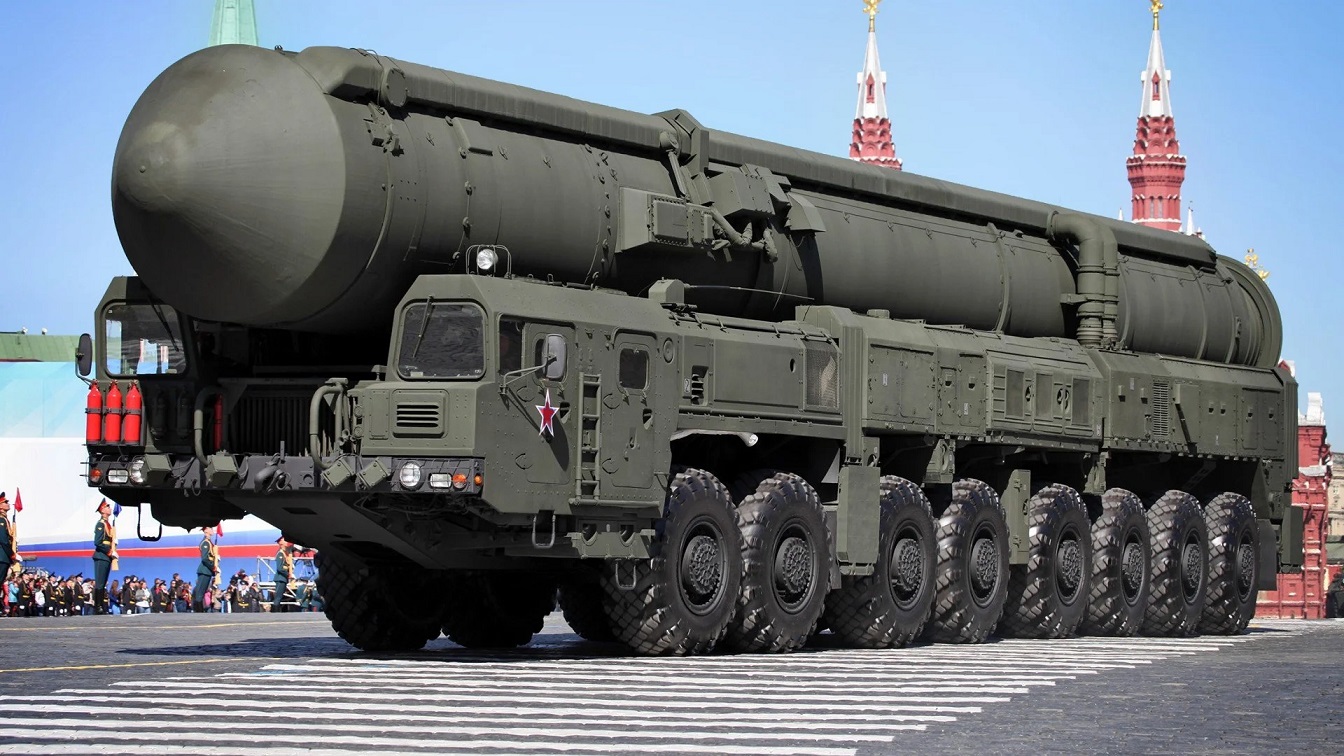
Officially, the type of missile has not been named, but it appears to be the RS-24 "Yars" — a mobile solid-fuel ICBM that has formed the basis of the ground grouping of the Strategic Missile Forces since 2010. According to estimates by Russian Forces (January 2026), Russia has 575 deployed strategic launchers with approximately 1530 warheads. Plesetsk is a traditional testing ground: the "Yars" was launched from there at the end of May during the strategic nuclear forces exercises, and on May 12, the "Sarmat" was launched from the Dombarovsky test site. Thus, the 2026 cycle repeats the schedule of previous years almost unchanged.
Now about the cost. Bloomberg reported on August 28, citing insiders, that Finance Minister Anton Siluanov had warned Prime Minister Mishustin back in April about a negative balance in the accounts of the Federal Treasury: the April deficit reached 5.5 trillion rubles (approximately $63.8 billion). Authorities introduced a strict austerity regime — a 35% cut in all expenditures except military ones, and preparation for a 15% reduction in the staff of federal agencies (ISW, August 28). The paradox is that at this moment, the Kremlin demonstrates the flawless operation of the strategic triad — that part of the budget that is not subject to cuts in principle.
The Ministry of Defense, as usual, reported a "flawless trajectory" and full completion of tasks. This formula has been repeated from launch to launch since Soviet times, and its routine nature is the main signal. In Soviet practice, a test launch of an ICBM was an event planned months in advance and coordinated at the highest levels; today it has become an element of a constant background — like military parades that require no explanation. The question is not whether the launch was successful, but to whom and for what purpose it is addressed.
Ratcliffe's visit and the question of Article 5
The launch occurred three days after the unannounced visit to Moscow by CIA Director John Ratcliffe — the first in five years. According to Politico and the Wall Street Journal, Ratcliffe warned the Russian leadership against attacks on NATO countries, primarily Estonia, Latvia, and Lithuania. ISW, in an assessment from August 27, suggested that the visit might indicate Russia's preparation for limited aggression against a NATO member to challenge the effectiveness of Article 5 — given that a full-scale invasion of the Baltics is unlikely and there are no signs of troop buildups at the alliance's borders.
An important caveat: the launch itself was likely planned long before the visit — ISW explicitly notes that such tests are prepared in advance and are unlikely to be related to Ratcliffe's arrival. But in the politics of signals, both intention and perception matter. Moscow received a rare opportunity to demonstrate: the CIA director's visit did not change either the schedule or the content of the strategic routine. This is a classic Soviet tactic — responding to diplomatic pressure with a demonstration of combat readiness rather than words. Just as in November 2021, three months before the invasion of Ukraine, Moscow hosted William Burns — and continued its exercises in exactly the same way.
Irony and inertia
There is a bitter irony in this story that is hard to overlook. While the Strategic Missile Forces are practicing launches at 6700 kilometers, Ukrainian drones reach the Plesetsk area, and strategic bombers at the Engels airbase sustain damage from strikes — on August 28, Zelensky confirmed the loss of a Tu-95MS. The strategic arsenal that the Kremlin demonstrates to the world is protected only because it is not participating in the war. Everything that is actually fighting — from oil refineries to military enlistment offices — is within the reach of Ukrainian strike capabilities.
Institutional inertia here is stronger than common sense. The nuclear ritual is the language that Moscow has been accustomed to speaking with the West since the 1960s; to abandon it would mean acknowledging that the familiar vocabulary has ceased to work. Therefore, launches will continue: "Sarmat," "Yars," "Bulava" from submarines. The only question is that this language has ceased to be a monopoly — it is now understood by those who did not think about it five years ago.
Nuclear deterrence does not cancel a war of attrition — it merely makes it meaningless for those who do not have a nuclear arsenal. But for Russia, which is waging such a war, the ritual remains the only available way to remind the world of its presence.
What’s next
In the coming months, we should expect the continuation of the testing cycle — likely with an emphasis on the sea component of the triad and on the autumn exercises of the strategic forces. However, the value of each subsequent launch for the external audience will decrease: habituation to the signal is a natural process, and the Kremlin understands this better than anyone. The real risk in 2026 is not in the ICBM, but in actions "below the threshold of Article 5," which Ratcliffe warned about: provocations with drones, sabotage, incidents in the air and at sea. These cannot be predicted by launch schedules — but it is they, not the "Yars," that will determine this autumn how seriously NATO perceives Moscow's signals.
On August 28, 2023, the Russian Strategic Nuclear Forces successfully launched an RS-24 Yars intercontinental ballistic missile from Plesetsk, reaching the Kura test range in Kamchatka. This event is part of a series of routine missile tests, occurring amidst heightened tensions with Ukraine and financial constraints within the Russian government. The launch underscores Russia's commitment to maintaining its strategic military readiness despite economic challenges.
- Successful test launch of RS-24 Yars ICBM from Plesetsk on August 28, 2023.
- Missiles traveled over 6700 kilometers to the Kura test range in Kamchatka.
- This launch is part of a routine series of tests by Russian strategic nuclear forces.
- The launch occurred amid reports of Ukrainian drones in the vicinity of Plesetsk.
- The Russian government is under financial strain, yet continues to demonstrate military capabilities.