
The Liaoning Carrier Group Enters the Western Pacific in 2026: PLA Aircraft Carrier Training Transitions from Nearshore to Systematic Confrontation
 Li Minghui
The Liaoning Carrier Group Enters the Western Pacific in 2026, PLA Aircraft Carrier Training Shifts from Nearshore to Systematic Confrontation
From October 14 to 15, multiple media outlets reported that the PLA's Liaoning aircraft carrier group is conducting training in relevant waters of the Western Pacific. The South China Morning Post stated that this action coincides with the timing of the expanded "Sword" exercises held by the United States and Japan; USNI News reported that the group is moving southward after training in the Philippine Sea. The Beijing side only indicated that the Liaoning is conducting training in "relevant waters" and emphasized that the action is not aimed at any specific country or target.
The Real Change is in the Training Routes
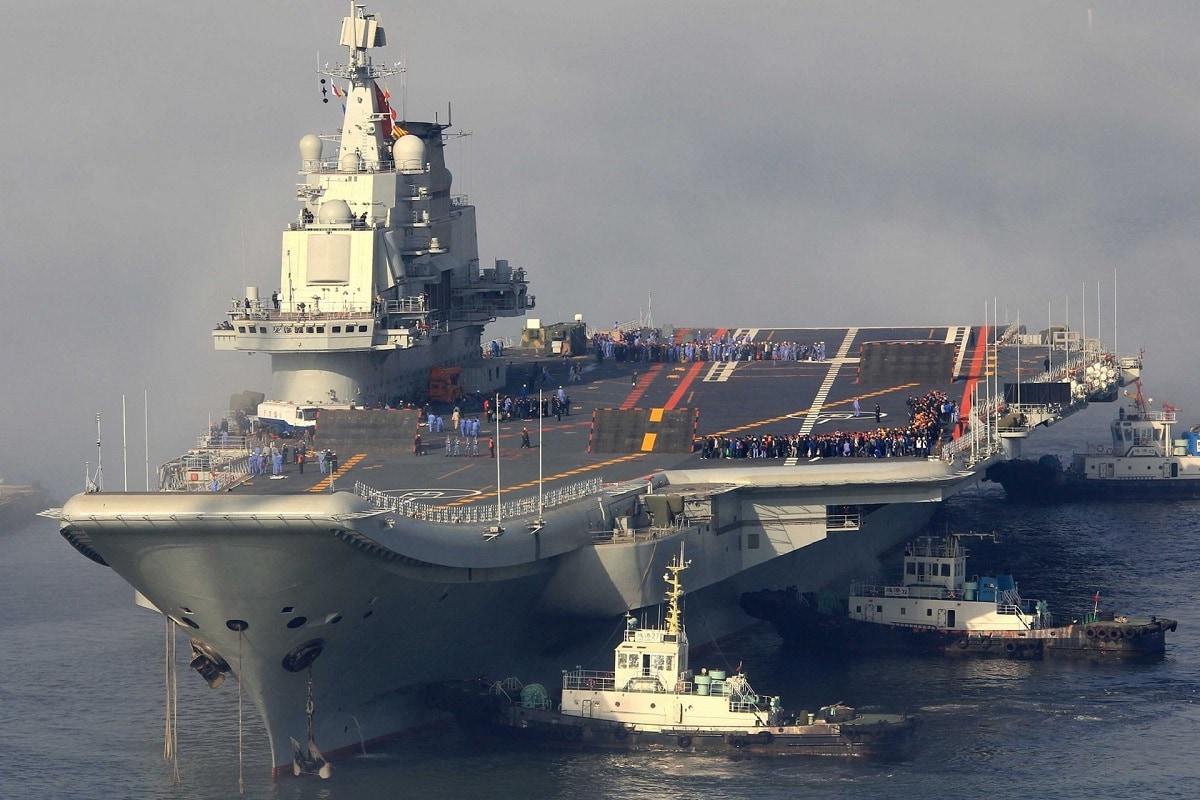
The Liaoning is not a new ship. It is a modified 001-class aircraft carrier based on the "Varyag," with a full-load displacement of about 60,000 tons, utilizing a ski-jump for takeoff, primarily carrying the J-15 series of carrier-based aircraft. Compared to the electromagnetic catapult of the Fujian, the Liaoning has inherent limitations in the takeoff weight and sustained launch efficiency of its carrier-based aircraft. However, this does not mean it lacks value: for an aircraft carrier group, the most difficult capability to replicate is not a one-time display, but the continuity of communication, resupply, alertness, and flight training after the group has crossed the first island chain.
The highlight of this operation is the extension of the training area from familiar nearshore waters to the Western Pacific. The aircraft carrier needs to rely on destroyers for air defense and anti-submarine operations at greater distances, integrated supply ships for endurance, and ensure that carrier-based aircraft, early warning, and electronic warfare forces work together. In simple terms, the Liaoning's journey resembles an "exam with a complete logistics system," rather than just a simple aircraft carrier cruise.
Signals from Overlapping US-Japan Exercises
The South China Morning Post mentioned that the US-Japan "Sword" exercises this year involved about 57,000 personnel, covering subjects such as missile defense and cross-sea coordination. The Liaoning carrier group has not been confirmed as a target of this exercise, but the proximity in time and space will force all parties to increase maritime and aerial surveillance, communication control, and crisis de-escalation measures. For the PLA, this provides an opportunity to observe the operational rhythm of US-Japan joint operations; for the United States and Japan, it serves as a window to assess the operational patterns of Chinese carrier groups in distant seas.
Variables in the direction of the Philippines are also increasing. The Global Times reported on the 15th that Chinese air and naval forces issued warnings and drove away a Philippine military helicopter near Huangyan Island. This report is a unilateral narrative from the Chinese side, and specific distances, flight trajectories, and on-site handling still await independent information cross-verification. However, placing this incident on the same timeline as the Liaoning carrier group's southward training shows that the South China Sea and the Philippine Sea are not isolated battle zones, but different nodes on the same maritime maneuvering chain.
How Far the Liaoning Can Go Depends Not Only on Carrier-Based Aircraft
It is important to remain calm; the Liaoning's distant sea training cannot be directly equated with mature aircraft carrier combat capabilities. The ski-jump takeoff limits the use of heavily loaded J-15s, and the capabilities of carrier-based fixed-wing early warning aircraft differ from those of catapult-equipped carriers; publicly available data on the group's high-intensity sustained operations, distant sea maintenance, and ammunition resupply remains limited. The author believes that what is truly worth observing is not whether the Liaoning can reach a certain sea area in a short time, but whether the PLA can connect aircraft carriers, early warning aircraft, long-range anti-ship firepower, and land-based aviation into a stable sensor-strike chain.
If this operation is merely an annual distant sea training, it indicates that the PLA is incorporating the Western Pacific into its routine training radius; if similar groups can more frequently cross the island chain in the future and maintain prolonged high-intensity operations of carrier-based aircraft, then the significance of the Liaoning will gradually shift from a "training platform" to a "system node." The question is whether the next publicly visible development will be more carrier groups or units that can demonstrate sustained operational capabilities in resupply, early warning, and drone operations.
References
- South China Morning Post, reports from October 14 to 15, 2026
- USNI News, report on the Chinese carrier group heading to the South China Sea on October 14, 2026
- Global Times, report on the helicopter incident near Huangyan Island on October 15, 2026
The Liaoning Carrier Group conducted training exercises in the western Pacific from October 14-15, 2026, overlapping with U.S.-Japan military drills. This operation marks a significant extension of Chinese naval training beyond coastal waters, involving coordination with destroyers and support vessels. Additionally, Chinese forces engaged a Philippine military helicopter near Scarborough Shoal during this timeframe, highlighting regional tensions.
- Liaoning Carrier Group conducted training exercises in the western Pacific from October 14-15, 2026.
- The training coincided with U.S.-Japan 'Sword' exercises involving approximately 57,000 personnel.
- The Liaoning is a modified Soviet-era aircraft carrier with limitations compared to newer models.
- Chinese forces warned and drove away a Philippine military helicopter near Scarborough Shoal during this period.
- The operation signifies an extension of Chinese naval training into the western Pacific.