

For years, Elon Musk insisted that SpaceX would send its first uncrewed Starships to Mars by late 2026. But that timeline has since slipped, with the company now shifting its near-term focus toward the Moon, which Musk once called a distraction.
While delays are often blamed on engineering challenges, the bigger obstacle is orbital mechanics, as Mars missions are governed by strict launch windows, months-long transit times, and enormous logistical hurdles that cannot simply be overcome with additional funding or faster manufacturing.
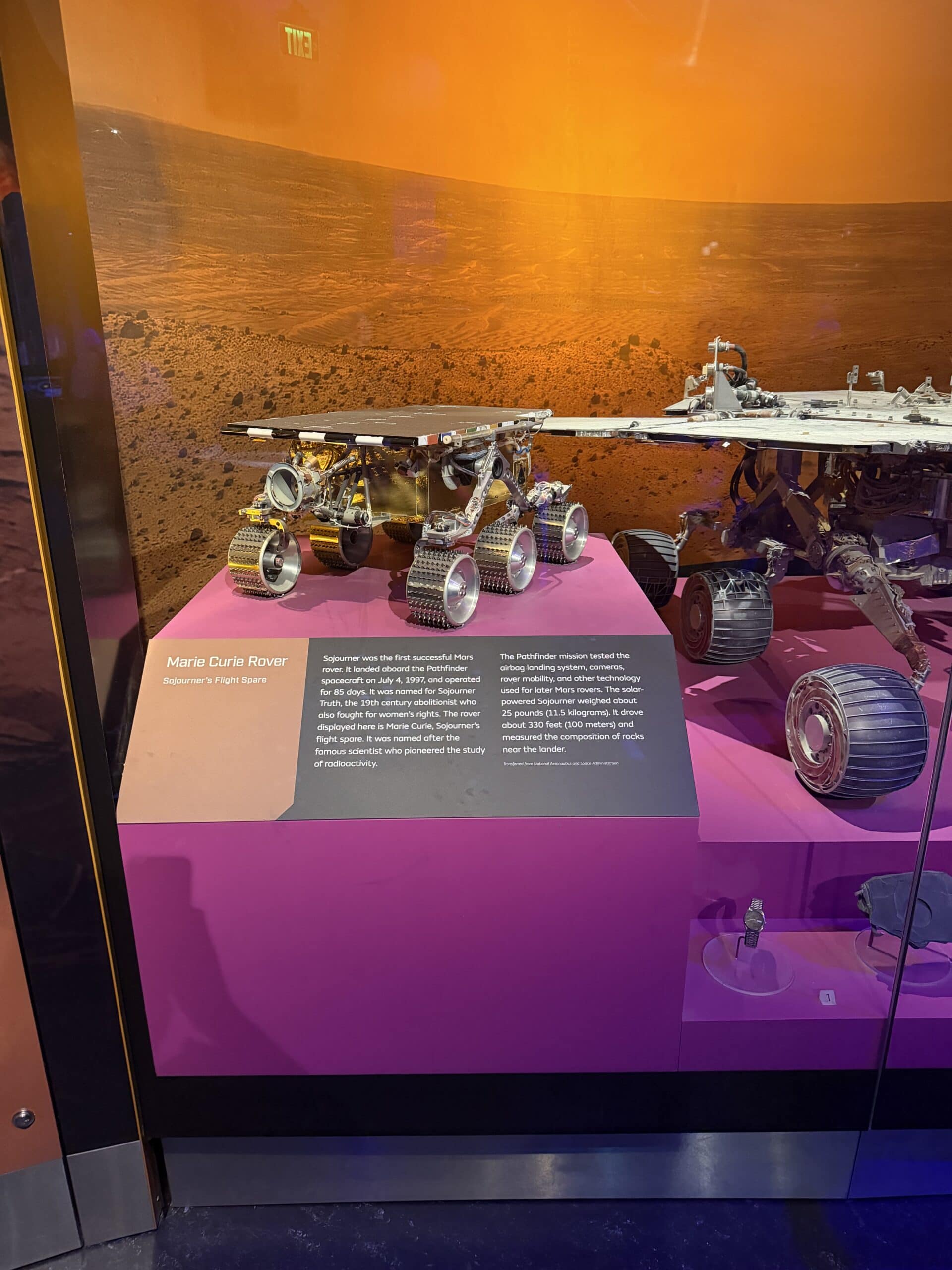
Mars Pathfinder Sojourner at the Smithsonian on July 1, 2026 image taken by 19FortyFive.
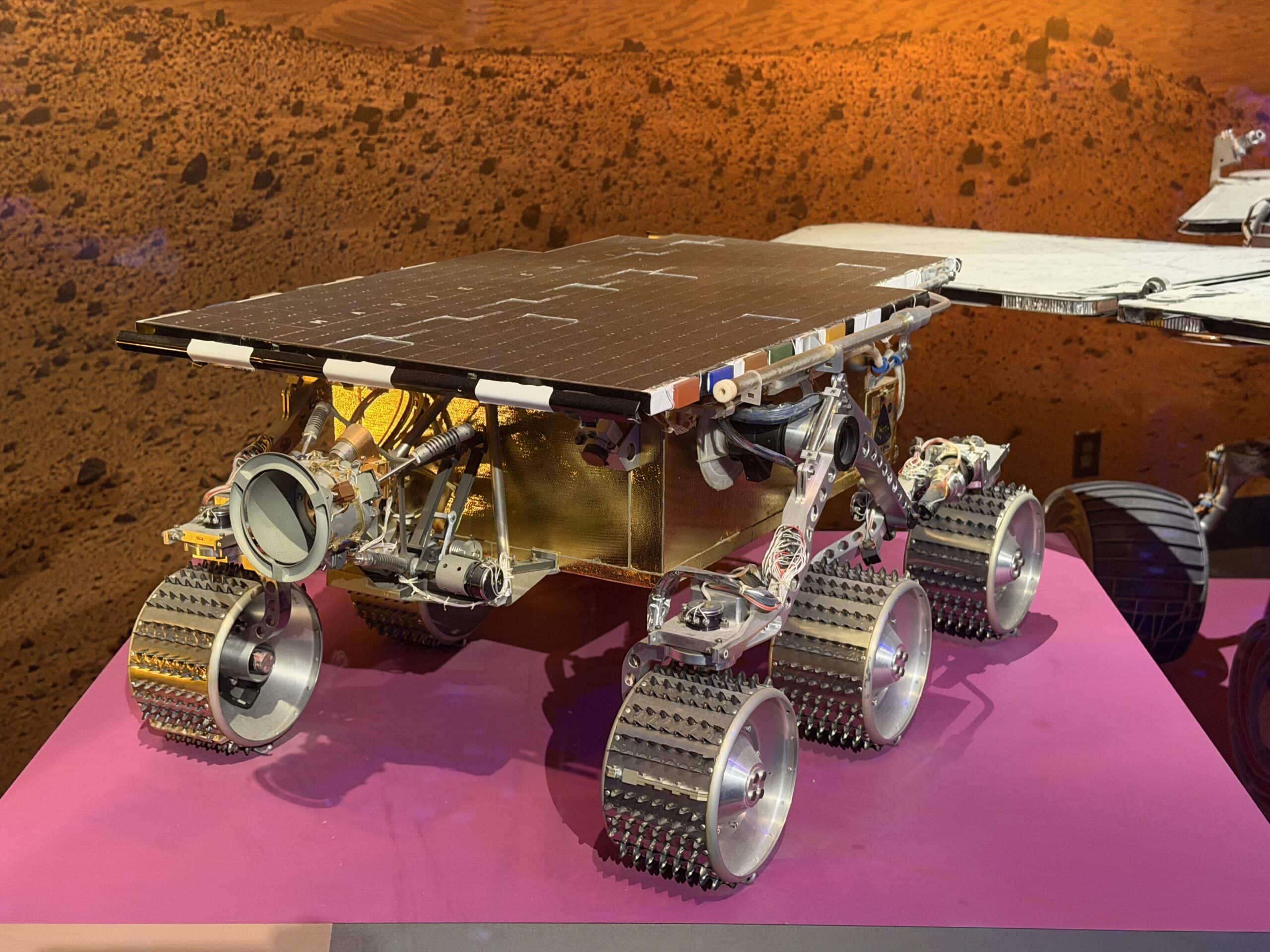
Mars Pathfinder at the Smithsonian on July 1, 2026 image taken by 19FortyFive.
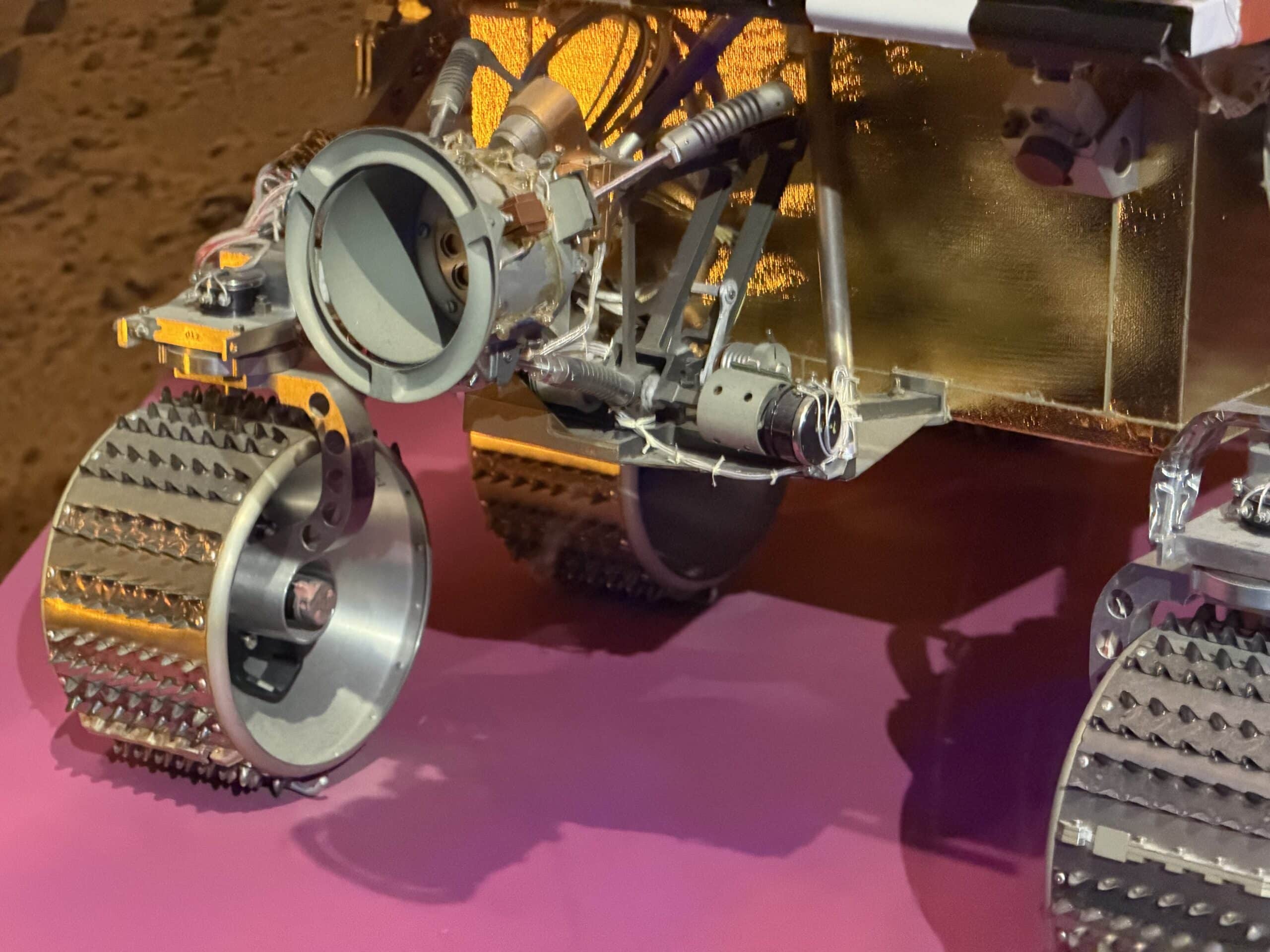
Mars Pathfinder at the Smithsonian on July 1, 2026 image taken by 19FortyFive.
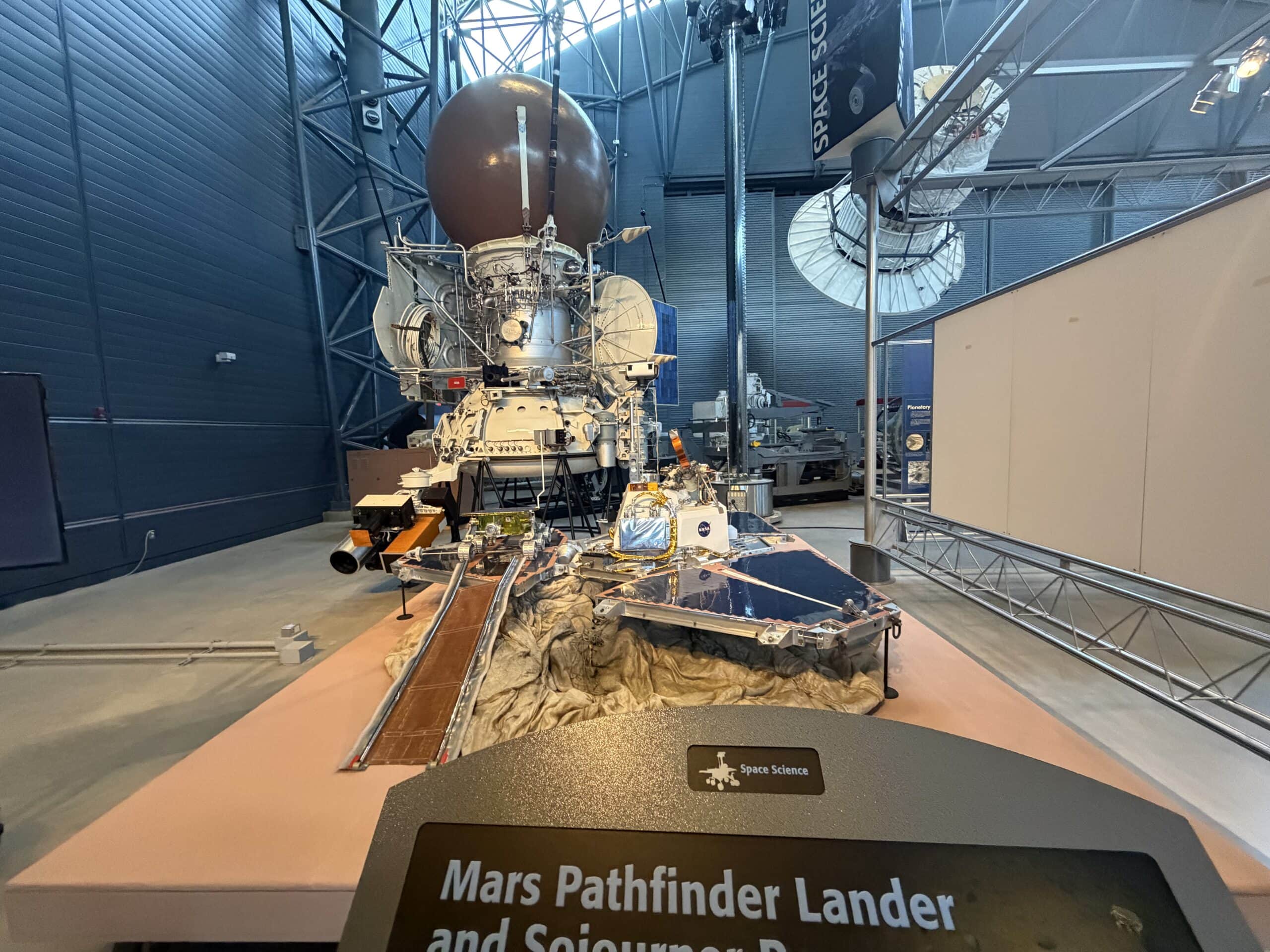
Mars Pathfinder at the Smithsonian. Image taken by 19FortyFive on 6/30/2026.
Misconceptions about Mars
Most people assume Mars is just far away. But in reality, the greater challenge of traveling to Mars is the constant motion of Earth and Mars around the Sun.
So neither the departure point nor the arrival point is a stationary destination. Launching a spacecraft requires intercepting another planet as it travels along its own orbit. Timing is just as important as rocket performance.
Engineers generally use what’s known as a Hohmann Transfer Orbit, the most fuel-efficient path between two planetary orbits.
Instead of flying directly to Mars, the spacecraft follows a long elliptical path around the Sun, with a trajectory that is designed so that Mars arrives at the same point in space at the exact moment the spacecraft reaches it.
It’s kind of like passing the puck in hockey—you don’t pass to where the receiving player is; you pass to where the player will be when the puck arrives.
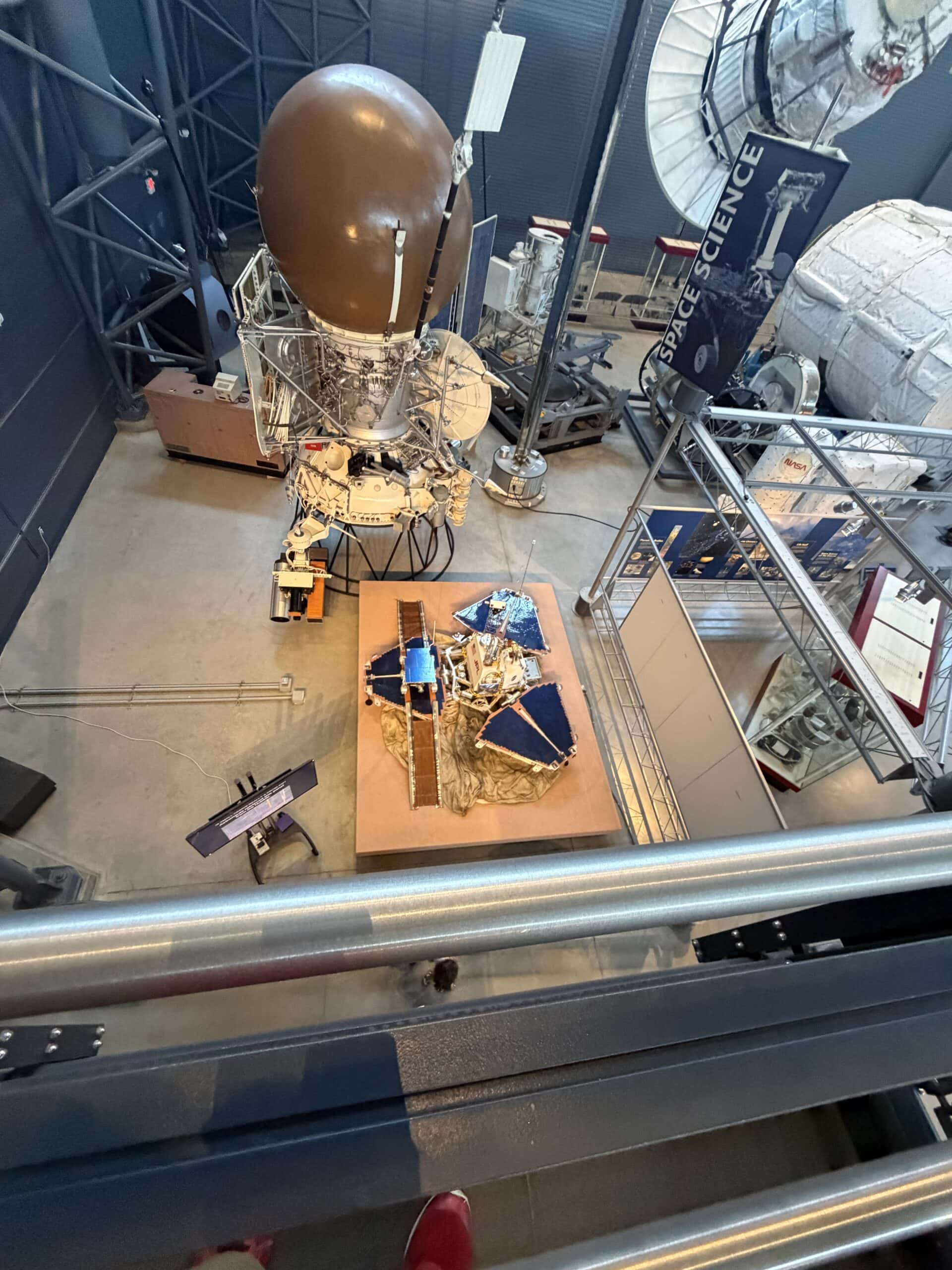
Mars Pathfinder at the Smithsonian. Image taken by 19FortyFive on 6/30/2026.
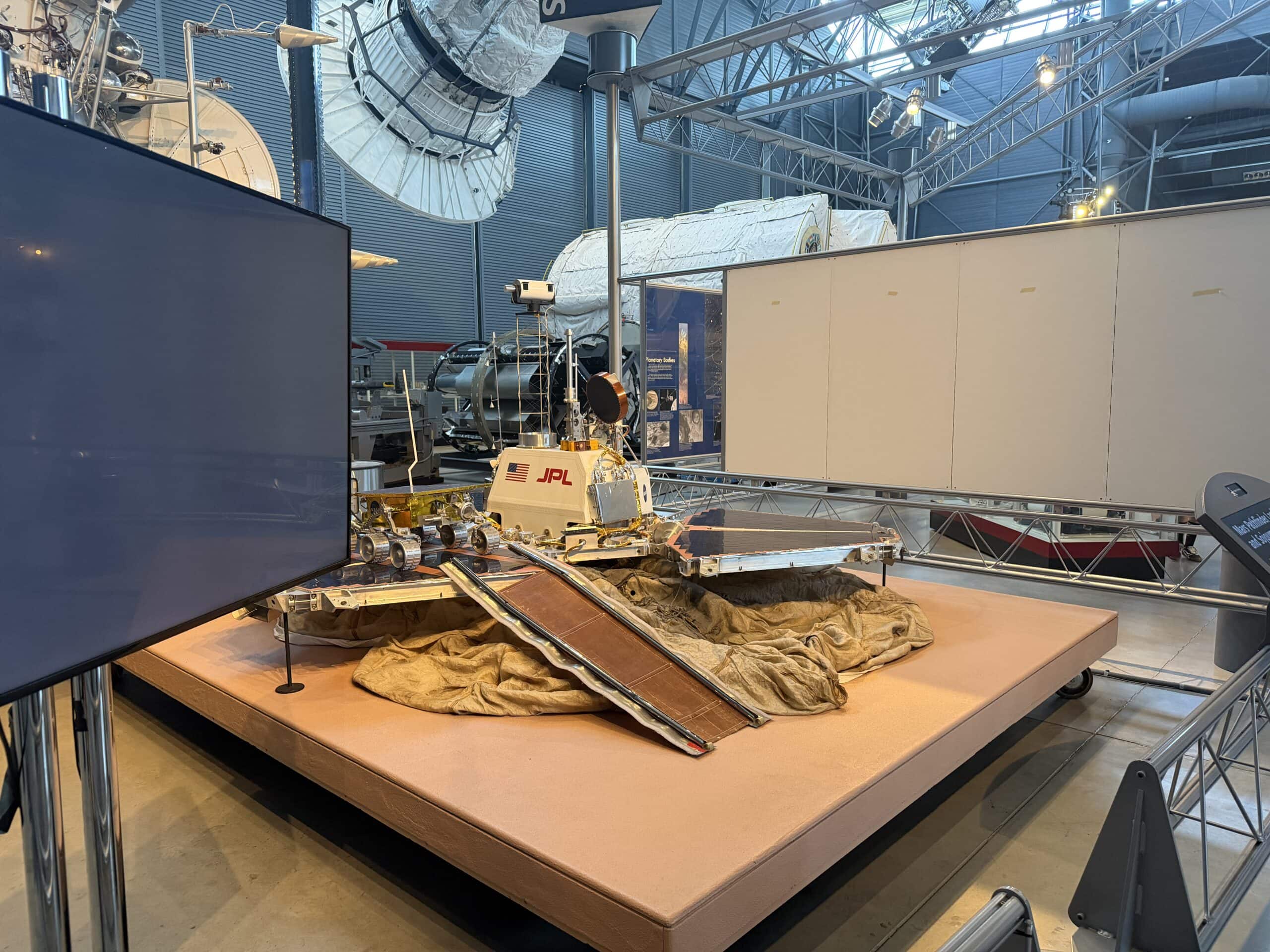
Mars Pathfinder at the Smithsonian. Image taken by 19FortyFive on 6/30/2026.
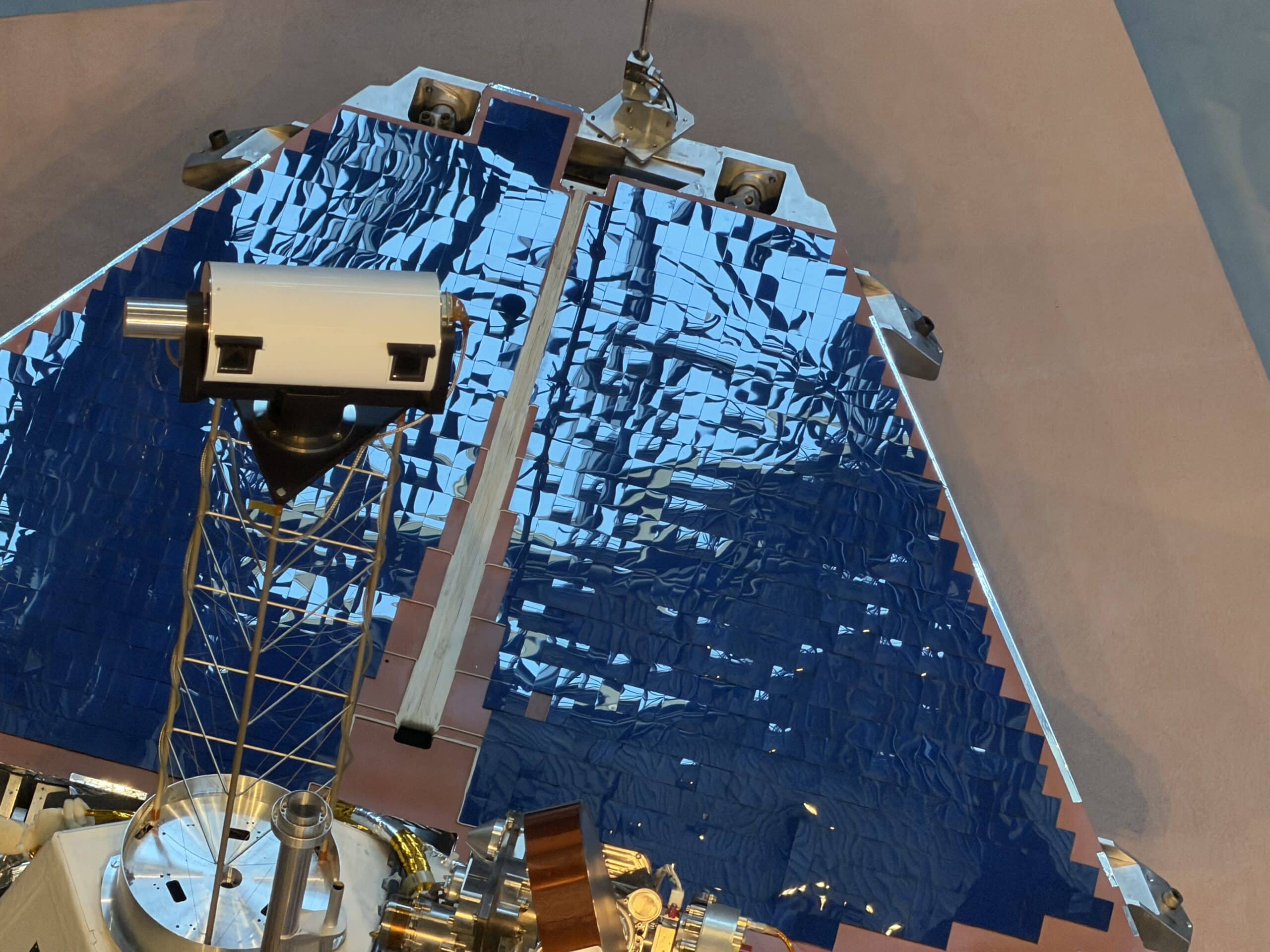
Mars Pathfinder at the Smithsonian. Image taken by 19FortyFive on 6/30/2026.
Shifting Windows
Launch windows only open every 26 months.
This obviously complicates Martian travel because Earth completes one orbit every 365 days, while Mars takes approximately 687 days. And because the planets travel at different speeds, they only line up in a favorable position about once every 26 months.
These opportunities are known as synodic launch windows. Missing one means waiting more than two years for another fuel-efficient opportunity.
That reality makes launch schedules extraordinarily unforgiving. Missing a window is a significant setback. A delay of weeks or months isn’t simply inconvenient.
Once Earth and Mars drift out of alignment, reaching Mars requires dramatically more energy and propellant. And while alternative trajectories exist, they become increasingly impractical for heavy spacecraft like Starship.
So as Starship development slipped behind schedule, the late-2026 opportunity effectively disappeared, forcing SpaceX to wait for the next viable launch window.
Months in the Making
Even a perfect launch is only a fraction of the journey. Under ideal conditions, a Mars transfer takes roughly 7 to 9 months in deep space.
During that time, the crew cannot receive rescue missions or emergency supplies. Unlike astronauts in low Earth orbit, Mars crews operate completely outside Earth’s protective environment.
Every single spacecraft system, from life support to power generation, must function reliably throughout the journey.
One remaining challenge is radiation exposure. Beyond Earth’s magnetic field, astronauts are exposed to Galactic Cosmic Rays (GCRs) and Solar Particle Events (SPEs).
Earth’s magnetosphere normally deflects much of this radiation.
But along the way to Mars, that natural protection ceases.
And long-duration exposure increases radiation dosage and complicates human missions. Engineers continue studying shielding strategies—but radiation remains one of the principal challenges of crewed Mars exploration.
The Refueling Problem
One of the largest engineering bottlenecks slowing a Mars visit is fuel.
Starship is designed to carry enormous payloads, and reaching low Earth orbit consumes most of its onboard propellant.
Before departing for Mars, it must be refueled in orbit. Accordingly, SpaceX plans to accomplish this using multiple tanker Starships carrying liquid methane and liquid oxygen.
But estimates suggest a single Mars-bound Starship could require roughly 8–12 tanker launches before departure. The scale here is massive, and orbital cryogenic fuel transfer at this scale has never been fully demonstrated.
So a single Mars mission isn’t just one launch. If SpaceX wanted to dispatch several Starships during a single launch window, dozens of successful launches would need to occur within a relatively short period.
Every tanker must reach orbit successfully. Every refueling operation must work correctly. Every vehicle must remain in good condition until departure. The complexity required is off the charts.
About the Author: Harrison Kass
Harrison Kass is a writer and attorney focused on national security, technology, and political culture. His work has appeared in Tablet, City Journal, The Hill, The Spectator, and The Cipher Brief. He holds a JD from the University of Oregon and a master’s in Global & Joint Program Studies from NYU. More at harrisonkass.com.