
The Mecca Agreement for Joint Defense between Saudi Arabia, Turkey, and Pakistan Redefines Regional Security After the Iran War
 Ahmed Al-Rashid
The Mecca Agreement for Joint Defense between Saudi Arabia, Turkey, and Pakistan Redefines Regional Security After the Iran War
On August 7, 2026, three of the most powerful leaders of the Islamic world gathered at the Al-Safa Palace overlooking the Grand Mosque in Mecca — Saudi Crown Prince Mohammed bin Salman, Turkish President Recep Tayyip Erdoğan, and Pakistani Prime Minister Shahbaz Sharif, accompanied by Pakistani Army Chief Asim Munir — and signed what is officially known as the "Mecca Agreement for Joint Defense." The agreement stipulates that any armed aggression against any of the three countries is considered aggression against all three collectively. This is not a military alliance akin to NATO, as analysts were quick to clarify, but it is the clearest declaration yet that major regional powers are beginning to chart their own security map.
Why Now Specifically
The timing is not random. The U.S.-Israeli war on Iran that erupted last February — and the subsequent partial closure of the Strait of Hormuz and Iranian missile strikes on civilian facilities in Saudi Arabia and Gulf states — revealed the fragility of existing security arrangements. Riyadh hosted U.S. military assets that came under attack, while Washington failed to provide sufficient air defense munitions to its partners as priority was given to Israel.
From a military standpoint, any officer who has served in the region understands that reliance on a single external party is no longer a rational option. This is not a political stance, but a practical conclusion: when the Patriot systems protecting your cities are tied to manufacturing and delivery decisions in Washington, you do not control your security. The Mecca Agreement is an implicit acknowledgment of this reality.
The negotiations did not start from scratch. After the Israeli attack on Doha in September 2025, Saudi Arabia and Pakistan signed a bilateral defense agreement. Then, on March 19, 2026, the foreign ministers of the three countries met in Riyadh on the sidelines of an Islamic summit to establish a broader framework. However, the Iran war — and its direct repercussions on Saudi security — accelerated everything.
What Each Party Actually Offers
The agreement is best understood through what can be termed the "Triangle of Capability": equipment × training × institutions. Each of the three parties brings a different element that complements the others:
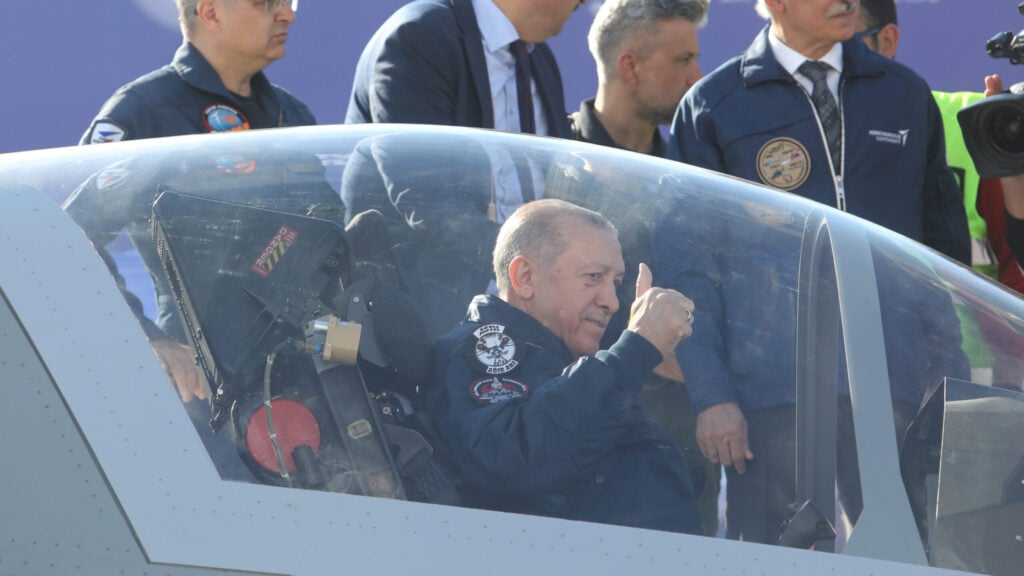
Turkey possesses the second-largest army in NATO and a rapidly evolving defense industry — from the Bayraktar drones that have proven effective in multiple battlefields to the fifth-generation KAAN fighter jet currently under development. Ankara does not just sell weapons; it transfers technology, training, and production partnerships. This is precisely what Saudi Arabia needs: not just purchasing ready-made platforms, but building local production capacity that aligns with the goals of Vision 2030, which aims to localize 50% of military spending.
Saudi Arabia has the financial power — it is the largest oil exporter in the world — in addition to significant political and religious influence in the Arab and Islamic worlds. Riyadh is the one that can fund joint defense projects that Ankara or Islamabad cannot afford on their own. The Saudi military budget of $75 billion makes it the fifth-largest military spender globally, giving it considerable negotiating weight.
As for Pakistan — and here lies the point that many analysts overlook — it possesses something that neither Turkey nor Saudi Arabia has: a nuclear arsenal. Islamabad is the only Muslim nuclear power, and this alone changes the deterrence equation in any regional defense arrangement. Additionally, it has an army of over 650,000 soldiers and extensive operational experience in complex combat environments. Pakistan is not just a partner — it is a true strategic depth for both Riyadh and Ankara.
There is also the existing bilateral defense cooperation between Turkey and Pakistan — drones, naval platforms, training, and intelligence sharing — which was practically tested during the India-Pakistan confrontation in May 2025. The new trilateral framework amplifies the possibilities of this cooperation and grants it broader institutional legitimacy.
What Is Not in the Agreement
The agreement is not directed against Iran — this was confirmed by Turkish Foreign Minister Hakan Fidan a day after the signing, describing the agreement as "an important step towards regional stability." It is not a substitute for the American security umbrella. Even the most optimistic analysts of the agreement acknowledge that these arrangements "will not replace the United States, but will provide additional strategic options."
In my view, this point is precisely the crux of the matter. The three countries still rely on American and Western weapon systems at the core of their military capabilities. Saudi F-15s, Pakistani F-16s, and Turkish F-16s are all American. Command, control, and intelligence systems depend on Western infrastructure. These countries cannot transition to complete strategic independence overnight, even if they wanted to.
The agreement also lacks clear executive mechanisms. Details of specific military commitments, the structure of joint command, and the conditions for activating the mutual defense clause have not been published. This is not NATO. This is a framework for cooperation, not a legally binding defense treaty in the precise legal sense. The distance between a framework and a treaty can be very long.
A Different Calculation than Western Analyses
Most Western analyses of the agreement focus on one question: Is this the beginning of the end of American dominance in the Gulf? This question is fundamentally flawed. These three countries are not thinking about "ending" the American presence — but rather diversifying it.
What is happening is akin to someone building a second home not to leave their first home, but to have a place to retreat to when access to the first is blocked. Saudi Arabia, in particular, understood from the Iran war that Washington may become preoccupied elsewhere — specifically in Tel Aviv — and that Riyadh needs options that do not go through the Pentagon. This is not "decoupling," but "multiple linkages."
From another angle, the agreement carries a message to Tehran that is no less important than its message to Washington: any aggression against Saudi Arabia will no longer be merely a bilateral Saudi-Iranian confrontation. Turkey, with its military weight, and Pakistan, with its nuclear capability, have become parties in the equation. Deterrence is no longer unilateral.
The Structural Contradiction That Will Not Disappear
What interests me as a former military officer is not the text of the agreement, but the contradiction it embodies and cannot resolve. Riyadh wants independence in its security decision but still relies on Washington for the maintenance of its fighter jets and operation of its advanced defense systems. Ankara wants to expand its regional influence as a leader of the Islamic world but remains a NATO member and hosts American bases on its territory. Islamabad wants to play an ambitious regional role, but its economy depends on foreign aid — from Saudi Arabia, China, and the International Monetary Fund — which may be consumed by its internal crises before it reaches any external battlefield.
The agreement will not resolve these contradictions. But it acknowledges them — and that in itself is an important development. The three countries clearly state: we need multiple options, not a single guardian. Practically, this is a rational path for any country that wants to protect its sovereignty in a highly turbulent regional environment.
The most important question remains — and will remain unanswered for years: Will these words translate into real military capability on the ground? The military history of the region is filled with trilateral and quadrilateral agreements that remained ink on paper. But the difference this time — and perhaps this is the deeper lesson from the Iran war — is that the cost of failure is no longer theoretical. Missiles have fallen on Riyadh. The strait has closed. Oil has stopped flowing. The decision is no longer a strategic option for discussion, but has become an existential demand that cannot be postponed.
And when existential necessity turns into state policy, even the most rigid military bureaucracies in the region may be forced to act. We shall see.
On August 7, 2026, Saudi Arabia, Turkey, and Pakistan signed the Mecca Agreement for mutual defense in Mecca, Saudi Arabia. The agreement stipulates that any armed attack on one of the nations will be regarded as an attack on all three. This development reflects a significant shift in regional security dynamics, with each country contributing unique military capabilities and resources to enhance collective defense.
- Saudi Arabia, Turkey, and Pakistan signed the Mecca Agreement for mutual defense on August 7, 2026.
- The agreement states that any armed attack on one of the countries is considered an attack on all three.
- The agreement is not a military alliance like NATO but signifies a shift in regional security dynamics.
- Turkey brings military capabilities and technology, while Pakistan contributes its nuclear arsenal.
- Saudi Arabia provides financial resources and political influence in the region.