
The military lacks an ‘overarching plan’ to improve munition stockpiles—partly because it’s no one’s job
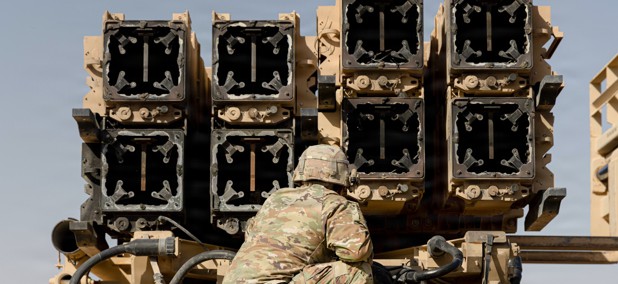

The Defense Department has no “overarching plan” to identify, achieve, or measure its progress toward long-term munition production goals, according to a Government Accountability Office study released on Thursday, which said the military was too reactive to global events and unprepared to forecast its own needs.
The GAO cited—among other issues—a lack of centralized authority over weapons inventories, which have been depleted by the Iran war and are vital to U.S. plans for a potential conflict with China.
At the center of the problem lies a discrepancy between what the military can buy and what it actually needs, which the GAO said could even result in munition investments that exceed the Pentagon’s requirements.
“While DOD is taking steps to focus on munitions shortages, it is not positioned to address these gaps,” the report’s authors wrote. “DOD does not have an overarching plan or designated and empowered leadership to improve munition inventories and meet its munitions requirements. By not identifying long-term goals, strategies to achieve them, and metrics to gauge progress, DOD cannot be sure that its actions will address its munition shortfalls. ”
Top administration officials, including Defense Secretary Pete Hegseth, have denied that the U.S. has a shortage in munitions, despite reports and independent analyses showing the Iran conflict has alarmingly drained key weapons, especially for highly-sought Patriot interceptors that can take more than two years to make.
But in its response to the GAO study, Pentagon officials concurred with the recommendation that the military needed to develop a long-term plan to improve its munition production.
“We agree with the need for an overarching framework that better integrates munition requirements, inventory levels, production, resources, and long-term objectives,” wrote David Cadman, the Pentagon’s acting deputy for acquisitions, who added that the department “already executes many elements” of the GAO’s recommendation.
The GAO study did not explore the inventories of specific munitions, but examined the processes by which an expansive list of weapons — from artillery shells to Tomahawk missiles — are tracked, forecast and generally addressed by the Pentagon.
“The important thing is that [the study] is not about current shortages,” Mark Cancian, a senior adviser with the Center for Strategic and International Studies who has written extensively on munitions policy. “It's about the future and deciding long-term inventories, production, and munitions mixes.”
Defense officials have emphasized the need for a “high-low” mix of munitions—that is, a balance between high-tech, hard-to-make weapons and cheaper ones. The Iran war illustrated the U.S. military’s reliance on expensive interceptors, which were heavily expended to shoot down cheap Shahed drones that only cost tens of thousands of dollars.
“When you have an exquisite capacity, and you are starting to expend an exquisite capacity to knock down non-exquisite capabilities that are rapidly replenished, it is an economical game that we're not going to win,” said Wayne Sanders, a defense analyst with Bloomberg Intelligence. “This is starting to turn into one of those revolutions in military affairs to say we have to change our doctrine as well as we change our production capacity in the U.S.”
In an email to Defense One on Friday, the GAO’s director for defense capabilities, Diana Moldafsky, noted that the Pentagon had identified shortfalls before the conflict with Iran, but said that the war “made addressing those shortages more urgent.”
“Our key point is that meeting DOD's munitions requirements will be challenging,” Moldafsky said. “A department-wide plan would help the department direct its resources towards its most critical munitions needs.”
Cancian said that Russia’s 2022 full-scale invasion of Ukraine, and the consequent transfer of Patriots and other weapons to Kyiv, introduced concerns about the defense industrial base and its ability to respond to munition needs around the world.
Meanwhile, the Pentagon has inked billions of dollars in multi-year “framework agreements” with top defense companies over the last year to help increase high-tech munition production, which require funding from Congress to come to fruition. The Trump administration also invoked the Defense Production Act earlier this year in an attempt to bolster munition supply chains.
A Pentagon spokesperson declined to address the GAO study directly, or even to be quoted by name. But they said the military is “fully equipped to strike at the time and place of the President’s choosing…while preserving a deep, ready stockpile to defend our people and interests.”
Part of the problem is that no one authority is really in charge of keeping arsenals topped off and ready, the report found.
The GAO identified several Pentagon offices and working groups, including individual service entities, responsible for managing munition inventories, but no one dedicated authority “that empowers the leadership to make decisions that improve munitions inventories department-wide and hold them accountable for the outcomes achieved, such as improving munitions inventory levels.”
The study also said that the services maintain separate tools to track munition inventories, which then feed into a Pentagon system known as the Munitions Readiness Initiative. But researchers said the DOD has limited oversight over that tracking platform and hasn’t regularly reconciled it with service-level numbers.
Citing an unnamed Pentagon official in its acquisitions and sustainment office, the GAO said “the office was reluctant to impose additional responsibilities on the services for maintaining data to meet MRI’s needs because they recognize that the services already face numerous responsibilities in managing their own munitions inventory data.”
The Pentagon concurred with most of the GAO’s recommendations, but only partially agreed with one: that the data management plan be run out of the DOD’s digital and AI office. Cadman’s response said that the Pentagon’s acquisition and sustainment arm was best suited to develop it.
The U.S. Department of Defense lacks a comprehensive plan to manage and improve its munition stockpiles, as highlighted by a recent Government Accountability Office study. This deficiency has resulted in a reactive approach to global events, risking shortages in critical munitions like Patriot interceptors. Defense officials acknowledge the urgency of developing a long-term strategy to address these gaps and ensure adequate inventory levels.
- The Defense Department lacks a centralized authority over weapons inventories.
- The GAO study emphasizes the need for a long-term plan for munition production.
- Current munitions shortages are exacerbated by the Iran conflict and the war in Ukraine.