

Contrary to what you might believe, SpaceX very badly wants to get humans — specifically Americans — to Mars very soon. The problem is that it’s a Herculean task, given the technology at our disposal today.
We don’t have the Starship Enterprise (yet) where we can just hit a button, go to warp speed, rely on the deflector shields for protection, and get to another planet in minutes with hundreds of people aboard.
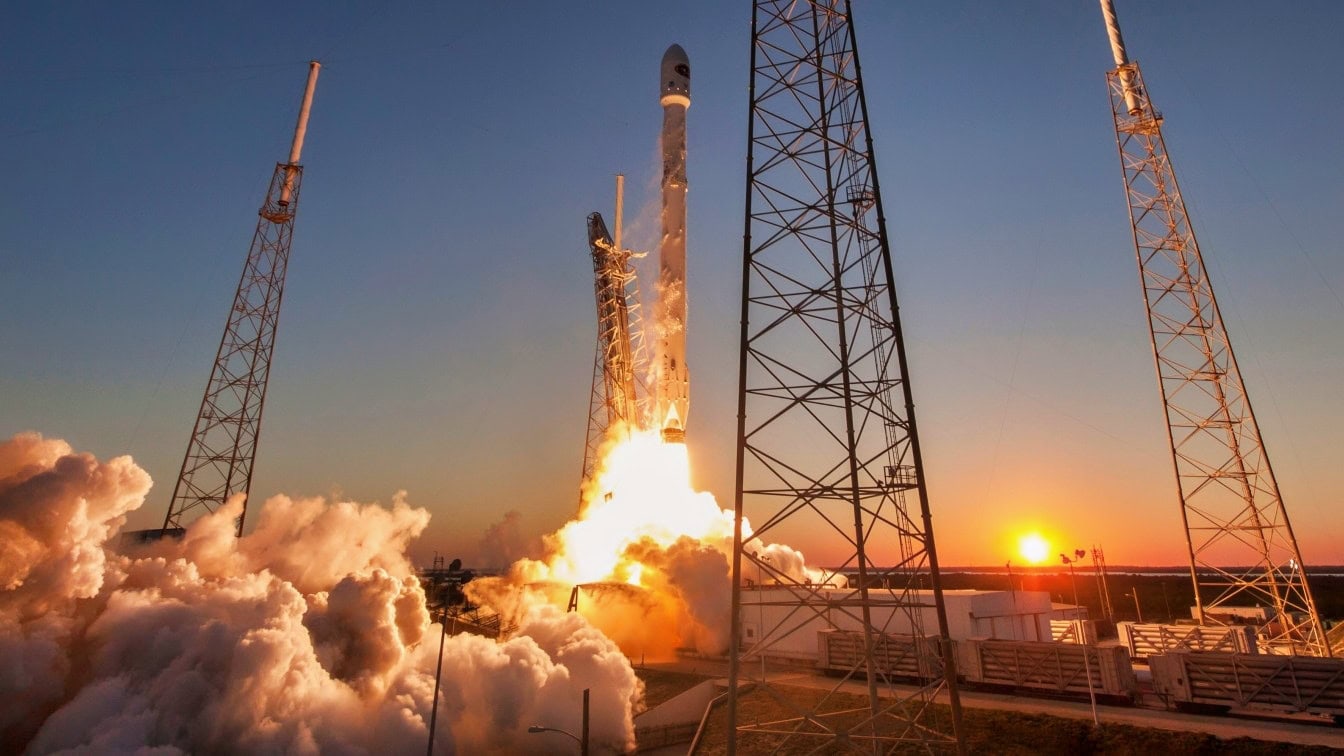
SpaceX Launch. Image Credit: SpaceX.
It takes months of arduous travel in the vacuum of space–all while being bombarded by cosmic radiation–with no gravity the entire time to get humans from Earth to Mars.
Why the Moon Comes Before Mars
SpaceX has struggled to solve this problem. It isn’t just about the rocket. That’s but one of many problems to solve. In fact, that might be the easiest problem to solve.
Musk has spoken about his desire to send a wave of Tesla-type robots to land on Mars ahead of any American astronaut and to develop a habitat for them.
But even that plan is risky. All the technology involved is unproven.
And sending that level of tech to a distant world, like Mars, hoping it all works out, isn’t really a cost-effective strategy. People should remember that SpaceX is a private company. It might be trying to do the nearly impossible.
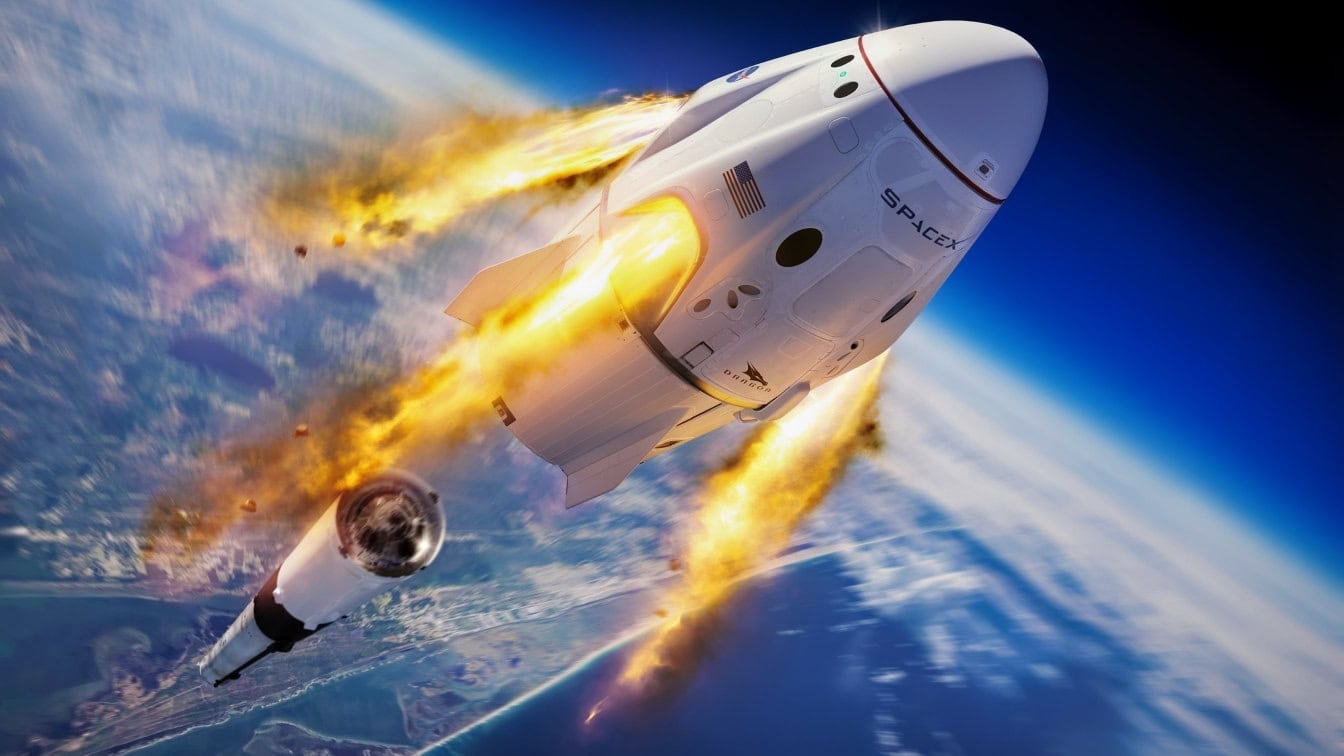
SpaceX Launch SpaceX Image Handout
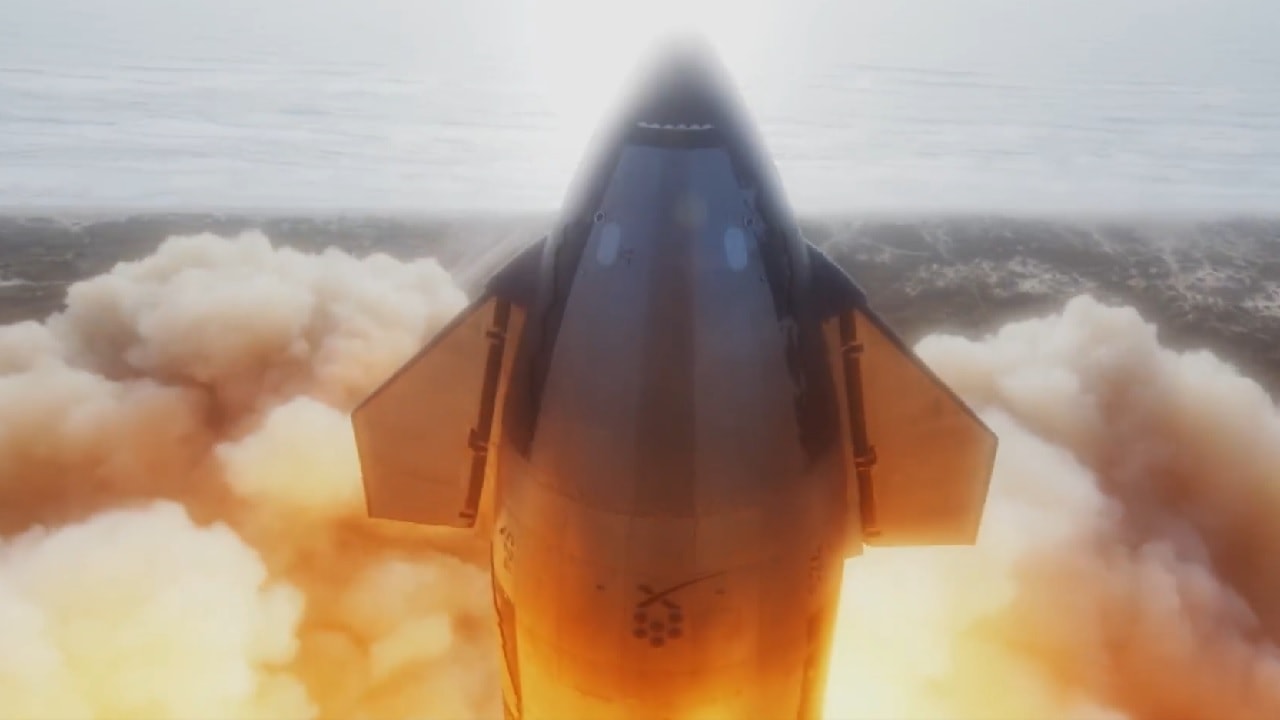
SpaceX Rocket Takeoff. Image Credit: Creative Commons.
It relies heavily on government contracts. But it remains a company that must perform for its investors.
That’s why Elon Musk’s decision to refocus his time and effort on getting humans to the Moon before Mars is not necessarily a failure.
On the contrary, it indicates a deeper commitment to working out whatever complications may arise on a longer-duration Mars mission in an arena much closer to Earth.
Because the Moon is closer, it is cheaper to move materials and people there. It’s also easier to test new tech there than it is to try it all out on Mars for the first time.
Moon Base Alpha: The Foundation of a Space Economy
Moon Base Alpha is what SpaceX is looking at. Musk envisions this facility on the Moon not only as America’s manned base operations but also as a massive, off-world computing and industrial hub.
Here is where one begins to understand better Musk’s long-term strategic thinking on the human colonization of the Solar System and SpaceX’s role.
Because once you start talking about manufacturing in space, you’re now talking about Starship Enterprise-type development coming down the line.
By utilizing the Moon’s abundant resources— critical minerals, ice for rocket fuel, and other rare-earth minerals— Musk intends to slash operating costs drastically.
Rather than having to launch everything from Earth to the Moon, the lunar colony (like Musk’s intended Mars colony) becomes self-sufficient over time.
In zero-gravity, atmosphere-less Moon, Musk’s SpaceX can build newer, better starships without ever having to waste money on the massive amounts of rocket fuel needed to escape Earth’s gravity.
Musk’s moon colony becomes self-enriching, too. Ultimately, space mining will become the basis of the future space economy.
By establishing a strong foothold on the lunar surface, Musk will extract the resources he needs to build his next generation of spacecraft for eventual Martian colonization, and he could potentially fund it all by selling lunar resources back on Earth.
The AI and Robotics Revolution Begins on the Moon
Then there’s the robotics component. In my popular 2020 book, Winning Space: How America Remains a Superpower, I posited that the one place where artificial intelligence (AI) and robotics would see exponential growth in both development and utility would be space. It is in space and on the Moon that robots and AI will best serve human needs.
By building an army of robots and converting the Moon into a giant data center supporting the AI and Tesla robots there, Musk would ensure his tech developed more rapidly than systems that remain earthbound.
Eventually, Musk could take his advanced robotics and sell iterations of them on Earth, enhancing the AI and robotics market here.
Musk intends to turn the lunar colony into a launchpad for AI-equipped satellites as well. Energy collected from solar panels powers these satellites.
Data farms would be launched directly into orbit using electromagnetic mass drivers, essentially advanced catapults for space, to effectively curb additional rocket-fuel costs.
Winning the Moon Is How America Wins Mars
Think of Musk’s proposed lunar colony less as the New World and more as a stepping stone to even greater frontiers (in this case, Mars).
Trying to go directly from Earth to Mars has always been a daunting prospect. It has proven to be more difficult than even Musk probably assumed.
By spending time developing the Moon and using it as a testbed for eventual technologies for colonizing Mars, Musk not only enhances his own bottom line but also increases the likelihood of success for his Martian colonization run.
What’s more, Musk will help the United States maintain space dominance over its foes by capturing the best real estate on the Moon before the Chinese and Russians can.
He who controls the Moon controls the Earth-Moon System.
He who controls that dominates the Earth below. Thanks to his company’s reliance on US government contracts, SpaceX can help NASA acquire the most important parts of the Moon while still furthering its own goal of getting Americans to Mars before anyone else.
That’s what I call “Winning Space.”
About the Author: Brandon J. Weichert
Brandon J. Weichert is the Senior National Security Editor at 19FortyFive.com. He also manages The Weichert Brief on Substack. Weichert also hosts “National Security Talk” on Rumble. He is the author of four bestselling national security books, the most recent of which is A Disaster of Our Own Making: How the West Lost Ukraine (Encounter Books). Follow him via Twitter/X @WeTheBrandon.