

The US Navy retired the S-3 Viking in 2009, and the argument over that decision has never really ended. The carrier jet did a little of everything, hunting submarines, attacking ships, refueling other aircraft, and flying surveillance, which is why Lockheed called it the Swiss Army knife of naval aviation.
Why the S-3 Viking Was Special
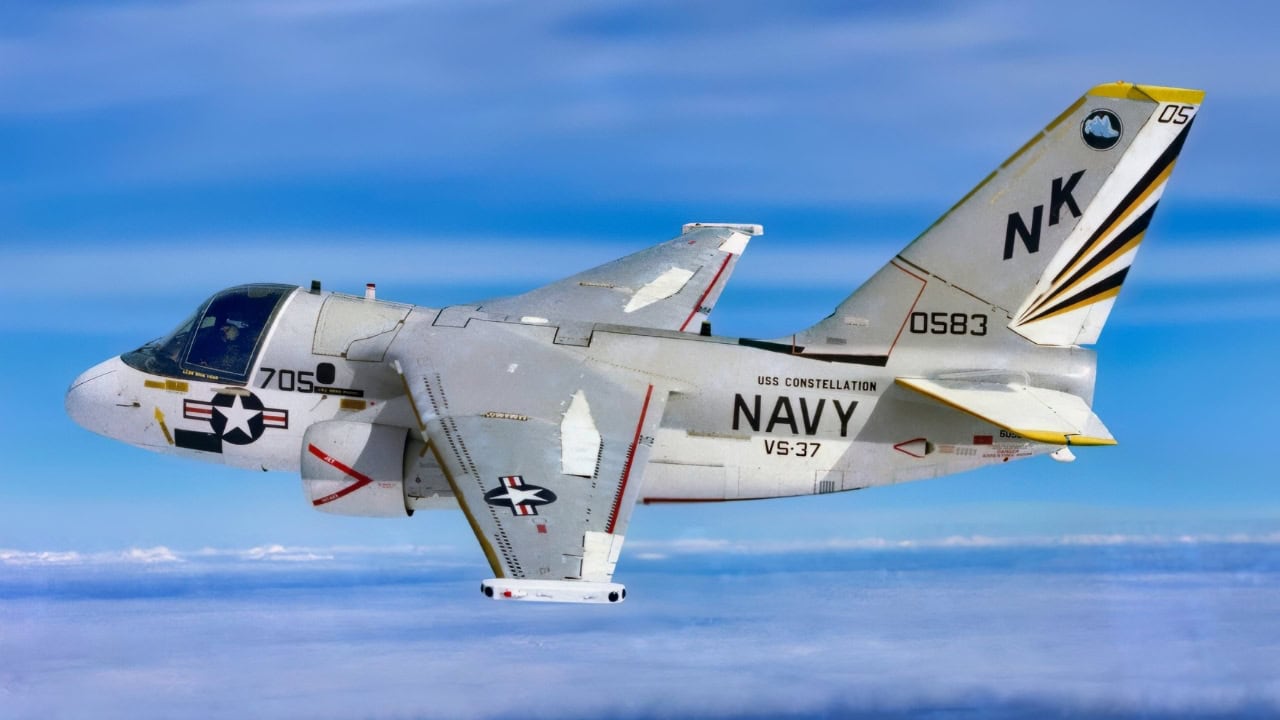
S-3 Viking. Image Credit: Creative Commons.
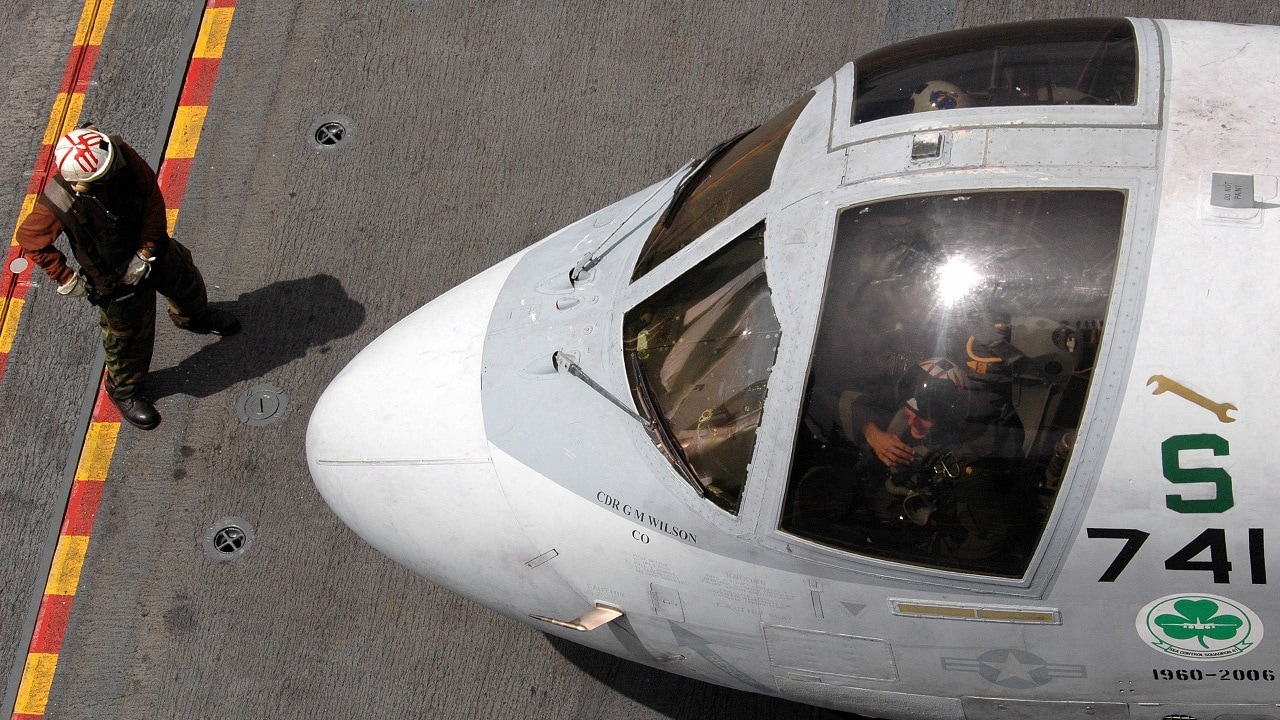
A U.S. Navy S-3B Viking aircraft assigned to the”Shamrocks”of Sea Control Squadron 41 prepares for launch from the U.S. Navy Aircraft Carrier USS NIMITZ (CVN 68).
The Lockheed S-3 Viking was a carrier-based jet aircraft that Lockheed began building in the 1970s. It had its first flight in January of 1972 and was formally introduced in 1974. It was sometimes called “The Hoover,” due to the USNI referring to it as “the distinctive vacuum-like sound of its engines.”
Between 1971 and 1978, 187 of them were built. It saw action in several wars, including the Gulf War, the Yugoslavia campaign in the late 1990s, and the war in Afghanistan, after the 9/11 attacks.
In 2009, the S-3 Viking was retired. And some are still, to this day, second-guessing that decision.
Retirement Day
Lockheed Martin, in a press release in January of 2009, announced that the last S-3 Viking had been retired from flight service, with ceremonies held that day in Jacksonville, “closing out the aircraft’s distinguished 35-year Naval career.”
“The S-3 Viking was known as the ‘Swiss Army Knife of Naval Aviation’ and served the U.S. Navy well in a wide variety of roles over the course of its operational service life,” Ray Burick, then Lockheed Martin vice president of P-3/S-3 programs, said upon its retirement in 2009.
“The Viking has played a critical role in carrier-based anti-submarine and anti-surface warfare, as well as overland operations, refueling, targeting, and electronic surveillance. And of course, Lockheed Martin is proud of the role it will continue to play in support of these critical Navy carrier-based missions, as many of these missions will eventually be carried out by the F-35C Lightning II.”
At the time of the retirement, Lockheed said that the NASA Glenn Research Center near Cleveland owned four of the planes for “aircraft icing research missions,” and that four more would remain in service in the Navy in a support role. Per Defense News, in 2014, 91 of the aircraft were at the time in storage at the Davis-Monthan Air Force Base.
After that retirement, per USNI, “the Naval Air Warfare Center Weapons Division, Naval Test Wing Pacific, and the VX-30 Bloodhounds at Point Mugu saw the opportunity to acquire a few Vikings for their own use.”
Those three Vikings “supported various Department of Defense test communities and customers” for a few years. But then, in January of 2016, the Navy announced that the last Viking had left Naval service.
“They still have life in them,” Capt. John Rousseau said upon the S-3’s retirement in 2016. “But it was time for another depot-level maintenance period, and you have to weigh that cost against the little time you could still get out of them.”
At that point, it was believed that one of the Vikings would head to NASA.
“So many amazing people have been associated with the S-3 community over the years,” Rousseau said at the time. “This last Navy flight is difficult. It feels like the end of an era.”
The NASA Age
Then, in April of last year, the last of the Viking planes was retired by NASA.
After more than a decade of support for NASA missions, the plane departed NASA’s Glenn Research Center and headed to the National POW/MIA Memorial and Museum in Jacksonville.
“We are honored to be part of it,” JD Demers, chief of Aircraft Operations at NASA Glenn, said in NASA’s statement at the time. “Moving the S-3 is a win-win for everybody. The museum gets an aircraft in beautiful shape, and our S-3 gets to continue living a meaningful life.”
NASA had retired a different S-3 in 2021. In addition, parts donated from the planes “contributed to communications research in advanced air mobility and monitoring of algal bloom growth in Lake Erie,” NASA said.
It was a familiar spot for the S-3, as the museum is the former site of Naval Air Station Cecil Field, where the Vikings once flew.
“Having this aircraft added an extra 10 years of life to its sister plane,” Demers added. “Those 10 years were vital for research. This plane allowed us to keep flying that aircraft after the Navy retired the S-3B Vikings in 2009. We wouldn’t have been able to find parts.”
The museum also welcomed the aircraft.
“It’s really fortunate for us that this S-3 has such a well-kept, beautiful airframe that we can use as part of this plaza,” Ed Turner, executive director of the National POW/MIA Memorial and Museum, said in the NASA announcement in April. “Cecil Field was the East Coast home for the S-3B Vikings, so we are proud to have it for display here as one of Cecil’s legacy aircraft.”
A Viking Revival?
There have been occasional rumblings about bringing the Viking back into service.
In 2015, Ben Ho Wan Beng of The Diplomat suggested the Navy should bring back the S-3 Viking.
“The boneyard at Davis-Monthan Air Force Base in the U.S. state of Arizona may offer the solution – an interim one perhaps – to two critical capability gaps that carrier air wings (CVWs) of the United States Navy are facing for the foreseeable future,” he wrote, citing a Hudson Institute report called Sharpening the Spear: The Carrier, the Joint Force and High-End Conflict.
At that point, there were 87 Vikings at that base, and the Hudson Institute report stated that retiring the Viking “has been criticized as short-sighted.”
“Resurrecting most of them could go some way towards addressing the aforementioned capability gaps. After all, the innocuous-looking aircraft had a diverse operational portfolio that included ASW and aerial tanking,” The Diplomat stated.
It’s also been argued, more recently, that the decision to retire the S-3 Viking was short-sighted.
“A hypothetical “S-3C” refresh—with modern acoustic processors, updated radar and ESM, multi-static buoy concepts, datalinks hardened against jamming, and perhaps a small team of collaborative unmanned wingmen—could patrol the outer ring where submarines prowl, cue helicopters for the attack, and buy the carrier time and space when an adversary’s undersea force presses,” we argued last month.
About the Author: Stephen Silver
Stephen Silver is an award-winning journalist, essayist, and film critic, and contributor to the Philadelphia Inquirer, the Jewish Telegraphic Agency, Broad Street Review, and Splice Today. The co-founder of the Philadelphia Film Critics Circle, Stephen lives in suburban Philadelphia with his wife and two sons. For over a decade, Stephen has authored thousands of articles that focus on politics, national security, technology, and the economy. Follow him on X (formerly Twitter) at @StephenSilver, and subscribe to his Substack newsletter.