

South Korean defense manufacturer Hyundai Rotem, in cooperation with the country’s Agency for Defense Development, has developed what they’re claiming is the most modern main battle tank (MBT) ever conceived. Known as the K3, the proposed tank will possess a dynamic hydrogen-based propulsion system (Hyundai is a leader in this new kind of propulsion). It will enjoy stealth technology, artificial intelligence, an unmanned turret, and a powerful 130mm main gun.
The K3 Tanks Look Like the B-21 Raider Stealth Bomber
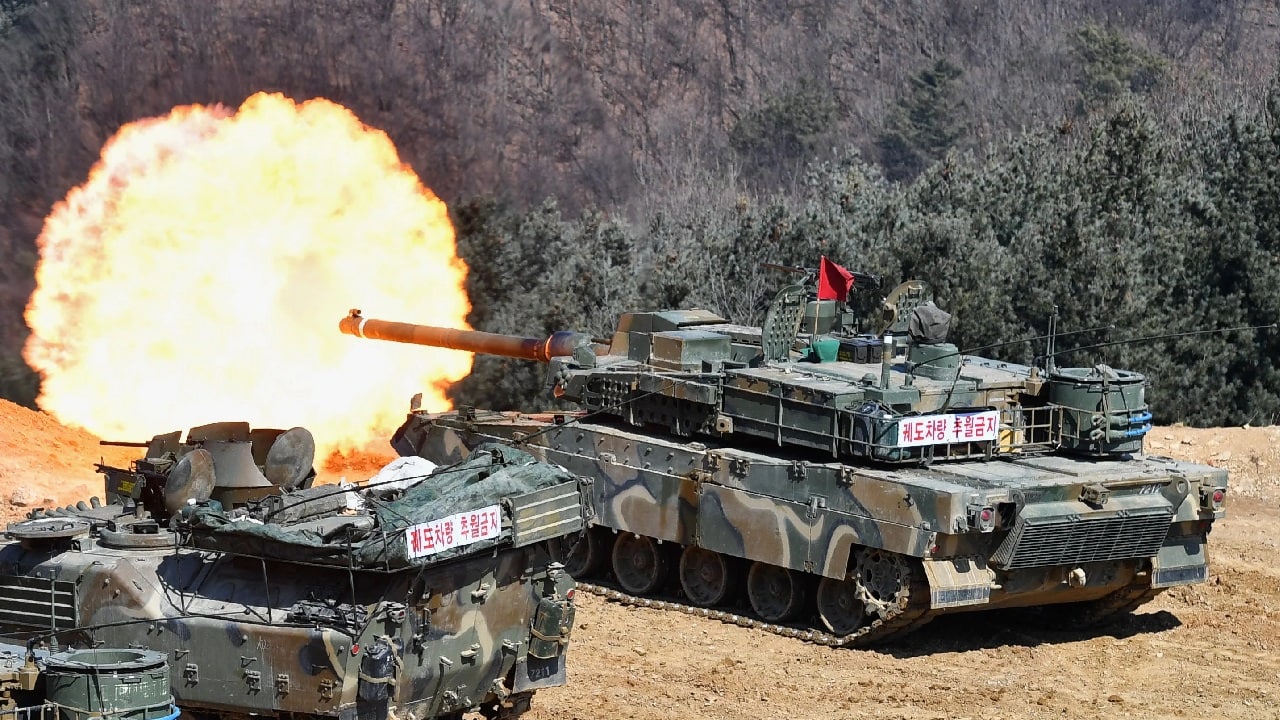
K2 Black Panther. Image Credit: Creative Commons.
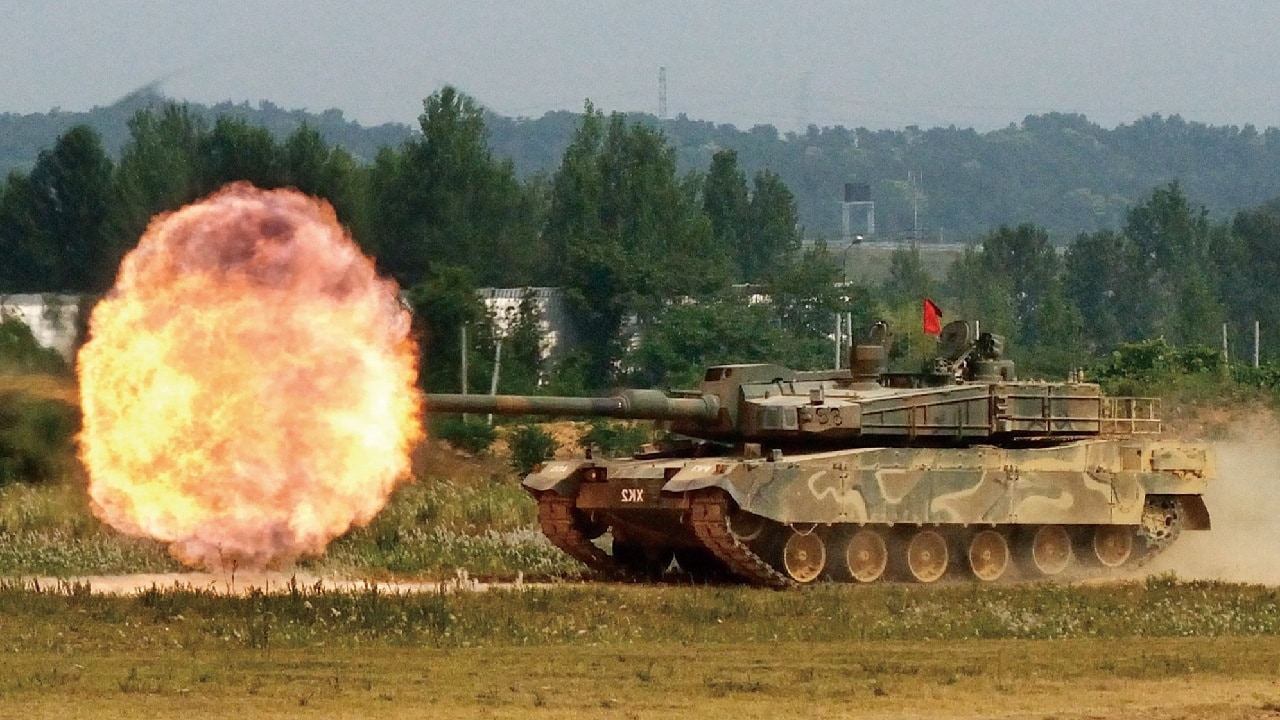
K2 Black Panther. Image Credit: Creative Commons.
South Korea has long built capable tanks.
They benefit not only from an innovative manufacturing sector, but also from partnerships with the American defense industrial base.
The K3 is meant to replace the aging K2 “Black Panther” MBT, which currently forms the backbone of South Korea’s armored force.
A Unique System
The most unique aspect about this tank is its appearance.
Its angular armor evokes the American B-21 Raider, a long-range, nuclear-capable stealth bomber Northrop Grumman is developing. Despite its shocking appearance, the real interest lies in the engineering itself.
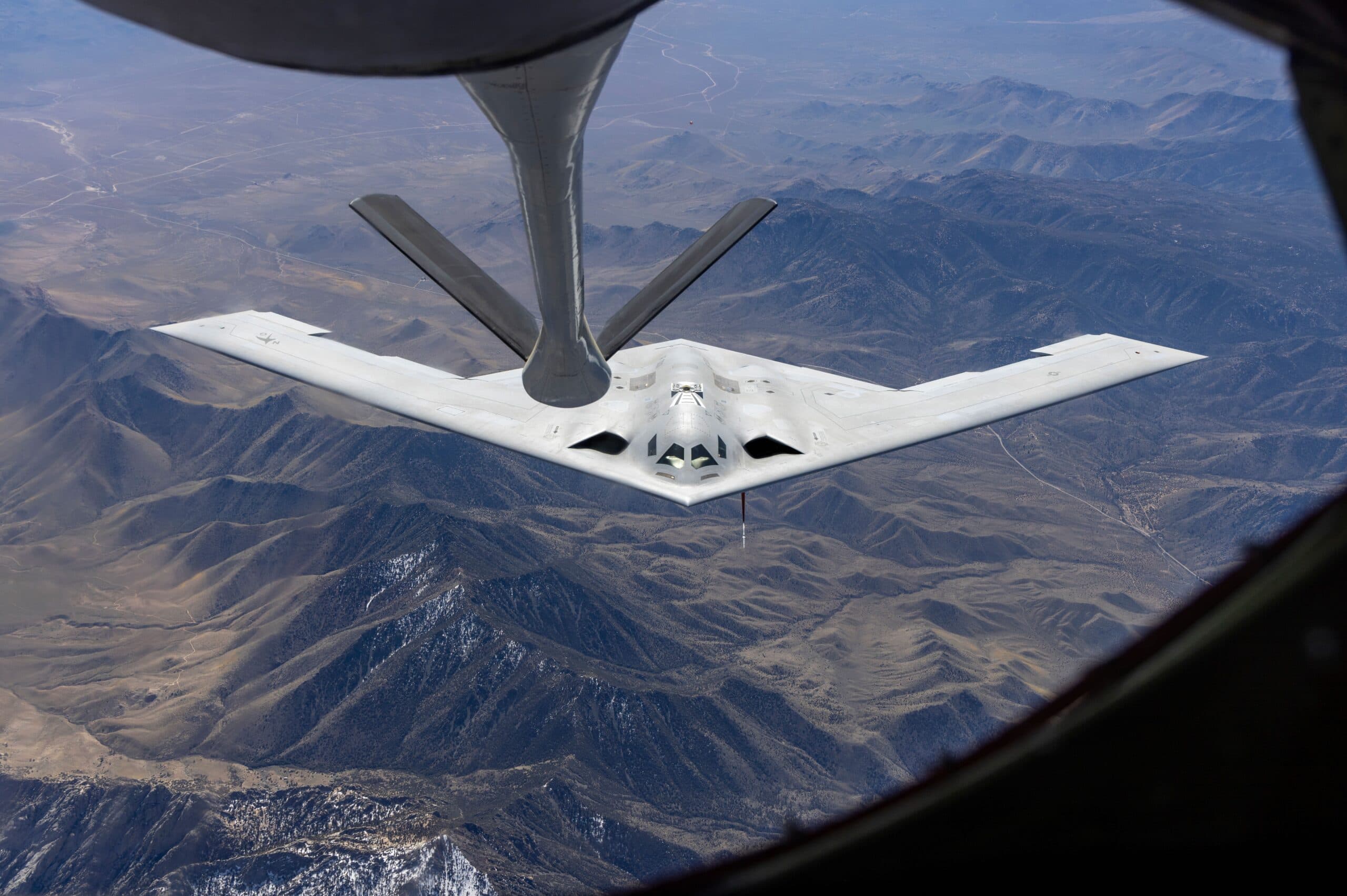
B-21 Raider. Image Credit: USAF.
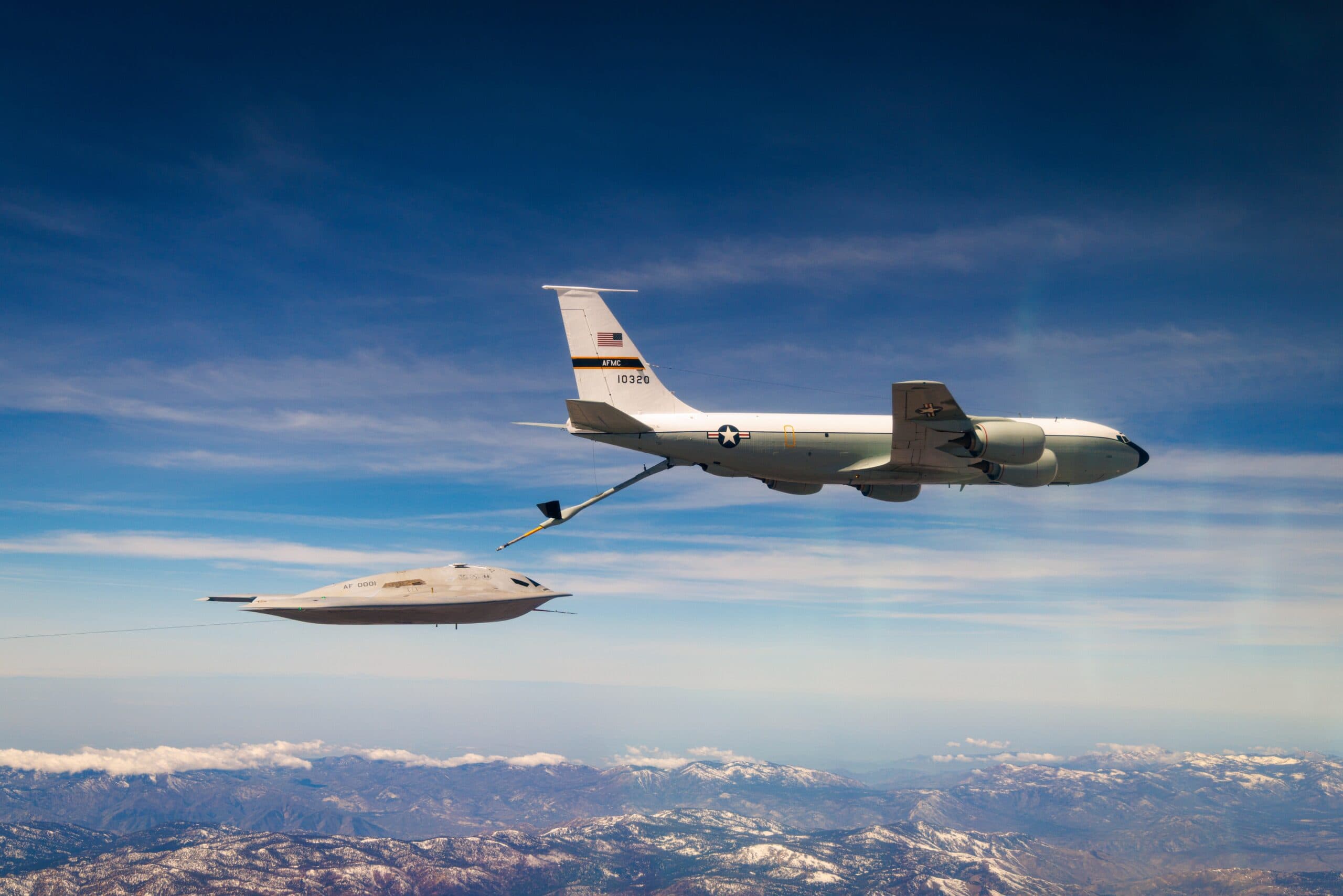
B-21 Raider Taking on Fuel. Image Credit: U.S. Air Force.
Let’s turn to the proposed tank’s hydrogen propulsion system, designed by Hyundai Rotem.
Most conventional MBTs rely on diesel engines or gas turbines.
The K3 employs unique hydrogen fuel-cell technology. Some worry the technology is too experimental and not combat-ready.
Initial development may involve hybrid propulsion that combines hydrogen and conventional fuel systems before eventually transitioning to a full hydrogen-electric configuration.
Electric motors provide propulsion.
But hydrogen fuel cells power those motors by generating electricity through an electrochemical reaction.
It’s really quite extraordinary.
Hydrogen-electric propulsion reduces tank noise (making the tank harder to detect).
One thing that we’ve witnessed in the war in Ukraine is just how vulnerable massive MBTs are to detection and severe attack by loitering munitions and other similar systems.
Being quieter would help ameliorate that.
Relatedly, a hydrogen-electric propulsion system could reduce the K3’s infrared signature by eliminating the hot exhaust associated with conventional combustion engines.
For combat maneuvers, the new system’s electric propulsion gives tank crews rapid acceleration and more efficient power delivery to critical systems.
In combat, these two features are key.
Paired with the K3’s B-21 Raider-like design, these features make it a promising MBT for South Korea.
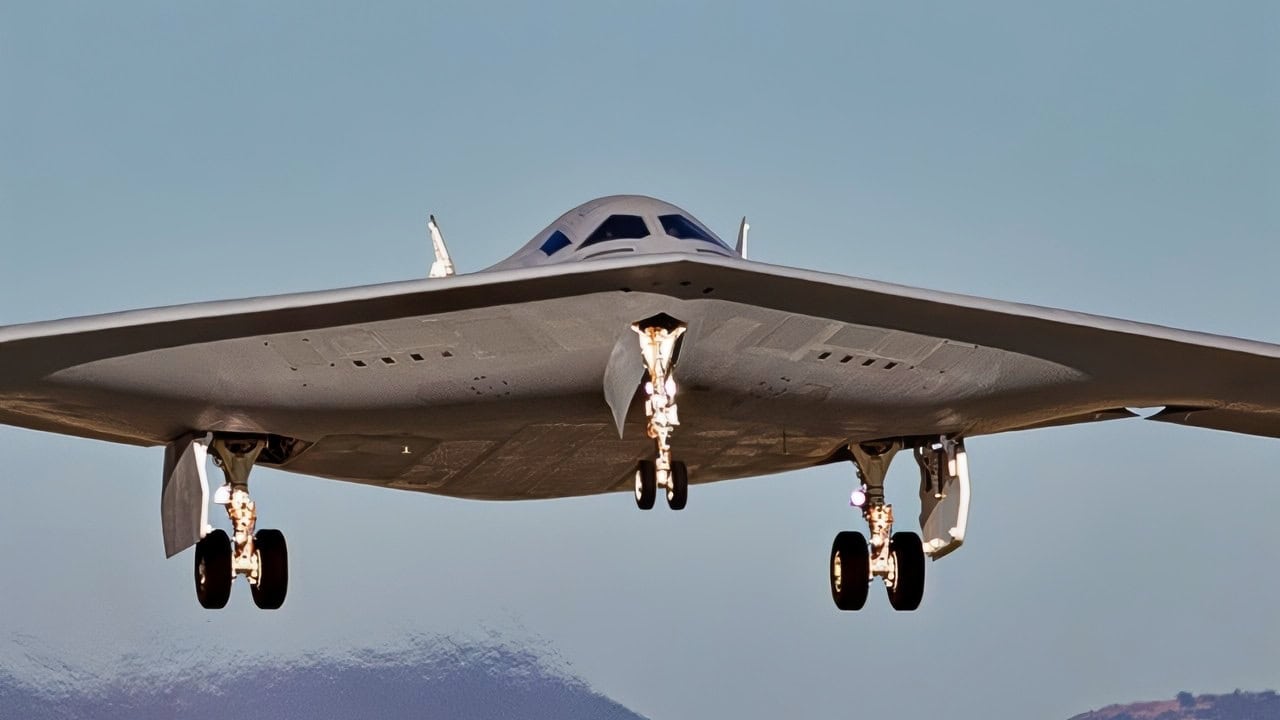
A second B-21 Raider test aircraft takes off, Sept. 11, from Palmdale, Calif., to join the Air Force’s flight test campaign at Edwards Air Force Base, Calif. The addition of the second test aircraft expands mission systems and weapons integration testing, advancing the program toward operational readiness. (Courtesy photo)
The North Korean Threat
And it couldn’t come at a more important time.
After all, the North Koreans are on a massive military modernization campaign.
North Korea has benefited greatly from its newfound close alliance with the Russian Federation (and the People’s Republic of China).
Thanks to North Korea’s endless assistance to the Russians in their war with Ukraine, the North Koreans have been gifted several advanced technologies, and their forces have already experienced what real modern warfare looks like by serving in large numbers on the front lines.
Pyongyang is rapidly integrating those experiences and new military technologies into its military. This directly threatens South Korea at a time when Seoul is experiencing its own population decline, economic problems, and political instability.
The K3 cannot come soon enough. But it likely won’t be there anytime soon.
Meanwhile, the K3 is being designed to carry a 130mm smoothbore main gun, which is considerably larger than the 120mm weapons mounted on most contemporary Western MBTs.
That larger caliber could use ammunition with greater kinetic energy and armor-penetration potential.
Plus, an autoloader would eliminate the need for a human loader.
As a secondary weapon, the K3 will carry a 30mm cannon to engage drones, lightly armored vehicles, and other battlefield threats.
Additional weapons could include a .50-caliber machine gun and beyond-line-of-sight anti-tank guided missiles with an attack radius of approximately eight kilometers. That’s fairly impressive.
The Underlying Systems
The K3 is also set to have an unmanned turret, allowing its three-person crew to operate from a protected compartment within the hull.
This is a significant advance in crew survivability.
That’s because the three-person crew would be separated from the turret and ammunition storage.
In fact, many have noted that the proposed K3 crew compartment design resembles Russia’s T-14 Armata MBT.
K3’s designers intend to fully integrate an artificial intelligence-assisted fire-control system.
This AI program would identify, track, and select targets using a plethora of information collected from onboard sensors and cameras.
It would be a major leap forward for South Korean tank crews who need exceptional situational awareness.
Designers project that the K3 will reach a maximum speed of around 50 miles per hour and have an operational range of around 310 miles.
It remains to be seen whether the K3 can successfully integrate ambitious technologies like a hydrogen fuel cell or stealth-like armor.
But if the K3 achieves even half of those capabilities, it might survive modern warfare, increasingly dominated by cheap drones and missiles that often make MBTs obsolete.
But the systems involved in designing this tank may ensure it dominates the future battlefield (if Seoul ever builds the tank in question).
About the Author: Brandon J. Weichert
Brandon J. Weichert is the Senior National Security Editor at 19FortyFive.com. He also manages The Weichert Brief on Substack. Weichert is the co-host for The Mario Nawfal Show on Twitter/X. He is the author of four bestselling national security books, most recently A Disaster of Our Own Making: How the West Lost Ukraine (Encounter Books). His next book, Fortress Americas: A New Monroe Doctrine (Tucker Carlson Books), is due out December 8. Follow him via Twitter/X @WeTheBrandon.