
The Non-Nuclear Three Principles Shaken by the Takashima Administration: The Blind Spot of Nuclear Umbrella Reliability
 Tanaka Takashi
The Non-Nuclear Principles Shaken by the Takai Administration: The Blind Spot of Nuclear Umbrella Reliability
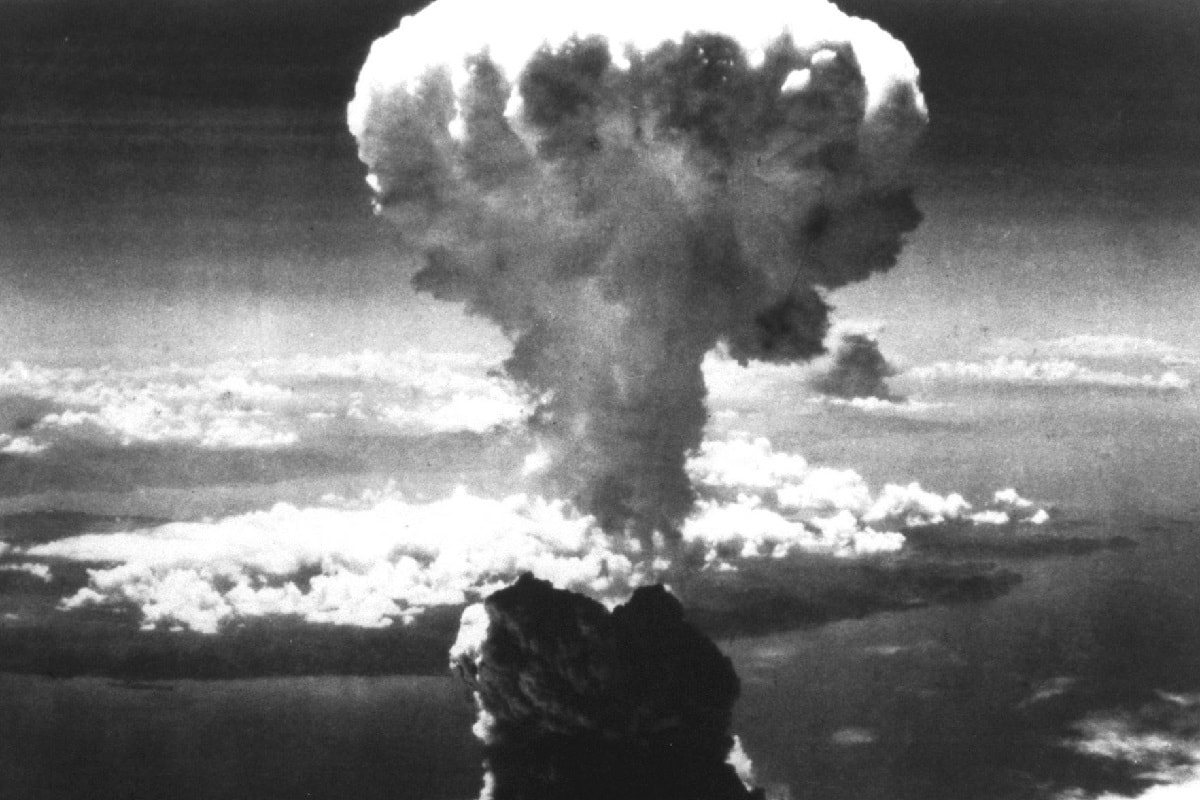
On August 9, at the Peace Memorial Ceremony in Nagasaki, Mayor Shiro Suzuki referred to nuclear weapons as "absolute evil" and warned of the dangers of dependence on nuclear deterrence, while Prime Minister Sanae Takai spoke of "realistic and practical" measures. Eighty-one years since Hiroshima and Nagasaki, the distance between these two phrases represents the most challenging question Japan currently faces.
The focus is on the pillar of the non-nuclear principles that states "no introduction." Prime Minister Takai stated that she would "maintain" the three principles and reaffirmed her commitment to pursuing a world without nuclear weapons. However, when asked whether the principles would continue to be explicitly stated in the three strategic documents to be revised by the end of the year, she avoided confirming the wording. The handling of these principles, which have symbolized post-war Japan's identity since they were declared by the Eisaku Sato Cabinet in 1967, has become ambiguous at this juncture, which is not insignificant.
The Wavering "Nuclear Umbrella"
Underlying this is the wavering reliability of the U.S. extended nuclear deterrence. Jennifer Lind and Daryl Press discussed the "broken nuclear umbrella" in the summer issue of Foreign Affairs, pointing out that as adversaries acquire means to reliably attack the U.S. mainland, the traditional nuclear umbrella is under pressure. In short, the question is, "Will the U.S. President risk Los Angeles to protect Tokyo or Seoul?" Under the "America First" stance, the political weight of that question increases further.
Domestically, the attitude of avoiding direct discussions about nuclear issues is gradually breaking down. Defense Minister Shinjiro Koizumi argued that it is no longer possible to simply exclude nuclear issues from policy discussions. Katsutoshi Kono, who served as Chief of Staff of the Joint Staff, also raised doubts about whether the U.S. nuclear umbrella can be taken for granted indefinitely and is calling for a broader national debate.
Maritime Questions Emerging in the Early 2030s
From the perspective of someone with a background in the Japan Maritime Self-Defense Force, what stands out is that this discussion will materialize at sea. The U.S. Navy is developing a nuclear-capable sea-launched cruise missile (SLCM-N) to be deployed on Virginia-class attack submarines, with operational deployment expected in the early 2030s. Will Japan continue to strictly apply "no introduction" when U.S. vessels dock, while also allowing the docking of U.S. platforms capable of carrying nuclear weapons? As long as the U.S. maintains a policy of "neither affirming nor denying the presence of nuclear weapons," this question cannot be avoided.
In her 2024 book, Takai revealed that in 2022, as a minister, she opposed the wording in the national security strategy that stated "maintain the non-nuclear principles." The reason was that if one expects the reliability of U.S. extended deterrence, "no introduction" is unrealistic.
Tensions are already manifesting in diplomatic arenas. The French nuclear aircraft carrier Charles de Gaulle, during its 2024-25 Indo-Pacific deployment (Clemenceau 25), docked in Indonesia, the Philippines, and Singapore, but did not dock in Japan. The Rafale M fighter jets it carries have the capability to transport nuclear-capable cruise missiles ASMP-A, but Paris neither affirms nor denies the nuclear capability of its strategic platforms. Although Rear Admiral Guillaume Pange, the former commander of the French Pacific Forces, stated that France respects Japan's legal regulations and does not consider them a constraint on bilateral defense cooperation, he avoided predicting whether the Charles de Gaulle would dock in Japan in the future.
In Conclusion
Nuclear armament or nuclear pacifism? The essence of this debate is not a binary choice. It hinges on whether the government can explain the contradiction of continuing to demand the strengthening of U.S. extended nuclear deterrence while treating "no introduction" as an unchanging premise. Abruptly abandoning the three principles would carry significant diplomatic and political costs linked to Hiroshima and Nagasaki. However, treating the three principles as inviolable regardless of changes in the strategic environment will quietly widen the gap between declared policy and the deterrent framework that allies are building around Japan.
It has been 81 years since Nagasaki. Avoiding that question itself is now becoming a strategic choice.
On August 9, Japanese Prime Minister Fumio Kishida reaffirmed Japan's commitment to its non-nuclear principles during a peace ceremony in Nagasaki. The reliability of the U.S. nuclear umbrella is under scrutiny as discussions on nuclear policy gain prominence in Japan. The U.S. Navy is developing nuclear-capable sea-launched cruise missiles expected to be operational in the early 2030s, raising questions about Japan's strict adherence to its non-nuclear stance.
- Japanese Prime Minister Fumio Kishida reaffirmed the commitment to the non-nuclear principles.
- The reliability of the U.S. nuclear umbrella is questioned amid evolving security dynamics.
- The discussion on nuclear policy is becoming more prominent in Japan's defense discourse.
- The U.S. Navy is developing nuclear-capable sea-launched cruise missiles for deployment in the early 2030s.
- Japan's strict application of its non-nuclear principles may conflict with U.S. military operations.