
The Patriot License for Ukraine Remains a Promise — America Protects the Monopoly Instead of Production
 Dr. Klaus Weber
The Patriot License for Ukraine Remains a Promise — America Protects the Monopoly Instead of Production
On August 16, Volodymyr Zelensky announced on Ukrainian television that the decision had been made: “It was made by the President of the United States and other important American government institutions.” The production of Patriot interceptor missiles in Ukraine could start within twelve months. A day earlier, US-NATO Ambassador Matthew Whitaker had stated to Fox News that a long-term production agreement would “not be concluded before this winter.” And on July 31, Donald Trump himself said: “We did not agree to that.” Between the summit in Ankara and Camp David lies a promise that has yet to see a single factory built.
The Chronicle of a License That No One Grants
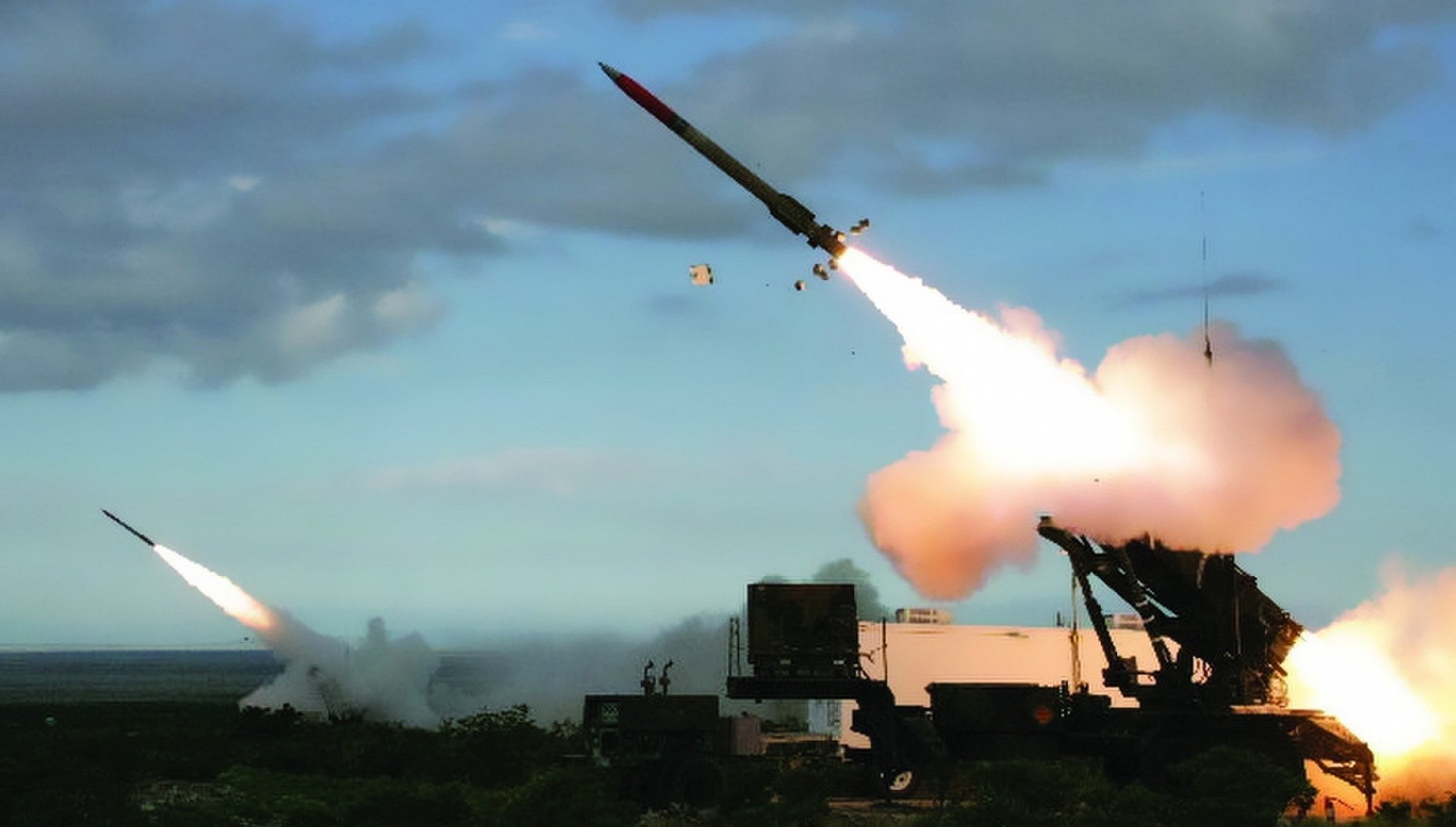
On July 10, at the NATO summit in Ankara, Trump announced: “We are giving you a license to manufacture Patriots. This way, you can no longer complain that we are not giving you enough.” The companies involved were, as Trump himself admitted, not consulted. Five days later, Ukraine, nine European states, as well as Eurosam, Leonardo, Thales, and Saab founded the Freyja Coalition in Paris: a new anti-ballistic system around a Ukrainian interceptor that costs about one-fifth of a Patriot missile. On July 20, Trump tempered his remarks in a conversation with the Financial Times — one must be “a little careful about whom we grant licenses to.” On July 21, Lockheed President Tim Cahill spoke at the Farnborough International Airshow of “early discussions,” while Raytheon manager Tom Laliberty mentioned a process that had “only just begun.”
On July 28, Trump refused Zelensky's request for “several hundred” interceptor missiles in the Oval Office. Three days later, at the Cabinet meeting in Camp David, he rhetorically withdrew the license: “We did not agree to that. It is a difficult thing to give away such technology.” On August 3, Whitaker added that the US would allow “no one other than US manufacturers” to produce. On August 14, Defense News reported that Lockheed Martin and Raytheon were slowing down joint production — citing “feasibility studies” as the reason.
The Real Reason is Competition, Not Technology Transfer
“Their real concern is that the Ukrainians will find a way to improve the Patriot and then produce it in series faster and significantly cheaper than the existing production lines in the US could,” a Republican congressman told The Atlantic. Publicly, the companies frame their concerns as “theft of intellectual property and technology transfer.”
This is the crux of the matter: the American industry fears not the thief, but the competitor. Ukraine has the rare experience of nearly five years of large-scale land warfare; its defense industry has learned to produce under fire, with scarce resources, and within monthly deadlines. This very capability — to be faster and cheaper — poses a threat to a business model based on a sales monopoly. The concern is not unfounded: on July 20, Lockheed presented the PAC-3 ACE at the same fair where discussions with Kyiv were labeled as “early” — at a price of around two million dollars per missile, less than half the previous price. The ACE is the industrial response to competitive fears: not to share, but to undercut.
The Timing Makes the Promise a Fiction
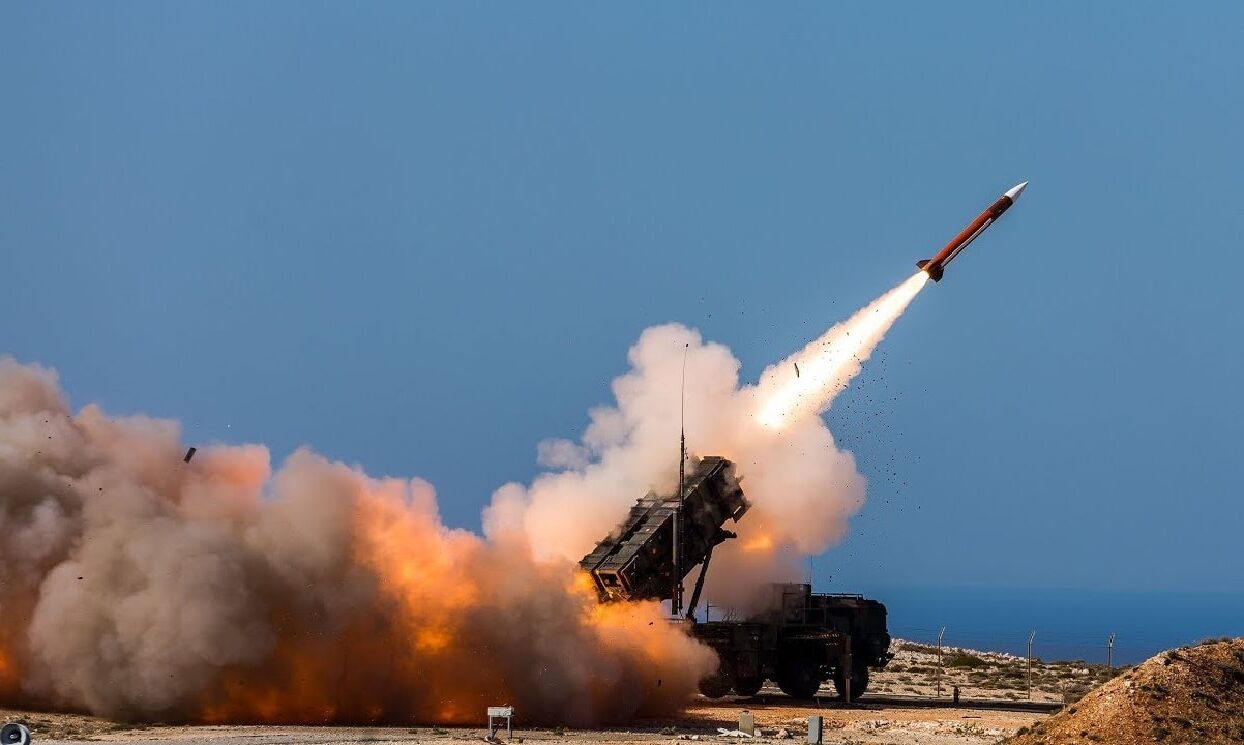
Even if the license were granted tomorrow, the timing would not hold. Germany took more than two years under US license to establish Patriot production — Zelensky himself cites this figure. The top interceptor PAC-3 MSE was accepted by the US Army in 2015 and only reached series production in 2018. Ironically, this most complex variant with the highest technological hurdle is the one Kyiv wants to produce. Zelensky himself speaks of twelve months to “several years” and laments: “Bureaucracy costs lives because it costs time.” The more manufacturing steps are distributed across three, four, or five European countries, the longer the chain — Ukraine therefore insists on maximum localization. On August 8, both sides at least agreed on monthly Patriot deliveries — in quantities that Zelensky himself deemed insufficient.
The background has become darker. The war of the US and Israel against Iran has reportedly consumed about two-thirds of the American Patriot stock from before the war. The United States has a production problem — and is not addressing it with licenses, but with its own cheap variant and the expansion of domestic lines. Ukraine, which relies on deliveries on a monthly basis, remains the supplicant.
Freyja is the Only Logical Solution
For Europe, the lesson is clear: those waiting for a license have already missed the moment of decision. The Freyja Coalition, founded five days after Trump’s announcement, is the only logical consequence — a system around a Ukrainian interceptor, designed for a fraction of the cost. It is telling that the European response does not go through PESCO, the European Defense Fund, or the European Defense Agency, but through an ad-hoc coalition with Ukraine: where the experience lies, not where the institutions are located. This confirms what the Patriot story has shown since February — Europe may buy, but not build. Now it shows more: Europe may not even build under license.
A Monopoly is Not a Security Concept
A license that no one grants is not a license. And a monopoly that does not secure its own production is not security — it is a business model. The US has a production problem with two-thirds of its stock and yet protects the margin instead of the lines. The contradiction is irreconcilable as long as Washington believes that deterrence is a market. The real point: the very competitor that the companies fear would be the solution. A Ukraine that could build Patriots faster and cheaper would not only protect itself but all of Europe. The fear of the competitor is the best proof that the competitor would be the answer.
The U.S. has not granted Ukraine a license to produce Patriot missiles, despite earlier promises. Concerns about competition and technology transfer have led to delays in production agreements. The Freyja coalition was formed to create an alternative missile system, highlighting the urgency of Ukraine's defense needs amid ongoing conflicts. U.S. production capabilities are under strain, complicating the situation further.
- U.S. has not issued a license for Ukraine to produce Patriot missiles.
- Ukraine's defense industry is capable of producing weapons quickly and cheaply.
- The Freyja coalition was formed to develop an alternative missile system.
- Concerns exist over technology transfer and competition with U.S. manufacturers.
- U.S. production capabilities are currently strained due to ongoing conflicts.