
The Pentagon wants ketamine wafers as a battlefield medicine option
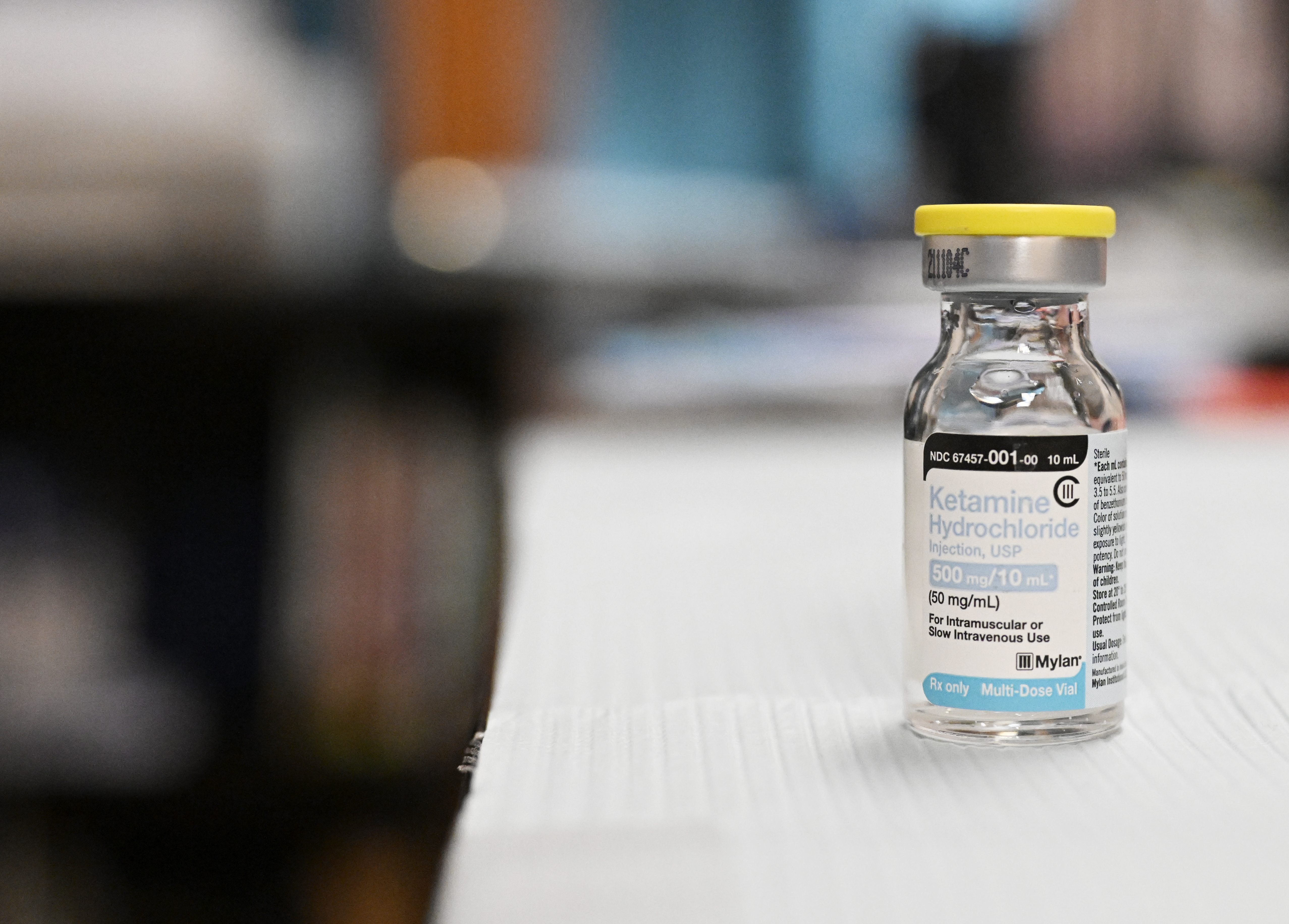
The Pentagon wants ketamine wafers. And it seems to want them now.
Earlier this year, the Defense Department awarded a nearly $41 million development contract to Singapore-based iX Biopharma to develop Wafermine, a small, ketamine-packed wafer that dissolves under the tongue.
Recently, the drug’s manufacturer announced that it is pursuing an emergency authorization that could make the medication available to troops before it receives full Food and Drug Administration approval, citing a September U.S. declaration of a military emergency that justifies the emergency use of drugs deemed necessary by the Pentagon.
A federal emergency use approval declaration by the U.S. Department of Health and Human Services on Sept. 3 opened the possibility of early official authorization, giving the FDA a route to use unapproved medications to treat war wounds.
According to the notice, on July 15, Defense Secretary Pete Hegseth determined “a military emergency, or significant potential for a military emergency, involving a heightened risk to U.S. military forces of an attack with a chemical, biological, radiological, or nuclear agent or agents,” or an attack with agents that would cause life-threatening injuries.
The declaration continues: “Injuries arising from these attacks may cause those forces to experience moderate to severe acute pain and place them at risk of developing life-threatening hemodynamic instability, including shock or respiratory distress.”
Because of Hegseth’s determination, Health and Human Services Secretary Robert Kennedy, Jr. declared that “circumstances exist justifying the authorization of emergency use of drugs” identified by the Pentagon.
The notice did not elaborate on the emergency circumstances or state which drugs would be identified for emergency authorization.
A Politico investigation published Tuesday found that iX Biofarma’s domestic manufacturing partner lacks the Nevada license required to operate.
iX Biofarma called the non-opioid medication the “world’s first sublingual ketamine for acute moderate to severe pain,” and said the wafer enables a different delivery mechanism, letting patients absorb the ketamine through the mucous membrane into the bloodstream.
Typically administered via injection, ketamine can alleviate pain, increase euphoria and cause dissociation and amnesia.
A 2023 study found that opioid use to alleviate battlefield injuries decreased between January 2010 and December 2019, while ketamine use increased.
The researchers found that “ketamine is generally used first for more severely injured patients and has increasingly been employed by the U.S. military as the primary analgesic for combat casualties.”
The company said it received a “sole-source” award for Wafermine development, meaning it did not solicit other vendors.
The Pentagon is advancing the development of ketamine wafers, known as Wafermine, for battlefield use, following a $41 million contract with iX Biopharma. An emergency authorization is being sought to allow its use before full FDA approval, in response to a military emergency declaration. This initiative aims to provide effective pain management for U.S. troops facing severe injuries.
- The Pentagon awarded a $41 million contract to iX Biopharma for ketamine wafer development.
- Emergency authorization for the drug is being pursued due to a military emergency declaration.
- The drug is intended for managing acute pain in battlefield injuries.