
The People's Liberation Army Conducts Air and Sea Drills Near Huangyan Island in the South China Sea, Escalating the Normalization of Control in Disputed Waters
 Li Minghui
PLA Conducts Naval and Air Exercises Near Huangyan Island in the South China Sea, Escalating Normalized Control in Disputed Waters
On September 27, multiple media outlets, including Bloomberg and the Philippines' GMA News, reported that China conducted joint naval and air activities near Huangyan Island (known as Scarborough Shoal in the Philippines). Public reports have not disclosed the types of participating vessels, the number of aircraft, or the exercise subjects, so it is not appropriate to package this as a large-scale military exercise. However, the timing and location of this action are sufficient to indicate that the PLA's operational logic in disputed waters is changing.
From Single Patrols to Joint Naval and Air Operations
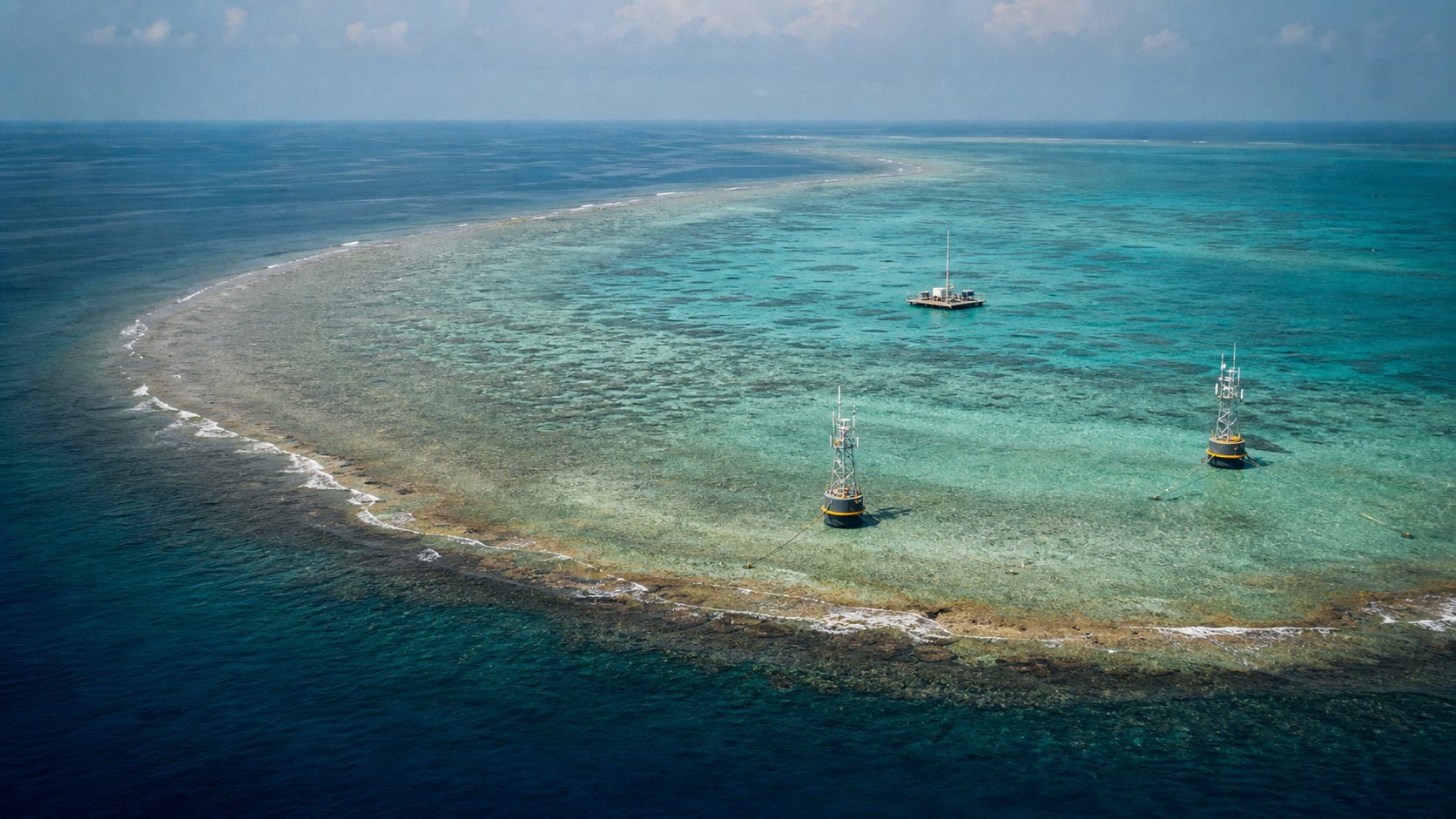
Huangyan Island is located about 220 kilometers from the western coast of Luzon in the Philippines. It is a small atoll situated at the intersection of the Bashi Channel, Luzon, and South China Sea shipping routes. For the PLA, this location is not suitable for the long-term deployment of large surface vessels, but it is very suitable for testing the coordination between the Coast Guard, naval aviation, and land-based long-range sensing systems. Maritime platforms are responsible for on-site law enforcement and interception, aircraft expand the search area, and land-based systems provide continuous target indication. In simple terms, this is not about a single warship "occupying" Huangyan Island, but rather using a distributed system to increase the frequency of entry and control.
The Real Change Lies in the Threshold for Action
In the past, confrontations between China and the Philippines near Huangyan Island often revolved around resupply, fishing boats, and Coast Guard vessels. The addition of air power now means that on-site commanders can identify targets more quickly and complete interception deployments before Philippine Coast Guard or resupply vessels approach. The air force does not necessarily need to carry out attacks; its mere presence compresses the decision-making time of the opponent and forces the Philippines to incorporate maritime operations and air surveillance into their plans simultaneously.
This model has similarities to the "integrated naval and air operations" in the Taiwan Strait, but it cannot be simply equated. The core of the Huangyan Island operation is not to seize air superiority, but to connect the front-line law enforcement of the Chinese Coast Guard with the support capabilities of the PLA within a framework of low intensity and controllable escalation. Its advantages are relatively low costs and flexible political signals; its shortcomings are that the risk of misjudgment will significantly increase when naval and air forces approach Philippine facilities or conduct joint patrols with the U.S.
The Dilemma Facing the Philippines and the U.S.
Currently, the Philippines finds it difficult to change the situation on the ground solely by increasing the number of Coast Guard vessels, as China can maintain its presence through rotating vessels, aircraft, and maritime surveillance platforms. The U.S. intervention also has its limits: Huangyan Island is not a base under Philippine actual control, and any escort operations could be described by Beijing as extraterritorial military intervention. A more realistic response is to strengthen maritime situational awareness, establish crisis communication, and focus joint patrols on avoiding disrupted supply chains.
From an equipment development perspective, Huangyan Island resembles a "system capacity" issue. What China needs is not a small number of high-performance platforms, but a sufficient number of Coast Guard vessels, patrol aircraft, data link nodes, and rotating personnel. Public reports have not provided details on the troop strength for this operation, and whether there is a fixed grouping can only be speculated; however, if similar naval and air activities recur in the coming weeks, what the outside world sees will no longer be a single news event, but a new norm.
Signals That Need Continued Observation
What is most worth tracking next is not a specific number of flights, but three details: whether operations expand from weekends to weekdays, whether Coast Guard and naval vessels appear in fixed pairings, and whether China publicly releases more complete training footage. If these signals appear simultaneously, it indicates that the direction of Huangyan Island is shifting from temporary responses to institutionalized control. The question is whether the Philippines will also systematize its resupply and patrol operations or continue to respond to China's persistent presence with isolated actions.
Source: Bloomberg (September 27, 2026); GMA Network, BusinessWorld Online, AsiaOne (September 27-28, 2026).
The People's Liberation Army conducted joint naval and air exercises near Scarborough Shoal on September 27, 2026. This operation marks a shift in China's approach to controlling contested maritime areas, integrating air power to enhance operational effectiveness. The exercises are seen as a move towards more regularized military presence in the South China Sea.
- China conducted joint naval and air exercises near Scarborough Shoal.
- The exercises indicate a shift in China's operational approach in contested waters.
- The presence of air power allows for quicker target identification and interception.
- The exercises are part of a strategy to enhance control over disputed maritime areas.
- The report suggests a potential shift towards institutionalized control in the region.