
The People's Liberation Army Daily Focuses on Japan's Unmanned Platforms: 10 Trillion Yen Plan Intensifies East China Sea Reconnaissance Competition
 Li Minghui
The PLA Daily Focuses on Japan's Unmanned Platforms: A 10 Trillion Yen Plan Intensifies Reconnaissance Competition in the East China Sea
On July 20, the PLA Daily dedicated an entire page to discussing Japan's unmanned combat capabilities, and the layout of this page is more interesting than the wording itself. The South China Morning Post noted that the article refers to Japan's unmanned platforms as a path to circumvent post-war constitutional restrictions and establish asymmetric advantages, pointing out that Japan's three security documents in 2022 emphasized the integration of unmanned defense capabilities, artificial intelligence, and manned platforms.
Japan's Unmanned Development is Not Just About Individual Equipment
Publicly available figures illustrate the issue. In the 2022 Defense Capability Development Plan, Japan proposed to invest approximately 10 trillion yen in unmanned systems over five years starting from the 2023 fiscal year, equivalent to about 6.2 billion USD. This figure is not exaggerated within the context of Japan's overall defense budget, but it is not as simple as just purchasing a few drones; rather, it involves integrating maritime and aerial reconnaissance, island resupply, electronic warfare decoys, and manned equipment into a single network.
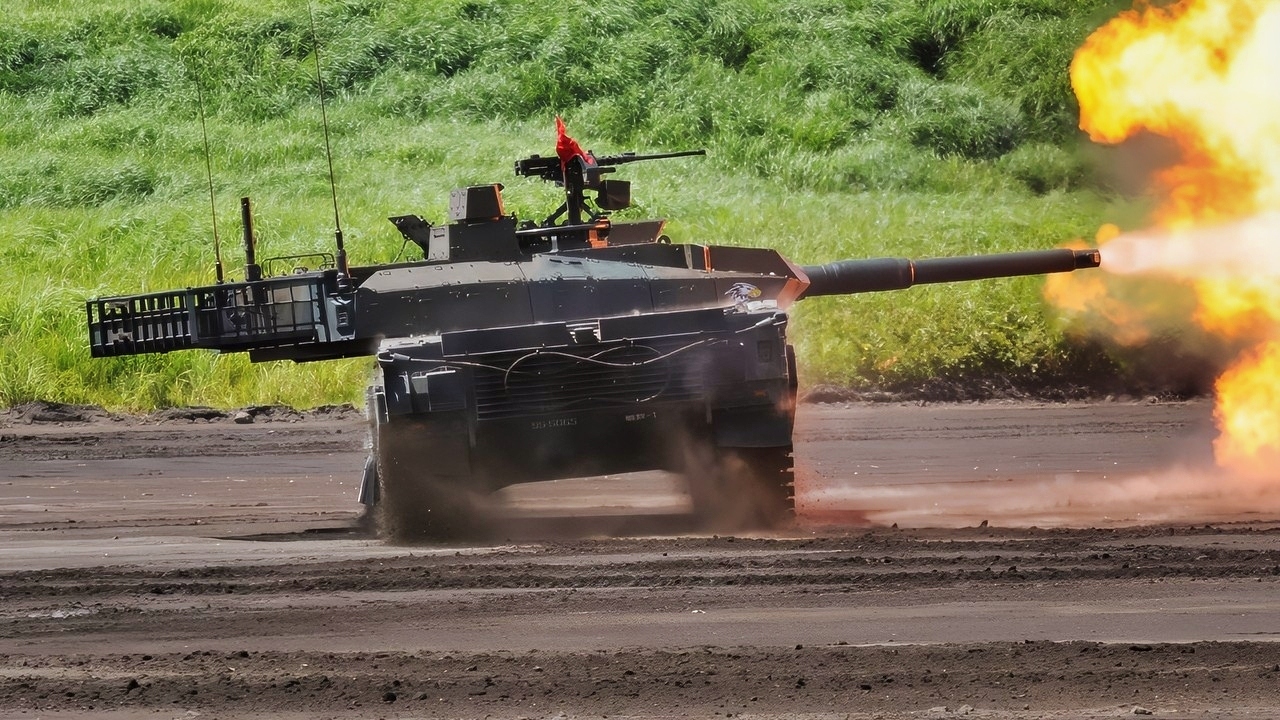
In June of this year, unmanned ground vehicles were publicly demonstrated during live-fire exercises by the Ground Self-Defense Force in Gotemba. From a visual perspective, it does not yet change the battlefield; however, from an engineering standpoint, the significance of ground platforms lies in pushing sensors and communication nodes closer to the front lines. In simple terms, positions that previously required a reconnaissance vehicle and several soldiers to risk going to can now be probed first by low-cost platforms.
Why the PLA Emphasizes Japan's Unmanned Platforms at This Time
The author believes that the PLA Daily is not merely issuing a public warning but is reminding domestic readers and military systems that Japan's unmanned development is serving operations in the southwestern islands. Japan needs to defend a line from Kyushu and Okinawa to Yonaguni Island, where the islands are dispersed, airports and ports are vulnerable, and supply distances are short but with many nodes. Drones, unmanned boats, and ground unmanned vehicles are particularly suited to these geographical conditions, especially for sustained monitoring in the East China Sea and the Miyako Strait.
The pressure on the PLA does not stem from the performance of any specific Japanese drone but from the tightening of the target detection chain. The actions of the Type 055 destroyers, J-16 fighters, Y-9 anti-submarine aircraft, and Coast Guard vessels have primarily faced tracking from large manned platforms of the US and Japan; in the future, they may simultaneously be monitored by coastal radar, small drones, unmanned boats, and commercial satellites. This change is not as dramatic as portrayed in propaganda, but it complicates wartime electromagnetic control, route planning, and counter-reconnaissance operations.
China's Military Industry's Corresponding Shortcomings Are in Affordability and Reliability
China does not lack unmanned equipment samples. From Rainbow and Wing Loong to various reconnaissance-strike integrated drones, and to the numerous unmanned vehicles and boats that appeared at the Zhuhai Airshow, there are many models. The issue is whether low-cost platforms can remain operational in the high-humidity, high-salinity environment of islands, whether communication links can withstand interference, and whether the supply chain can quickly replenish after losing dozens of units; these factors are more critical than the parameters displayed at the exhibition.
Interestingly, Japan's approach provides a reference for the PLA: unmanned development is not about making expensive platforms increasingly complex, but about creating a system where sensors, communications, decoys, and munitions are quickly replenishable. The battlefield in Ukraine has already proven that the generational gap of individual equipment can be offset by the speed of attrition. If a crisis arises in the East China Sea, what both sides may be competing on is not which drone is more advanced on the first day, but who can still present enough usable nodes on the tenth day.
The South China Morning Post quoted an article from the PLA Daily stating that Japan is attempting to establish an asymmetric advantage on future battlefields through unmanned combat capabilities and is advancing a broader remilitarization agenda. This statement carries a clear political tone, but the underlying technical judgment is not unfounded.
What Really Matters is Not the Wording of the Article
This news can easily be interpreted as a verbal spat between China and Japan. The author prefers to view it as a signal: the PLA has begun to incorporate Japan's unmanned systems into the realistic variables of island chain operations, rather than merely treating it as a public relations label. The next two details to observe are whether the Eastern Theater Command and naval aviation exercises will increase training on countering small drones and unmanned boats; and the production speed of Chinese military enterprises in low-cost electro-optical pods, anti-jamming data links, and small turbojet engines.
The question that still lacks an answer is whether, if Japan uses 10 trillion yen to first lay out a low-cost reconnaissance network, the PLA will choose to use stronger electronic suppression to paralyze it, or use similarly cheap, larger quantities of unmanned platforms to overwhelm it. This is the most critical aspect of the unmanned competition in the East China Sea.
Sources
- South China Morning Post, July 20, 2026, Chinese military media warns about Japan's expansion of unmanned combat capabilities.
- Japan's Ministry of Defense 2022 Defense Capability Development Plan proposed an investment of approximately 10 trillion yen in unmanned systems over five years.
- Recent Defense News reports from the Asia-Pacific indicate that unmanned boats and platforms are becoming a new focus for Indo-Pacific exercises and island chain resupply.
The People's Liberation Army (PLA) emphasizes the strategic implications of Japan's planned 1 trillion yen investment in unmanned systems, which aims to enhance its reconnaissance capabilities in the East China Sea. This development is viewed as a response to Japan's efforts to establish asymmetric advantages in regional defense. The PLA is particularly concerned about the potential for increased surveillance and the impact on military operations in the area.
- Japan plans to invest 1 trillion yen in unmanned systems over five years starting from FY2023.
- The People's Liberation Army (PLA) is concerned about Japan's unmanned capabilities enhancing its defense.
- Japan's unmanned systems are seen as a means to establish asymmetric advantages in the region.
- The report highlights the potential for increased surveillance and reconnaissance capabilities in the East China Sea.
- China's military industry faces challenges in producing reliable low-cost unmanned systems.