
The Philippines' 2027 Drone Push Won't Close the South China Sea Gap
 Marcus Chen
The Philippines' 2027 Drone Push Won't Close the South China Sea Gap
Fifty billion pesos sounds like serious money until you put it next to 142.95 billion pesos in military pensions. That is the number that matters in Manila's 2027 defense debate. When Defense Secretary Gilberto Teodoro told Congress this week that the Philippines wants more drones, more guided-missile corvettes, and better networks, he was describing a military that understands the direction of the threat. He was also admitting, indirectly, that understanding the threat and building a usable kill chain are two different things.
The immediate headline is the drone push. The more important story is that Manila is trying to buy persistence at sea because it cannot afford presence everywhere. Against China's coast guard, maritime militia, and naval pressure in the South China Sea, unmanned systems offer the Philippines a cheaper way to watch, classify, and cue a response. That is useful. It is not decisive by itself.
The Program Starts With Sensors
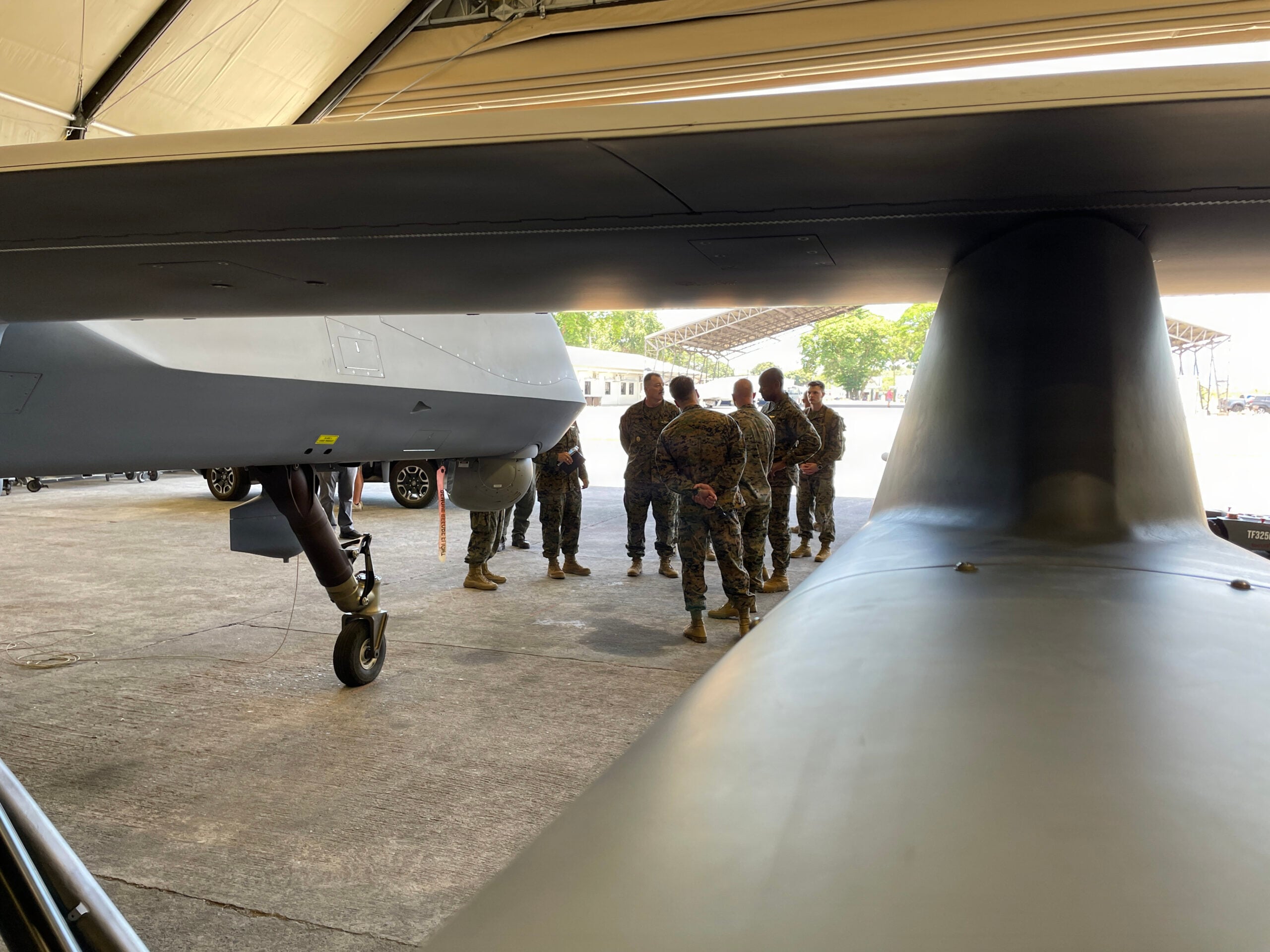
Teodoro's testimony was more sober than the usual modernization rhetoric. He said the Armed Forces of the Philippines already operates unmanned aerial vehicles for intelligence, surveillance, and reconnaissance. He did not promise a sudden leap to a Ukrainian-style drone force. He talked instead about development, acquisition, connectivity, and operational know-how. That is the right sequence.
- Proposed 2027 defense budget: 324.6 billion pesos
- Proposed modernization allocation: 50 billion pesos
- Increase for modernization versus current budget: 25%
- Military pension bill in the same 2027 budget: 142.95 billion pesos
Those numbers tell you what Manila is trying to do. Drones are attractive because they stretch surveillance hours without stretching crews, hulls, or flight lines at the same rate. The June transfer of four Ocean Aero Triton autonomous underwater and surface vehicles from the United States points in the same direction. Systems that can stay out for days and feed maritime awareness are a rational answer for an archipelagic state with too much water to patrol and not enough ships to patrol it.
The Budget Math Is the Warning
This is where the drone story becomes less triumphant. If 142.95 billion pesos of a 324.6 billion peso defense budget goes to pensions, roughly forty-four cents of every defense peso is already spoken for before Manila buys fuel, missiles, data links, or spare parts. The proposed 50 billion peso modernization line equals only about fifteen percent of the whole defense budget. And drones do not become useful because they were purchased. They become useful when they are connected to a resilient command network, protected from jamming, and paired with something that can act on the track they generate.
That is Marcus Chen math, not abstract strategy. A drone that sees a Chinese coast guard cutter harassing a Philippine vessel is just a camera unless the information moves fast enough to an operations center, then to a coast guard or navy unit, and then into a politically usable response. The expensive part is not the airframe. The expensive part is the architecture around it.
"More than the personnel, it is the integration into the operation, what do you do with them and how do you use them," Teodoro told lawmakers.
That is the most important sentence in the hearing. It means Manila knows the bottleneck is not procurement theater. It is integration.
Why Drones Fit the Philippine Fight
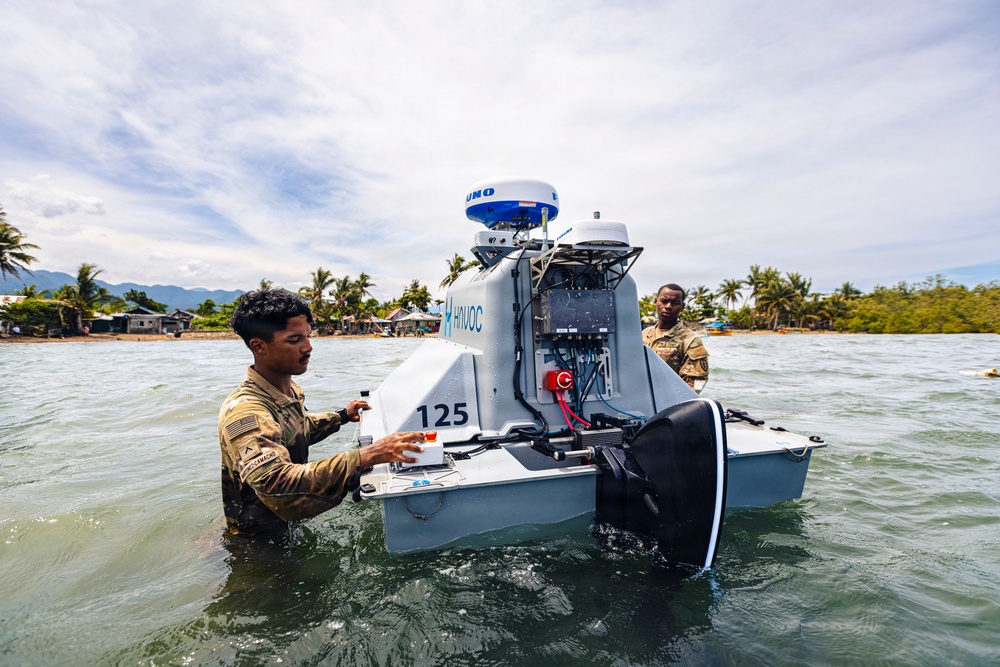
The Philippines does not need drones because they are fashionable. It needs them because geography is unforgiving. Manila must watch long coastlines, scattered islands, vulnerable resupply routes, and disputed waters where China prefers pressure below the threshold of war. That environment rewards persistence more than glamour. A corvette cannot be everywhere. A crewed patrol aircraft is costly to keep airborne hour after hour. A mix of aerial drones and maritime drones can widen the surveillance screen at lower operating cost.
The U.S. transfer of four Triton unmanned sea systems in June mattered for that reason. They were not war-winning platforms. They were proof that Washington and Manila are moving toward an asymmetric model built around maritime domain awareness, gray-zone monitoring, and distributed sensing. If the Philippines uses the 2027 budget to buy more ISR drones, harden communications, and improve data fusion with allies, it will get a more credible day-to-day posture in the West Philippine Sea.
What Drones Still Cannot Do
They cannot solve the response problem. China can still mass coast guard and militia hulls faster than Manila can mass unmanned systems. It can still pressure Philippine outposts with scale. It can still contest links with cyber and electronic warfare. And unless the Philippines sharply expands munitions stockpiles, coastal fires, and repair capacity, better surveillance may simply produce a clearer picture of a balance that remains unfavorable.
That is why Teodoro paired drones with guided-missile corvettes and other major assets. He understands that sensors without shooters create frustration, while shooters without sensors create waste. The Philippine military is trying to build both ends of the chain at once under a budget increasingly distorted by pensions.
What 2027 Will Probably Buy
By 2027, the most realistic outcome is not a Philippine drone revolution. It is a better surveillance grid: more unmanned ISR, more maritime awareness, some improvement in secure communications, and tighter cooperation with U.S. and possibly Ukrainian drone expertise. That would be meaningful. It would also fall short of closing the South China Sea gap, because the gap is not just about seeing more. It is about staying on station, surviving interference, and imposing cost quickly enough to change Chinese behavior.
The Philippines is making the right bet on unmanned systems. It is just not making a big enough bet, and it is making it inside a budget structure that eats modernization alive. Manila can buy more drones next year. What it still may not be able to buy, at scale, is the network, protection, and strike capacity that turn drones into leverage. That is the real limit. And China will notice it.
The Philippines plans to enhance its military capabilities by acquiring more drones and guided-missile corvettes as part of its 2027 defense budget. The proposed budget allocates 50 billion pesos for modernization, while 142.95 billion pesos is designated for military pensions, limiting available funds. The Armed Forces of the Philippines aims to improve surveillance and operational capabilities in response to threats in the South China Sea, with a focus on unmanned systems for maritime awareness.
- The proposed 2027 defense budget is 324.6 billion pesos.
- 50 billion pesos is allocated for modernization, which is only 15% of the total budget.
- 142.95 billion pesos is allocated for military pensions, limiting available funds for modernization.
- The Philippines is acquiring unmanned aerial vehicles for intelligence, surveillance, and reconnaissance.
- The U.S. transferred four Triton unmanned sea systems to the Philippines.