
The Practical Implementation of Japan-Philippines Maritime Cooperation in 2026 as Indicated by the Destroyer Ikazuchi and GSOMIA Negotiations
 Tanaka Takashi
The Practicalization of Japan-Philippines Maritime Cooperation in 2026 as Indicated by the Destroyer Ikazuchi and GSOMIA Negotiations
A single formation sailing photograph taken in the South China Sea well illustrates the significance of this Japan-Philippines summit. On April 23, during Balikatan 2026, the Japan Maritime Self-Defense Force destroyer "Ikazuchi" joined the Philippine Navy vessels, U.S. Coast Guard, and Australian and Canadian ships in the same formation. As President Marcos of the Philippines meets with Prime Minister Takaichi on May 28, this photograph serves not merely as a record of an exercise but as a precursor to institutionalized operational cooperation.
What Comes After RAA and ACSA
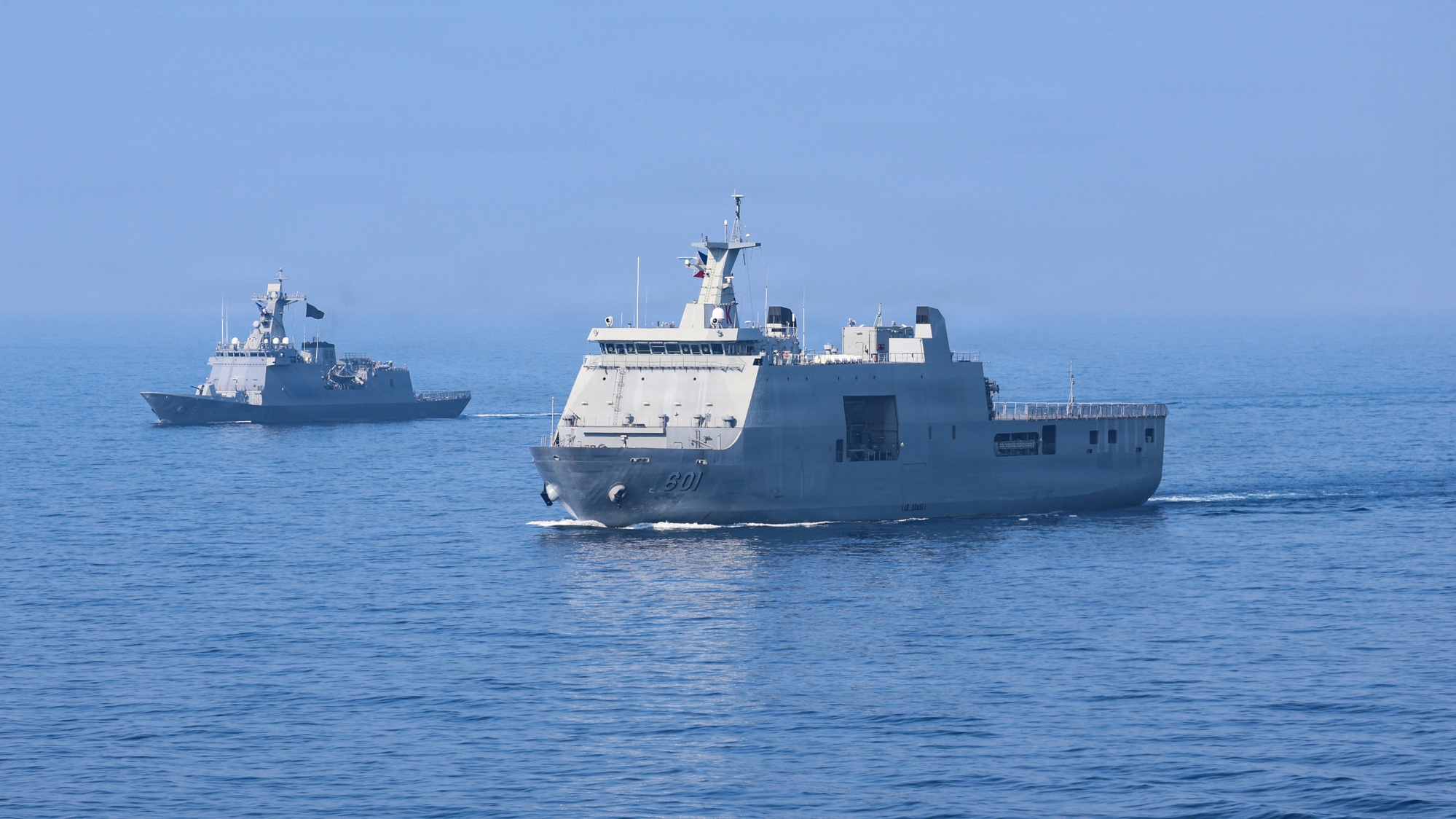
According to the AP, Tokyo is treating the Philippines as a key defense cooperation partner and a destination for equipment transfers, with expectations for strengthening defense and equipment cooperation during this visit to Japan. GMA reported that Mr. Marcos stated that Japan-Philippines cooperation has entered an operational phase through the RAA (Reciprocal Access Agreement) and ACSA (Acquisition and Cross-Servicing Agreement), also mentioning support for maritime situational awareness capabilities through OSA.
Notably, the next point of discussion has shifted to negotiations for GSOMIA (General Security of Military Information Agreement). The Diplomat highlighted the initiation of negotiations for this agreement as a key agenda item during Marcos's visit to Japan. The RAA facilitates personnel movement, while the ACSA supports fuel, supplies, and maintenance. With the addition of GSOMIA, a legal foundation will be established to handle radar information, vessel movements, and anti-submarine and aerial surveillance data more swiftly.
Equipment Transfers Are Not Just Symbolic
The joint announcement by Japan's Ministry of Defense on May 5 explicitly stated Japan-Philippines equipment and technology cooperation, positioning the Self-Defense Forces' participation in Balikatan 41-26 as a deepening of operational cooperation under the RAA. On the same day, the AP reported that discussions on a framework to enable the transfer of used destroyers to the Philippines began during the defense ministerial talks. If realized, this would become a highly political maritime equipment case following Japan's revision of its three principles on equipment transfers.
However, I believe that the transfer of destroyers should not be overestimated. More challenging than handing over the ships is supporting crew training, maintenance parts, tactical data links, and ammunition management over several years. Even with older ships, if they are connected to the Philippines' maritime surveillance network, U.S. military ISR, and Japan's SLOC (Sea Lines of Communication) defense concept, they will have practical significance for continuous monitoring in the northern South China Sea.
The Nansei Islands and the Luzon Strait Form a Single Operational Map
During Balikatan 2026, Japan was involved not only with maritime forces but also with the Ground Self-Defense Force's anti-ship capabilities. While the Luzon Strait, Bashi Channel, and Nansei Islands may appear separate on a map, they form a continuous defense line when viewed through maritime traffic routes and aerial approach paths. Given that the Chinese Navy recently trained the aircraft carrier "Liaoning" and the new 054B frigate southwest of Okinotorishima, it is understandable why Tokyo is eager to coordinate with Manila.
The focus of Japan-Philippines cooperation is not merely a diplomatic expression of increased friendly nations. It is about what information to share in how many minutes during a crisis, which ports to resupply, and who will establish warning lines in which maritime areas.
The remaining weakness lies not in equipment or agreement names but in the speed of political judgment. When an incident occurs in the South China Sea, can Tokyo and Manila immediately utilize the information they can legally share? The true test of Japan-Philippines maritime cooperation will not be in the training grounds but will manifest in this delay of a few hours.
Main Sources
- AP, May 28, 2026, Reports on President Marcos's Visit to Japan and Japan-Philippines Defense Cooperation
- Japan Ministry of Defense, May 5, 2026, Joint Announcement by Japan and the Philippines Defense Ministers
- The Diplomat, May 25, 2026, Outlook on Japan-Philippines GSOMIA Negotiations
- DVIDS/U.S. Navy, April 23, 2026, Balikatan 2026 Group Sail Photo
Japan's destroyer Ikazuchi participated in joint naval exercises with the Philippine Navy and U.S. Coast Guard in the South China Sea on April 23, 2026. Discussions on the GSOMIA negotiations were a key focus during Philippine President Marcos's visit to Japan, emphasizing enhanced defense cooperation. The report highlights the operationalization of defense agreements between Japan and the Philippines.
- Japan's destroyer Ikazuchi participated in joint exercises with Philippine Navy and U.S. Coast Guard on April 23, 2026.
- Discussions on GSOMIA negotiations were highlighted during the visit of Philippine President Marcos to Japan.
- The report indicates a shift towards operational cooperation between Japan and the Philippines in maritime security.