
The Reality of Integrated Air Defense Among 29 Countries Demonstrated by the Destroyer Kongo Heading to RIMPAC 2026
 Tanaka Takashi
The Reality of Integrated Air Defense Among 29 Countries as Demonstrated by the Destroyer Kongo Heading to RIMPAC 2026
What stands out in the photos taken at sea on June 12 is not an aircraft carrier or an amphibious assault ship, but the Japan Maritime Self-Defense Force's destroyer Kongo, which has joined the formation. According to a report by USNI News on June 19, the Philippine Coast Guard's BRP Gabriela Silang, the Philippine Navy's BRP Miguel Malvar, the JMSDF's JS Kongo, the Italian Navy's ITS Giovanni Delle Bande Nere, the Republic of Korea Navy's ROKS Cheon Ja Bong, and the Singapore Navy's RSS Steadfast conducted group sailing en route to RIMPAC 2026.
This is not merely a goodwill cruise. RIMPAC 2026 will take place around Hawaii from June 24 to July 12, with the U.S. Department of Defense estimating participation from 29 countries, 40 surface ships, 3 submarines, over 150 aircraft, and more than 25,000 personnel. What I find noteworthy is not just the scale itself, but that the formation, which includes Aegis destroyers of the Kongo class, is already being tested for multilateral command, communication, identification, and formation maintenance as it moves toward the center of the Pacific.
The Role of Aegis Destroyers is Not Just Anti-Ship Warfare
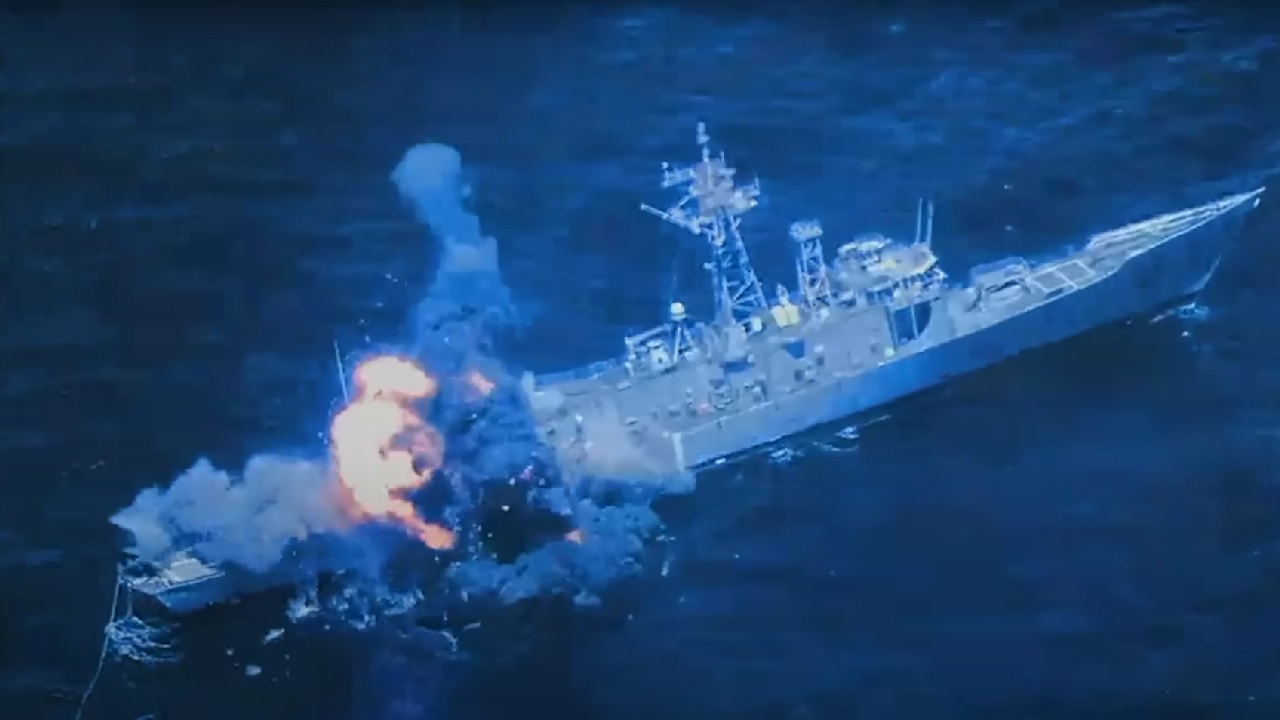
The Kongo class is the first Aegis-equipped ship introduced by the JMSDF, with a standard displacement of about 7,250 tons and equipped with Mk 41 vertical launch systems, centered on fleet air defense capabilities of the SM series. Compared to the newer Maya and Atago classes, it is an older ship. However, being older also means that the JMSDF's Aegis operations have accumulated nearly 30 years of practical experience. What is being tested at RIMPAC is not the performance metrics of a single ship, but whether it can operate with the same charts, links, and rules of engagement as the U.S. Navy, the Republic of Korea Navy, Southeast Asian nations, and European navies.
It is essential not to overlook the context of Northeast Asia here. The Japanese Ministry of Defense's updated North Korean missile data from June assesses that North Korea is complicating detection and interception with a variety of launch methods, including low-altitude, irregular trajectory short-range ballistic missiles, TELs, submarines, and railway vehicles. Additionally, at the 9th Congress of the Workers' Party of Korea in February, the production of nuclear weapons, nuclear armament of maritime and underwater forces, AI unmanned attack complexes, and special assets for anti-satellite purposes were reportedly listed. While this description may include exaggerations for propaganda, it is undeniable that the pressure on Japan's air defense and missile defense is shifting from simple ballistic missile interception to responding to complex saturation attacks.
The Distance Between the Chinese Navy's Oceanization and RIMPAC
The same Ministry of Defense document on Chinese military activities organizes that since 2021, Chinese drones have frequently passed between Okinawa and Miyako Islands, and since 2023, passages between Yonaguni Island and Taiwan have also been confirmed. Furthermore, it is reported that Liaoning's carrier-based aircraft operated in the Pacific in May 2026, and the routes for Chinese naval vessels to advance into the Pacific have diversified, including the Soya, Tsugaru, Osumi, and Miyako Straits.
From this reality, RIMPAC in Hawaii is not a distant training exercise for Japan. Rather, it serves as a maintenance ground for allies and partners to operate based on the premise of the Chinese Navy's oceanization, outside the first island chain. The significance of Kongo's participation in sailing alongside the Philippines, South Korea, Singapore, and Italy lies there. Japan's SLOC (Sea Lines of Communication) does not conclude merely near the southwestern islands. If the lines of supply and information extending to the east of Taiwan, the Philippine Sea, Guam, and Hawaii are severed, fleet operations from Yokosuka and Sasebo will also become constrained.
The Challenge is the Speed of Decision-Making Rather Than the Number of Missiles
The IISS analyzed this week that Japan's missile defense is evolving layered defense in response to a complex threat environment. This is the right direction. However, in my view, what is more troublesome for the JMSDF is not just the number of intercept missiles. When conducting surveillance and monitoring with a multilateral fleet, who identifies the target first, who has the authority to engage, and who bears the political risk? If this order is delayed by a few minutes, the performance differences among Aegis ships diminish.
Kongo's participation in RIMPAC is not merely a story of an old destroyer still being usable. Rather, it is a test of how much the JMSDF's seasoned ships can enhance the speed of multilateral decision-making in an era where Japan faces the simultaneous complex missile threats from North Korea and the oceanization of the Chinese Navy. During the Cold War, the JMSDF was part of the outer perimeter protecting U.S. aircraft carriers. In 2026, the JMSDF may sometimes have to design that perimeter itself. The issue remains not in the modernization of equipment, but in the speed at which political decisions allow that judgment to be made.
Key References
- USNI News, Western Pacific Pulse, 19 June 2026
- U.S. Department of War, Rim of the Pacific 2026 overview
- Japan Ministry of Defense, Recent Missile and Nuclear Development of North Korea, June 2026
- Japan Ministry of Defense, China’s Activities in East China Sea, Pacific Ocean, and Sea of Japan, June 2026
- IISS, Japan’s evolving missile air- and missile-defence capabilities, June 2026
The Japan Maritime Self-Defense Force's JS Kongo participated in group sailing exercises with naval forces from the Philippines, South Korea, Italy, and Singapore, heading towards RIMPAC 2026 in Hawaii from June 24 to July 12, 2026. This exercise aims to enhance multilateral command and control capabilities amid evolving threats from North Korea and increasing Chinese naval activities in the Pacific.
- RIMPAC 2026 will involve 29 countries and over 25,000 personnel.
- The Japan Maritime Self-Defense Force's JS Kongo is participating in group sailing exercises.
- The exercise aims to enhance multilateral command and control capabilities.
- North Korea's missile threats are evolving, complicating Japan's defense strategy.
- China's naval activities are increasing in the Pacific, impacting regional security.