
The Revolutionary Guard's statement about 26 ships in 2026 turns Hormuz into an Iranian licensing system.
 Ahmed Al-Rashid
IRGC Statement on 26 Vessels in 2026 Turns Hormuz into an Iranian Licensing System
On May 20, 2026, Al Jazeera reported that the Iranian Revolutionary Guard Corps announced it coordinated the passage of 26 vessels through the Strait of Hormuz in just 24 hours, while talks between Washington and Tehran regarding the resumption of traffic in the narrow corridor remained stalled. The number itself is significant, but more importantly is the phrase relayed by the channel from a statement carried by the Iranian ISNA agency: passage through Hormuz is occurring "with permission and in coordination with the IRGC Navy." This is not the language of a transient military closure. This is the language of a licensing office.
Hours later, the Persian Gulf Strait Authority published a new map on platform X delineating a controlled maritime area that vessels cannot cross without authorization. According to the same report, the area extends from Koh Mubarak in Iran to the south of Fujairah at the eastern entrance of the strait, and from the tip of Qeshm Island to Umm Al-Quwain at the western entrance. Practically, Tehran is trying to shift the question of Hormuz from "closed or open" to a more troubling question for the market: who has the right to grant permission?
From the Strait to the Licensing Desk
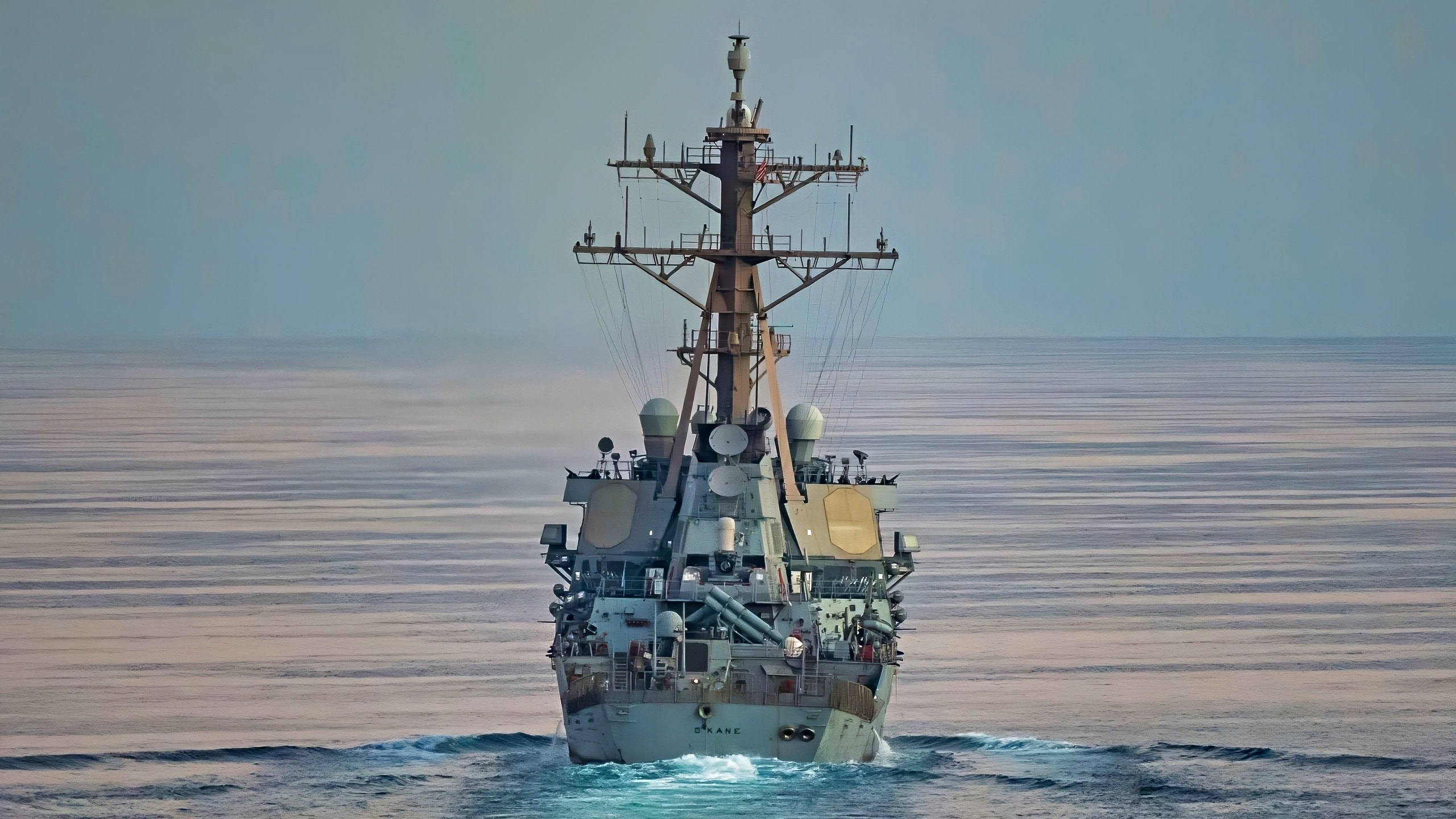
A quick military reading might see the announcement of 26 vessels as evidence that Iran does not want complete paralysis. This is partially true, but it is not enough. When the IRGC says it "coordinated" the passage, it is not just selling an image of calm; it is establishing a new administrative practice. Any military personnel who has served in the region knows that control does not always begin with gunfire. Sometimes it starts with a radio call, then a consent form, then a map, and then the insurance company, the captain, and the port are waiting for a response from a party that did not exist a week ago.
Here lies the danger of the PGSA. Iran does not need to close the entire corridor to achieve a political and economic impact. It is enough to make every trip require a new risk assessment. The vessel that used to calculate transit time, fuel prices, and port fees will now add a question about Iranian authorization, the possibility of American objection, insurance costs, and the owner's liability if they accept passage under Tehran's rules. In this sense, the strait is transforming into a semi-administrative border rather than just a battlefield.
Washington Pressures Ports While Tehran Pressures the Sea
Al Jazeera states that the Trump administration responded to Tehran's blockade of the corridor by imposing a blockade on Iranian ports, which choked Iranian oil exports, the main source of income for the state. On the same day, Trump spoke of "progress" in negotiations but threatened to resume military action if Iran did not agree to a deal. In response, Iranian Foreign Minister Abbas Araghchi warned that a return to war would involve "more surprises," and the IRGC stated that any new attack could expand the fighting this time beyond the region.
These are not negotiations between a party that has power and a party that has refusal. They are negotiations between two blockades. The United States is pressuring Iranian ports and oil. Iran is pressuring the energy corridor and maritime trade. The difference is that American pressure is clear in law, sanctions, and fleets, while Iranian pressure is trying to don the guise of local management of the strait. If Tehran succeeds in making the world treat the PGSA as an operational reality, even without legal recognition, it will have won part of the battle before signing any agreement.
The Shock Does Not Stop at Oil
Before the U.S. and Israel's war on Iran on February 28, about one-fifth of global energy exports passed through Hormuz, according to Al Jazeera. The market has understood for decades that any disruption there raises the price of oil and gas. The new warning from the Food and Agriculture Organization (FAO) is about shifting the crisis from the energy screen to the food basket. The organization warned, as reported by Al Jazeera, that disruption could trigger a global food price crisis within six to twelve months, describing what is happening as "the beginning of a systemic shock in food and agriculture."
The FAO's statement is significant because it outlines the chain that politicians do not like to acknowledge: energy, then fertilizers, then seeds, then reduced yields, then rising commodity prices, then food inflation. This is not a theoretical scenario for distant countries. The Gulf itself imports a large portion of its food and relies on ports, desalination, and cooling chains powered by energy. Egypt, Jordan, Lebanon, and Yemen will be more sensitive if the costs of transportation and fertilizers turn into a wave of new prices. Asia, especially China, India, Japan, and South Korea, will pay a double price: more expensive energy and more expensive food at the same time.
The Gulf Test Between Pipelines and the Sea
The Gulf states are not without alternatives. Saudi Arabia can use the East-West pipeline to Yanbu on the Red Sea, the UAE has the Abu Dhabi to Fujairah pipeline that partially bypasses the strait, and Oman is always trying to present its ports as a quieter outlet. However, these alternatives do not eliminate Hormuz. They relieve pressure but do not erase the problem. The production capacity of pipelines is limited, alternative ports need protection, security, and political coordination, and Qatari liquefied natural gas remains more vulnerable as geography does not provide it an easy route out of the strait.
From the Gulf's perspective, the real danger is not that Iran decides tomorrow to close the sea completely. The danger is that passage becomes "possible but conditional." This type of pressure is more exhausting for governments. It does not give them a single moment of crisis to request broad American protection, nor does it allow them to declare that trade has returned to normal. Every day that passes with some vessels passing with permission, others waiting, and insurance costs rising, the Gulf becomes a gray area between war and peace.
China and Asia Facing the Cost of Silence
Asian energy-importing countries will read the announcement of 26 vessels differently than Washington. The United States can rely more on its domestic production and on broad financial and military tools. China, India, Japan, and South Korea view Hormuz as an industrial feeding line. If the PGSA becomes part of the reality of passage, every Asian buyer will find themselves facing an awkward equation: should they pressure Iran not to misuse the license, or pressure Washington to ease the blockade on Iranian ports, or pay higher prices and wait?
For China, the issue is not just oil. Rising energy costs increase shipping and industrial costs, and rising fertilizer prices pressure global food security, while disruption in the Gulf gives Washington an opportunity to reintroduce maritime corridors into the core competition with Beijing. Therefore, Beijing may see keeping the strait open with Iranian permits as better than a complete closure, but it will fear that this system could set a precedent: a regional power creating local maritime authority over an international corridor, then using it to negotiate with a superpower.
The Deeper Message Behind the Number 26
The number 26 vessels is not evidence of the end of the crisis. It is evidence of its new form. Iran is telling the world that vessels are passing, but they are passing through its hand. Washington says there is progress, but it retains the option of war. The FAO says the shock may begin in food after months, not hours. In my view, this is the most dangerous aspect of the current Hormuz crisis: it is no longer a battle over closing a gate, but about transforming the gate into an institution, the corridor into a letter of credit, and the global market into a hostage to an administrative and military rhythm simultaneously.
In the East, we say that a door that does not close may still prevent you if every entry requires the guard's permission. Hormuz today is not a completely closed door, but it is no longer an open door as it once was. This small difference in language is the big difference in security.
Main Sources
- Al Jazeera, 20 May 2026, Iran claims it coordinated passage of 26 vessels out of Hormuz in 24 hours.
- ISNA, Iranian statement attributed to the IRGC regarding coordination with the IRGC Navy, reported by Al Jazeera.
- Persian Gulf Strait Authority, map of the controlled maritime area on platform X, reported by Al Jazeera.
- Food and Agriculture Organization FAO, warning about systemic shock in food and agriculture, reported by Al Jazeera.
On May 20, 2026, Iran's Revolutionary Guard Corps announced the coordination of 26 vessels' passage through the Strait of Hormuz, establishing a new licensing system for maritime traffic. This development indicates a shift in control from military closure to administrative oversight, raising concerns about the implications for global energy and food markets. The situation reflects ongoing tensions between Iran and the U.S. regarding maritime security and trade routes.
- Iran coordinated the passage of 26 vessels through the Strait of Hormuz in 24 hours.
- The Revolutionary Guard stated that passage requires permission and coordination with its naval forces.
- A new maritime control area has been established, requiring authorization for vessels to cross.
- The situation reflects a shift from military closure to administrative control over maritime traffic.
- The FAO warned of potential global food price crises due to disruptions in energy supply.