
The Russia-Africa Summit Redefines the Sahel — Moscow Promises More Than Just Weapons in 2026
 Marie Dubois
The Russia-Africa Summit Redefines the Sahel — Moscow Promises More Than Just Weapons in 2026
Moscow, October 30, 2026. In the halls of the third Russia-Africa summit, the topic is not just economic cooperation. For the juntas of Mali, Burkina Faso, and Niger, the concrete question is much harsher: what can Moscow actually provide when the columns of JNIM and the Islamic State advance on secondary roads, far from the capitals?
The summit concluded with an action plan for 2027-2029 and an agreement announced in artificial intelligence. Vladimir Putin met with several African leaders, including the president of the African Union, Évariste Ndayishimiye. The images and statements give an impression of a diplomatic offensive. On the ground, however, Russia still needs to convert its military presence in the Sahel into sustainable control of routes and populations.
A Political Showcase for the Alliance of Sahel States
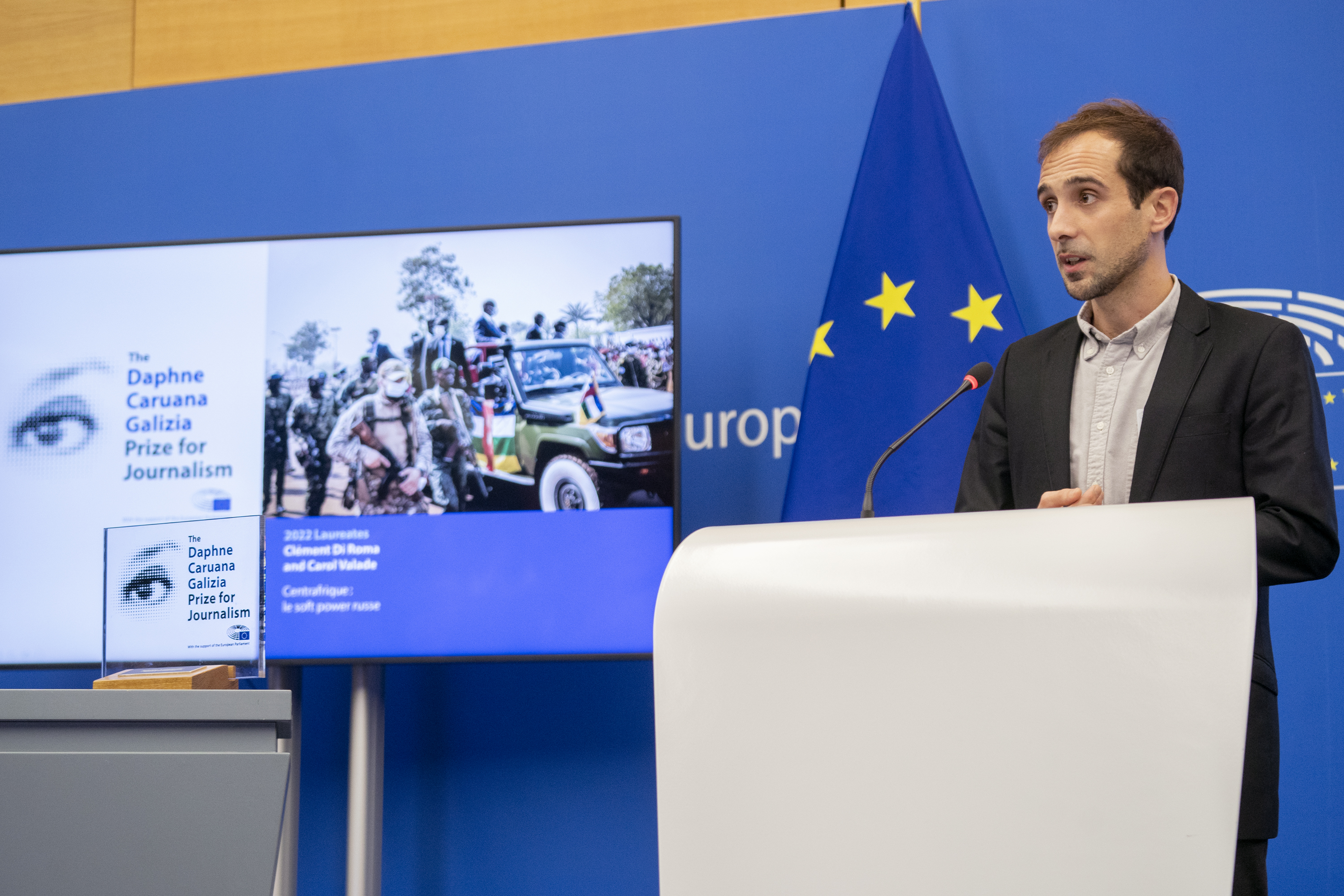
Since the French withdrawal and the break with several Western partners, Bamako, Ouagadougou, and Niamey are seeking less a replacement for Barkhane than a margin of maneuver. The Alliance of Sahel States (AES) wants to decide alone on its alliances, operations, and public messages. Moscow has understood this. The summit offers the three regimes international recognition that they can no longer easily obtain in regional forums.
Russia does not ask its partners to return to a democratic framework before discussing security. This is precisely the political value of its offer. But this flexibility comes at a price: it protects governments, not necessarily the villages located between Gao and Ansongo, or the markets along the roads in eastern Burkina Faso.
From Wagner to the Africa Corps, the Same Underlying Problem
The vocabulary has changed. The Africa Corps, placed under Russian state control, has replaced the Wagner brand in official communications. However, the operational logic remains familiar: protect regimes, secure certain strategic nodes, and gain political or economic access. Available reports describe a Russian presence in Mali, Burkina Faso, and Niger, but they do not allow for precise measurement of troop strength, command chain, or rules of engagement for each detachment.
This is where Moscow's announcements meet the dust of the ground. An escort can secure a convoy for a few hours. It does not sustainably hold a 300-kilometer road, does not replace local administration, and does not automatically provide the human intelligence necessary to distinguish a fighter from a herder. JNIM exploits exactly this gray area: it avoids frontal battle, taxes the routes, intimidates local leaders, and then returns after the forces have passed.
Technology Does Not Replace Presence
The agreement on artificial intelligence is indicative of the new Russian offer. Drones, data processing, border surveillance, and communication platforms can improve the decision-making speed of Sahelian armies. But the operational loop remains incomplete if the information is not verified by units capable of staying on site. An aerial image does not indicate who actually controls a hamlet after nightfall.
The risk is to confuse modernization with mastery of the theater of operations. AES forces can receive more advanced equipment while losing the battle for mobility, maintenance, and local recruitment. On a battered track between Ménaka and the Nigerien border, the availability of a vehicle, the quality of an interpreter, and the trust of a village chief often matter more than a slogan about algorithmic warfare.
Competition with Algeria, Not a Frictionless Alliance
The rise of Moscow is not occurring in a strategic vacuum. Algeria is also seeking to regain a foothold in northern Sahel, with an approach based on border depth, mediation, and surveillance of its borders. Its interest is to contain armed groups before they reach the Algerian Sahara. Russia's interest is to expand its influence and maintain political partners.
These objectives may coincide during a crisis, but they are not identical. Niamey may want aircraft, instructors, and Russian political support while refusing to become a mere outpost of Moscow. The AES, for its part, seeks to multiply its options. This is an African strategy, not just a Russian alignment: Sahelian capitals are using the rivalry of powers to negotiate their survival.
The Real Test Will Be on the Ground
Public sources — the Russian presidency, Al Jazeera, ABC News, and summit reports — confirm the diplomatic intensity of the sequence. They do not prove that a new Russian deployment has reduced attacks from JNIM or the Islamic State. This distinction is essential. The figures on troop strength, losses, and results claimed by the armies remain partial and sometimes contradictory.
In the coming months, three very simple indicators will need to be monitored: the effective reopening of roads, the duration of the forces' presence in rural areas, and the authorities' ability to restore civil services after an operation. If the Russians remain confined to the capitals and bases, their influence will be spectacular but superficial. If AES units recover logistical corridors without collective punishments or new abuses, Moscow will be able to present a tangible result.
For now, the summit has changed the diplomatic map faster than it has changed the map of territorial control. In the Sahel, it is the kilometers held after the cameras leave that will determine whether Russia is a security partner or merely the new patron of a besieged power.
Sources
- Presidency of the Russian Federation, press conference of October 29, 2026, with the president of the African Union.
- Al Jazeera, Russia-Africa Summit: What is on the agenda, and why does it matter?, October 28, 2026.
- ABC News, Putin woos African leaders at a Moscow summit aimed at expanding Russia-Africa ties, October 29, 2026.
- TeleSUR English, Third Russia-Africa Summit Ends With AI Deal, 2027-29 Action Plan, October 30, 2026.
Russia is enhancing its military and diplomatic presence in the Sahel region, focusing on cooperation with Mali, Burkina Faso, and Niger. The Russia-Africa summit on October 30, 2026, resulted in a plan for action from 2027 to 2029, emphasizing military support without democratic prerequisites. The Africa Corps has replaced the Wagner Group in official communications, indicating a shift in Russia's approach to regional influence.
- Russia is increasing its military presence in the Sahel region.
- The Russia-Africa summit resulted in a plan for action from 2027 to 2029.
- Moscow is offering military support without requiring democratic reforms from local regimes.
- The Africa Corps has replaced the Wagner Group in official communications.
- Local governments are seeking to leverage Russian support against armed groups.