
The Shortcomings in DDG-51 Repairs Highlighted by the RAND 2026 Exercise: Remaining Alliance Weaknesses in Yokosuka and Sasebo
 Tanaka Takashi
RAND 2026 Exercise Reveals Insufficient Repairs for DDG-51, Remaining Weaknesses in the Alliance at Yokosuka and Sasebo
How many days will it take to return the Arleigh Burke-class destroyer, back at the Yokosuka pier, to the sea? The question posed by RAND in its 2026 tabletop exercise is less flashy than the Taiwan contingency itself. However, from the perspective of the Japan Maritime Self-Defense Force's practical experience, this is where the durability of the Japan-U.S. alliance is most starkly revealed.
Assumptions Surrounding the Repair Battle for DDG-51
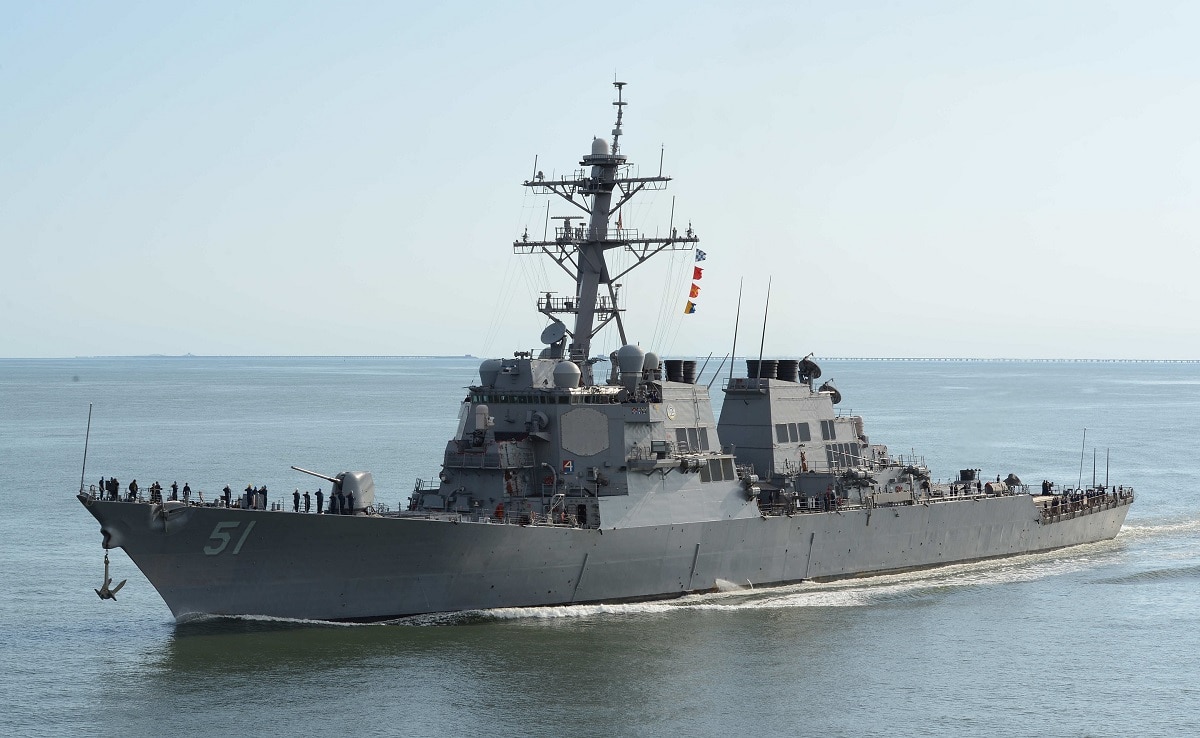
RAND's report examined the combat damage repair of DDG-51 class missile destroyers in the Indo-Pacific during an exercise conducted in August 2025. The scenarios included preventing an invasion of Taiwan, escort missions in the South China Sea, and incidents near the Strait of Malacca. According to Defense News, the current U.S. Navy system is still tied to peacetime assumptions regarding command structures for ship repairs, parts stockpiling, and access to allied facilities.
Japanese Ports Are Close but Not Safe
Yokosuka, Sasebo, Kure, and Maizuru are geographically valuable to the U.S. military. However, this holds the same significance from China's perspective. In a scenario where ballistic missiles, cruise missiles, drones, and cyberattacks are used in conjunction, it is overly optimistic to assume that large dry docks and ammunition handling facilities can be used for long-term repairs. RAND also points out that even if allies have a principle of willingness to support, political decisions are not automatic when the threat level rises.
For the JMSDF, the Issue Is Not Just the Number of Vessels
In Japan, discussions tend to focus on increasing escort ships and stand-off defense capabilities. However, the procedures for assessing damaged vessels, conducting emergency repairs, reallocating parts, and deciding who determines the feasibility of re-deployment are not easily visible in training. RAND has proposed multinational pre-positioning of mobile repair teams, flight-deployable assessment units, and forward repair packages. This directly impacts the JMSDF as well, since the same constraints apply not only to U.S. ships but also to Japan's Aegis destroyers and supply ships.
In my view, the deterrent capability of the first island chain cannot be measured solely by missile range. The number of ships that can be returned after being hit will determine the combat power on the next day of battle.
The Hidden Vulnerability of Decision-Making Speed
Using allied ports involves legal frameworks, community explanations, handling of ammunition and fuel, and securing port labor. While adjustments may be possible in peacetime, they become a different issue in the tens of hours during a crisis. If the U.S. side does not fully understand Japan's capabilities, and Japan remains ambiguous about what it can take on, damaged vessels will become heavy objects blocking the pier rather than combat power. The real challenge is not the number of shipyards, but being prepared to prevent repairs from becoming a political issue on the first day of a crisis.
Sources
- RAND Corporation, Battle Damage Repair for Arleigh Burke-Class Destroyers, 2026
- Defense News, US could not repair battle-damaged ships in war with China, study finds, June 22, 2026
RAND's 2026 exercise assessed the repair capabilities of DDG-51 destroyers, revealing vulnerabilities in the U.S.-Japan alliance. The report emphasizes that political decisions could impede the use of Japanese ports during a crisis, affecting naval readiness. It recommends multinational pre-positioning of repair teams to enhance operational capabilities in the Indo-Pacific.
- RAND's 2026 exercise assessed repair capabilities for DDG-51 destroyers in the Indo-Pacific.
- The report highlights vulnerabilities in the U.S.-Japan alliance regarding naval repairs.
- Political decisions may hinder the use of Japanese ports during a crisis.
- RAND suggests multinational pre-positioning of repair teams and equipment.
- The ability to repair damaged ships is critical for maintaining combat readiness.