

The A-12 Oxcart reconnaissance plane was a CIA program that was designed to replace the highly successful U-2 spy plane.
Developed by iconoclast Lockheed engineer Clarence “Kelly” Johnson and his Skunk Works team, the A-12 incorporated titanium construction, some of the most advanced engine inlets of its era, significant radar-signature reduction (though it was not a stealth plane), and two powerful Pratt & Whitney J58 engines.
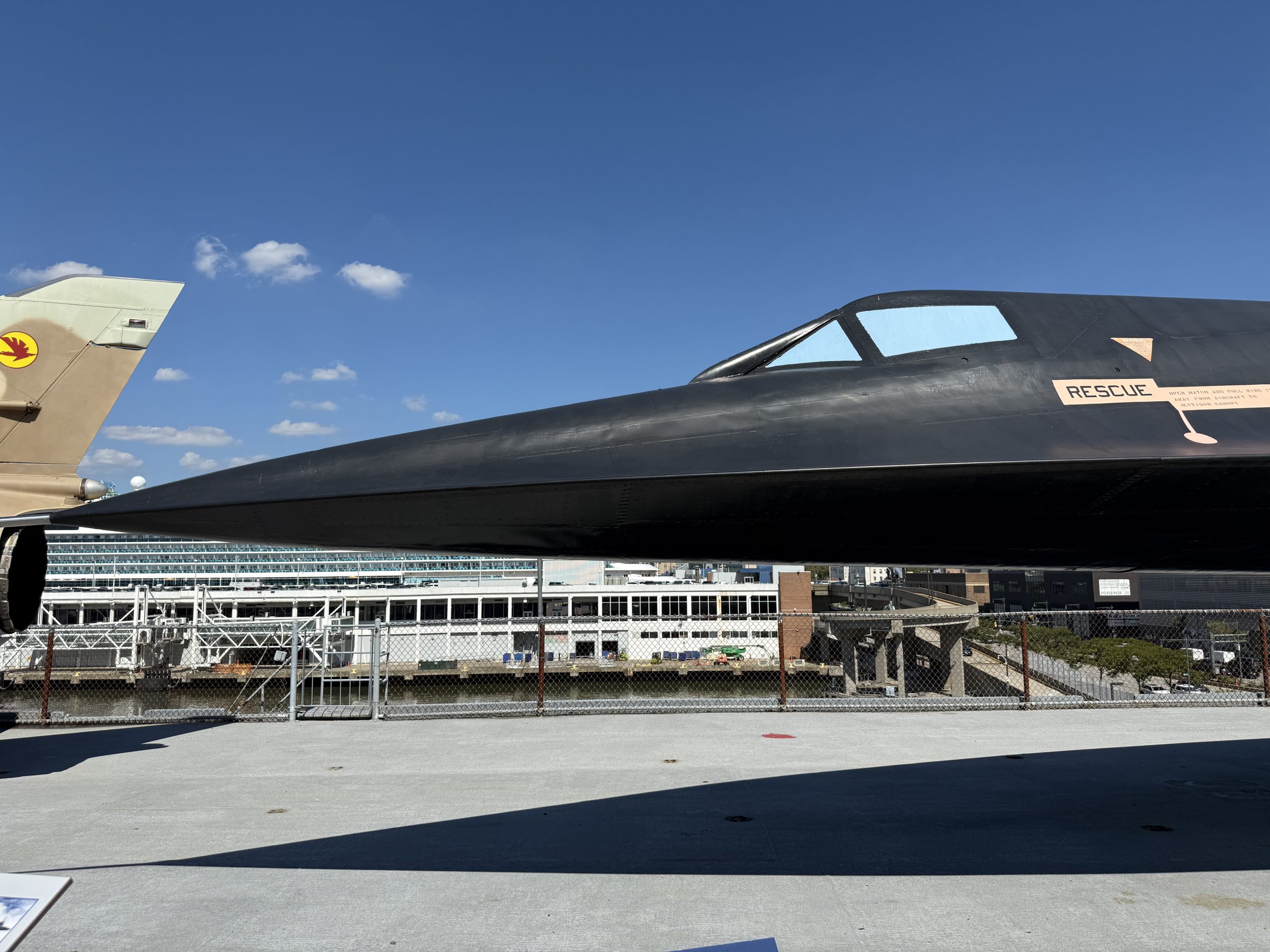
A-12 That Came From SR-71 Family USS Intrepid Photo Shoot 19FortyFive
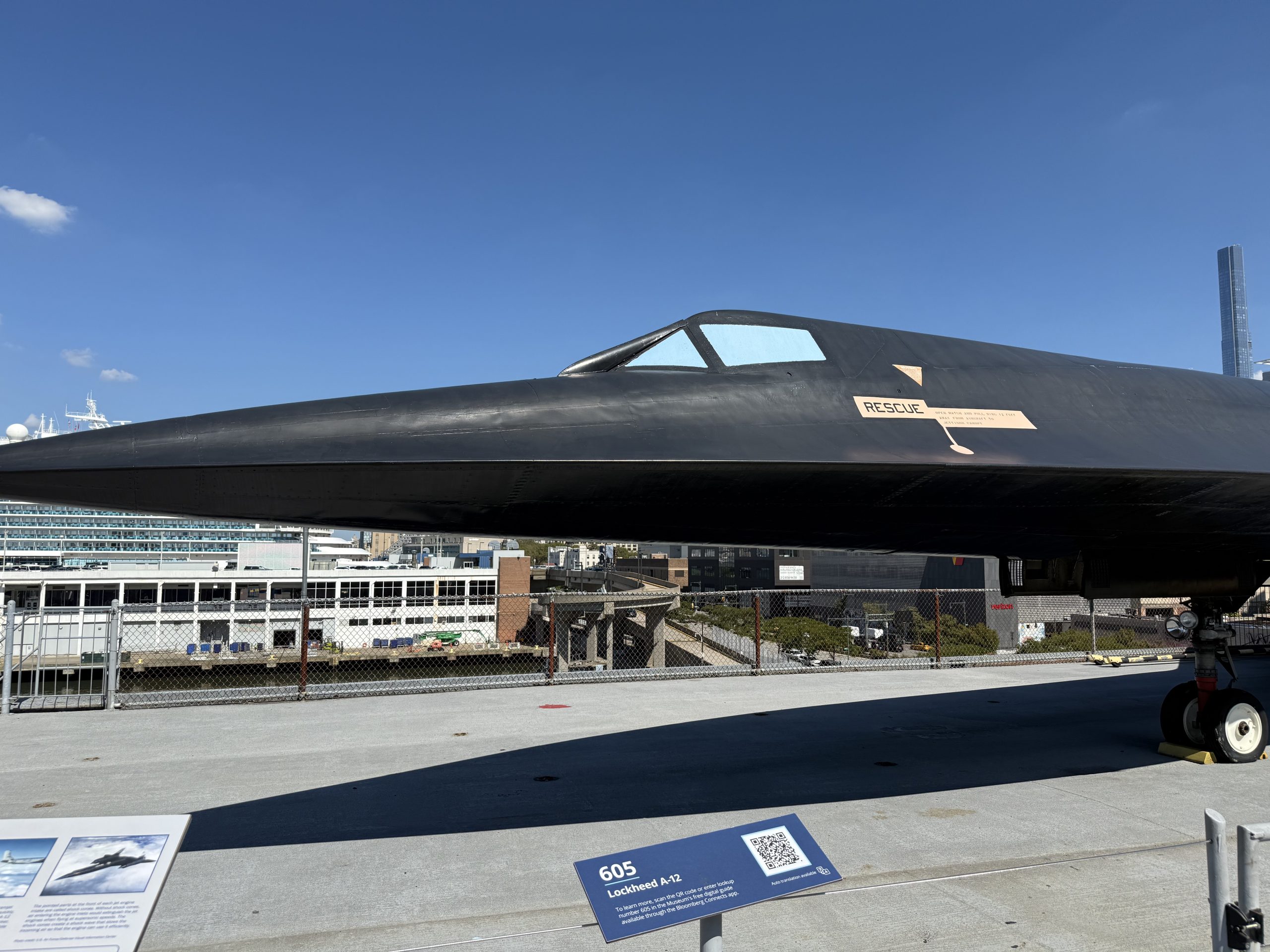
A-12 That Came From SR-71 Family USS Intrepid Photo Shoot 19FortyFive

A-12 That Came From SR-71 Family USS Intrepid Photo Shoot 19FortyFive
Building the Future of Warfare
CIA needed the A-12 to go fast. Really fast.
It needed to outrun the Soviet Union’s increasingly sophisticated air defense (AD) systems.
So engineers had to design a plane that could sustain Mach 3.2 at altitudes approaching 90,000 feet.
This was especially complex because, when the A-12 was conceived, the technology to do this wasn’t readily available.
Essentially, Lockheed’s engineers had to create the entire system from scratch.
They needed to rethink everything about flying because, at the proposed speeds and altitudes, things could get messy fast for the A-12’s pilots.
Lockheed engineers had to consider how aerodynamic heating would affect the craft’s operation.
They also had to determine what specialized fuel systems were needed to meet the CIA’s onerous requirements.
They also needed to reconsider the engines needed to sustain Mach 3.2 at around 90,000 feet.
But Johnson’s Skunk Works team proved it was possible.
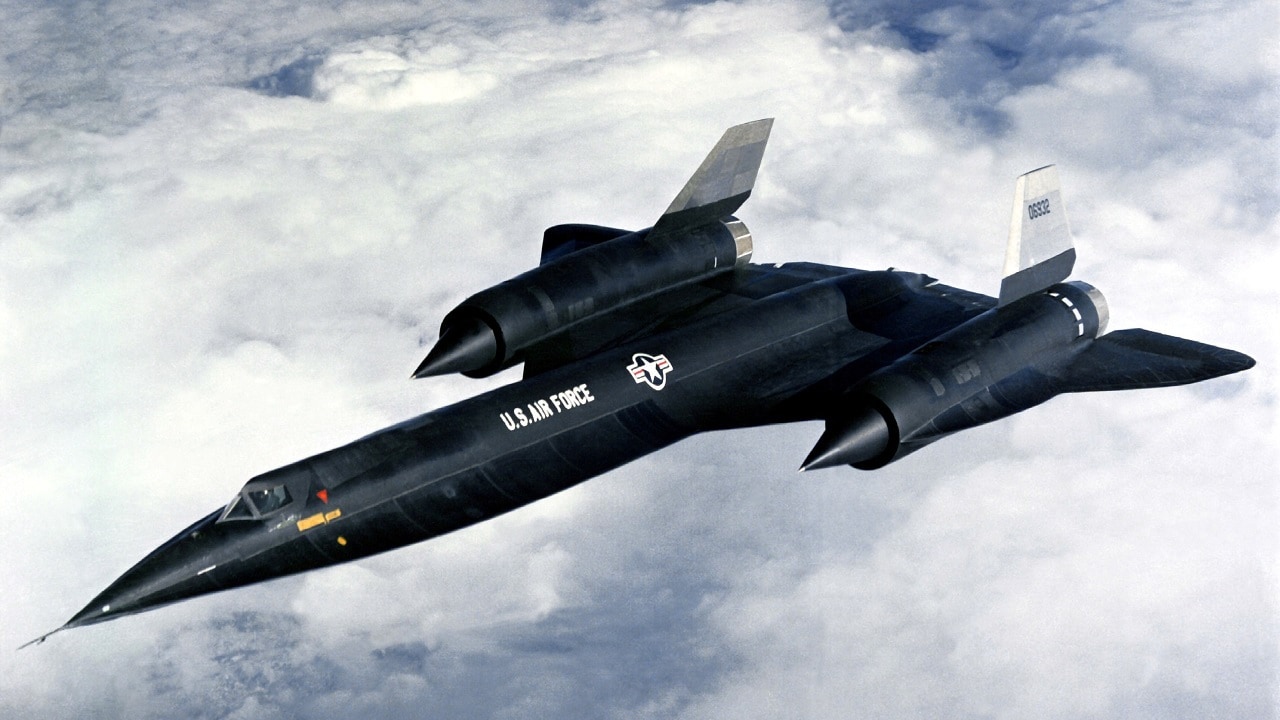
An air-to-air left front view of a A-12 aircraft. Creative Commons Photo.
And they created a plane that, decades later, still captures the imagination of aircraft enthusiasts everywhere.
As Kelly Johnson designed the CIA’s next surveillance plane, the A-12, he also realized the reconnaissance mission requirements were similar to those for nuclear strike missions.
Kelly Johnson began to consider how to turn the A-12 Oxcart into more than just a CIA recon bird.
So, around September 1960, Lockheed began studying how to adapt the Oxcart into a nuclear bomber.
By January of 1961, Kelly Johnson submitted a formal strategic reconnaissance bomber proposal.
This proposal coincided with radical developments in nuclear miniaturization techniques in the United States.
Johnson contemplated four hypothetical nuclear weapons weighing around 400 pounds each.
On the other hand, Johnson’s team explored the prospect of placing one large nuclear weapon in the proposed A-12 Oxcart nuclear bomber version.
The idea was to preserve the A-12’s aerodynamic configuration so the plane could maintain its high speed and deep-penetration capabilities.
Johnson’s proposal even got an official designation–the RB-12–and it would combine the strategic reconnaissance capabilities with deep nuclear strike capabilities, giving it a real edge over other, more conventional US systems.
Curtis LeMay Takes Interest
Even legendary US Air Force Gen. Curtis LeMay took interest, according to The Aviation Geek Club, an online trade publication.
The RB-12 advanced to the mock-up stage, which caught LeMay’s interest in 1961. General Thomas Power, who succeeded LeMay as commander of Strategic Air Command (SAC), also took an interest in the proposed RB-12.
But this wasn’t the only A-12 derivative the Air Force was studying for possible mass production.
The Air Force was also interested in an interceptor variant of the A-12 Oxcart that was being developed at the same time.
That craft was designated the YF-12A. Unlike the RB-12, the YF-12A progressed to flight testing.
On top of that, the RB-12 was facing real competition from the North American Aviation XB-70 Valkyrie. That system was a six-engine strategic bomber intended to cruise at Mach 3.
The Valkyrie was a major Air Force investment, so its supporters within the branch were unwilling to seriously consider a different aircraft for the same strategic mission.
This was a strange reality, given how troubled the XB-70 was—and the fact that it ultimately did not become the Air Force’s primary strategic nuclear bomber.

XB-70 photo taken at U.S. Air Force Museum by 19FortyFive in 2025.
A Memorable Bird
Nevertheless, Kelly Johnson expressed frustration over the resistance his proposal met within the Air Force bureaucracy, even though he and some senior Air Force leaders knew the RB-12 was a superior concept to the XB-70.
At the time, though, a significant shift toward long-range ballistic missiles over deep-penetration nuclear bombers also hurt the RB-12’s chances of mass production.
Nevertheless, the underlying technology survived.
The SR-71 Blackbird grew out of these programs. Although the military never adopted it as a nuclear bomber, it still did significant work for the military and intelligence community.
The Blackbird may have helped America win the Cold War.
About the Author: Brandon J. Weichert
Brandon J. Weichert is the Senior National Security Editor at 19FortyFive.com. He also manages The Weichert Brief on Substack. Weichert also hosts “National Security Talk” on Rumble. He is the author of four bestselling national security books, most recently A Disaster of Our Own Making: How the West Lost Ukraine (Encounter Books). Follow him via Twitter/X @WeTheBrandon.