
The Strikes of Qeshm 2026 Between Iran and the United States Put the Strait of Hormuz to the Test of Gulf Maritime Deterrence
 Ahmed Al-Rashid
Qeshm Strikes 2026: Iran and the United States Put the Strait of Hormuz to the Test of Gulf Maritime Deterrence
On June 3, 2026, the most significant military news in the Gulf was not the number of missiles intercepted, but the location that returned to the forefront: Qeshm Island and the Strait of Hormuz. The Associated Press reported that U.S. and Iranian forces exchanged new strikes in the Gulf as efforts to extend the ceasefire faltered. Axios noted that U.S. Central Command spoke of intercepting several Iranian ballistic missiles and drones and conducting defensive strikes on a site in Qeshm following threats against navigation. This is not an isolated tactical incident, but a practical test of who holds the daily decision-making power over the artery through which a large portion of the world's oil and gas flows.
From Qeshm to Hormuz
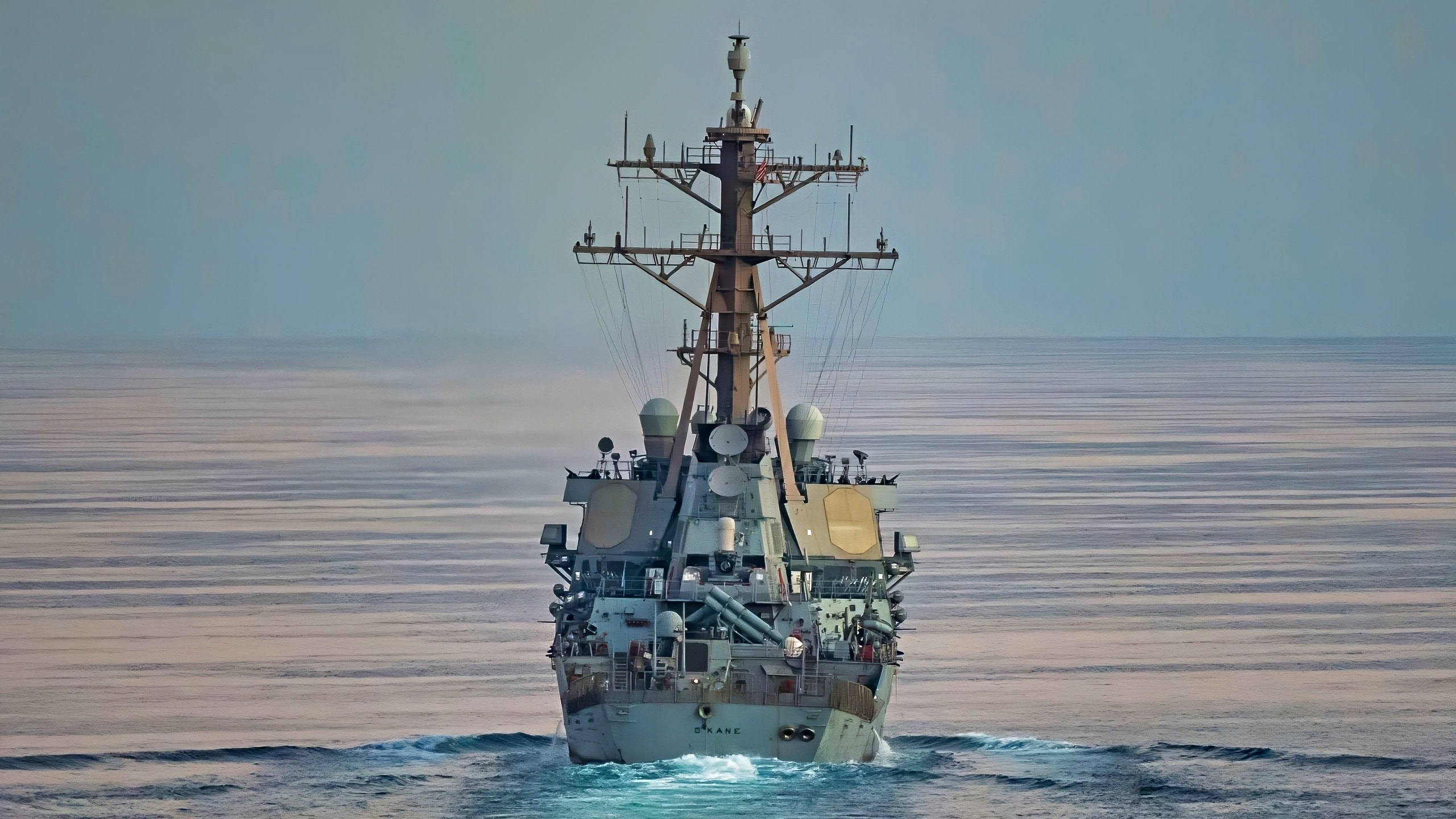
Qeshm Island is not just a passing geographical name. Militarily, its location gives Iran surveillance and firepower over the strait's entrances, enabling the Revolutionary Guard to combine coastal radars, drones, fast boats, and short- to medium-range missile units. When the United States strikes a control station or launch site there, it is not merely responding to an attack; it is attempting to break the command and control loop that makes the strait a continuous area of extortion.
However, the problem is that the U.S. response, no matter how precise it seems, does not change the geography. The strait does not allow for complete control. Every ship that passes needs a clear route, air security, early warning, communication with ports, and understanding with insurance companies. Therefore, Iran can lose a position in Qeshm or Bandar Abbas and then compensate for that with a small boat, a suicide drone, or a wireless threat that forces a tanker to wait. In narrow naval warfare, disrupting movement is sometimes more important than sinking ships.
The Difference Between Defending a Base and Defending Trade
Those who measure Gulf security solely by the number of Patriot or THAAD batteries are mistaken. These systems are primarily designed to protect high-value points: an airbase, an energy facility, a city, or a command center. Protecting a moving shipping line in Hormuz is a different matter. A tanker is not a fixed target, and you cannot place an air defense dome over every nautical mile. Here lies the capability gap that armies know well: missile defense protects sites, but it is not enough on its own to secure the economy.
Gulf countries have spent billions over the past two decades on air interception, which is understandable after the experience with Houthi missiles and Iranian drones. However, Hormuz demands a different kind of investment: mine sweepers, armed maritime patrols, anti-boat helicopters, long-range reconnaissance aircraft, joint maritime command centers, and legal and political capacity to manage commercial convoys in a crisis. These elements are less glamorous than purchasing an F-35 fighter or a THAAD battery, but at this moment, they are more connected to the security of bread and fuel.
Iran Uses the Cost of Passage, Not the Power of Victory
In my estimation, Tehran is not seeking a decisive naval battle with the Fifth Fleet. It knows the power differential. What it wants is to raise the cost of passage so that every crossing decision becomes a political and economic one, not just a routine navigational decision. If a ship needs U.S. escort, if insurance premiums rise, and if companies hesitate to send their tankers, Iran has achieved part of its deterrence without officially closing the strait.
This is the essence of the Iranian maneuver since the beginning of the 2026 war. The use of missiles and drones is not only aimed at hitting a target but also at producing a constant question in Riyadh, Abu Dhabi, Kuwait, and Doha: Can the Americans protect everything at the same time? The cold military answer is no. The United States can intercept many projectiles and strike launch sites, but it cannot grant every tanker complete immunity, nor can it make commercial companies act as if the sea has returned to normal.
The Old Gulf Dilemma in Naval Clothing
Any military officer who has served in the region knows that the Gulf is adept at purchasing platforms but weaker in building the system that connects them. We have excellent radars, modern ports, patrol aircraft, and American, French, and British bases. However, the current crisis poses a painful question: Who leads the operations room when an Iranian missile strikes a commercial route rather than a military base? Is the decision with the national command, CENTCOM, the shipping company, or the flag state of the ship?
Gulf coordination is still less than the magnitude of the threat. The sea does not recognize political boundaries in the way that official data does. A threat that begins near Qeshm may end at the ports of the UAE, eastern Saudi Arabia, or Omani waters. If each country treats the threat as a separate sovereign file, Iran will get what it wants: fragmented responses to a single connected threat.
Washington Between Guardian and Adversary
The irony is that the United States presents itself as a guardian of freedom of navigation, but it has become, in Tehran's view, a direct party in the war and blockade. This creates a problem for Gulf states. Relying on the U.S. Navy is practically essential, but it makes Gulf trade routes dependent on Washington's political and military decisions. If the United States decides to strike a target in Qeshm, the Iranian response may fall on a commercial ship or a Gulf port, not on an American destroyer.
Practically, Gulf states cannot do without the American umbrella now. However, they can reduce their maritime vulnerability by building a joint Gulf command for the corridors, linking coastal monitoring centers, expanding fleets of mine sweepers and patrol boats, and purchasing defensive munitions specifically for small drones, not just ballistic missiles. Buying expensive interception is not a mistake, but relying on it alone is like putting a steel door on a house without windows.
After the Qeshm Strike
The Qeshm strike will not resolve the Hormuz conflict. It may delay an attack or incapacitate a control station for hours or days, but it does not eliminate Iran's ability to make the sea a source of concern. More importantly, it reminds the Gulf that energy security no longer starts from the wellhead alone, but from the maritime passage point and the state's ability to keep trade moving under pressure.
The primary sources for this reading are the Associated Press regarding the exchange of strikes in the Gulf and Axios regarding the U.S. Central Command's narrative of the Qeshm strikes, along with previous reports from USNI News about the nature of missile and drone risks in the Strait of Hormuz. The conclusion is not that Iran owns the strait, nor that the United States has lost it. The conclusion is that the Gulf still lives between a necessary reliance on American power and a declared desire for defensive independence. As the old military saying goes, the road you cannot protect yourself does not truly belong to you, even if it passes in front of your house.
On June 3, 2026, U.S. and Iranian forces engaged in strikes in the Gulf, particularly around Qeshm and the Strait of Hormuz. The U.S. Central Command reported intercepting Iranian ballistic missiles and drones, while Iran's military capabilities pose a significant threat to maritime navigation. This exchange highlights the ongoing military tensions and the strategic importance of the Strait of Hormuz for global oil and gas supplies.
- U.S. and Iranian forces exchanged strikes in the Gulf on June 3, 2026.
- The U.S. Central Command reported intercepting several Iranian ballistic missiles and drones.
- Iran's military capabilities in the Strait of Hormuz include coastal radars and fast boats.
- The U.S. aims to disrupt Iran's command and control over maritime routes.
- Iran seeks to raise the cost of maritime passage to influence political and economic decisions.