
The Tu-95 Flying Around Japan and the Six Chinese and Russian Vessels Indicate Maritime and Aerial Pressure
 Tanaka Takashi
Tu-95 Flights Around Japan and the Maritime and Aerial Pressure Indicated by the Announcement of Six Sino-Russian Vessels
On July 22, a brief headline titled "On the Movements of Russian Military Aircraft (Tu-95 and others)" appeared in the press release section of the Joint Staff Office. The day before, on the 21st, there were successive announcements regarding Chinese and Russian naval vessels, including joint navigation and shooting exercises, navigation near Okinotori Island, northward movement from south of Iwo Jima to north of Iwo Jima, the passage of the Chinese Navy's Dongdiao-class intelligence-gathering ship between Okinawa and Miyako Islands, and the passage of Russian vessels through the Soya Strait and between Yonaguni Island and Iriomote Island. Looking at each individual action, none can be immediately deemed abnormal under international law. However, the overlap of maritime and aerial announcements over the two days cannot be taken lightly.
The Significance of the Tu-95 Lies in Its Route Rather Than the Aircraft Itself
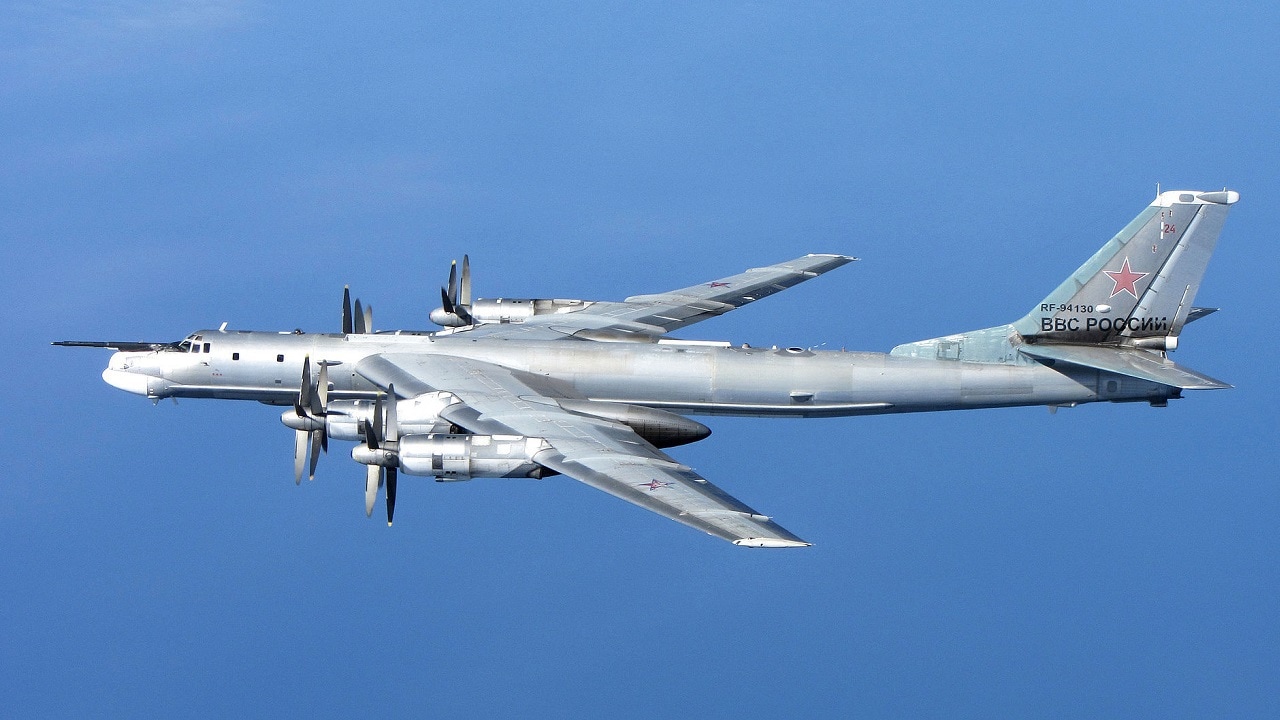
The Tu-95 is a turboprop strategic bomber with its origins in the Cold War era, and it is not an aircraft that excels in speed or stealth compared to modern fighter jets. However, due to its long range and cruise missile carrying capability, every time it appears near Japan's air defense identification zone, the Japan Air Self-Defense Force is compelled to confirm alert monitoring, emergency scrambles, air control, and the connection of ground radar. This serves as a kind of flying checklist.
In my view, the point of interest this time is not that "an old bomber flew," but that pressure was applied from the air immediately after multiple naval movements around Japan were announced the day before. While the responses of the Japan Maritime Self-Defense Force (JMSDF) and the Japan Air Self-Defense Force (JASDF) are institutionally separated, the threat perception on the ground is connected by a single operational map. Listing the place names such as the Soya Strait, between Okinawa and Miyako Islands, between Yonaguni Island and Iriomote Island, off Okinotori Island, and south of Iwo Jima, reveals that the entire area from the northernmost part of the Japanese archipelago to the southwestern islands and even the outer edge of the Pacific is being tested simultaneously.
Sino-Russian Joint Navigation Measures the Burden on the Southwestern Islands
The most suggestive aspect of the announcements on July 21 is that the Sino-Russian joint navigation and shooting exercises were announced on the same day. For the Chinese Navy, the passage between Okinawa and Miyako Islands is a representative exit that crosses the first island chain, and the passage of the Dongdiao-class intelligence-gathering ship is naturally seen as having the intent to observe the communications and radar operations of the Self-Defense Forces and the U.S. military. The announcements related to the Russian Kilo-class submarines and the movements of smaller combat vessels such as the Tarantul III-class are limited events when viewed in isolation. However, when the flights of the Chinese intelligence-gathering ship, Russian surface and support vessels, and the Tu-95 coincide in timing, the situation changes.
The challenge for Japan is not to handle individual approaches one by one. The issue is how to allocate escort ships, patrol aircraft, fighter jets, ground radar, and intelligence personnel in what order when publicized incidents occur in a short period during peacetime. While the increase in defense spending will advance equipment updates, alert monitoring ultimately comes back to personnel and maintenance time. The operational rates of P-1 patrol aircraft and F-15/F-35 fighters in the southwestern region, as well as the operations of bases such as Naha, Nittagahara, and Tsuiki, are far more realistic constraints than political slogans.
Implications for the Japan-U.S. Alliance
For the U.S. military, this type of simultaneous Sino-Russian action is not merely a show of force by neighboring countries. The deterrent effect of the Japan-U.S. alliance depends not only on the presence of aircraft carriers and bombers but also on how quickly and accurately Japan can create a maritime and aerial situation map. When the U.S. military conducts operations connecting Guam, Okinawa, Yokosuka, and Sasebo, Japan's alert monitoring network serves as a forward sensor and simultaneously acts as a political early warning device.
As far as can be confirmed from available sources, the Joint Staff Office announced the movements of Russian military aircraft including the Tu-95 on July 22, and on July 21, announced the Sino-Russian joint navigation, shooting exercises, navigation near Okinotori Island, and the passage of the Dongdiao-class intelligence-gathering ship between Okinawa and Miyako Islands. Detailed tracking and reading of the number of aircraft will still require checking each PDF document.
Therefore, this incident should not be overly dissected into one Russian aircraft, one Chinese vessel, and one Russian vessel. Rather than directly provoking Japan, China and Russia may be measuring how broadly and how long they can constrain Japan's surrounding vigilance. The true blind spot is not the presence or absence of airspace violations, but whether the speed of Japan-U.S. decision-making can keep pace with the speed of information on the ground when simultaneous non-violation activities occur.
On July 21-22, 2023, Russian and Chinese military forces conducted joint naval operations and a flight of a Tu-95 bomber near Japan. The Chinese Dongdiao-class reconnaissance ship passed between Okinawa and Miyako Islands, while Russian vessels transited the Soya Strait and other areas. These actions reflect a coordinated effort to exert maritime and aerial pressure on Japan, testing its defense response capabilities.
- Tu-95 aircraft flew near Japan on July 22, 2023.
- Joint naval operations between China and Russia were reported on July 21, 2023.
- Chinese reconnaissance ship passed between Okinawa and Miyako Islands.
- Russian naval vessels transited the Soya Strait and between Yonaguni and Iriomote Islands.
- The activities indicate increased maritime and aerial pressure on Japan.