
The UAE is Approaching India's BrahMos and Akashteer in a Deal That Could Reach $4 Billion
 Ahmed Al-Rashid
The UAE Approaches Indian BrahMos and Akashteer in a Deal That Could Reach $4 Billion
On June 22, 2026, Reuters published a brief but significant news item: India and the UAE are in early talks regarding the sale of the supersonic BrahMos missile to Abu Dhabi, while subsequent Indian reports added that the Akashteer networked air defense system is also on the table. No deal has been signed yet, which is important; however, in the Gulf, sometimes the direction of negotiations speaks louder than the signature itself, especially when a buyer like the UAE moves outside the traditional American track.
The figure circulating in Indian media is around $4 billion if the package expands to include missiles, command and control centers, and support. I do not treat this figure as a final fact, but rather as an indicator of the scale of ambition. The UAE is not looking for a single missile to display at a military parade, but for a new layer in the coastal and aerial deterrence structure following the recent Iran war and what it revealed about the fragility of defense calculations in the region.
What Abu Dhabi is Actually Buying
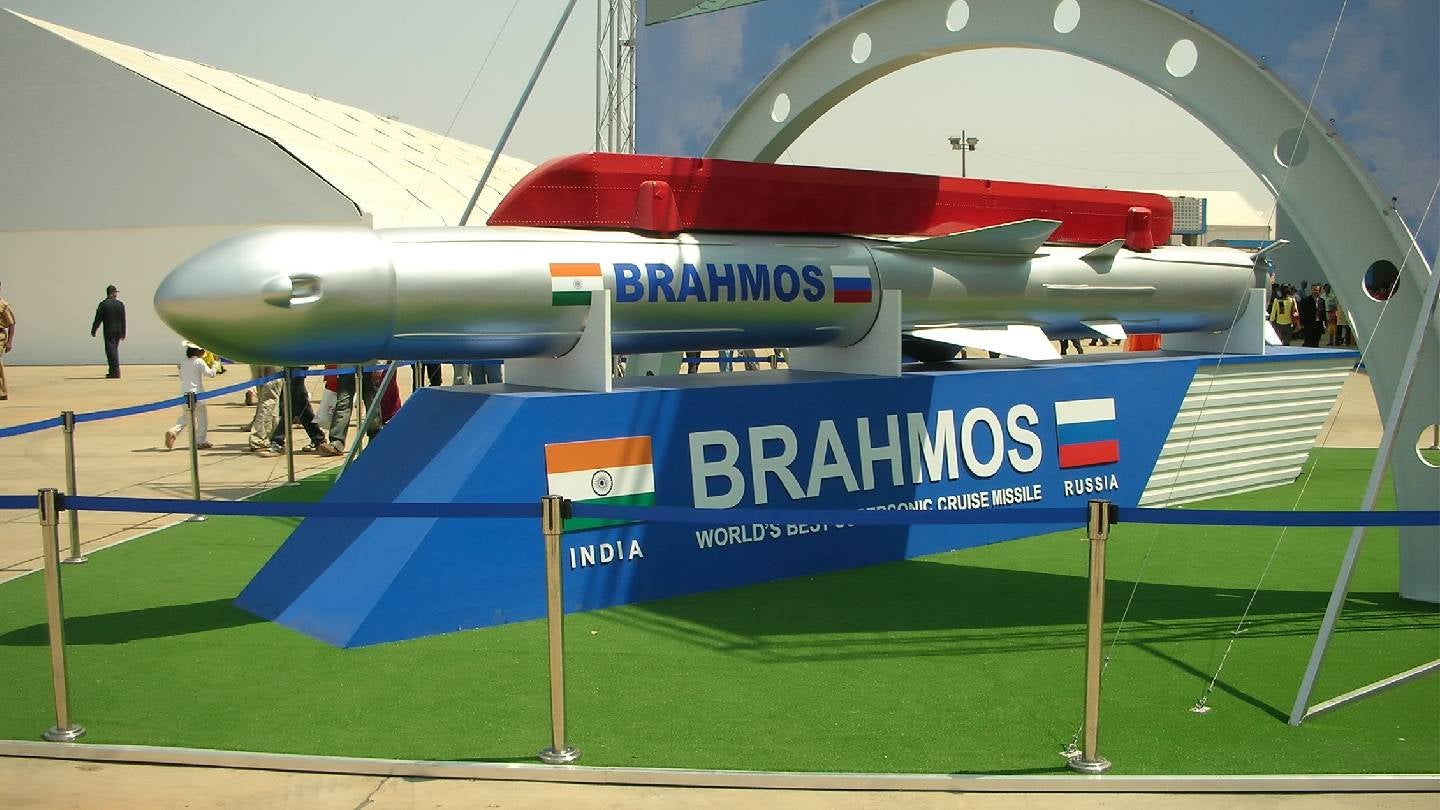
BrahMos is not an ordinary missile in the Asian arms market. It is a supersonic cruise missile developed by India in collaboration with Russia, flying at speeds between Mach 2.8 and Mach 3 depending on the variant, and can be launched from land, sea, or air platforms in various families. Export versions have historically been associated with ranges around 290 kilometers, while India has been discussing longer-range variants for years after modifying the constraints of the MTCR. For the UAE, even the conservative range is sufficient to change calculations regarding coasts, ports, and narrow passages in the Gulf and the Sea of Oman.
As for Akashteer, it is not an interceptor missile as some commentators believe. Its value lies in being a command and control network for air defense, linking radars, sensors, and fire units into a single operational picture. Militarily, this type of system is less attractive in headlines than a shiny missile, but in war, it is sometimes more important. A soldier does not fight with the missile alone; he fights with the knowledge of where to launch it and when not to launch it.
Why India and Not the United States
The UAE already possesses a heavy Western air defense: Patriot, THAAD, F-16 Block 60 aircraft, and a large French Rafale deal. Therefore, the interest in BrahMos should not be understood as an immediate replacement for the American umbrella, but rather as an addition of a supply and technology channel outside of Washington. Abu Dhabi has learned, as Riyadh and Doha have, that complete reliance on the United States provides high protection but leaves the final decision in a political room that is not Arab.
Here lies the paradox. BrahMos carries within it a Russian component and an Indian history, which means that if the deal progresses, it will require legal and political scrutiny, and perhaps arrangements regarding production and support components. But this very difficulty is part of its appeal. The UAE wants to convey that its defense market is no longer waiting for the approval of a single party. After years of discussion about the F-35, Abu Dhabi finds in India a source that is less politically sensitive than China, less restrictive than Washington, and closer to its ambition to diversify partnerships.
Coastal Deterrence Does Not Require a Large Fleet
In the Gulf, geography amplifies the impact of missiles. Distances are short, passages are narrow, and vital installations are exposed to drones, cruise missiles, and fast boats. A relatively small country can impose a high cost on any naval force or maritime militia attempting to approach its ports, oil facilities, or logistical lines with a reliable coastal missile.
This is why I am more interested in the potential deal than in the financial figure. The UAE does not need to build a major offensive navy to send a message to Tehran or any non-state actor at sea. It is enough to have a layer of precise and rapid fire, linked to a warning and control network, making it costly to approach Emirati maritime territory. In the language of officers, this is not a show of force, but distance management.
The Lesson Gulf Capitals Do Not Like
However, we should not exaggerate. Owning BrahMos does not mean having the full capability to use it in a complex war. The missile requires continuous reconnaissance, targeting moving maritime targets, secure communications, and training for engagement under jamming and political pressure. If the UAE buys the missile without building this chain, it will acquire a powerful but isolated weapon, and this is a problem we have seen many times in the region.
I return here to the merciless triangle of capability: equipment, training, and institution. Gulf countries excel in the equipment side. They have budgets, relationships, and the ability to buy the best. However, they vary in joint training and the independence of the military institution from the logic of political offering. BrahMos with Akashteer could be a mature step if it enters into an integrated coastal and aerial defense system, but it could be just an expensive title if it remains a separate piece in storage.
A Message to Iran and a Message to Washington
Iran will read these talks in its own way. For Tehran, any supersonic missile on the Arab coast means that ships and facilities near the Gulf are no longer facing only American or Israeli aircraft, but also Arab capabilities sourced from India. As for Washington, it will read it as a calmer signal: Gulf allies are not leaving the American umbrella, but they want other doors when approvals are delayed, administrations change, or weapons become a political bargaining tool.
India, in turn, gains more than just an export contract. If BrahMos enters the UAE after entering the Philippines, New Delhi shifts from being a large arms buyer to a supplier in a market that was previously the domain of the United States, Europe, and Russia. This is not a revolution, but a slow change in the map of suppliers. The Middle East likes slow change because it allows everyone to deny that it is happening.
Conclusion
The BrahMos and Akashteer deal, if completed, will not make the UAE an independent missile power overnight. However, it will add an important layer of deterrence and reveal a broader trend in the Gulf: the search for greater independence without breaking old alliances. The problem is that independence in weaponry does not come from merely diversifying suppliers. It comes from the ability to operate, maintain, decide, and link fire with information. As we say in the military, a weapon that does not have its entire life cycle under your control owns you as much as you own it.
The paradox is that Abu Dhabi may buy from India to reduce its dependence on Washington, but it will need years of training and integration to avoid replacing one dependency with another. This is the real tension behind the news: the Gulf wants greater decision-making freedom, but it is still buying that freedom from abroad.
The UAE is engaged in early discussions to acquire BrahMos and Akashteer missile systems from India, with a potential deal valued at approximately $4 billion. This move reflects the UAE's strategy to diversify its defense capabilities and reduce reliance on traditional US suppliers. The BrahMos missile, known for its supersonic speed, and the Akashteer air defense system are key components in enhancing the UAE's military deterrence in the Gulf region.
- UAE is in early talks to purchase BrahMos and Akashteer missiles from India.
- The potential deal could be worth around $4 billion.
- BrahMos is a supersonic cruise missile developed by India and Russia.
- Akashteer is an air defense network system, not just a missile.
- The UAE seeks to diversify its defense partnerships beyond the US.