
The United States Will Accelerate the Production of Five Key Missiles, Military Experts Interpret
[Global Times Comprehensive Report] According to the U.S. Navy News on the 4th, American defense giant Raytheon has signed five milestone framework agreements with the U.S. Department of Defense to significantly increase the production capacity and accelerate the delivery of Tomahawk missiles (land-attack and sea-attack variants), Advanced Medium-Range Air-to-Air Missiles (AMRAAM), Standard-3 Block 1B interceptors, Standard-3 Block 2A interceptors, and Standard-6 missiles.
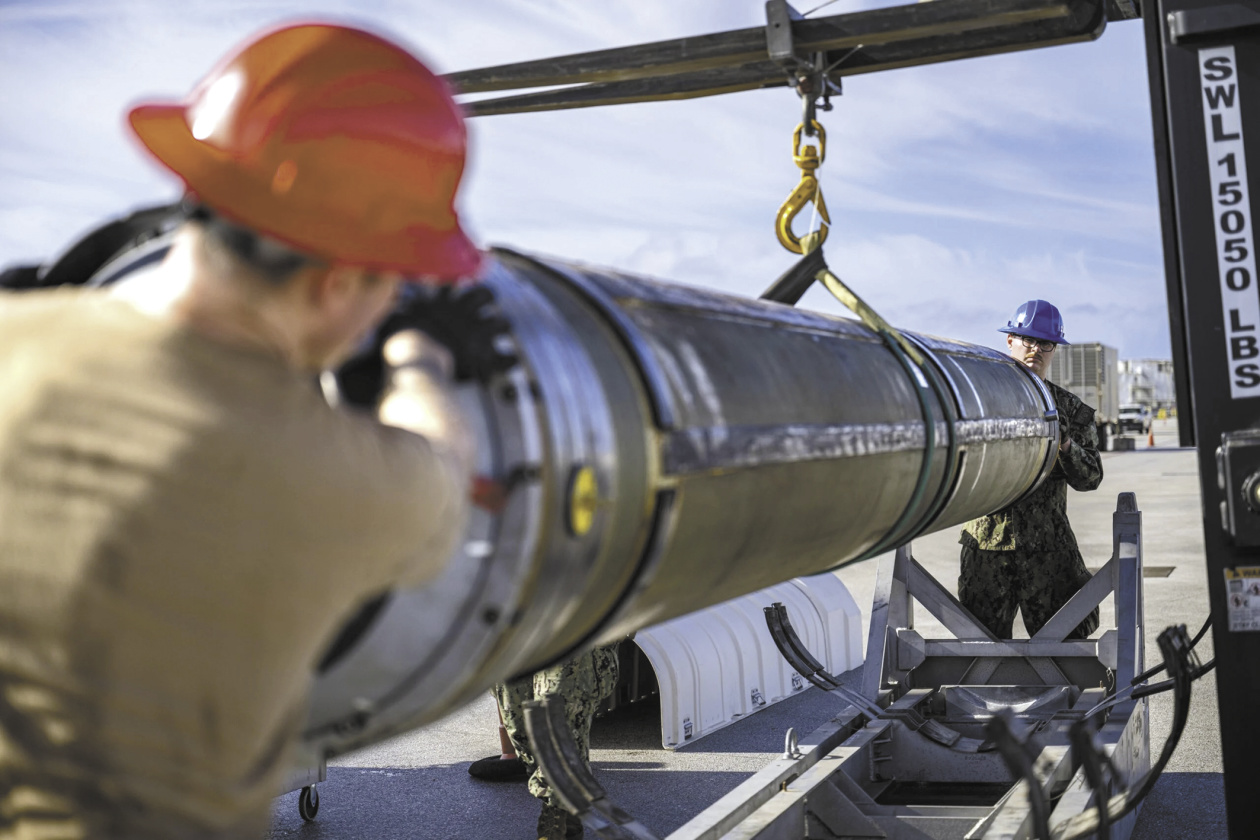
According to Raytheon's press release, as global demand for these precision-guided weapons continues to grow, these seven-year agreements lay the foundation for Raytheon to expand its production scale. Under the newly announced agreements, Raytheon will increase the annual production of Tomahawk missiles to over 1,000 units, the annual production of AMRAAMs to at least 1,900 units, and the annual production of Standard-6 missiles to over 500 units. Additionally, Raytheon will also increase the production of Standard-3 Block 2A missiles and accelerate the production of Standard-3 Block 1B missiles. Many of these weapons will see production increases of 2 to 4 times compared to current levels.
It was reported that Raytheon has invested heavily to expand its capacity to accelerate the production of various key munitions and will continue to invest in capacity expansion and production acceleration projects. According to the aforementioned framework agreements, the relevant production will take place at Raytheon's facilities in Tucson, Arizona; Huntsville, Alabama; and Andover, Massachusetts.
Regarding the reasons for increasing the production capacity of these five key munitions, an article on the U.S. Naval Institute website on the 4th stated that the main reason is that the U.S. military is utilizing stockpiled munitions to respond to various emergencies, especially in the Middle East, including the "Twelve-Day War" between Israel and Iran and operations against the Houthi forces in Yemen. Tomahawk cruise missiles and the Standard series missiles widely used by the U.S. fleet have been extensively used globally over the past three years. U.S. allies are also seeking munitions from the U.S. to meet their defense needs. In 2024, Japan ordered 400 Tomahawk missiles.
Chinese military expert Zhang Xuefeng stated in an interview with the Global Times on the 5th that there are two main reasons for the U.S. to expand the production of various missiles: first, the Russia-Ukraine conflict and the Israel-Iran conflict have made the U.S. realize that there is a significant demand for offensive missiles and interceptors in high-intensity conflicts. For example, during last year's Israel-Iran conflict, Iran launched over 500 medium-range ballistic missiles at Israel within 12 days, which led to the U.S. THAAD system, which assisted in intercepting, consuming about a quarter of its interceptor stock. Second, the U.S. believes that future operations in the Pacific may face greater missile strike intensity and higher operational intensity, necessitating missile production expansion for both defensive and offensive needs. In a sense, the U.S. is also preparing for potentially more intense conflicts in the future.
However, Zhang Xuefeng emphasized that based on Raytheon's announced expansion plans, some key models will only have an annual production of one or two thousand units even after doubling, indicating that the U.S. military's reserve and production capacity for high-end missiles remain relatively weak and are not as impressive as claimed. (Liu Yang)
Raytheon has signed agreements with the U.S. Department of Defense to significantly increase the production of Tomahawk, AMRAAM, Standard-3, and Standard-6 missiles across its facilities in Tucson, Huntsville, and Andover. This initiative aims to meet the growing global demand for precision-guided munitions, with production increases expected to begin immediately and span over seven years.
- Raytheon signed five milestone agreements with the U.S. Department of Defense.
- Production capacity for Tomahawk missiles will exceed 1000 annually.
- AMRAAM production will increase to at least 1900 annually.
- Standard-6 missile production will exceed 500 annually.
- The agreements are in response to increased global demand for precision-guided munitions.