

When the F-22 Raptor entered service in 2005, after more than a decade of research and design, it was billed as the most interesting warplane the United States Air Force would fly.
A fifth-generation air-superiority stealth fighter, the F-22 was originally designed to fight the Soviet Union in the final stages of the Cold War.
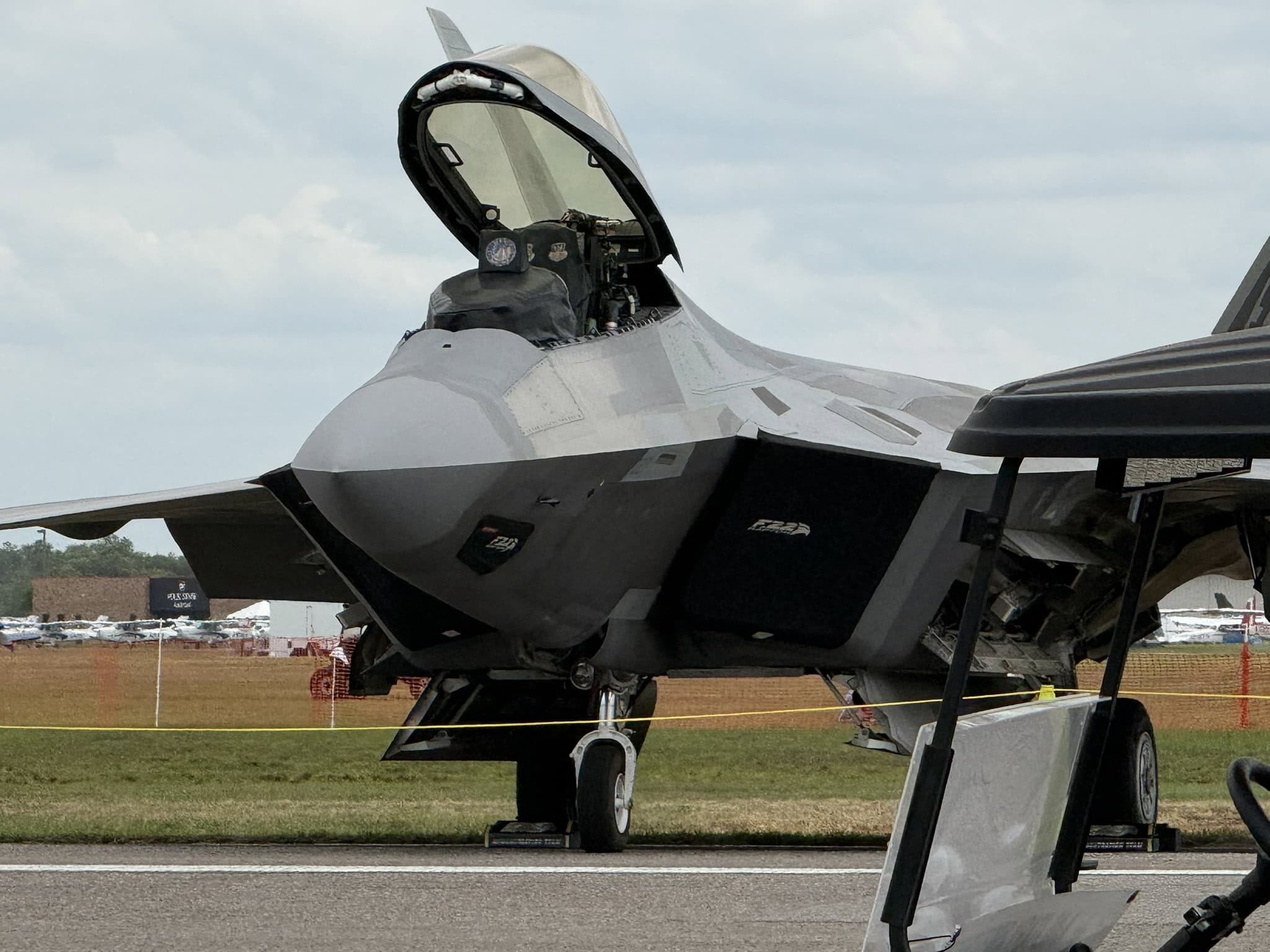
F-22 Raptor. Taken on 4/19/2026 by Harry J. Kazianis for 19FortyFive.com
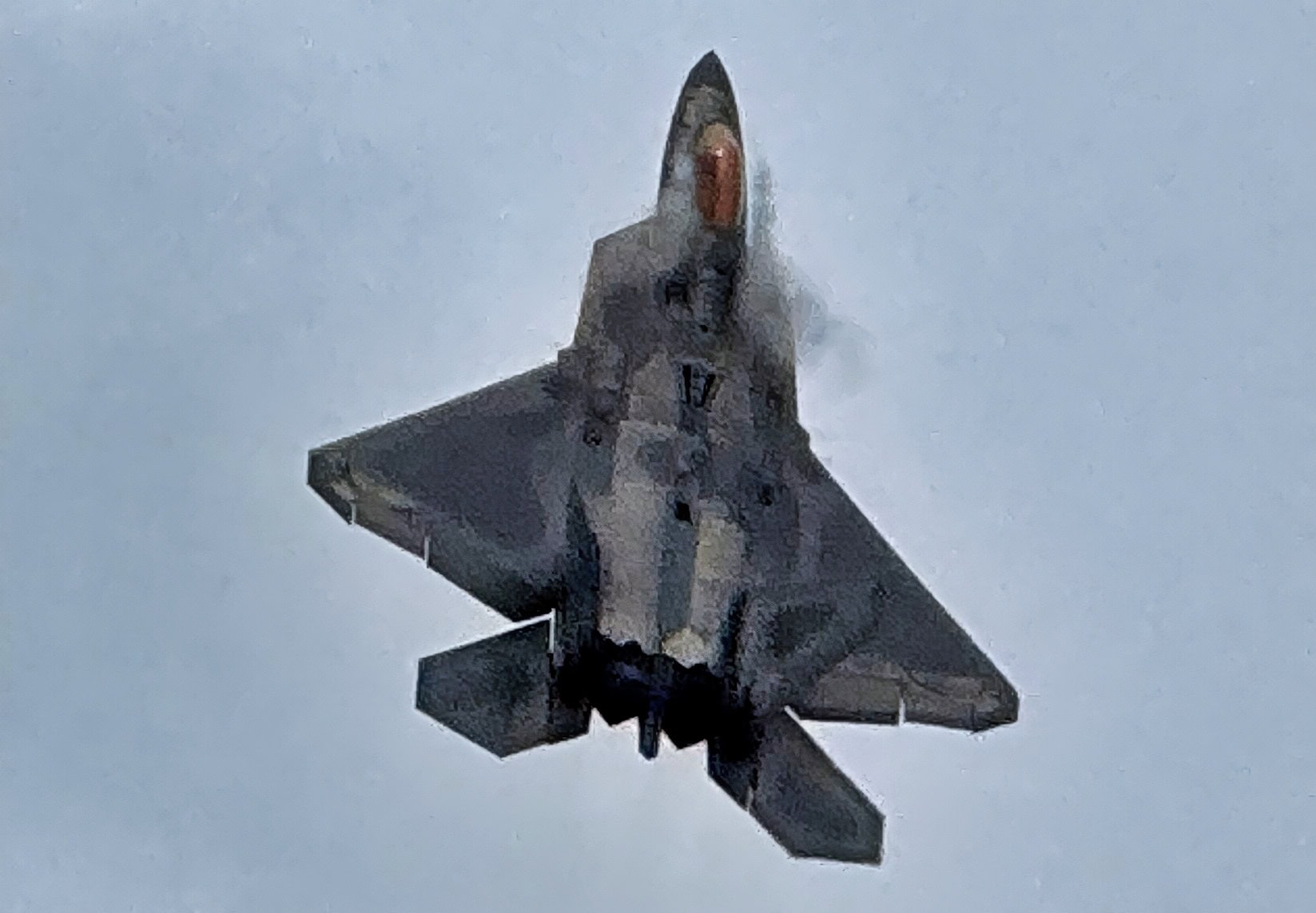
F-22 Raptor high in the sky. Image taken by Harry J. Kazianis in Lakeland, Florida on 4/19/2026.
It wasn’t ready to fly, however, until after the USSR suddenly collapsed, lending credence to 1990s claims that the United States was the sole remaining superpower.
Yet, the F-22 has never been truly tested the way it was meant to be. And now, as the world enters another period of great-power conflict and competition, the F-22 has been flying for many years.
Cutting the Production Line Prematurely
Indeed, many unintended changes have occurred in the Air Force’s total number of warplanes and its overall force structure, which have many in Washington concerned as time progresses and US rivals (notably China) catch up.
That’s to say nothing of the fact that the F-22 was never allowed to reach the numbers that its designers originally intended.
During the Great Financial Crisis (GFC) of 2008, the Obama administration chose to close the F-22’s production line prematurely, limiting the number of F-22s in America’s arsenal, in favor of developing the F-35 Lightning II fifth-generation multirole warplane.
Still, the Air Force intends to reach its finite F-22 force by 2060. But that goal depends on two things: keeping the airframe physically intact and constantly replacing or upgrading the technology inside them.
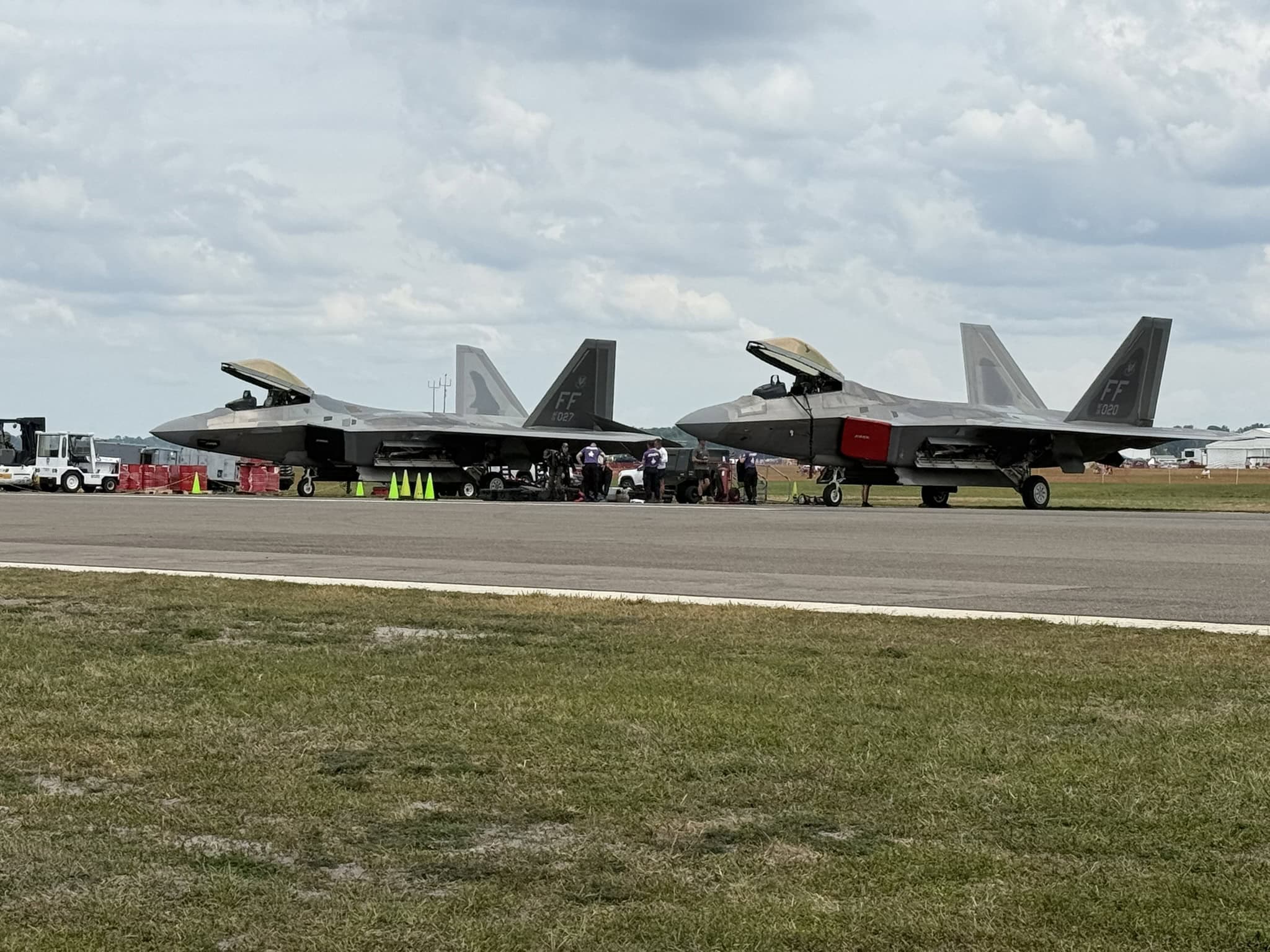
F-22 Raptors on the ground. 19FortyFive.com image taken in Lakeland, Florida on 4/19/2026.
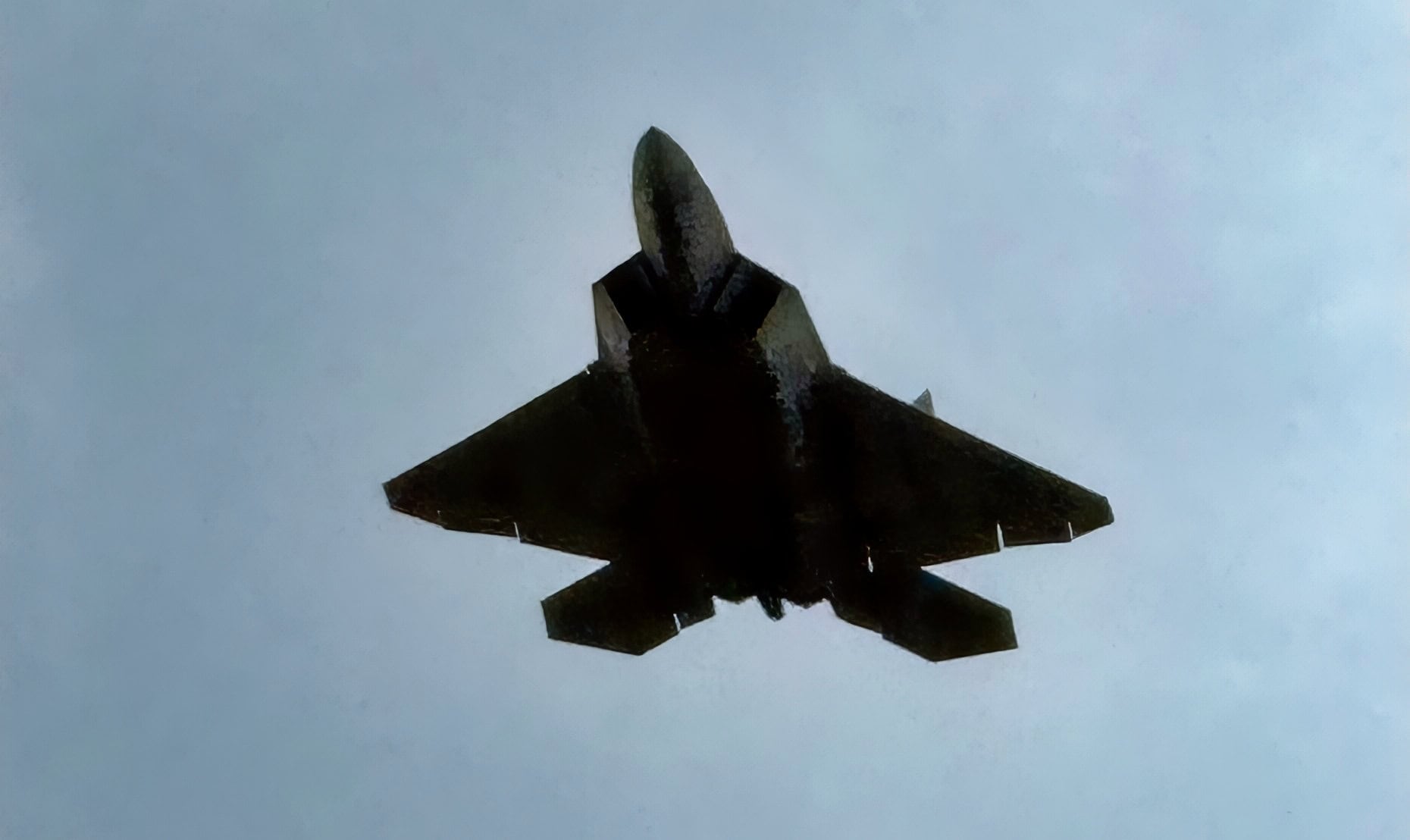
F-22 at Lakeland Air Show 2026. Taken on March 19, 2026 by 19FortyFive.com
The F-22 was originally designed for a structural lifespan of 8,000 flight hours.
Air Combat Command now says that individual F-22s could remain safe for between 12,000 and 15,000 flight hours.
Meanwhile, the Air Force has augmented its F-22 force with extensive structural enhancements.
For instance, Hill Air Force Base’s F-22 Structural Repair Program has reduced the risk of component fatigue by adding advanced coatings and anti-corrosion elements and implementing modifications that increase flying-hour serviceability by another 8,000 hours.
Making It to 2060?
Of course, that doesn’t mean every F-22 Raptor will make it to 2060.
Individual lifespans vary greatly, depending on their flight histories and maintenance schedules.
Nevertheless, the structural work the Air Force is doing on its F-22 fleet will give the Air Force greater optionality as the force continues its transition for the remainder of the twenty-first century.
The real concern, though, isn’t about the structural issues with the aging and limited number of F-22s.
It comes from the prospect of great power competition erupting into a great power war, the likes of which we’ve not experienced since the Second World War.
The Air Force must keep the Raptor capable of fighting the increasingly sophisticated anti-access/area-denial (A2/AD) networks of China and Russia, as well as the advancing warplanes of their fleets.
Toward that end, the Air Force repeatedly upgraded the F-22’s software.
F-22s have also undergone significant improvements to the plane’s weapons and avionics packages.
In fact, the Baseline 3.2B modernization package improved the F-22’s ability to deploy AIM-9X Sidewinder and AIM-120D AMRAAM missiles.
Subsequent modernization efforts have focused more on enhancing the plane’s electronic warfare (EW), communications, and sensor systems.
And when it comes to sensors, the Air Force wants to improve the plane’s infrared sensing. One effort is the Infrared Defensive System (IRDS).
That program uses distributed infrared sensors to improve detection (and tracking) of enemy airplanes and enhances the ability of the pilot’s ability to detect surface-to-air-launched missiles.
Originally designed for a world of stealth warplanes operating alone, the Air Force is accelerating upgrades to the F-22 to ensure these birds can integrate with the wider (and growing) network of battlefield sensors that now underpins America’s ability to wage war.
Future warfare requires all platforms and warfighters to exchange targeting information.
Modernization emphasizes an open-system architecture that employs improved networking, enabling new capabilities to be added without a costly, time-consuming redesign of the entire plane.
A Bigger Concern for the Air Force
Yet, because only 195 F-22s were ultimately delivered to the Air Force before the production line was prematurely closed during the early Obama administration, the Air Force must keep a relatively small number of increasingly old aircraft flying.
That means maintaining specialized parts, engines, stealth coatings, and technical expertise for decades beyond the plane’s original expiration date.
So, the Air Force’s target of maintaining its tiny F-22 fleet until 2060 is feasible.
However, that date is no guarantee.
The long-term extension of the F-22’s lifespan reflects less the technological advancement of the F-22 (which is impressive for a plane that was first put to the drawing board in the 1980s) and more a reminder of how concerned the Air Force is about future numbers of planes it will have available as we move to the middle of this century.
About the Author: Brandon J. Weichert
Brandon J. Weichert is the Senior National Security Editor at 19FortyFive.com. He also manages The Weichert Brief on Substack. Weichert also hosts “National Security Talk” on Rumble. He is the author of four bestselling national security books, the most recent of which is A Disaster of Our Own Making: How the West Lost Ukraine (Encounter Books). Follow him via Twitter/X @WeTheBrandon.