

The U.S. Air Force has approved $508 million through 2031 to arm its KC-135 Stratotanker, C-5 Galaxy, KC-46 Pegasus, and C-17 Globemaster III aircraft with active defense sensors against incoming missiles. The Large Aircraft Survivability Systems program is the first time the Air Force has equipped tankers and cargo planes with onboard defenses. The change is driven by Chinese A2/AD missiles that the Pentagon expects U.S. tankers to face in the Indo-Pacific.
The Drone Defense Is Strong With This U.S. Air Force
The U.S. Air Force is planning to spend over $500 million through 2031 to equip cargo planes and tankers with active defense sensors to counter enemy drones and missiles.
Known as the Large Aircraft Survivability Systems (LASS) program, it aims to install sensors and weapons on KC-135 Stratotankers, C-5 Galaxy, KC-46 Pegasus, and C-17 Globemaster III aircraft to detect, track, and destroy incoming threats.
This initiative aims to protect vulnerable transport aircraft from enemy attacks in contested environments.
Tankers Are The Catalyst In Every Large Air Campaign
This is a huge change for the Air Force, which has traditionally treated tankers and cargo aircraft as defenseless. However, given the cost of these platforms today, the Air Force, with a limited number of cargo aircraft, can scarcely afford to lose them to long-range missile fire.
In every large-scale air campaign since Operation Desert Storm, the Air Force has heavily relied on its aerial refueling tankers to accomplish its mission. Given the shorter range of the US F-35s and F-22s, tankers are the lifeblood of these air operations.
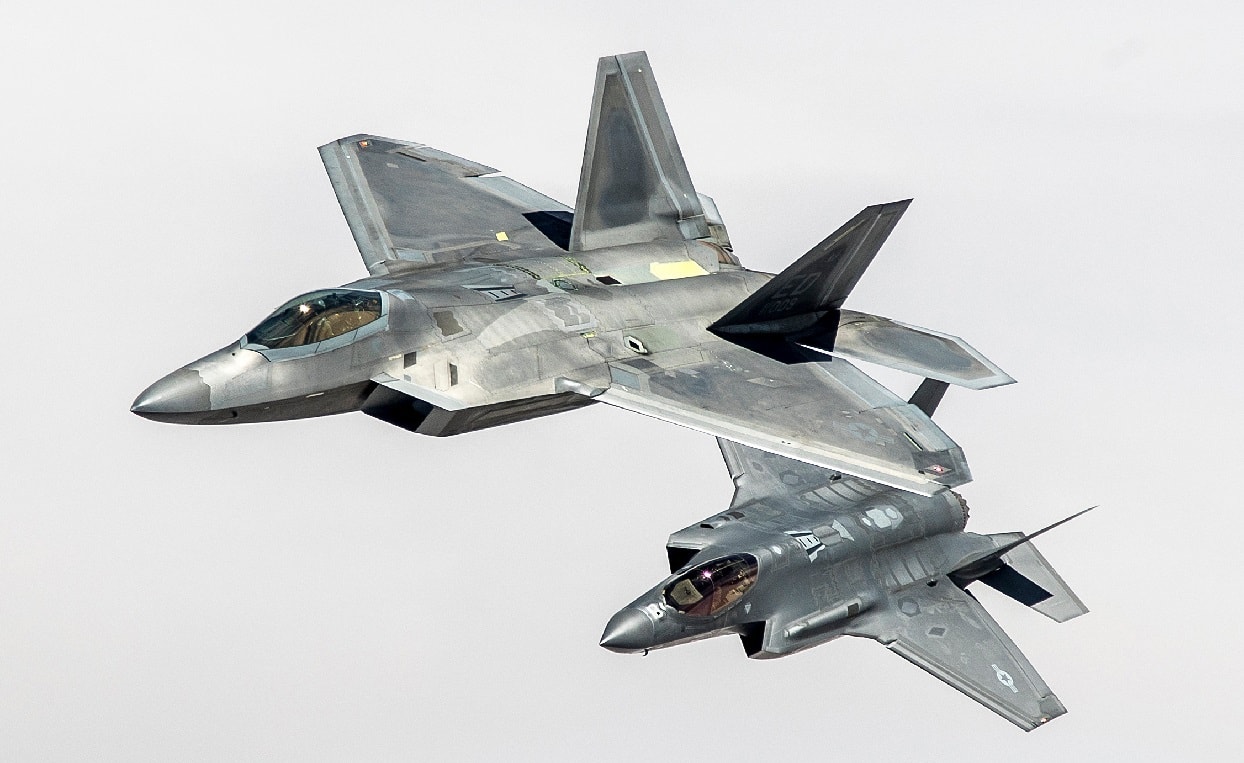
IFG Family Photo, F-22, A/C 4009, LtCol Lee “Split” Bryant, F-35A, AF-3, Major Jonathan “Spades” Gilbert, F-16D, A/C 835, Major Charles Brantigan & Major Scott “Gins” Rinella, in formation over ISB, Tanker View, 15 May 2019
And in the event of an air war with China in the Indo-Pacific, not only will US tankers be of even more importance to conduct air operations, they will be large targets for Chinese air defense missiles.
The tankers are too large, slow-moving, and non-stealthy and are vulnerable to China’s A2/D2 defenses and drones, so the Air Force has decided, and rightfully so, to give them some defenses.
What The Air Force Is Planning For
Sandboxx reported, “These sensors will be integrated via onboard processors with both kinetic and non-kinetic effectors, allowing them to identify inbound threats and relay their target track to either onboard electronic warfare systems or to interceptors of some sort that can then be launched to bring that threat down.”
The Air Force wants to include $50 million in the 2027 budget to develop sensors that will identify threats. An additional $18 million will be invested to design an effector system, consisting of a processor and kinetic and nonkinetic effectors, “to defeat any long-range threat” without external assistance, the document states.
“Large aircraft must have the ability to detect, decide, and defeat the enemy threats organically from onboard the aircraft,” the budget document added.
“Multiple sensors will detect threats, processors will decide what threat is inbound and which aircraft is being targeted, and determine which effector is the best option to defeat the threat.”
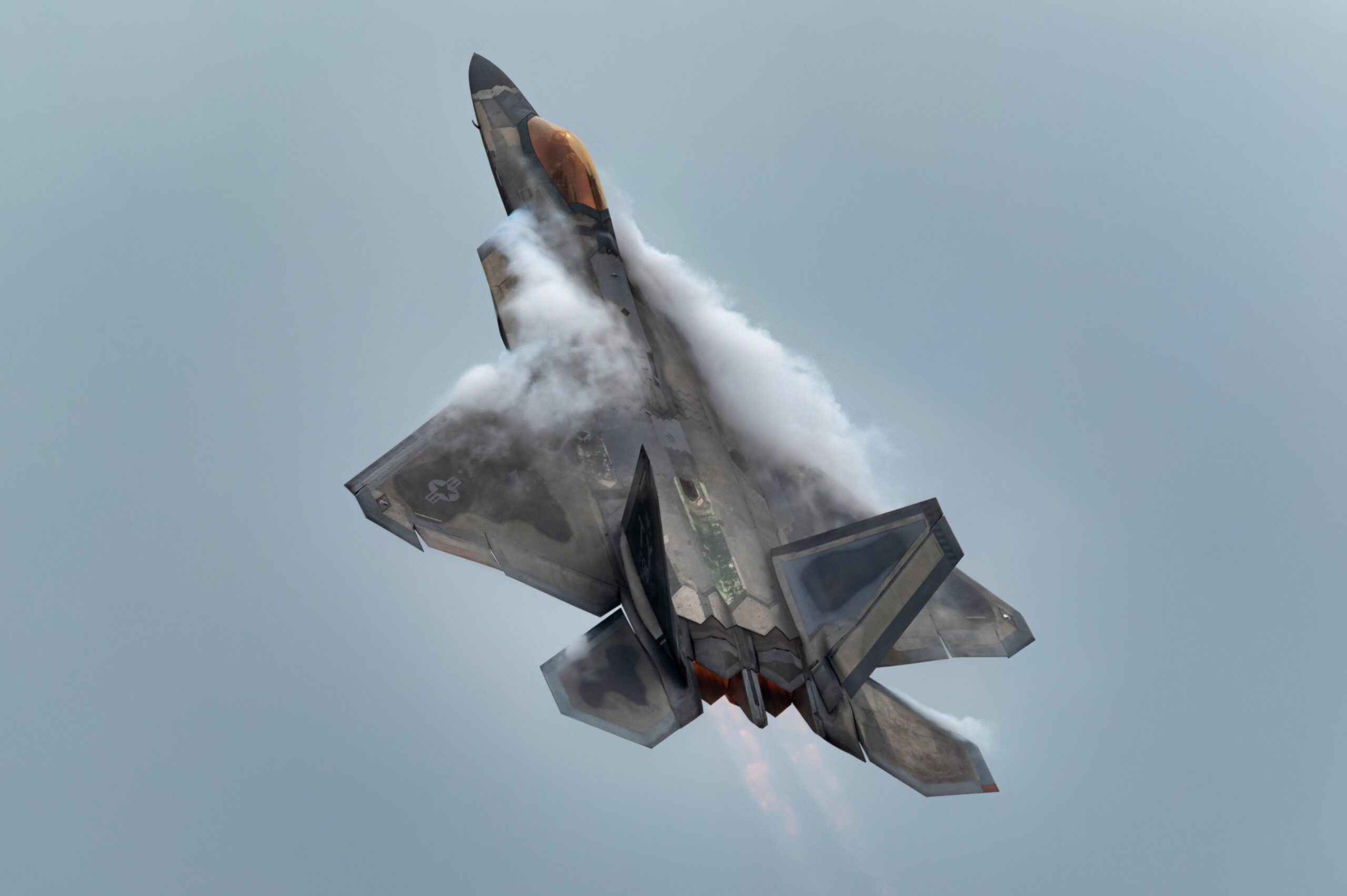
U.S. Air Force Maj. Josh Gunderson, F-22 Demo Team commander, performs maximum power takeoff during a demonstration for the 67th National Security Forum at Maxwell-Gunter Air Force Base, Montgomery, Alabama, May 11, 2021. The F-22 Raptor’s two Pratt and Whitney F119 Turbofan engines bring a combined 70,000 pounds of thrust, allowing the aircraft to takeoff straight into the vertical. (U.S. Air Force photo by Staff Sgt. Don Hudson)
The program’s cost will be spread over the next five Air Force budgets, totaling $508 million. The Air Force is seeking $264 million for the effector system in fiscal years 2028 and 2029, and $176.2 million for the sensors spread over fiscal years 2028-2031, according to the budget documents.
Alex Hollings added in his Sandboxx post that, while the program’s costs seem quite high, they are actually lower than those of a single E-7 Wedgetail airborne early warning and control aircraft, making it a worthy investment.
The Air Force’s budget request also includes funding for a program called Large Aircraft Infrared Countermeasures, a defensive system against man-portable air-defense systems and other IR threats.
The Warzone has reported that Northrop Grumman filed a patent for a kinetic missile defense system in 2017.
The Air Force’s Air Mobility Command and the U.S. Transportation Command are studying options for the Next Generation Air-refueler System, or NGAS.
The Air Force was initially considering a low-observable, stealthy tanker that could refuel other aircraft in contested environments, but contesting airframes and the current state of the tanker fleet have placed this program in jeopardy.
“What you can’t do is you can’t pit a tanker against a fighter. And that’s typically what we’ve done when we’ve gone through this, very vertically stove-piped. We have different portfolios, and they’re all pitted against each other.
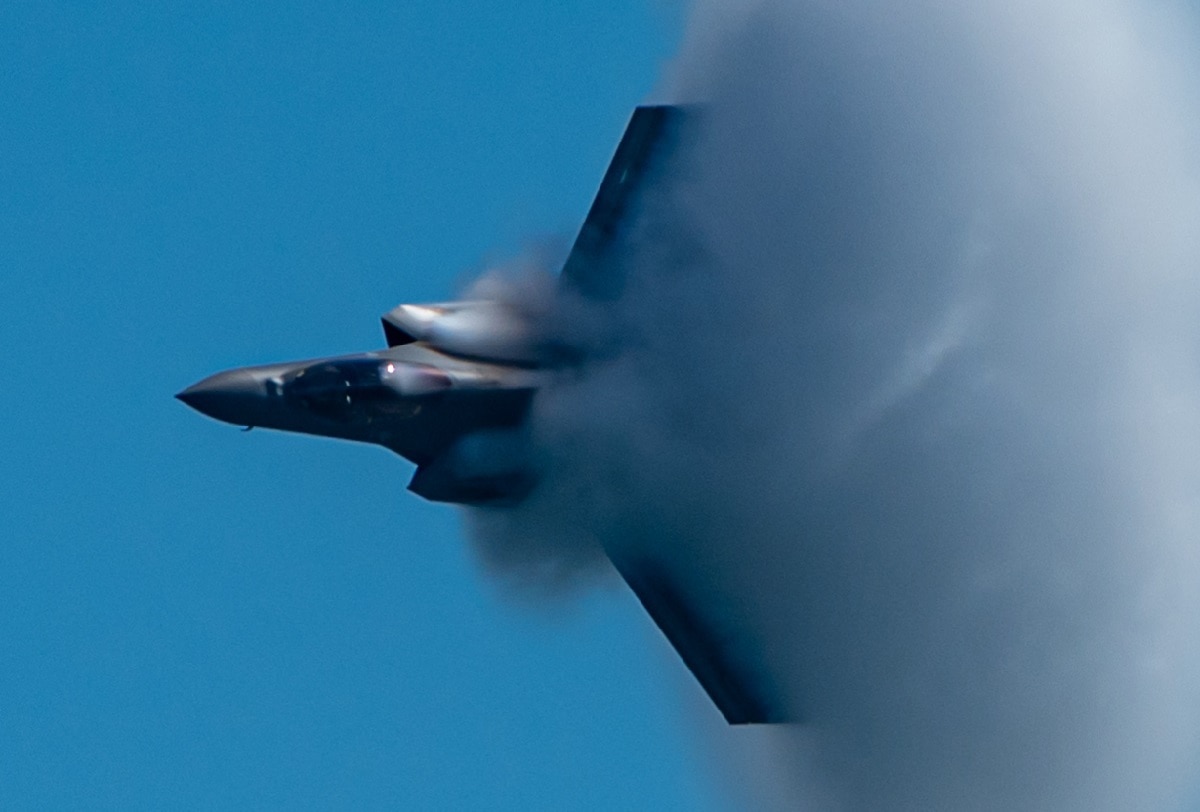
U.S. Air Force Capt. Kristin “Beo” Wolfe, F-35 Demonstration Team pilot, tears through the skies during a rehearsal performance for the 2020 OC Air Show Aug. 14, 2020, Ocean City, Md. The OC airshow featured numerous performers to include the U.S. Air Force Thunderbirds, F-22 Raptor, A-10, and F-35 Demonstration Teams. (U.S. Air Force photo by Capt. Kip Sumner)
“And you’re either gonna buy tankers or you’re gonna buy new fighters. You’re either gonna buy bombers, or you’re gonna buy new fighters,” Major General Joseph D. Kunkel, Director of Force Design, Integration, and Wargaming, stated last year.
“We’ve gotta think about the entirety of the system, and we’ve gotta buy the system. The way the chief says it is, hey, we need NGAD, but a critical neighbor to NGAD is the ability to reliably generate combat power from bases, and also the ability to refuel, to get survivable air refueling is also a critical neighbor for that,” Kunkel added.
The Air Force may be considering a platform somewhat akin to the Navy’s MQ-25 Stingray, a carrier-based unmanned aerial refueling platform slated for fielding around 2027.
About the Author: Steve Balestrieri
Steve Balestrieri is a National Security Columnist. He served as a US Army Special Forces NCO and Warrant Officer. In addition to writing on defense, he covers the NFL for PatsFans.com and is a member of the Pro Football Writers of America (PFWA). His work was regularly featured in many military publications.