
The U.S. "Aircraft Carrier Empire" Faces Triple Crisis
【Global Times Special Correspondent Chen Yang】Editor's Note: Since World War II, the massive aircraft carrier battle group has been a symbol of American maritime hegemony. However, in recent years, the condition of U.S. aircraft carriers has noticeably deteriorated due to the decline of the American shipbuilding industry and the overall strength of the Navy. Recently, issues with U.S. aircraft carriers have frequently emerged— the USS Lincoln, deployed in the Middle East, has been reported to have crew members suffering from mental breakdowns due to extended deployment, older carriers are nearing retirement while new carriers are "without successors," and President Trump’s directives have led to a "backward" approach in technology for new carriers... Behind these news events is a concentrated outbreak of negative issues stemming from the excessive use of aircraft carriers by the U.S. over the years. The carefully crafted "aircraft carrier empire" of the United States is now facing at least three crises.
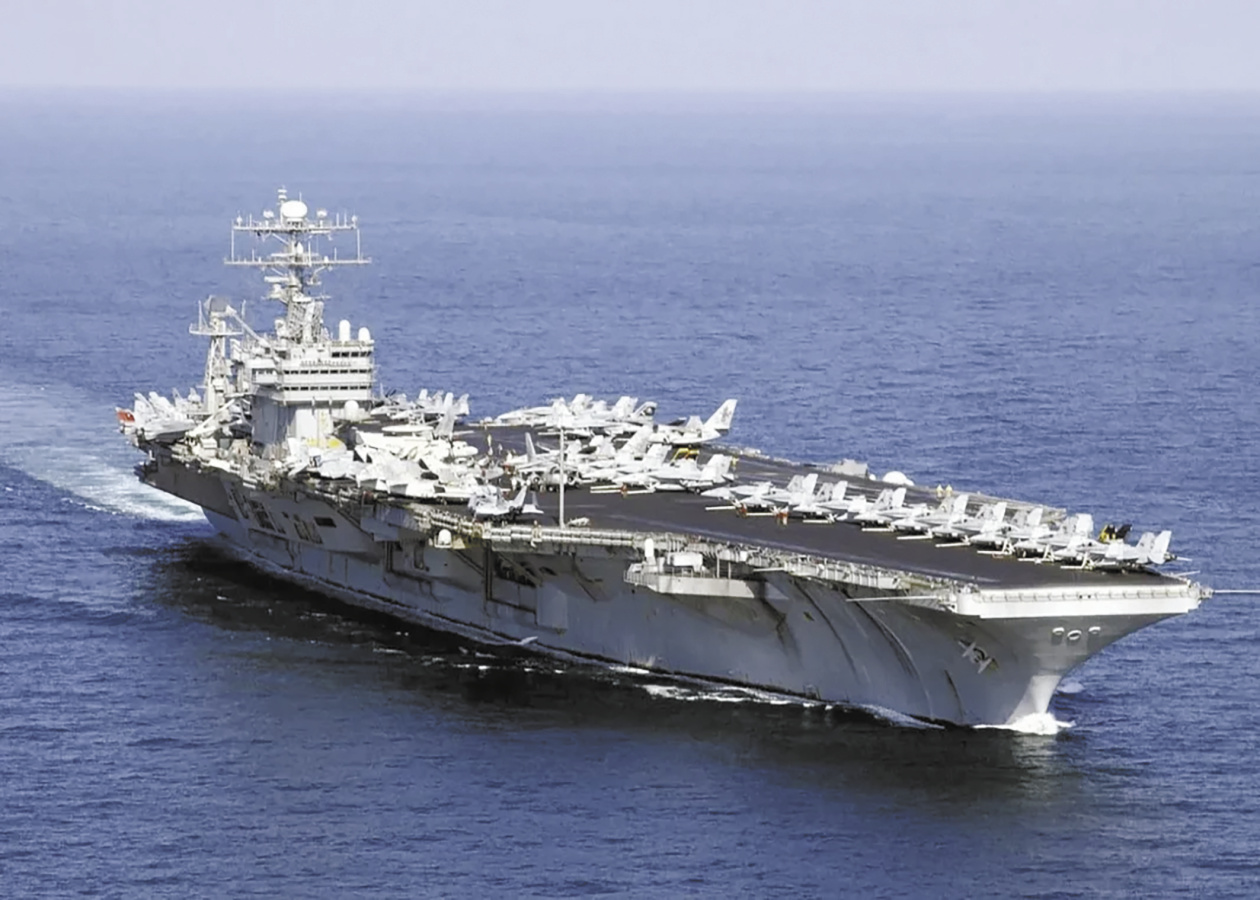
Extended Deployment Leads to Tragedy
The initial trigger for this U.S. aircraft carrier controversy is the USS Lincoln, which has been deployed in the Middle East for over 250 days. CNN reported on the 15th that the Lincoln may break the record for the longest deployment of a U.S. aircraft carrier since the Vietnam War. During this deployment, the ship has not been able to return to port for over six months, coupled with the high-stress wartime environment from its continuous participation in airstrikes against Iran, leading to serious morale and mental health issues among its approximately 5,000 crew members.
Reports indicate that a crew member on the Lincoln stated that basic facilities on board frequently malfunction— toilets and water dispensers are often shut down, and hot water is frequently unavailable. The carrier has faced intermittent food shortages, insufficient hygiene supplies, and issues with the water supply during its deployment. The U.S. MS Now news channel revealed that sailors on board reported that a typical lunch consisted of "half a bowl of rice plus two corn tortillas," and most of the fruits and vegetables delivered to the carrier were rotten. The U.S. website "Political Focus" described that "the toilets on board are clogged, with sewage overflowing, and about half a foot of feces covering the bathroom floor."
Amid shortages of supplies, frequent equipment failures, extreme mental stress, and the inability to return to port for rest, sailors on the Lincoln complained to CNN that morale is very low, and they have heard multiple reports of shipmates having suicidal thoughts. The U.S. Navy Times and the Stars and Stripes reported that there have been at least two incidents of sailors jumping overboard from the Lincoln.
Due to concerns about the mental state of the crew, about 200 family members of the sailors have met with U.S. Acting Navy Secretary Thomas Modly and others in San Diego. However, U.S. Navy officials stated that "no increase in reports of suicidal thoughts or attempts has been found on board," and U.S. Secretary of Defense Mark Esper dismissed reports about the poor conditions on the Lincoln as "completely false" and "totally distorted." President Trump told the media on the 14th that the deployment time of the Lincoln, which has been deployed for nearly nine months, is still "far from enough." The wife of a crew member on the Lincoln urged Trump and Esper in an interview with CNN to "show some empathy."
MS Now news channel reported on the 15th that, facing the predicament of the Lincoln, the U.S. Navy actually has very few options. Modly recently stated that the USS Washington, which "needs to maintain a deterrent presence in the Western Pacific," is not suitable to replace the Lincoln, but as pressure mounts for the Lincoln to return to the U.S., the Washington is now heading towards the Middle East, which also means that the U.S. Navy is once again facing a "carrier vacuum" in the Western Pacific.
This move by the U.S. Navy also exposes its difficulties in carrier deployment. CNN noted that in recent years, the deployment time of U.S. aircraft carriers has continued to increase. The normal overseas deployment cycle for U.S. carriers is usually only seven months, but since the outbreak of the new round of conflicts in the Middle East in 2023, their deployment times have significantly extended. During these extended deployment missions, the components of the carriers continue to wear out, and other issues gradually accumulate: the arrestor wires that assist in landing carrier-based aircraft begin to wear down, saltwater seeps into onboard systems... ultimately greatly increasing the likelihood of accidents involving the carriers.
“Sailing with Illness,” a Gap in Successors
If the various issues exposed by the Lincoln during its extended deployment represent a common dilemma faced by active U.S. aircraft carriers, then the USS Kennedy, the second ship of the Ford-class carriers, which has just "sailed with illness," symbolizes the lack of successors for the new generation of U.S. carriers.
The U.S. Naval Institute website stated that the Kennedy set sail for its second sea trial on August 12, but U.S. Navy documents show that of the 11 advanced weapons elevators equipped on the carrier, only 7 have been completed. Reports acknowledge that the carrier has experienced severe delays in construction and sea trial progress.
It is reported that the Kennedy began laying its keel in 2015 and was launched in 2019, but has remained docked until it begins its first sea trial in January 2026. According to the original plan, it was supposed to be delivered to the U.S. Navy in 2018.
Reports indicate that multiple factors have led to the Kennedy facing such a predicament. First, the Ford-class carriers have adopted a large number of unproven new technologies, resulting in serious reliability issues. Since the Ford, the carrier has been unable to achieve combat capability due to the high failure rates of advanced weapons elevators, electromagnetic catapults, and advanced arresting gear. The Kennedy, which is identical in design to the Ford, has inherited these problems. The U.S. Navy initially planned to adopt a "two-phase delivery" approach, meaning it would be delivered first and then gradually improved, but Congress required in 2019 that it must be "fully delivered," meaning that the Kennedy must integrate the capabilities for launching and recovering the F-35C stealth carrier-based fighter jet and a new radar system that the Ford has yet to possess at the time of delivery, with U.S. Navy estimates indicating that this would require at least an additional two years of construction time.
To make matters worse, Newport News Shipbuilding, the only builder of nuclear aircraft carriers in the U.S., has long faced structural issues such as the loss of skilled workers and unstable supply chains. Additionally, due to the continuous failures of the Ford during its deployment, many critical components that had already been installed on the Kennedy, such as HMI screens and motor controllers, have been "donated" to the former, which has also slowed down the construction progress of the Kennedy.
According to U.S. law, the number of active U.S. aircraft carriers must not be less than 11, but the delays in the commissioning of new carriers have resulted in a "gap in successors." After the retirement of the old generation USS Enterprise in 2012, the USS Ford, which was supposed to replace it, was still under construction, forcing the U.S. Navy to apply to Congress for a "temporary waiver." Five years later, unable to delay any longer, the U.S. Navy was compelled to commission the Ford in 2017, but in reality, the ship was commissioned with a large number of unfinished work and unpassed critical tests, and subsequently remained docked for several years until it could deploy at sea in 2022. Now, with the Kennedy "sailing with illness," it is almost certain to continue down the same path as the Ford. The Kennedy is planned to be commissioned after completing only two sea trials, and it is expected to remain docked for a long time thereafter.
Technological Direction Going Backward
In addition to the delayed commissioning, a bigger problem for the new generation of U.S. carriers comes from Trump’s latest directive. According to NBC News on the 15th, Trump has signed a national security memorandum, formally ordering the U.S. Navy to abandon the electromagnetic catapult system used on the Ford-class carriers when constructing new carriers and to revert to the steam catapult system. According to the White House website, Trump has requested that the first three Ford-class carriers that are in service or under construction retain the electromagnetic catapult system, while the fourth carrier, the USS Doris Miller, will switch back to the steam catapult system. The national security memorandum signed by Trump also requires the Pentagon and the U.S. Navy to submit a plan for removing the electromagnetic catapult system to the president within 60 days.
Although theoretically, the electromagnetic catapult system has many advantages over the traditional steam catapult system, such as saving space and weight, lower maintenance difficulty, and higher launch efficiency, the reliability of the electromagnetic catapult system, which was first adopted by the Ford-class carriers, has long been subpar and has faced criticism from the outside. Trump has previously expressed dissatisfaction with this multiple times. In October 2025, during a speech on the USS Washington, stationed in Japan, Trump emphasized to the sailors: "We have steam catapults, and they work very well. If the electromagnetic catapult breaks, you have to send someone to MIT to get the smartest people in the world to fix it. As for the steam system, they say you can fix it with a hammer and a blowtorch."
Moreover, the modification of the design of the follow-on ships of the Ford-class carriers is also heavily influenced by Trump’s personal preferences. He has publicly stated multiple times that he enjoys watching the "beautiful" sight of steam rising from the carrier deck during steam catapult launches, and that if electromagnetic catapults are used, "you won't see that effect." The U.S. Washington Post reported on the 15th that the U.S. Navy is brewing plans to modify the design of the Ford-class carriers, especially moving the island from the stern to the middle of the hull. Reports suggest that this move may be at Trump’s request, as he hopes "the new carriers' appearance is closer to the classic ship styles of World War II."
However, many U.S. media outlets have expressed concern about the potential consequences of making significant modifications to the Ford-class carriers in the current situation where the U.S. Navy's carriers are clearly facing a "gap in successors." The U.S. website "Power" stated in its "Battle Zone" channel that although the electromagnetic catapult system used on the Ford has many shortcomings, it represents the future direction of aircraft carrier technology, and existing problems can be solved through gradual improvements. Reverting to the steam catapult system would undoubtedly be "going backward." Additionally, the aft placement of the island on the Ford-class carriers is an optimized design made by the U.S. Navy based on decades of experience in aircraft carrier flight deck operations, and moving the island forward would only affect the operational efficiency of U.S. carriers.
CNN also mentioned that such a significant modification to the design of the Ford-class carriers would not only require additional expenditure of tens of billions of dollars but would also lead to a substantial extension of the carrier delivery cycle.
The USS Abraham Lincoln aircraft carrier has been deployed in the Middle East for over 250 days, leading to severe morale issues among its approximately 5000 crew members. Reports indicate food shortages, equipment failures, and incidents of sailors jumping overboard due to mental health crises. Meanwhile, the USS Kennedy, the next generation carrier, is facing significant delays and reliability issues, compounding the U.S. Navy's challenges in maintaining operational readiness.
- USS Abraham Lincoln has been deployed for over 250 days, the longest since the Vietnam War.
- Crew morale is severely affected, with reports of suicidal thoughts among sailors.
- There have been at least two incidents of sailors jumping overboard.
- The carrier is facing food shortages and equipment failures during deployment.
- USS Kennedy, the next generation carrier, is delayed and facing reliability issues.