
The U.S. May Sign a Memorandum of Understanding with Iran This Weekend; Experts: The U.S. is Trapped in a Cycle of "Threats Failing, Then Retreating to Seek Talks, and If Talks Fail, Threatening Again"
[Global Times correspondent in the U.S. Feng Yaren, Global Times reporters Li Meng and Aoki Wenyuan] After threatening to launch a severe strike against Iran on the evening of the 11th, U.S. President Trump suddenly changed his mind, stating that he might sign a memorandum of understanding to end hostilities with Iran in the "coming days." Iran, on the other hand, stated that Tehran is reviewing the memorandum but will not compromise on "red line" issues. According to the Islamic Republic News Agency, during the 60 days of negotiations following the signing of the memorandum, Iran will continue to adhere to its fundamental principles, including retaining the right to enrich uranium, with enriched uranium stocks remaining within Iran. Trump reiterated on the 11th that Iran must never be allowed to possess nuclear weapons. Sanam Vakil, director of the Middle East program at the Royal Institute of International Affairs, stated that any potential signing of the memorandum between the U.S. and Iran should be welcomed with caution. Currently, both sides remain distrustful of each other and are unwilling to make substantial concessions, while Israel will continue to exert influence behind the scenes.
Vance may attend the signing ceremony
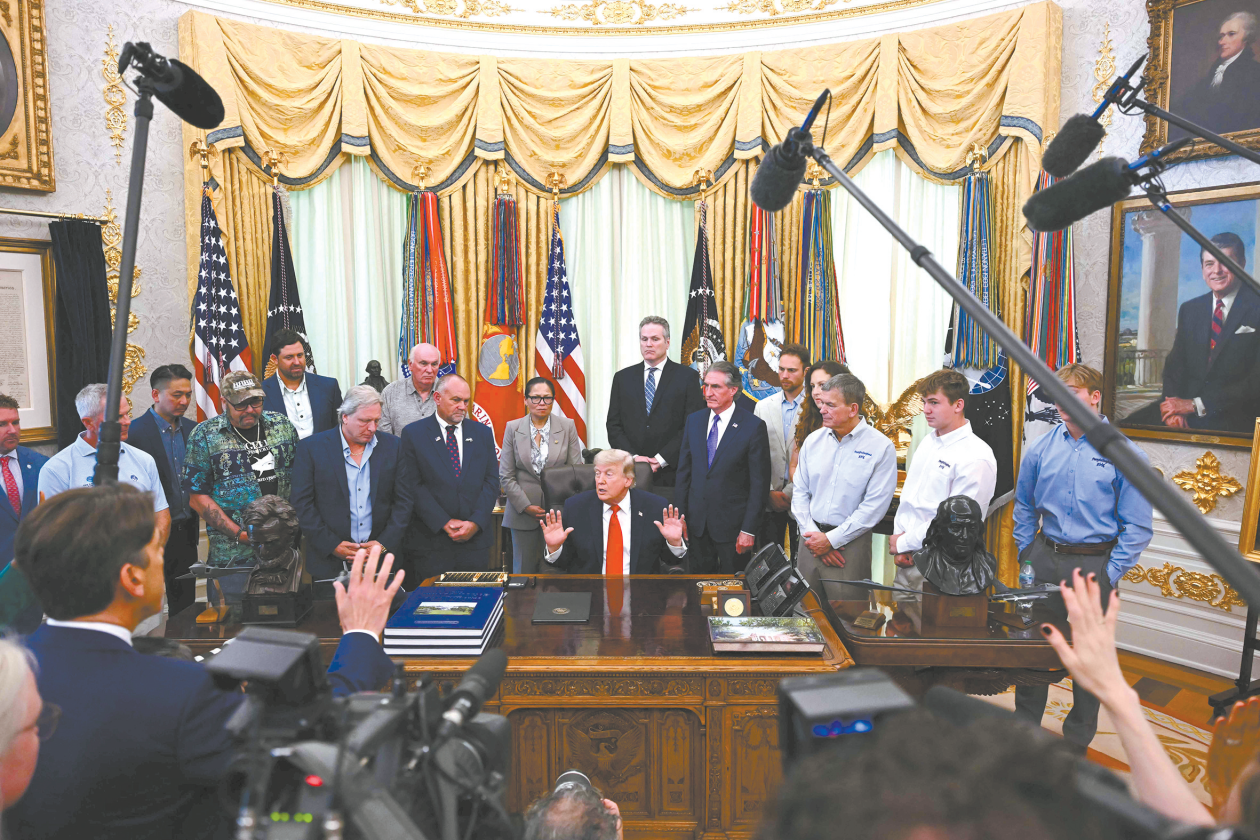
"We have just reached a significant resolution regarding the conflict with Iran," Trump said to the media in the Oval Office on the afternoon of the 11th, describing it as a very strong memorandum of understanding that, once signed, would officially open the Strait of Hormuz. "It may be signed in Europe over the weekend," and Vice President Vance will attend the related events. When asked if Iran's Supreme Leader Mujtaba had approved the memorandum, Trump replied, "As far as I understand, the answer is yes."
Later that day, Trump stated on social media that the relevant consultations and final points had been recognized by all parties involved at both the conceptual and detailed levels. The Israeli Prime Minister's Office issued a statement saying that although Israel is not a signatory to the memorandum, it supports Trump's commitment to limit Iran's nuclear program and missile capabilities in the final agreement reached with Iran.
Iranian Foreign Ministry spokesman Baghaei stated in an interview on the 11th that most of the text of the memorandum has been finalized, but Iran has not yet made a final decision on the memorandum. The U.S. has repeatedly changed its position, making unrealistic new demands and even launching military strikes during the negotiations. Iran has made it clear both diplomatically and on the battlefield that it will never yield to the conditions and demands of the other side. Regarding media reports about the possible time and location of a signing ceremony, Baghaei dismissed these as mere speculation.
On the 12th, the Iranian Tasnim News Agency quoted sources as saying that the existing text of the memorandum still needs to be reviewed and finalized by relevant Iranian institutions, and that any other speculation and news before that is not true.
Iranian media: Tehran hopes to unfreeze assets as soon as possible
The U.S. Axios news website reported on the 11th, citing sources, that the "upcoming signing" of the U.S.-Iran memorandum includes provisions for the immediate reopening of the Strait of Hormuz without tolls, as well as sanctions relief for Iran based on compliance. The report stated that this memorandum would extend the ceasefire period by 60 days, covering Lebanon, during which nuclear issue negotiations would take place. The memorandum also includes a framework for addressing Iran's enriched uranium stockpile, but any actions regarding Iran's nuclear program will depend on a more detailed agreement ultimately reached.
According to the Islamic Republic News Agency on the 12th, the main framework of the current memorandum text includes: no agreement will be reached on nuclear issues at this time, and any nuclear negotiations will begin within 60 days after the signing of the memorandum; after the end of hostilities, the U.S. and Israel will end their blockade of Iran, and Iran has not committed to transferring control of the Strait of Hormuz to any party, nor has it committed to restoring the situation to what it was before U.S.-Israeli military actions; if Tehran decides to sign the memorandum, some frozen assets will be unfrozen immediately, and the remaining assets will be gradually unfrozen during the negotiations.
The Wall Street Journal reported that a major obstacle to advancing peace negotiations is Iran's demand for the immediate unfreezing of hundreds of billions of dollars in assets frozen by the U.S. to alleviate its severely damaged economy. Some individuals familiar with the negotiations indicated that the two countries initially had differences over the timeline and mechanism for asset unfreezing, but they believe the differences are narrowing.
Earlier on the 11th, Trump had threatened on social media that the U.S. would launch a severe strike against Iran that evening. In the near future, the U.S. would occupy Iran's Khark Island and other oil infrastructure, fully controlling Iran's oil and gas markets. Previously, both the U.S. and Iran had launched the most intense round of mutual strikes since the ceasefire on April 8. The Austrian newspaper Der Standard reported that both sides are playing with fire: even a single miscalculation could drag the Middle East into a new war.
"This is likely the only option currently on the table"
Professor Niu Xinchun from the China-Arab States Research Institute at Ningxia University told Global Times reporters on the 12th that the ultimate goal of the U.S. remains to force Iran to reach an agreement, but Iran has not easily compromised. Therefore, over the past two months, the U.S. has fallen into a cycle of "threats leading to concessions to seek talks, and threats again when negotiations fail." Additionally, Niu Xinchun believes that Trump's statement about possibly sending Vance to Europe to sign on behalf of the U.S. may suggest that it is difficult for Iran to send someone of equal rank to participate.
Despite the recent escalation of the situation, negotiations aimed at ending the conflict are still ongoing. The Austrian newspaper Der Standard reported that both the U.S. and Iran have controlled the scale of the attacks. Trump's goal is to reach an agreement that limits Iran's nuclear program, which can be touted as a success. Economic and social issues are also driving Iran to reach an agreement.
Suzanna Maloney, vice president of the Brookings Institution, told U.S. public broadcasting that both the U.S. and Iran believe that the use of force can accelerate the negotiation process or enhance their position in negotiations. Therefore, even if the two countries reach a memorandum of understanding, there may still be ongoing turmoil and chaos. She also stated that without specific provisions regarding the nuclear program, the U.S. is actually unwilling to sign the memorandum, "but this is likely the only option currently on the table." The challenge for the U.S. is how to ultimately reach a meaningful nuclear agreement. The 2015 nuclear agreement negotiations took two years, with a 159-page text that was very detailed. "I believe this administration may not have the patience to deal with such detailed issues; we still need to see what conditions Iran is actually prepared to offer regarding its nuclear program."
President Trump proposed a memorandum of understanding with Iran to end hostilities, indicating a potential signing in Europe over the weekend. Iran is reviewing the terms but remains firm on its nuclear rights and will not compromise on key issues. The situation remains tense, with both sides expressing distrust and military threats persisting.
- Trump threatened military action against Iran before proposing a memorandum of understanding.
- Iran is reviewing the memorandum but will not compromise on key issues.
- The memorandum includes provisions for reopening the Hormuz Strait and potential sanctions relief for Iran.