
The U.S. Significantly Reduces the Scale of Joint Military Exercises with South Korea, Korean Media: "This is the First Time"
[Global Times Special Correspondent Wu Yan] According to a report by Yonhap News Agency, the South Korean and U.S. militaries decided on the 19th to end the ongoing "Ulchi Freedom Shield" (UFS) joint military exercise early on the 21st, in accordance with U.S. President Trump's directive to reduce the scale of joint drills. Trump previously stated that he "does not like the fact that the U.S. has been conducting joint military exercises with South Korea for a long time," and instructed U.S. Secretary of Defense Mark Esper to significantly scale back the joint exercises. Public information shows that various types of joint exercises are held annually between the U.S. and South Korea, which have drawn widespread criticism from the outside world.
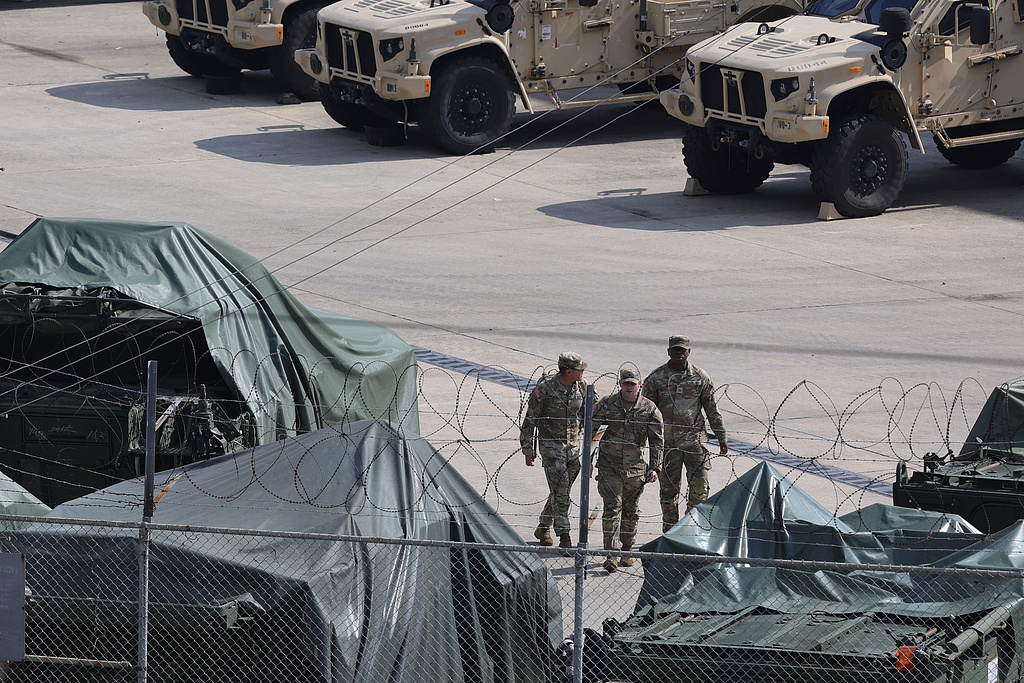
The report states that it is the first time that a fully launched South Korea-U.S. theater-level joint exercise has been halted midway at the request of the U.S. It is noted that the U.S. and South Korea typically hold two large-scale theater-level joint exercises each year, in March and August. The annual "Freedom Shield" exercise held in March has its origins in the "Focus Lens" exercise established in 1954, making it one of the earliest mechanized military exercises conducted by the U.S. and South Korea. It was renamed "Freedom Guardian" in 2008 and adopted its current name in the second half of 2022. The "Freedom Shield-2026" exercise took place from March 9 to March 19, involving 18,000 South Korean troops. During the initial command post exercise phase, the exercise simulated joint combat processes through computer modeling, focusing on assessing the conditions for the transfer of "wartime operational control"; in the subsequent field maneuver training phase, the exercise covered multiple areas including air defense and missile defense, drone offense and defense, cyber and space confrontation, nuclear and biochemical protection, manned and unmanned coordination, non-combatant evacuation, and deep strike.
The South Korea-U.S. joint exercise "Ulchi Freedom Shield" held every August aims to enhance defense capabilities on the Korean Peninsula in emergency situations, consisting of both command post exercises and supporting field maneuver training. This year's "Ulchi Freedom Shield" command post exercise was originally planned to be conducted in two phases, with the first phase taking place from August 17 to 21, focusing on strengthening defensive capabilities; the second phase was scheduled to continue from the 23rd to the 27th, primarily tasked with mastering counter-sabotage operations.
However, Trump publicly criticized the South Korea-U.S. military exercises on the 16th local time, stating that they are not only costly but that most of the expenses are borne by the U.S. Since the "Ulchi Freedom Shield" joint exercise had already begun, he instructed Secretary of Defense Esper to significantly reduce the scale of this military exercise. Yonhap News Agency reported that the South Korean and U.S. militaries agreed to only conduct the first phase of the exercise, which will end on the 21st, and to cancel the second phase scheduled for the 24th to the 27th. This adjustment means that the overall exercise time has been cut in half compared to the original plan. As a result, the scale of the field maneuver training will also be reduced.
In addition to these two core exercises, the U.S. and South Korea also conduct various other types of joint exercises each year. For example, the "Freedom Banner" series of large-scale bilateral air exercises are held once in the first half and once in the second half of each year. This year's first half "Freedom Banner" exercise took place from April 10 to 24, during which the air forces of both countries practiced various tactics, including defensive counter-air operations, air interception, and close air support, to enhance their joint operational capabilities and assess their comprehensive combat capabilities in wartime scenarios.
At the same time, the South Korean and U.S. air forces conduct multiple "Double Eagle" joint exercises each year, which are brigade-level joint air exercises alternately held at the air force bases of both countries on the Korean Peninsula. The "Double Eagle" exercise in 2025 is expected to have as many as eight iterations. However, earlier this year, the South Korean newspaper Chosun Ilbo reported that this year's "Double Eagle" exercises have been reduced to four, but the combat power for each exercise has doubled, and the number of sorties has also significantly increased.
On August 19, the Chosun Ilbo also revealed that the South Korean military stated that, based on Trump's instructions, the planned South Korea-U.S. nuclear and conventional weapon integration tactical training "Hammer," the South Korea-U.S. air joint exercise "Freedom Banner," and the South Korea-U.S. Marine Corps "Double Dragon Training," centered on large-scale amphibious operations, may also be consecutively canceled or reduced.
The various joint exercises held annually by the U.S. and South Korea have faced widespread criticism both domestically and internationally. For example, during the "Freedom Shield" exercise in March 2025, two South Korean KF-16 fighter jets accidentally dropped eight bombs on a residential area outside the shooting range, injuring 31 people, which sparked strong criticism from the South Korean public. On April 30 of this year, China's permanent representative to the United Nations, Fu Cong, stated at a Security Council meeting on the North Korean nuclear issue that certain countries are continuously strengthening military alliance systems in the Northeast Asia region, conducting highly targeted joint military exercises, and promoting "extended deterrence," which heightens hostility.
U.S. and South Korean forces decided to end the ongoing 'UFS' joint military exercise early on March 21, 2023, following directives from President Trump to reduce its scale. The exercise, which involved 18,000 troops, was originally scheduled to run from March 9 to March 19, 2023, with a second phase planned for March 24-27, 2023, now canceled. This marks the first instance of a joint exercise being halted mid-way due to U.S. directives.
- U.S. and South Korean forces will end the 'UFS' exercise early on March 21, 2023.
- President Trump directed a significant reduction in the scale of the joint military exercises.
- The first phase of the 'UFS' exercise was scheduled from March 9 to March 19, 2023, with 18,000 troops involved.
- The second phase of the exercise, originally planned for March 24-27, 2023, has been canceled.
- This is the first time a joint exercise has been halted mid-way due to U.S. directives.