

The USS Gerald R. Ford (CVN-78) is the lead ship of the U.S. Navy‘s Ford-class nuclear-powered supercarriers. It is the world’s largest aircraft carrier—indeed, the largest warship of any type ever constructed—and it has already lived a story of triumphs, trials, and tribulations, from Venezuela to Iran. Fortunately, it has not experienced any tragedies—no lives were lost during a March 12, 2026, shipboard laundry room fire.
Deployment Doldrums for USS Gerald R. Ford
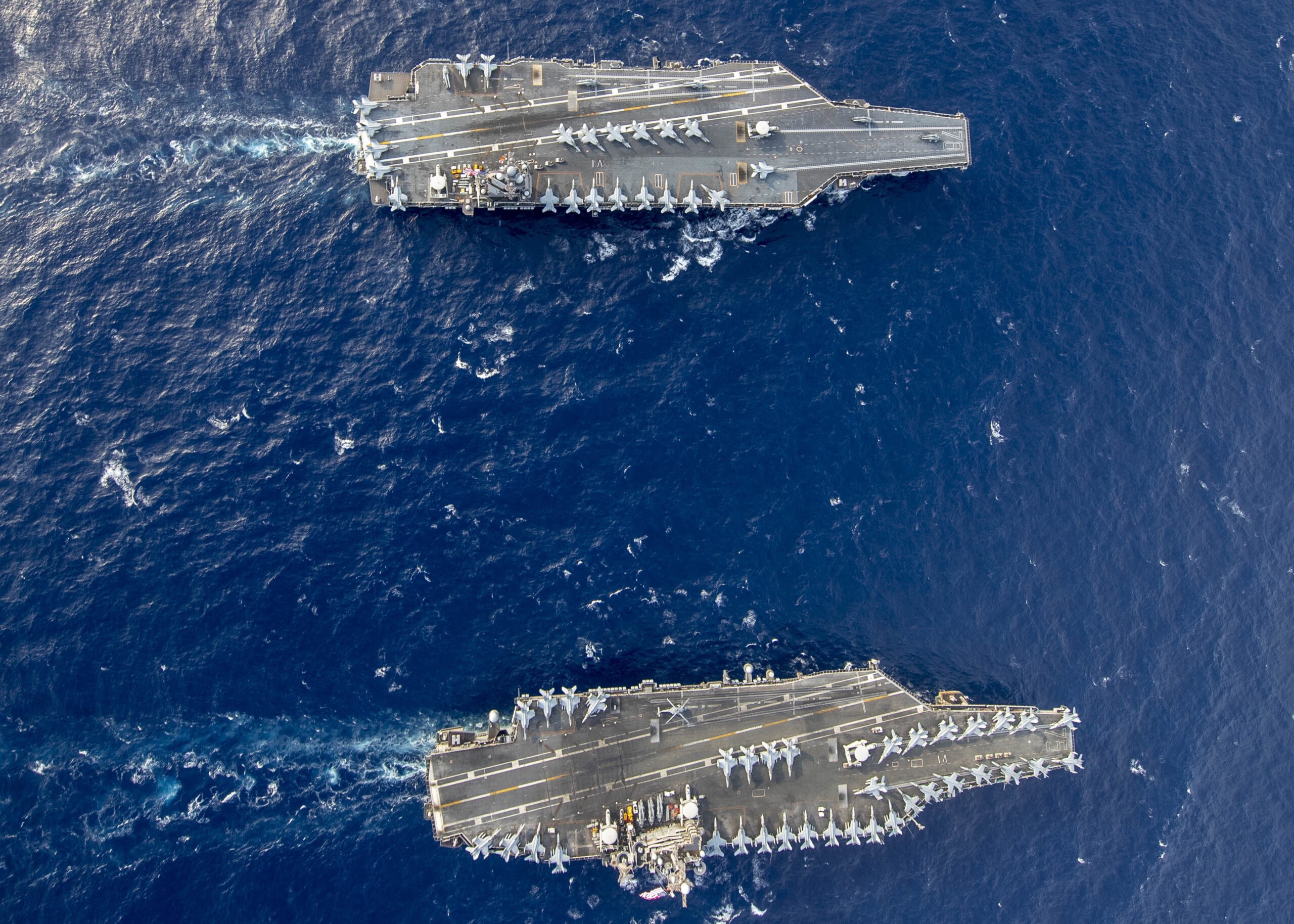
The Ford-class aircraft carrier USS Gerald R. Ford (CVN 78) and the Nimitz-class aircraft carrier USS Harry S. Truman (CVN 75) transit the Atlantic Ocean June 4, 2020, marking the first time a Ford-class and a Nimitz-class aircraft carrier operated together underway. Ford is underway conducting integrated air wing operations, and the Harry S. Truman Carrier Strike Group remains at sea in the Atlantic as a certified carrier strike group force ready for tasking in order to protect the crew from the risks posed by COVID-19, following their successful deployment to the U.S. 5th and 6th Fleet areas of operation. (U.S. Navy photo by Mass Communication Specialist Seaman Riley McDowell)
The Ford has been in extended, very active deployment.
As USA Today reporter Saleen Martin notes, “Wednesday, April 15 will mark 295 days since the USS Gerald R. Ford, or CVN-78, first left Naval Station Norfolk in Virginia for a regularly-scheduled deployment with nearly 4,500 sailors aboard. The carrier has since been ordered to Iran as part of President Donald Trump’s efforts to pressure Iranian leaders into reaching a nuclear peace agreement.”
The hard-working, long-suffering crew of the Ford will find April 15 to be taxing in more ways than one.
Recalling previous carrier deployments, the USS Midway (CV-41’s) stands out.
The Midway spent nearly 11 months deployed in 1972-73, during the peak of the Operation Linebacker air campaign against North Vietnam.
Other extended carrier deployments after Vietnam included:
–USS Abraham Lincoln (CVN-72) – 294 days (295 days when counting the day the ship returned)
–USS Nimitz (CVN-68) – 341 days (including a 27-day ship-wide pandemic quarantine)
What About the Repair Work Timeline?
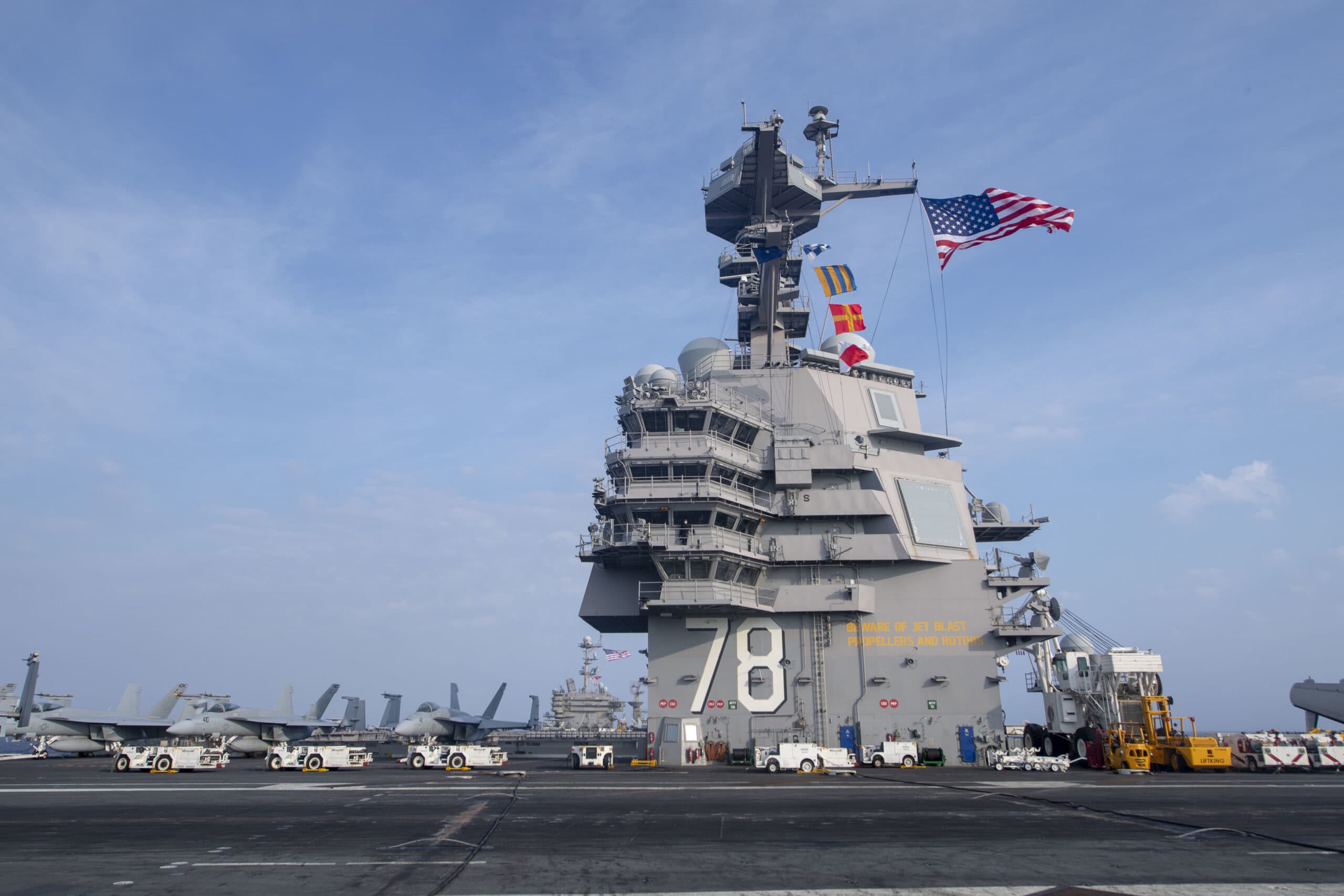
The Ford-class aircraft carrier USS Gerald R. Ford (CVN 78) and the Nimitz-class aircraft carrier USS Harry S. Truman (CVN 75) transit the Atlantic Ocean June 4, 2020, marking the first time a Ford-class and a Nimitz-class aircraft carrier operated together underway. Ford is underway conducting integrated air wing operations, and the Harry S. Truman Carrier Strike Group remains at sea in the Atlantic as a certified carrier strike group force ready for tasking in order to protect the crew from the risks posed by COVID-19, following their successful deployment to the U.S. 5th and 6th Fleet areas of operation. (U.S. Navy photo by Mass Communication Specialist Seaman Sawyer Connally)
Molly Parks of the Washington Examiner, on April 3, shared an update on expected repairs to the Ford.
Parks noted that “The USS Gerald R. Ford is leaving Split, Croatia, after a five-day repair visit in the Adriatic port city. … The ship transited to Croatia on March 28 following a three-day docking in Crete for refueling and repairs. The Gerald R. Ford initially left the Red Sea for Crete after an hours-long [sic] fire tore through the aircraft carrier’s laundry unit.”
A week before that article was published, other reports indicated that the Ford could be out of action for 12–14 months. But to add to the confusion, the Navy publicly stated that the ship “remains poised for full mission tasking in support of national objectives in any area of operation.”
The Pentagon did not comment on where the ship was headed next. However, for what it’s worth, the Cruising Earth ship tracker website reports the Ford’s current location as “Underway in the Mediterranean Sea, heading toward CENTCOM AOR (as of April 8–12, 2026).”
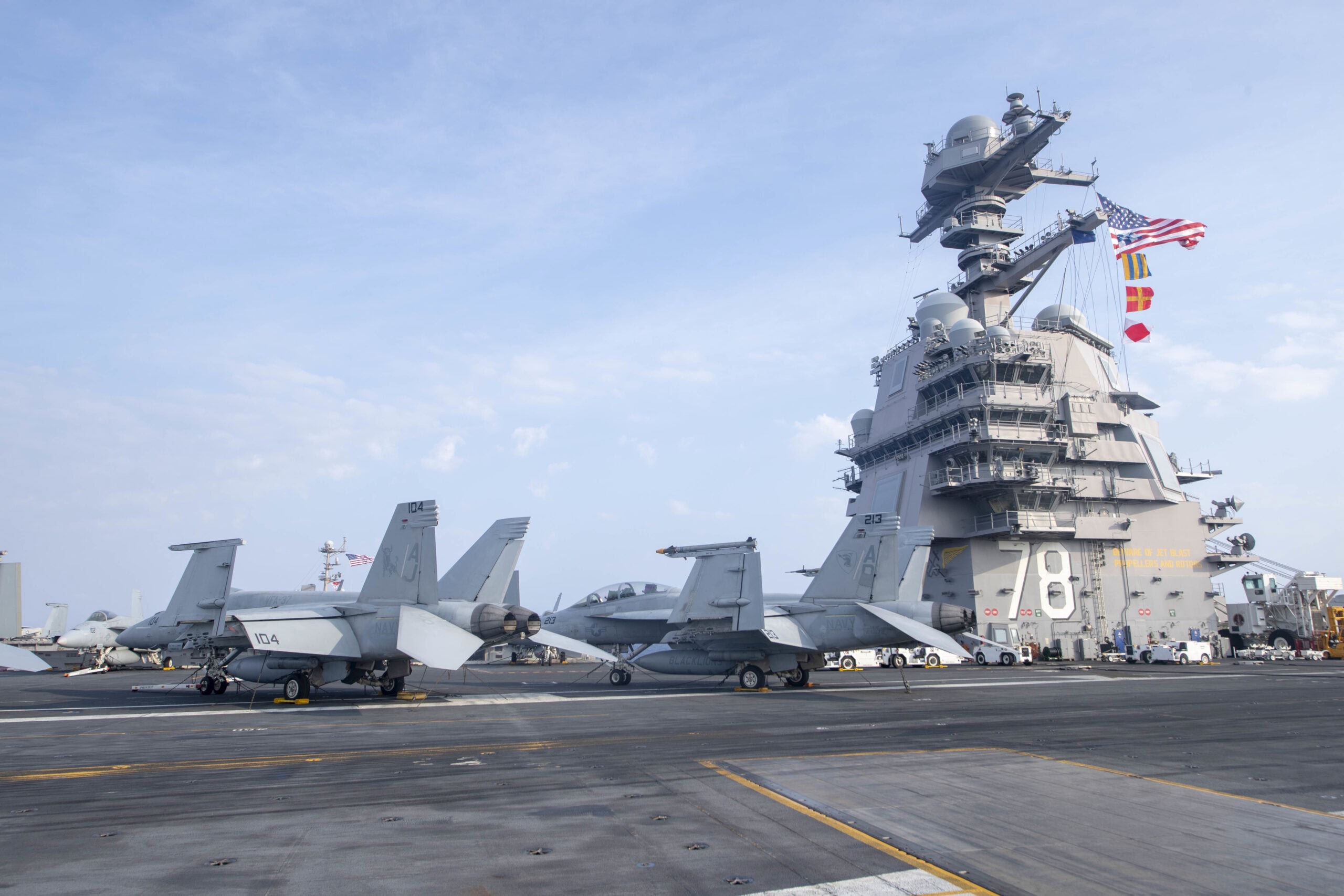
The Ford-class aircraft carrier USS Gerald R. Ford (CVN 78) and the Nimitz-class aircraft carrier USS Harry S. Truman (CVN 75) transit the Atlantic Ocean June 4, 2020, marking the first time a Ford-class and a Nimitz-class aircraft carrier operated together underway. Ford is underway conducting integrated air wing operations, and the Harry S. Truman Carrier Strike Group remains at sea in the Atlantic as a certified carrier strike group force ready for tasking in order to protect the crew from the risks posed by COVID-19, following their successful deployment to the U.S. 5th and 6th Fleet areas of operation. (U.S. Navy photo by Mass Communication Specialist Seaman Sawyer Connally)
However, the website admins throw in the caveat that, “The current location information above is an estimate from public reports and open-source intelligence. Exact positions are classified for operational security (OPSEC). The tracker map below shows the most recent publicly transmitted AIS data for this ship. Military ships typically transmit AIS data for maritime safety when operating near civilian traffic, when not in an active theater.”
Historical Comparisons
Without trivializing the trials and tribulations of the Ford’s crew, matters should be kept in perspective: During World War II, warship deployments were considerably longer (for understandable reasons).
For example, the Iowa-class battleship USS New Jersey (BB-62) was once deployed for 14 months. During that time, it took part in the Marshall Islands campaign and the Battle of Leyte Gulf, among other things.
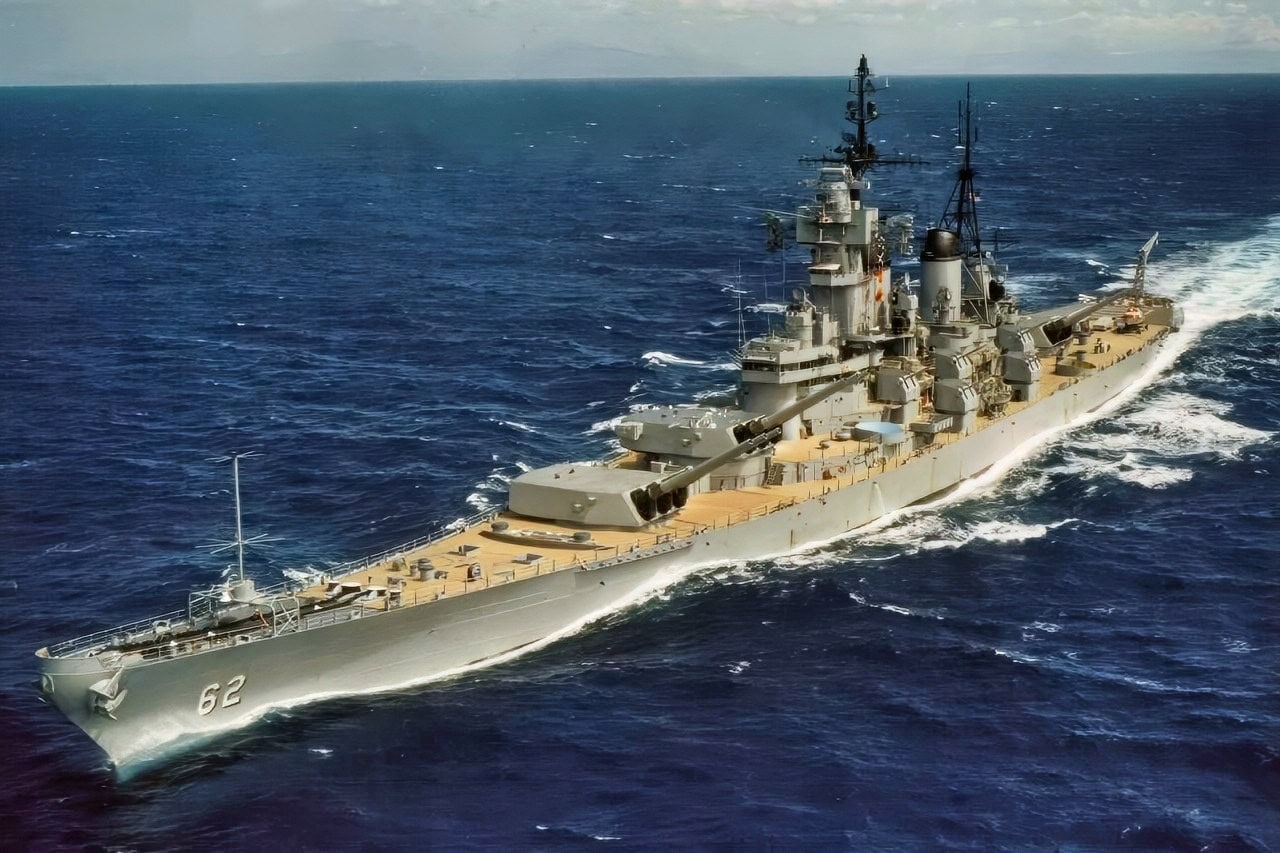
USS New Jersey Battleship. Image Credit: Creative Commons.
This incredible endurance is at least part of the reason for “The Big J’s” prestigious status as the most decorated battlewagon in naval history, with 19 battle stars.
Meanwhile, in that pre-nuclear age, flattop repairs were much quicker.
A classic case in point: during the Battle of the Coral Sea in May 1942, the USS Yorktown (CV-5) suffered severe damage at the hands of Imperial Japanese Navy warplanes, including a 551-lb. armor-piercing bomb that plunged through the flight deck 15 feet inboard of her island.
It penetrated 50 feet into the ship before exploding above the forward engine room, destroying six compartments.
It was initially estimated that it would take 90 days to repair the Yorktown. However, Admiral Chester W. Nimitz, Commander in Chief, Pacific Fleet, declared that, “We must have this ship back in three days.” And miraculously, this three-day repair mission was accomplished. That work enabled CV-5 to contribute to the tide-turning Battle of Midway, one month after the Coral Sea engagement. However, in a sad twist of fate, the Yorktown was sunk during the epic Midway clash.
About the Author: Christian D. Orr
Christian D. Orr is a Senior Defense Editor. He is a former Air Force Security Forces officer, Federal law enforcement officer, and private military contractor (with assignments worked in Iraq, the United Arab Emirates, Kosovo, Japan, Germany, and the Pentagon). Chris holds a B.A. in International Relations from the University of Southern California (USC) and an M.A. in Intelligence Studies (with a concentration in Terrorism Studies) from American Military University (AMU). He is also the author of the book “Five Decades of a Fabulous Firearm: Celebrating the 50th Anniversary of the Beretta 92 Pistol Series,” the second edition of which was recently published.