
The Yemen Conflict Escalates, Pakistan and Turkey Express Support for Saudi Arabia
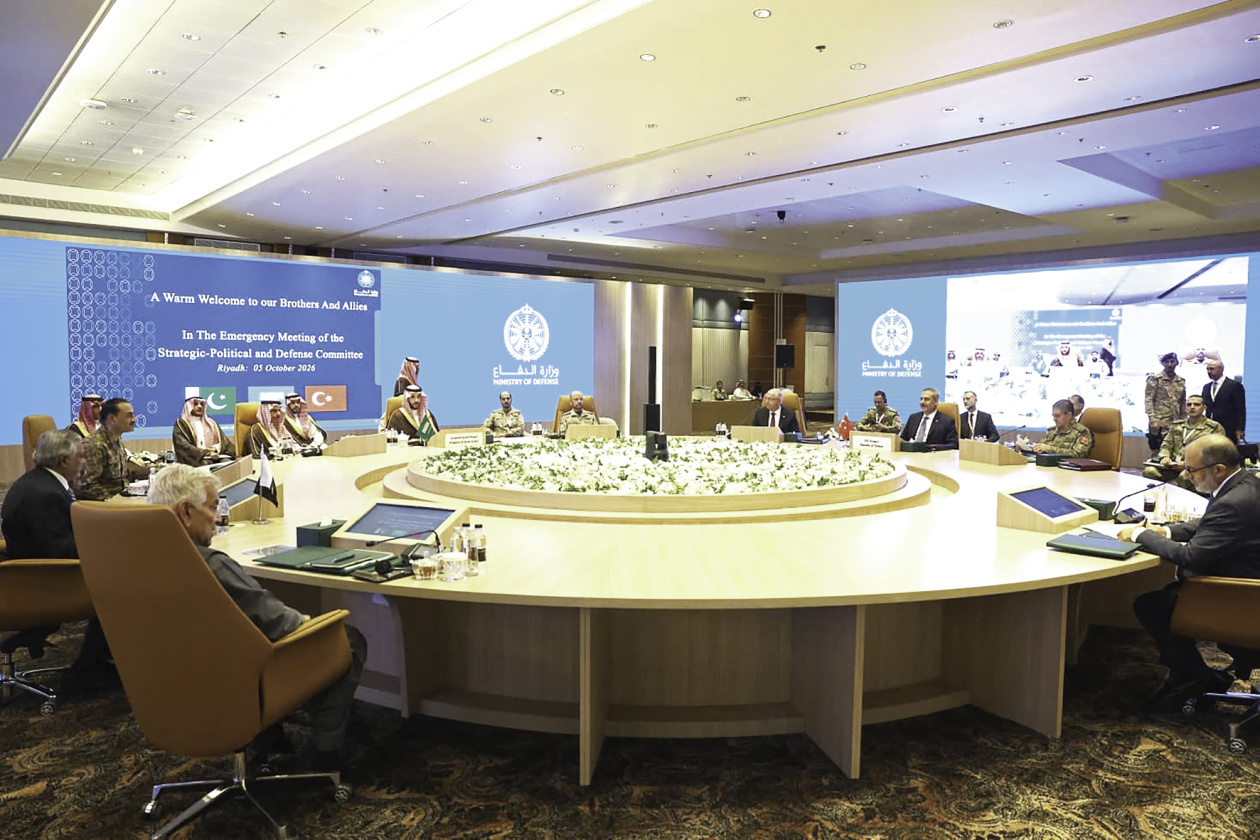
[Global Times reporter Ren Haoyu, Global Times special correspondent Wu Ming] In recent days, the situation in Yemen has been escalating. The Yemeni government forces launched the "Yemen Dawn" operation against the Houthi armed group earlier this week, with the Saudi-led multinational coalition participating in the operation and providing air support for the Yemeni government forces' ground actions. The Houthi armed group denied the progress made by the government forces in areas such as the Bab-el-Mandeb Strait, while continuing to strike civilian and military targets, including airports within Saudi Arabia. As the conflict between the Houthi armed group and Saudi Arabia escalates, officials from Saudi Arabia, Pakistan, and Turkey, who previously signed the Mecca Joint Defense Agreement, held an emergency meeting of the "Mecca Defense Alliance" Strategic Political and Defense Committee in Riyadh on the 5th to discuss the security situation and threats facing Saudi Arabia, and decided to immediately fulfill their mutual defense commitments. According to a report by Bloomberg on the 7th, the conflict between Saudi Arabia and the Houthi armed group has opened a new front in the confrontation against Iran, with the U.S. government reluctant to become more involved in Saudi Arabia's offensive against the Houthis and attempting to prevent Riyadh from triggering a new major conflict in Yemen. Analysts believe that recent developments are breaking the assumption that "if Saudi Arabia is attacked, the U.S. will come to the rescue," which not only forces Saudi Arabia to seek friends outside of the U.S. but also continuously tests the latter's strength and influence.
Multiple airports in Saudi Arabia attacked
On October 4, Rashad al-Alimi, chairman of the Yemeni Presidential Leadership Council, announced the launch of military operations to reclaim areas controlled by the Houthi armed group and to restore the operation of national institutions across the country. On the 5th, Majid Nuzaili, spokesperson for the Yemeni government forces, stated that the government forces had begun large-scale implementation of the "Yemen Dawn" operation and successfully controlled the Bab-el-Mandeb Strait. According to a report by Al Arabiya on the 7th, as part of the "Yemen Dawn" operation, the Yemeni government forces have intensified military actions on multiple fronts. However, Houthi military spokesperson Yahya Saree stated on the 7th that the organization successfully thwarted multiple attempts by enemy forces to advance towards the Bab-el-Mandeb Strait, forcing them to retreat.
Since the start of the "Yemen Dawn" operation, the Houthi armed group has intensified its strikes on civilian and military targets, including airports within Saudi Arabia. On the evening of the 5th, explosions were heard again in Riyadh, the capital of Saudi Arabia. The Houthi armed group claimed to have used drones and missiles to strike targets such as King Khalid International Airport in Riyadh. Saree warned all international airlines operating routes through Saudi airspace to suspend flights, "because these airspaces have become the battlefield for our operations." Open-source aviation tracking data showed that King Khalid International Airport in Riyadh has experienced multiple temporary closures before resuming operations.
The Houthi armed group's attacks on Saudi airports and other targets had not ceased by the 7th. According to a statement issued by Saree that day, the organization launched a new round of attacks using ballistic missiles and drones against targets within Saudi Arabia, including King Khalid International Airport, Abha International Airport, and King Khalid Air Base, claiming that these attacks had affected airport air traffic and damaged military bases.
"Mecca Defense Alliance" decides to implement mutual defense commitments
In response to the ongoing attacks by the Houthi armed group against Saudi Arabia, Saudi Arabia, Pakistan, and Turkey held an emergency meeting of the "Mecca Defense Alliance" Strategic Political and Defense Committee in Riyadh on the 5th. This was the first decision to implement mutual defense commitments since the three countries signed the agreement in August, taking necessary measures to deploy military forces in Saudi Arabia.
According to the Mecca Joint Defense Agreement, any armed attack against any one of the three countries will be considered an attack against all three. Saudi Defense Minister Khalid bin Salman posted on social media platform X on the 6th that the emergency meeting held on the 5th "reaffirmed the unity and consensus of the three countries in countering the vile attacks against the Kingdom of Saudi Arabia and the holy sites," and the "Mecca Defense Alliance" Strategic Political and Defense Committee agreed to initiate collective deterrence measures within the framework of the alliance to respond to these attacks and all attackers.
According to Saudi state media, the committee decided to appoint retired Pakistani Major General Norman Mahmood as the first Secretary-General of the alliance for a term of three years. Saudi military strategy expert Faisal Hamad analyzed that the holding of this meeting marks a shift of the alliance from a political level to a practical military level. The appointment of the first Secretary-General is not only an administrative measure but also establishes the alliance as a reality with a permanent system and operational capability.
It remains unclear to what extent Islamabad and Ankara will assist Riyadh. Reuters reported on the 2nd, citing a Pakistani official, that Pakistan has deployed 30,000 to 40,000 soldiers to Saudi Arabia to help defend its border areas and assist in intercepting drones and missiles. However, this claim was quickly refuted by the Pakistani side. According to the Pakistani newspaper Forum Times, the country's Ministry of Information and Broadcasting stated that Reuters' "speculative" report was based on unverifiable unknown sources and suggested that it refer to the official statements of the country rather than fabricating numbers and details.
U.S. Middle East news site Al Monitor noted that the three countries mentioned in their joint statement that any deployment must comply with the "national laws" of the relevant countries, and the Turkish parliament has not yet approved this agreement, which means that Turkey will currently support Saudi Arabia through intelligence sharing, military planning, and joint training rather than deploying troops. U.S. publication Foreign Policy analyzed that even if Turkey and Pakistan only threaten to jointly intervene in the conflict between Saudi Arabia and the Houthi armed group, it could alter the dynamics of the conflict. The article cited statistics from the 2026 Global Military Strength Index, stating that the "Mecca Defense Alliance" has nearly 1.4 million active troops, 3,400 aircraft, 6,000 tanks, and over 340 naval vessels.
U.S. security commitments questioned
"Trump opposed a deeper U.S. role in the conflict between Saudi Arabia and the Houthi armed group," Bloomberg reported on the 7th, citing informed sources that the U.S. has informed Saudi Arabia not to send more soldiers to Yemen amid the ongoing U.S.-Iran conflict and the disruption of shipping in the Strait of Hormuz. "The U.S. largely views the current conflict as a Saudi issue, partly because it is trying to limit the scope of the conflict with Iran, focusing primarily on the Strait of Hormuz." Bloomberg economic analysts Dina Esfandiary and Becca Wasser stated in a research report that while Saudi Arabia may continue to make more demands, the U.S. is unlikely to provide assistance beyond what it currently offers to the Saudi-led coalition.
The Los Angeles Times analyzed that the relationship between Saudi Arabia and the U.S. has revolved around a frequently mentioned but rarely tested assumption for decades, namely that if Saudi Arabia is attacked, the U.S. will come to the rescue. However, recent events indicate that this long-promoted security guarantee is actually riddled with holes, forcing Saudi Arabia to seek friends outside of Washington. An article from the Qatar Middle East Global Affairs Committee on the 6th argued that Washington has found itself in a dilemma, unable to completely abandon the Middle East while also unable to dominate regional affairs as it once did. The Middle East is shifting from a source of American power to a continuous test of the limits of U.S. strength.
Yemeni government forces initiated the 'Yemen Dawn' operation against Houthi forces, supported by the Saudi-led coalition, in early October 2023. Houthi forces retaliated with drone and missile strikes on Saudi airports. An emergency meeting of the Mecca Defense Alliance was held in Riyadh, where Saudi Arabia, Pakistan, and Turkey reaffirmed their commitment to collective defense against ongoing threats. Reports indicate Pakistan may deploy troops to assist Saudi Arabia, although this has been officially denied.
- Yemeni government forces launched 'Yemen Dawn' operation against Houthi forces.
- Houthi forces attacked multiple Saudi airports using drones and missiles.
- Emergency meeting of the Mecca Defense Alliance took place in Riyadh to discuss security threats.
- Pakistan reportedly deployed 30,000 to 40,000 troops to assist Saudi Arabia, though this was denied by Pakistani officials.
- The Mecca Defense Alliance agreed to implement collective defense measures against Houthi attacks.