

Summary and Key Points: Expert Steve Balestrieri examines Theodore Roosevelt’s line, “Far and away the best prize that life has to offer is the chance to work hard at work worth doing,” and the “strenuous life” behind it: an asthmatic New York boy who rebuilt himself through exercise, graduated Harvard magna cum laude in 1880, wrote “The Naval War of 1812” in 1882, lost wife Alice and mother Martha on February 14, 1884, ranched the Dakota Badlands, and became president.
Theodore Roosevelt Made Military History and Is a Walking Reference Book
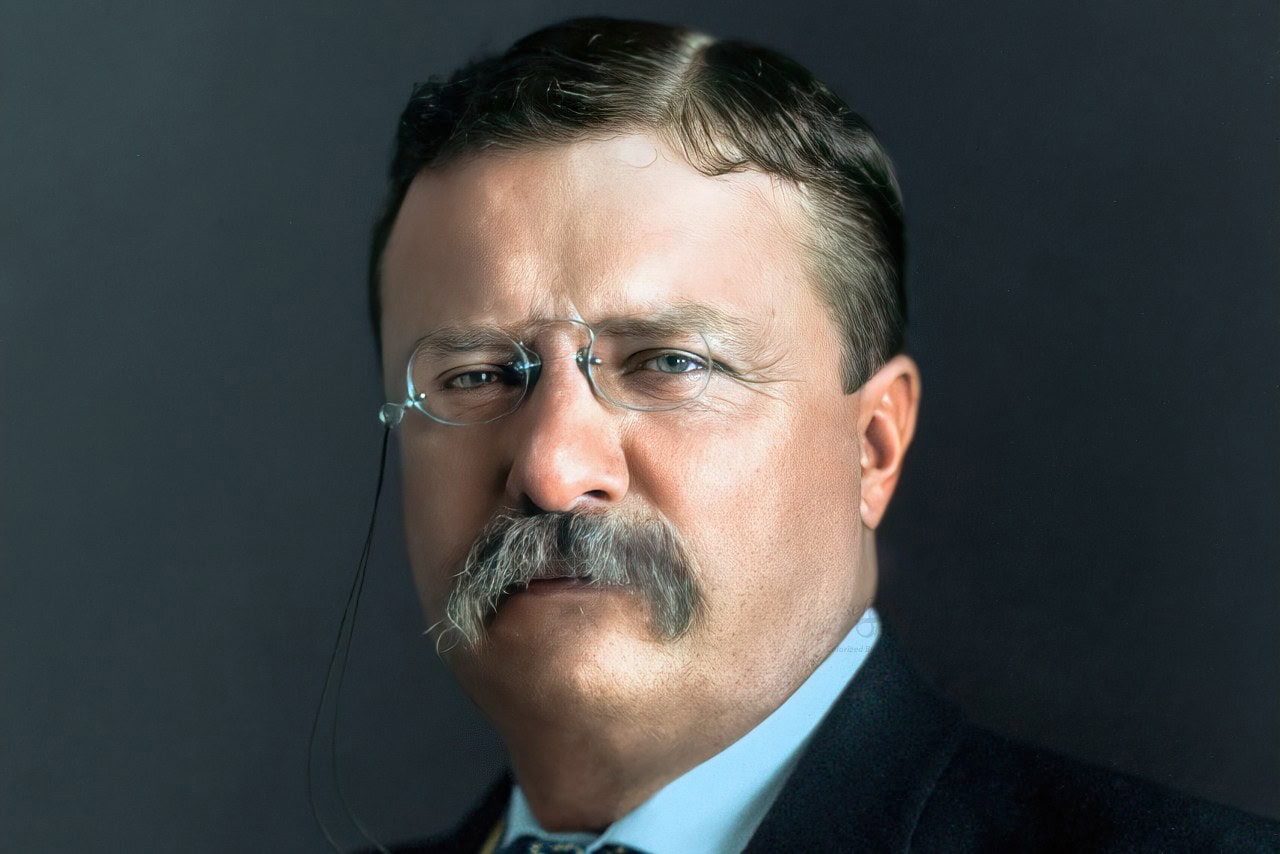
Theodore Roosevelt. Image Credit: Creative Commons.
The famous quote, “Far and away the best prize that life has to offer is the chance to work hard at work worth doing,” is attributed to Theodore Roosevelt, who emphasizes that personal fulfillment comes from dedicating oneself to challenging, meaningful, purposeful work.
It promotes the “strenuous life” over leisure, suggesting that the effort itself is more rewarding than the outcome, and finding noble work brings true value to life. He felt that true fulfillment comes from engaging in challenging, worthwhile activities, a sentiment echoed in his writings, including his 1916 essay, “The Key to Success in Life“.
The Best Prize:
Roosevelt believed the reward is not wealth, fame, or ease, but the opportunity to engage in productive, challenging labor. “Work Worth Doing” refers to work that has purpose, contributes to a greater good, or aligns with personal values and passions.
His philosophy is a rejection of an “ignoble ease” (a lazy life) in favor of a life filled with toil, striving, and resilience.
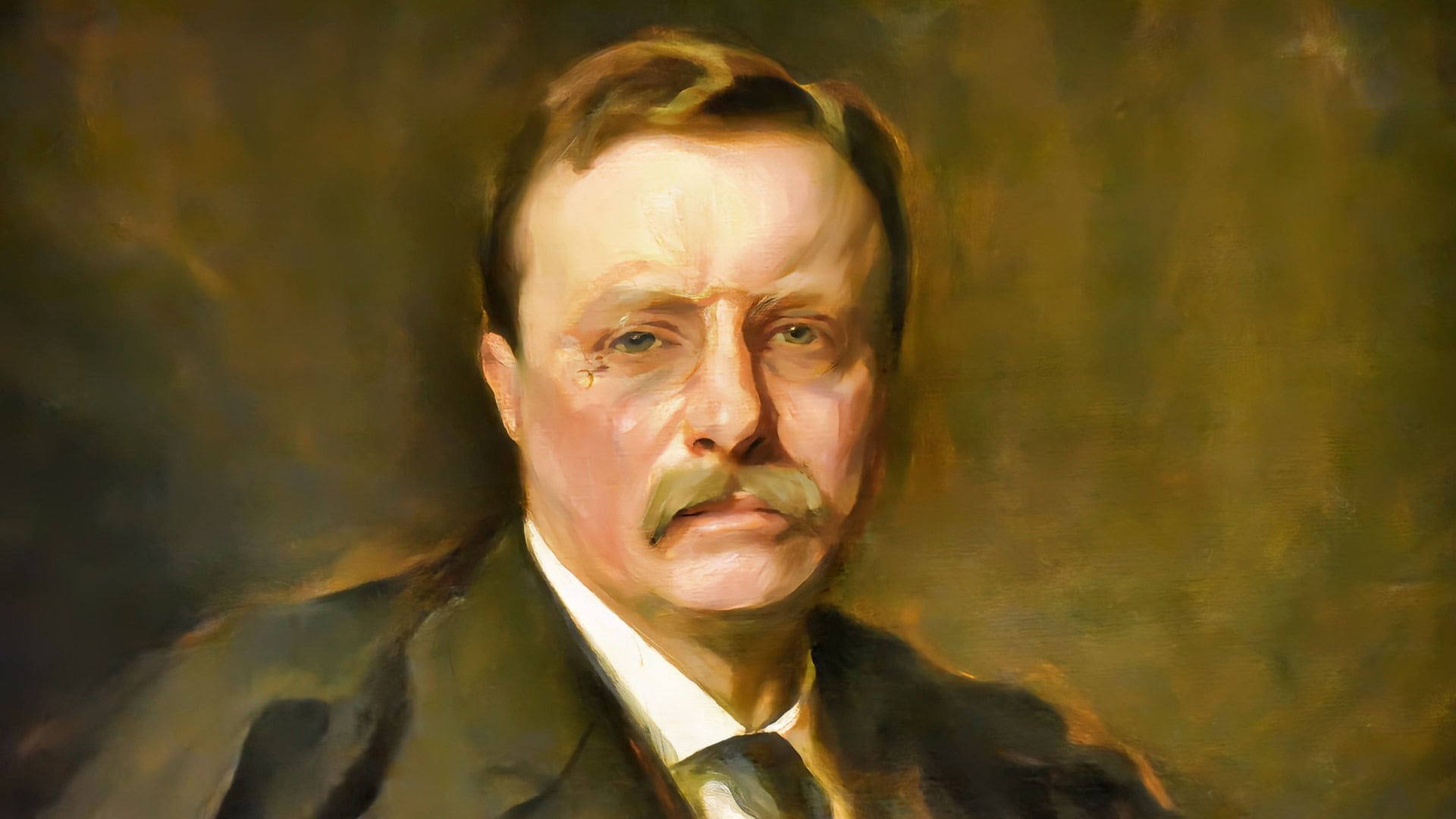
Theodore Roosevelt 19FortyFive.com Image from National Portrait Gallery Taken on 1/23/2026.
Context of The Quote:
The quote was meant to inspire a proactive, energetic approach to life, emphasizing that effort and dedication are necessary for genuine satisfaction and character, and champions work that contributes to something greater, aligning effort with purpose.
Teddy Roosevelt Biography and Early Life:
Theodore Roosevelt Jr.(October 27, 1858 – January 6, 1919), also known as Teddy or T. R., was the 26th president of the United States, serving from 1901 to 1909.
Teddy Roosevelt was famous for being the youngest man to become U.S. President, a champion of conservation, a “trust-buster,” and a leader who expanded America’s global power, known for his “big stick” diplomacy, building the Panama Canal, and mediating the Russo-Japanese War (earning a Nobel Peace Prize).
He established the U.S. Forest Service, created national parks, and passed consumer protection laws like the Pure Food and Drug Act, solidifying the modern, powerful presidency.
A Sickly Child Transformed By Exercise:
Teddy Roosevelt’s early life was marked by a dramatic contrast. He was born into wealthy New York society in 1858, but was plagued by severe asthma and frailty.
He transformed himself through a rigorous “strenuous life” of exercise and intellectual pursuits, encouraged by his father and fueled by his own voracious reading, ultimately developing a physically robust, adventurous spirit despite early health challenges.
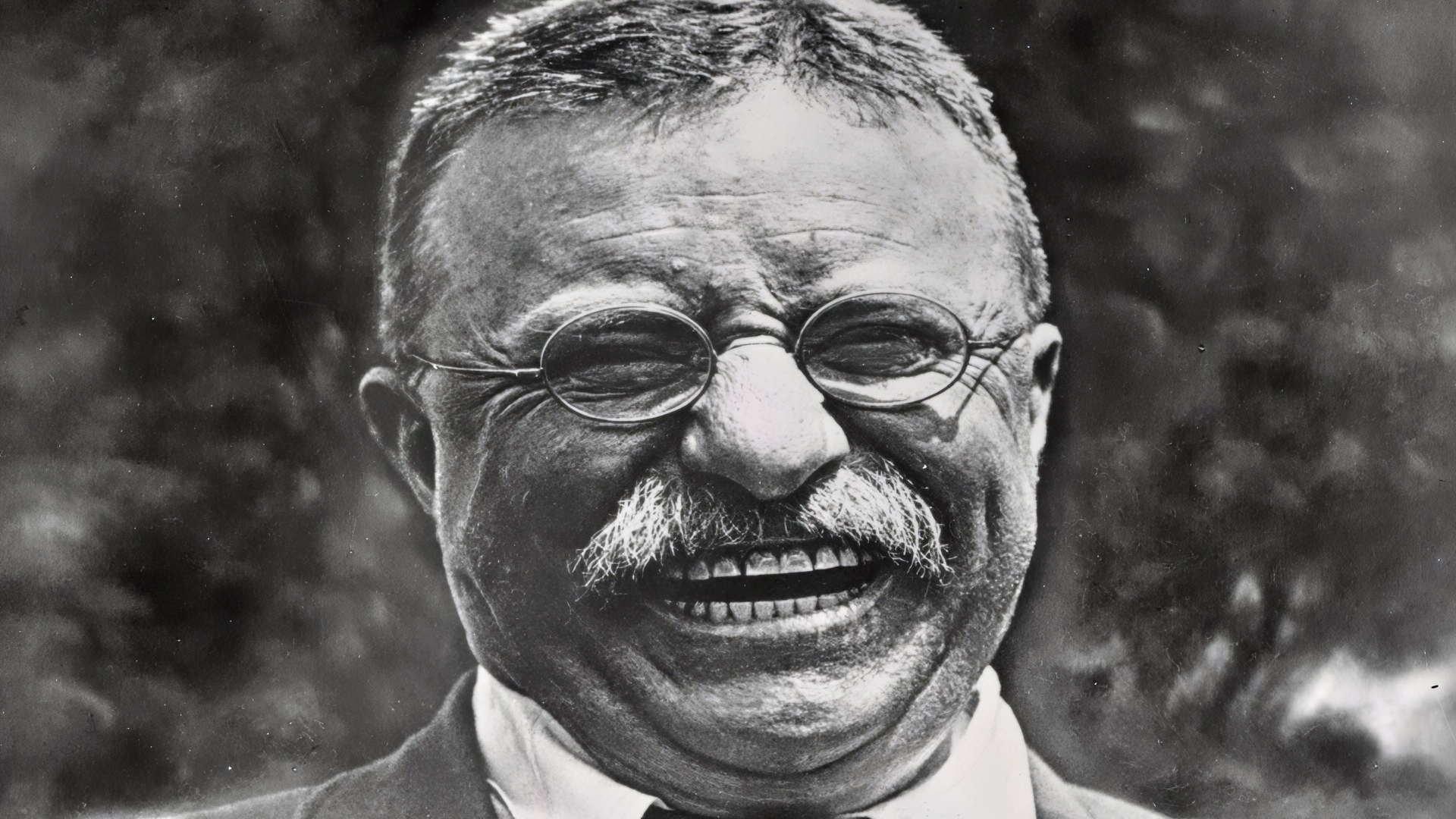
Theodore Roosevelt Laughing Creative Commons Photo
He was an inquisitive child who, despite his asthma, devoured adventure tales and nature books and began collecting specimens for his own “Roosevelt Museum of Natural History.” At age nine, he recorded his observations in a paper titled “The Natural History of Insects.”
A Student At Harvard:
He later excelled at Harvard in 1876, where his father’s advice was to “[T]ake care of your morals first, your health next, and finally your studies.” Roosevelt excelled in science, philosophy, and rhetoric courses, but struggled in Latin and Greek. He was already an accomplished naturalist and a published ornithologist, and studied biology intently.
A voracious reader, TR had a photographic memory. Roosevelt was physically active in both rowing and boxing, and was a member of the Alpha Delta Phi literary society, the Delta Kappa Epsilon fraternity, and the prestigious Porcellian Club. In 1880, Roosevelt graduated Phi Beta Kappa (22nd of 177) with an A.B. magna cum laude.
Roosevelt The Historian/Author:
He wrote “The Naval War of 1812” in 1882. The book included comparisons of British and American leadership down to the ship-to-ship level. It is still considered the definitive book on the subject. It caused considerable controversy for its bold refutation of earlier accounts of the war.
It was so well received by the United States Navy that every ship was required to keep a copy on board. He so impressed the Royal Navy with his book that when an official history of the Royal Navy was published several years later, he was asked to contribute to the section on the War of 1812.
Marriage, Birth Of His Daughter, And Widowerhood:
In 1880, Roosevelt married socialite Alice Hathaway Lee. They had a daughter, Alice Lee Roosevelt, born on February 12, 1884. Two days later, however, tragedy struck.
Alice died of kidney failure on the same day as Roosevelt’s mother, Martha, died of typhoid fever. In his diary, Roosevelt wrote a large “X” on the page and then, “The light has gone out of my life.”
Distraught, Roosevelt left baby Alice in the care of his sister Bamie while he grieved; He didn’t resume custody of his daughter Alice until she was three. In his grief, Roosevelt retreated to his Dakota Badlands properties, working as a rancher and sheriff, solidifying his connection to the rugged West and finding a renewed sense of his purpose and vigor.
This tragedy set the stage for his later exploits as a civil servant, a police commissioner, the Assistant Secretary of the Navy, a war hero, a governor, a Vice President, and, finally, the 26th President of the United States.
About the Author: Steve Balestrieri
Steve Balestrieri is a National Security Columnist. He served as a US Army Special Forces NCO and Warrant Officer. In addition to writing on defense, he covers the NFL for PatsFans.com and is a member of the Pro Football Writers of America (PFWA). His work was regularly featured in many military publications.