

1,700-Mile Nuclear Tomahawks: Why Battleships Still Tempt the U.S. Navy
Nuclear-armed Tomahawk missiles capable of attacking at ranges up to 1,700 miles, land attack Tomahawks able to travel 850 miles, and even ship-to-ship maritime Tomahawks, all armed with the famous US Navy WWII-era Iowa-class battleships.
The sheer firepower of the Iowa class, which also included armor-piercing shells, dual-purpose 5-inch guns for surface bombardment up to 10 miles offshore, and Harpoon anti-ship missiles, is likely a main reason the US Navy brought the ships back to life during the Cold War in the 1980s.
Two Iowa-class battleships attacked Iraq with missiles and 16-inch guns during the Gulf War in 1991.
Before this, the Iowa-class battleships were famous for decades of successful service in support of the US Navy, and they also performed successfully during the Korean War and World War II. During World War II in the Pacific, Iowa-class battleships served as escorts for Essex-class carriers.
Some have questioned whether Iowa-class ships should make a comeback, given their sheer firepower and ability to “blanket” enemy areas with attacks.
Perhaps this could become true in the form of a new generation of massive, heavily armed, extremely high-tech next-generation Trump-class battleships, armed with lasers, rail guns, hypersonic missiles, and even nuclear weapons.
Ship-to-Shore Battleship Attack
Large battleships may seem like slow, large, attractive targets for enemy aircraft and coastal land-fired missiles.
Yet, there do appear to be ways the kind of firepower brought by the Iowa-class could add tremendous value in maritime warfare.
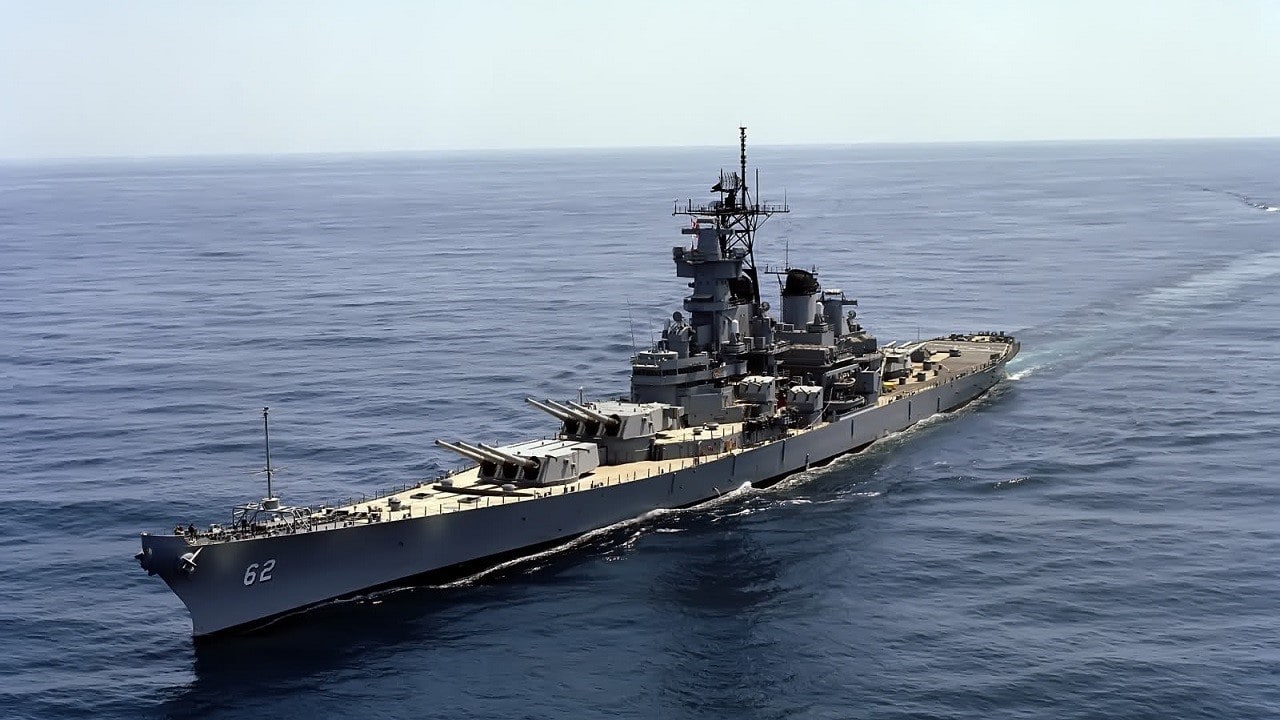
Image is of an Iowa-class battleship. Image Credit: Creative Commons.
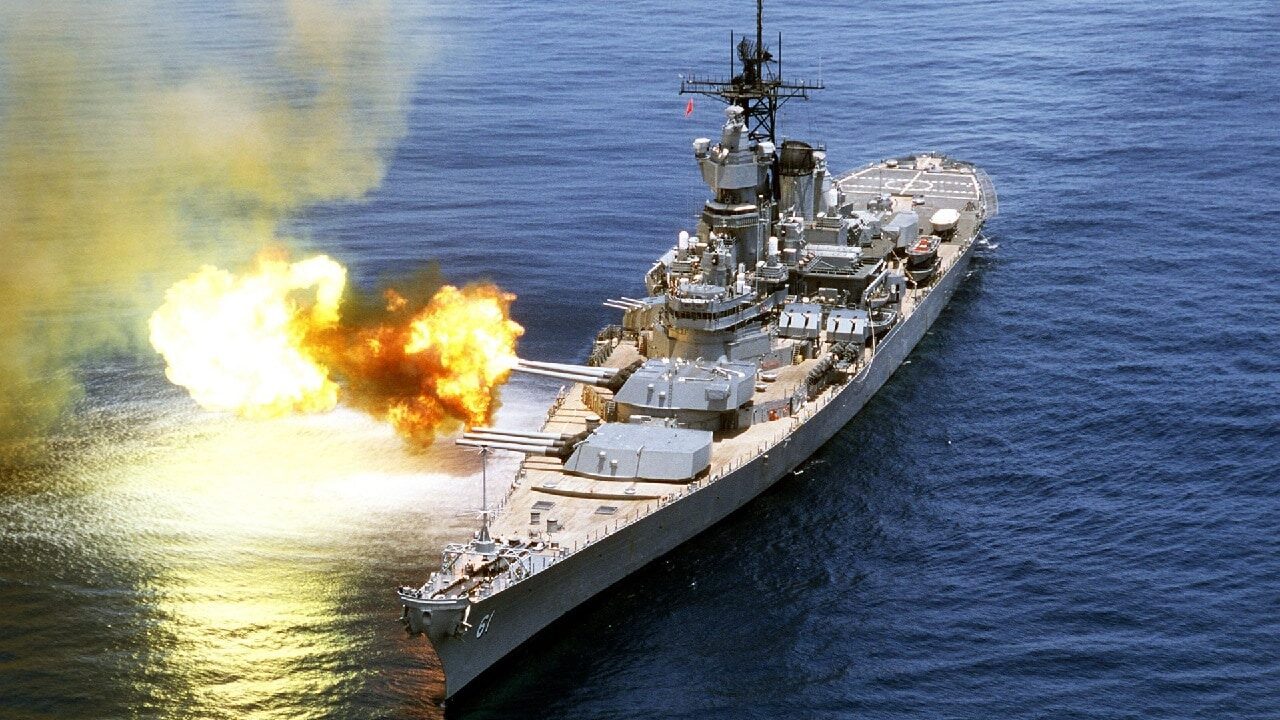
USS Iowa Battleship. Image Credit: Creative Commons.
In one respect, the ability to support amphibious or coastal Naval operations with heavy ship-to-shore fire is still relevant. In enemy areas with shorter-range, less-precise munitions, a large battleship could support an amphibious landing with supportive fires and be equipped with new generations of sensors and long-range weapons.
Since US Navy battleships were configured to launch aircraft and use radar, a modern battleship could launch helicopters and vertical-take-off-and-landing aircraft such as an F-35B.
In less contested areas, a battleship of this kind could provide combat reinforcement and serve as a floating home or seabase for aircraft and large weapons systems.
Although they can be equipped with radar, a ship of that size would be easily seen by drones, satellites, and surveillance planes.
Potential adversaries now operate with new generations of longer-range, precision weaponry positioned to be successful against a large battleship.
“Mass Fires”
Large battleships could bring lethal fires to launch aircraft with massively upgraded modern sensors and targeting systems.
For example, the US Navy has also increased the number of over-the-horizon deck-fired missiles, such as the Naval Strike Missile. In an excellent power engagement, an ability to “mass” precision, long-range fires to “scale” an attack would likely be highly significant.
The most relevant or significant element of this possibility is that heavily armed, large battleships could serve as massive “attack” platforms, protected by cruisers and destroyers in a Carrier Strike Group.
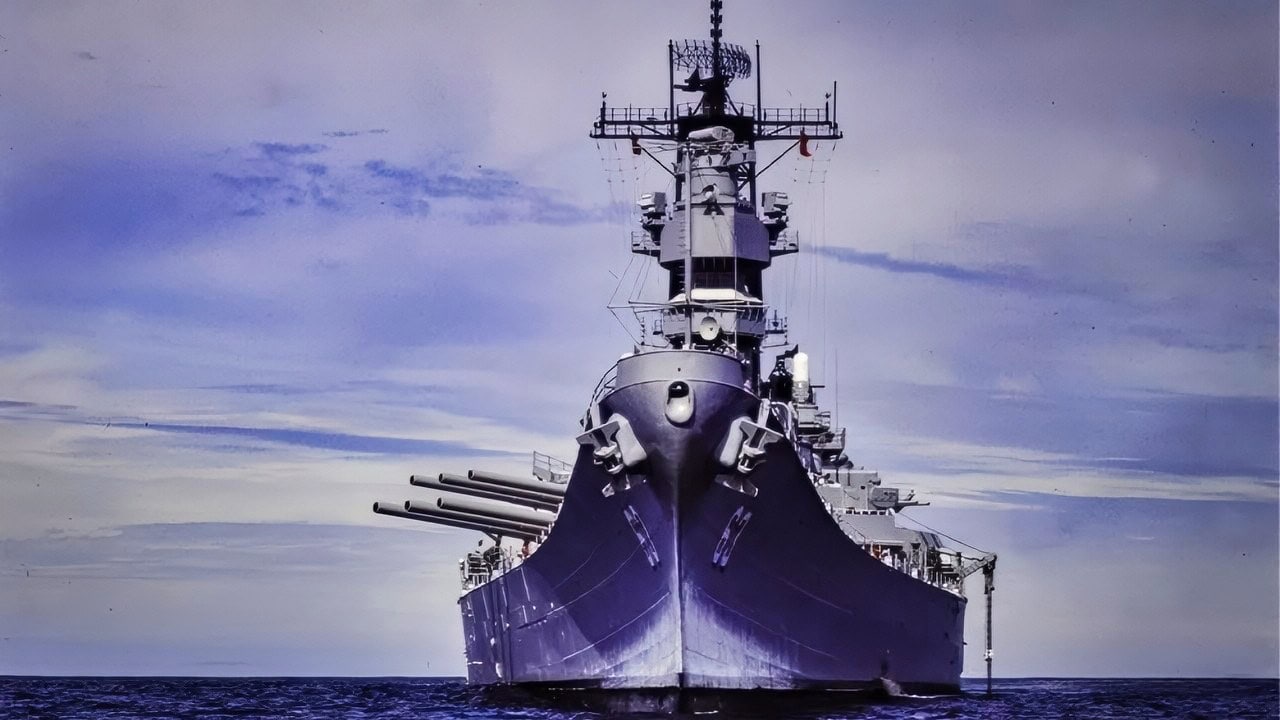
USS Missouri Navy Battleship. Image Credit: Creative Commons.
Much as carriers are protected by ship-based radar and interceptor missiles launched from cruisers and destroyers, battleships could bring unparalleled firepower while remaining protected as part of a group of ships.
Not only is there a tactical reason why large-volume ship-to-shore fires would remain extremely important in maritime combat, particularly against a less advanced adversary, but there are likely emerging layered ship defenses and non-kinetic weapons that could address survivability concerns for ships.
EW, lasers, and Vertical Launch Tube-fired interceptor missiles, supported by long-range, high-fidelity radar systems, could all prove quite effective in protecting the ship. In any large-scale war, scale and volume will have significant consequences.
Chinese Coastline Bombardment
Should the US Navy need to bombard the Chinese coastline to protect Taiwan or Japan, the fleet would need to attack miles of shoreline and would need more than a smaller number of precision weapons to support an amphibious landing.
Sensors and targeting technology could help identify targets for Iowa-class guns, many of which could be upgraded to fire precision munitions as well as “mass” or “area fire.” The sheer size of the Chinese Navy and its weaponry along its coastline would require a large amount of firepower to be attacked.
About the Author: Naval Expert Kris Osborn
Kris Osborn is the President of Warrior Maven – Center for Military Modernization. Osborn previously served at the Pentagon as a highly qualified expert in the Office of the Assistant Secretary of the Army—Acquisition, Logistics & Technology. Osborn has also worked as an anchor and on-air military specialist at national TV networks. He has appeared as a guest military expert on Fox News, MSNBC, The Military Channel, and The History Channel. He also has a Masters Degree in Comparative Literature from Columbia University.